
Fifteen years ago this autumn, a 28-year-old researcher named Alan Durning lugged a refurbished library table into the cramped bedroom closet of his Seattle home, drilled a phone line through the wall, and filed the legal papers to create a nonprofit research institute.
The goals of the fledgling organization were ambitious: to become the premier regional think tank in the Pacific Northwest; to arm change-makers with the independent research, ideas, and tools they needed to make a difference; with the modest goal of reshaping the region’s public agenda in favor of a healthy, lasting prosperity. And—oh yeah—to set an example for the world.
So, how are we doing?
It’s tempting to answer that question by the numbers—books, reports, and backgrounders written; audiences and partnerships; policies influenced. (And indeed, we have those numbers here.) This time, though, we’d prefer to tell the story by, well, telling stories.
Sightline was built on the idea that success for a movement is measured not only in the “wins” of the day, but also—and perhaps more importantly—in the seeds planted for the future. We’ve spent 15 years planting seeds in the form of innovative ideas, solutions, and data. And we’ve worked closely with people like you—advocates, leaders, educators, supporters, and idea-spreaders—to grow these ideas in your communities.
So in honor of our 15th anniversary, here are the stories of nine key ideas we’ve seeded—where they started, the principles they stood for, where they journeyed, and what, eventually, they changed.
 1. Putting Walkability on the Map: We first documented the multiple benefits of pedestrian-friendly communities with our 1996 classic, The Car and the City. After hiring a research director with a talent for mapping and numbers, we expanded that work exponentially with sprawl studies that highlighted the region’s best—and worst—practices in urban design. Our urban design research is credited with helping defeat “bad-neighbor” ballot measures in Oregon (2002) and in five western states (2006), with inspiring pedestrian- and transit-friendly planning across the region (Vancouver’s Eco-Density, Seattle’s center-city strategy, Oregon City’s master plan, to name a few), and for shining a light on how to do health-friendly transportation planning. Then, in 2007, a Sightline partner and his colleagues—who happened to be genius programmers–launched Walk Score, a wildly popular tool inspired by Sightline’s research_item and storytelling on walkability. Walk Score is now reshaping North America’s real estate market in favor of walkability.
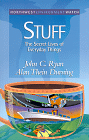 2. The Stuff Worldview: Published in 1997, Stuff: The Secret Lives of Everyday Things, is still Sightline’s bestseller, with six print runs behind it and more than 50,000 copies in circulation. Beyond the unprecedented media attention it generated when published, Stuff has sparked everything from documentaries to high school musicals to hundreds of curricula and lesson plans. Most recently, in 2007, Wal-Mart starting using it as a primer on product stewardship and the film rights were optioned. What’s the secret to Stuff’s success? We suspect it’s not all the data, but the promise of a new, more values-driven worldview. Who can resist that?
 3. The Opportunity of Green-Collar Jobs: Sightline coined the term green-collar jobs in 1999 (see this book). By 2007, with the help of powerhouse economic justice leader Van Jones, the term—a shorthand for the idea that a clean, green jobs sector can also serve as a path out of poverty—was on the lips of governors, members of Congress, and presidential candidates. The influence of “green-collar jobs” continues to grow, with states like Washington passing legislation to kick-start the green-jobs sector in 2008, and President-Elect Obama promoting green jobs as a key piece of economic stimulus for 2009.
 4. Do Mess With Taxes: Overhaul the tax code, save the world. That was the premise of Sightline’s 1999 book that detailed dozens of revenue-neutral tax innovations to jumpstart the economy, hold polluters responsible, and encourage a cleaner, greener, healthier region. In ten years, our promotion of tax shifting has won a cult-like following region-wide, inspired a starter tax shift in BC in 2001 and—most significantly—informed BC’s pioneering carbon tax in 2008. While other regions ponder the promise of tax shifting, BC just did it.
 5. Telling the Truth About Prices: This core Sightline principle champions the idea that prices, which influence billions of decisions every day, should give consumers better signals about what, say, a gallon of gas, or an acre of sprawl really costs us. With Sightline’s help, a host of powerful solutions founded on this principle are taking root in Northwest soil, from congestion pricing to parking taxes to electronic waste programs. And Cascadia’s families may soon be able to benefit from another pricing solution that Sightline’s worked closely on: pay-as-you-drive car insurance. It’s gaining traction via a 2003 Oregon law, a 2006 BC resolution, and King County, Washington, is preparing a pilot project for public launch.
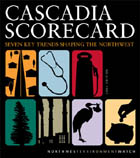 7. Scoring Sustainability: Sightline’s Cascadia Scorecard index was launched in 2004 as a new kind of regional gauge of progress—one that reflected people’s core values, instead of one-sided economic indicators. Hailed by regional papers as “a complex, ambitious new tool for charting the Northwest’s well-being,” dozens of communities and organizations—from the Vancouver 2010 Olympics leadership to a Spokane community coalition—now look to the Scorecard as a regional guide and as inspiration for their own measurement efforts. Coming in 2009: The Scorecard online.

6. Pollution in People: In 2004, Sightline, with a cadre of committed partner organizations, published an ambitious study of a troubling new PCB-like toxic that was appearing in the breastmilk of Northwest mothers. The study, which received wide attention from media and policymakers region-wide, was the first regionally to document the dramatic surge in PBDEs in northwesterners, and helped spur passage of strong phase-outs of the chemicals in Oregon (2005) and Washington, which passed the nation’s strongest ban in 2007.
 7. Fair Climate Policy for Cascadia: Sightline’s commitment to climate solutions for Cascadia started with books such as Over Our Heads (1997) and our 2005 clean-energy report. In 2007, we published a groundbreaking analysis of the climate impacts of transportation projects, which helped shape the debate over road-building in Washington and beyond. The same year, we began consulting with Western Climate Initiative leaders and advocates on how to design a greenhouse-gas cap and trade system covering seven states and four provinces. (Here’s our primer on how.) As cap and trade goes to the states in 2009, Sightline researchers will continue to consult on how to make climate policy effective and fair to low-income families.
 8. No More Bulk Discounts for Polluters. Our September 2007 report “Bulk Discounts for Polluters”—another leaf on the “making prices tell the truth” tree—documented how some of the biggest polluters in Washington State pay nickels on the dollar in hazardous waste fees, compared with what small businesses pay. In 2008, the report inspired the state legislature to fund a task force to fix this unfair flaw. Look for a win in 2009.
 9. It’s About Values: You’ve got the data. You’ve got solutions. You’ve got policy. But how does your policy connect to people’s core values—opportunity, fairness, community, responsibility, family? Sightline decided to invest in the answers to those questions by launching a communications strategy program in 2005, headed by political communications whiz Anna Fahey. Since that time, we’ve conducted original research on values-based communication, issued talking points memos, held expert workshops on best practices in framing and language, and consulted with groups around the region on messaging topics from reproductive rights to climate policy.
There’s much more, of course: Just in 2008, for example, Sightline’s research helped defeat an insidious ballot measures in Washington State, I-985. In 2007, researcher Eric de Place’s blog post on the surprising climate impacts of spray-canister keyboard cleaners spurred the City of Seattle to phase them out.
Across Cascadia, hundreds, even thousands, of northwesterners like you keep nudging projects along to advance ideas like these that improve every corner of Cascadia. And we still have a long way to go to begin to realize the promise of sustainability’s slow-motion revolution. The stories above illustrate how Sightline’s work succeeds: only in partnership. The change-making ideas that we generate together spread far beyond the people who know us directly.
We’ve come a long way together since that refurbished library desk 15 years ago. With fifteen paid staff members, dozens of volunteers, hundreds of contributors, and tens of thousands of readers, Sightline now is the premier regional think tank in the Pacific Northwest. It does arm change-makers with the independent research, ideas, and tools they need to make a difference. It has reshaped the region’s public agenda in favor of a healthy, lasting prosperity. What remains for the next fifteen years, it seems, is to set an example for the world.
