Donate Newsletters

Cities Call for Carbon Pricing in Washington

It wasn’t greeted with fanfare at the time, but one of the most encouraging developments in Washington State carbon pricing happened in early December. Even as Governor Inslee’s Climate Legislative and Executive Workgroup (CLEW) struggles to find an assertive, but consensus-based policy recommendation, local governments are starting to call for action. And it’s not just … Read more

The Truth About Carbon Pricing

These are exciting times for carbon pricing in the Pacific Northwest. Under the auspices of the Climate Legislative and Executive Workgroup (CLEW), state leaders are, right now, engaged in the first serious look at the subject in years. (Please be sure to attend the hearings on October 23 in Seattle, and December 6 in Olympia!) The work is heavily informed by a recently released report commissioned by the state. It sets a foundation for the important work ahead, but we fear that it makes a few missteps that are unhelpful to policymakers. Our aim is to set the record straight about the benefits (and perils) of carbon pricing.

The truth about carbon pricing—a term that encompasses both carbon taxes and cap-and-trade systems—is that those two policies are two sides of the same coin. Unlike “command and control” policies that directly regulate the economy, “market-based” policies use the power of capitalism to protect the environment. Putting a price on carbon gives businesses and households a powerful financial incentive to reduce their consumption of fossil fuels and other greenhouse gases.

Although there are some (mostly subtle) differences between carbon taxes and cap-and-trade systems, they are more alike than they are different. In this context, efforts by some conservatives to re-label cap-and-trade as “cap-and-tax” makes perfect sense: the point of both of these policies is to make polluting more expensive. For the most part, whatever you do with one you can do with the other. (In particular, you can do either one well, and you can do either one badly.)


Read more

How You Can Support Carbon Pricing in Washington

Opportunities like this don’t come along every day. But right now, Washington residents have a very unusual—and very real—opportunity to press for serious climate policy. Two public hearings in October, plus one in December, represent the best opportunity in ages to speak up and demand strong action on climate change.

Here’s the back story. In the last legislative session, Governor Jay Inslee’s first piece of successful legislation directed the state’s legislative leaders to come back to the table in 2014 with serious proposals to reduce Washington’s greenhouse gas emissions by 50 percent. If it’s not obvious, that’s a very big deal.

The group actually charged with the task, the Climate Legislative and Executive Workgroup (CLEW), is composed of four voting members drawn from legislative leadership—two Democrats and two Republicans—plus the governor as a non-voting member. There’s not likely to be a huge amount of consensus across party lines, but the more they hear that the Washington public is demanding fast-paced and aggressive climate action, the stronger their recommendations are likely to be.

So here’s where you need to get yourself:

Read more

Recipe: Cooking the Books on Carbon Taxes

Editor’s note: This extra-rich recipe was originally shared on Yoram’s own blog at The Stand-Up Economist. Check it out!

The National Association of Manufacturers just released a scathing report on carbon taxes (the full report was produced—unfortunately—with the assistance of my friends at NERA), but in reality all their analysis shows is that paying down the federal debt is the poison pill of economic policy: as long as the economy is struggling to recover, connecting debt payments to any policy will make that policy look terrible.

In other words, it’s a recipe for cooking the books on carbon taxes:

  1. Pre-heat the oven with debt-crisis rhetoric. The interest rate for federal borrowing is incredibly low, but don’t let that stop you from arguing that “[debt reduction] is appealing because this could reduce the interest rate for Federal borrowing.”

    Read more

American Support for a Carbon Tax

Lots of polling shows that Americans are good and ready for somebody to do something about climate change. But when it comes to specific policy measures, attitudes aren’t always so clear cut—especially if the policy solution features the word “tax.”

However, several recent surveys give insights into Americans’ current attitudes about carbon taxes. And support seems to be steady—and in some cases, quite high.

Depending on how survey questions are worded, support has been hovering around 50 percent—and nudging up to 60 percent on a good day. But support drops to below half when increases in energy costs are specified, or, surprisingly, when there’s mention of tax rebates or refunds.

Read more

Three Things Everyone Should Know About BC’s Carbon Tax – In Pictures

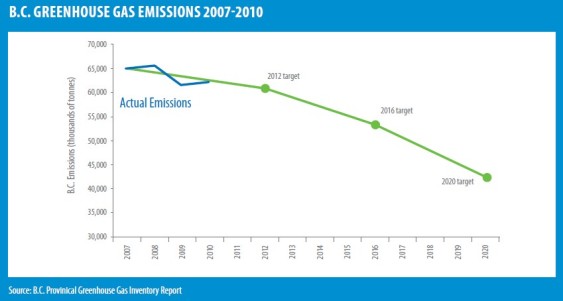
If you only want to know three things about British Columbia’s carbon tax, here’s what they should be. First:

ScreenHunter_01 Jan. 30 10.15

BC’s carbon tax, while still young, is helping the province reduce its greenhouse gas emissions consistent with its targets.

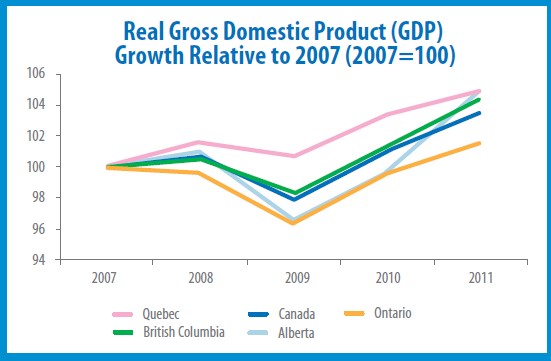
Second:

ScreenHunter_02 Jan. 30 10.15

BC’s carbon tax has been correlated with a GDP growth rate higher than Canada’s as a whole. (Compare the green line with the dark blue line.) Combined with the province’s emissions reductions, this is what it looks like to de-carbonize a growing economy.

Read more

Making BC’s Carbon Tax Even Better

Chart from “Fair and Effective Carbon Pricing: Lessons from BC”, CCPA 2011

Sightline is an unapologetic booster of British Columbia’s carbon tax. For good reason, other jurisdictions look to Canada’s west coast as a model of a strong carbon policy. Yet, BC’s tax is not perfect. It’s come in for criticism from progressive groups in BC who wish the tax were fairer, stronger, and broader than it is now.

Let’s take a moment to examine three major criticisms of the tax. Then we’ll recommend some fixes that can make BC’s tax even better.

Robin Hood in Reverse?

The Canadian Centre for Policy Alternatives (CCPA) has been shining a spotlight on the tax’s economic fairness since it was first proposed in 2007. It’s an important perspective because consumption taxes, particularly on energy, are often regressive. Let’s take a look at how the tax stacks up.

Read more

Maintain WA’s Transportation Network with a Carbon Tax

Editor’s Note: This op-ed originally ran in The Seattle Times print edition January 3, 2012, and online January 2, 2012.

We have a transportation problem. The governor’s Connecting Washington report identified a maintenance shortfall of almost $800 million per year over the next 10 years just to keep roads, bridges and ferries in safe working order.

We have a climate problem. Carbon concentrations in the atmosphere continue to rise, and the scientific consensus about the risks of global warming continues to build.

We can fix both problems at the same time. Economists from across the political spectrum agree that putting a price on carbon is the most effective and efficient way to reduce carbon emissions. British Columbia has proved them right: In the past few years our northern neighbor has reduced its carbon-dioxide emissions by 5 percent, and its economy has outperformed the rest of Canada.

Read more

The Conservative Case for Carbon Taxes

This week, Sightline Fellow Yoram Bauman will moderate a panel that should prove fascinating: “Changing What We Tax: Prospects for a Free-enterprise Solution to Energy Security and Climate Change.”

It’s a joint event put on by one national conservative group, the Energy and Enterprise Institute and one state group, the Washington Policy Center. The speakers will include Bob Inglis, a Republican and former Congressman from South Carolina; Todd Myers, director of WPC’s environmental program; and Mike Wallace, a professor of atmospheric science at the University of Washington.

Details here:

Date: Wednesday, November 14th, 2012
Time: 7:00 pm – 9:00 pm
Place: Room 109, Otto Miller Hall, Seattle Pacific University, 301 W. Ewing Street, Seattle, Washington.

Bob Inglis is certainly one of the most fascinating people in American politics right now. A bona fide conservative Republican who served multiple terms in Congress representing South Carolina, he’s also been a vocal and articulate climate hawk, one who urges fellow conservatives to hew to the facts of climate science and to embrace carbon pricing as an opportunity to reform national tax policy. You can get a taste of that with this video:

Read more

McDermott’s Fee and Dividend Bill

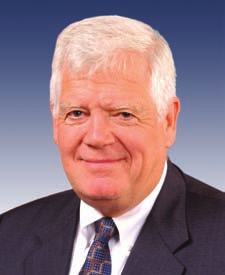
I’m almost a week late on this (hey, I’ve been on vacation), but I want to shed a little positive light on Washington congressman Jim McDermott’s new carbon pricing legislation.

It’s more than a little refreshing to see that at least one member of the Northwest’s congressional delegation is still working hard to put a firm limit on US carbon emissions. It’s also nice to see that the so-called “fee and dividend” approach is still alive.

Under McDermott’s plan, which he calls a “managed carbon price,” the Treasury would set up a carbon fee to be levied on emissions. The proceeds would then be divvied up with 25 percent set aside for reducing the federal deficit and 75 percent returned directly to legal US residents as a per capita dividend. (More details are here and here.)

There’s a lot to like about this approach, not least of which is the fact that it provides Americans with a direct financial stake in reducing carbon.

Read more

×
Privacy Overview
Sightline Institute

More information about our privacy notice

Strictly Necessary Cookies

Strictly Necessary Cookie should be enabled at all times so that we can save your preferences for cookie settings.

3rd Party Cookies

This website uses Google Analytics to collect anonymous information such as the number of visitors to the site, and the most popular pages.

Keeping this cookie enabled helps us to improve our website.

Additional Cookies

This website uses social media to collect anonymous information such as which platform are our users coming from.

Keeping this cookie enabled helps us better reach our audiences.