


 There’s a raft of cool stuff in “Analysis of Bicycling Trends and Policies in Large North American Cities,” a new report out by the University Transportation Research Center. It’s authored by John Pucher at Rutgers and Ralph Bueler at Virginia Tech.
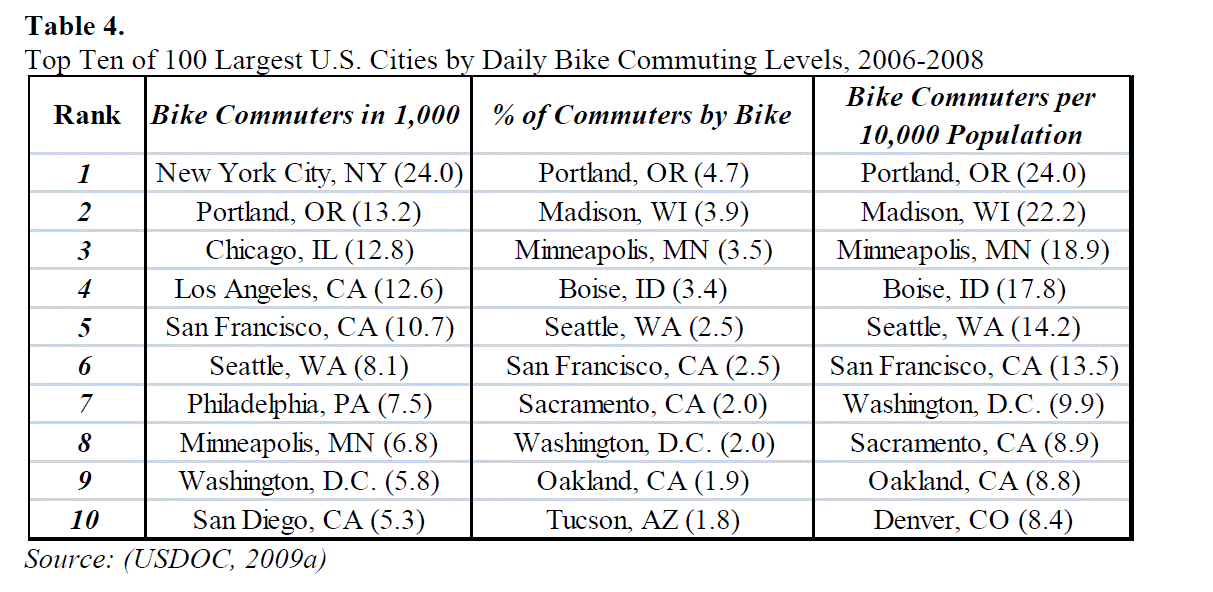
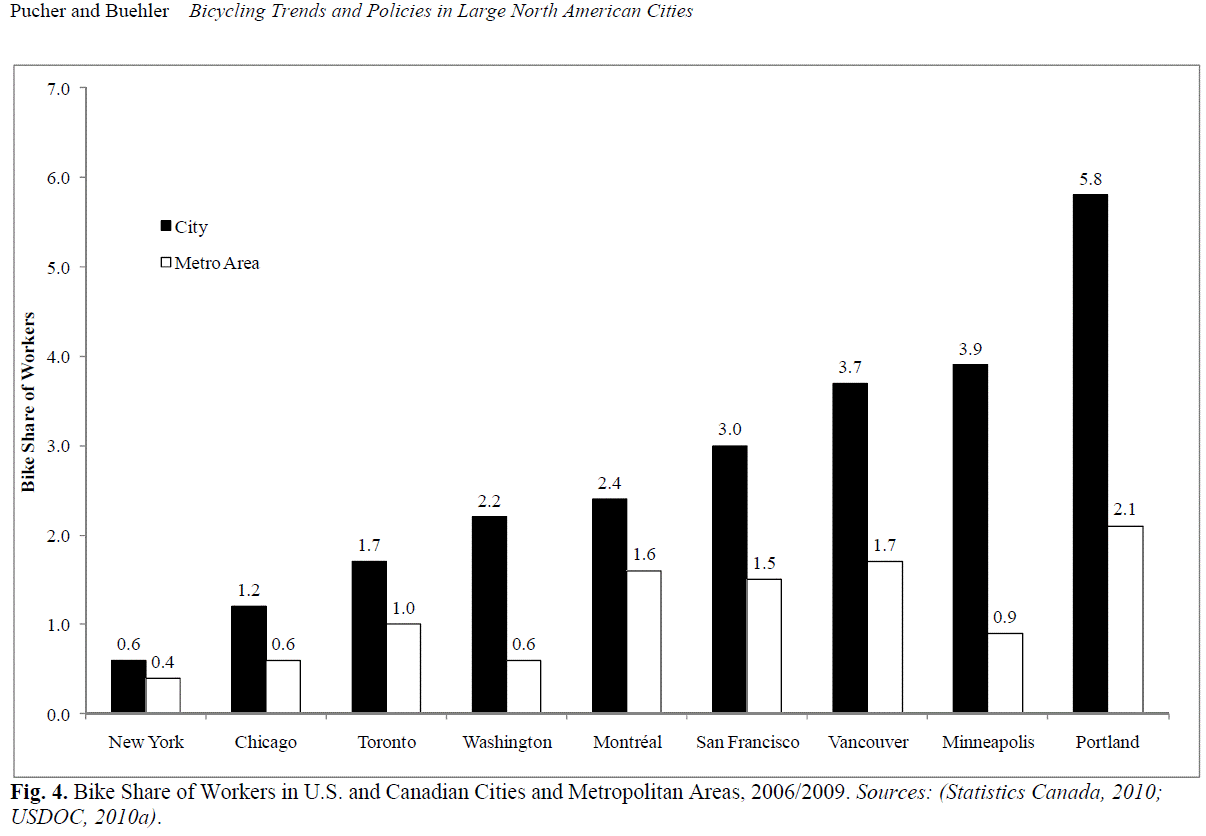
I was struck by two things: 1) what a stand-out Portland is, even in North American terms; and 2) how well Minneapolis fares on almost every measure. Portland had better watch out, lest the temperate regions cede bicycling superiority to a place where 20 degrees is, in all seriousness, considered balmy for long stretches of the year.
Apart from that, I don’t feel like I have much to add, so I’ll just highlight a handful of the more intriguing graphics. Our blog platform renders these in a slightly hard-to-read display—I apologize—but they’re worth squinting for.
Top Ten of 100 Largest US Cities by Daily Bike Commuting Levels
Bike Share of Workers in US and Canadian Cities
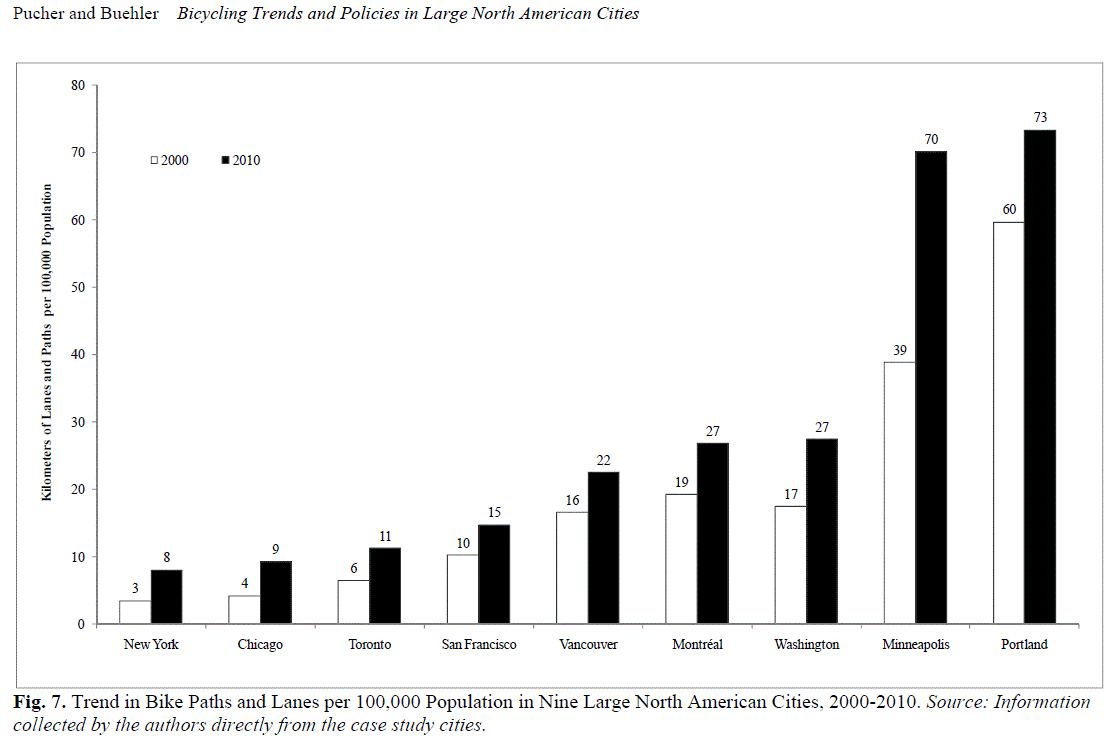
Trend in Bike Paths and Lanes
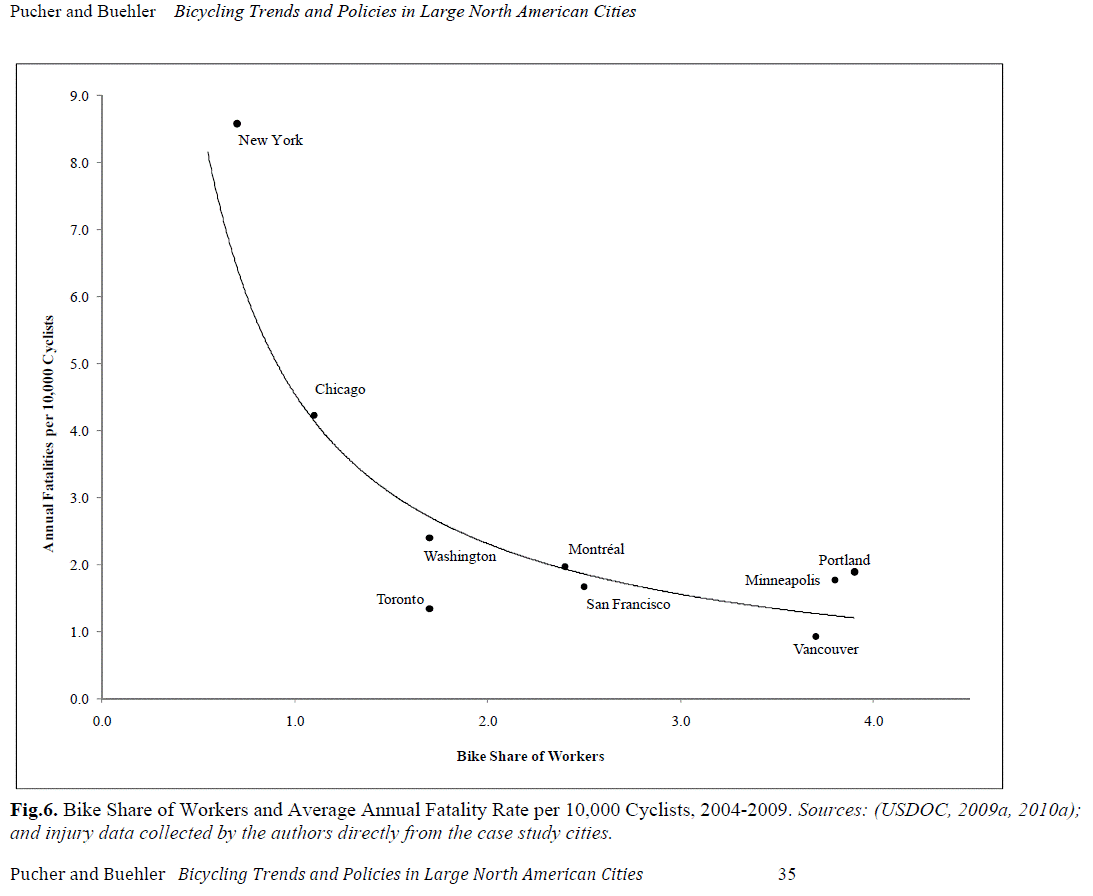
Bike Share of Workers and Average Annual Fatality Rate
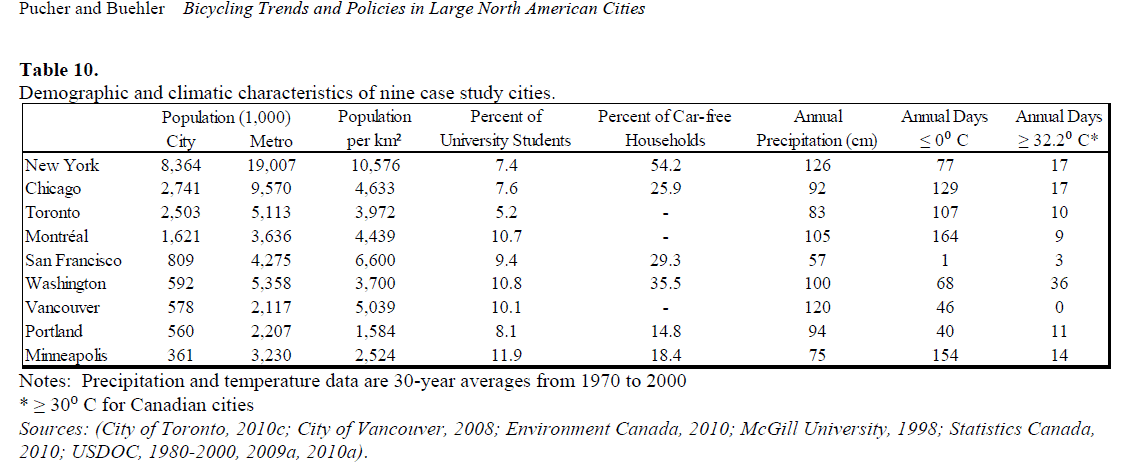
Precipitation and temperature data
If you’re into bike wonkery, go read the whole thing.
Photo credit: Bikes in the snow / Richard Holden / CC BY-NC-SA 2.0

Two things stand out to me in this flotilla of charts and graphs:1. Boise does quite well, despite its not-very-bike-friendly infrastructure. Relative flatness + university town + outdoorsy lifestyle + younger demographic profile? It’s a city worth considering. What could Boise achieve if it invested in bike infrastructure as Portland has?2. The length of bikeways is a potentially misleading measure. It needs to be adjusted for population density. Vancouver, BC, for example, is much denser than Portland, Oregon. Portland’s street grid, stretched into a line, is something like 3x Vancouver’s, if I remember correctly. So Vancouver’s low ranking on bikeways, compared to Portland, is somewhat irrelevant. The question for any individual cyclist is whether the major destinations s/he might want to ride to are accessible on safe cycleways. I suppose the ideal measure would be what share of arterial streets have high-quality bikeways?
Alan,Very interesting analysis and conclusions. I would like to point out one thing relevant to your last point on ‘ideal measures’: The % of arterial streets with bike facilities would not recognize well composed networks of bicycle friendly, low volume streets with specific improvements to encourage and maintain comfortable cycling conditions and provide a much more dense bike network. Perhaps a better measure would be household proximity to a recognized bicycle facility. We (at Alta Planning + Design) have been developing (in cooperation with Portland Bureau of Transportation) a Cycle Zone Analysis tool that evaluates how bikeable a district is and helps identify what the barriers are to improving bicycle mode share. Its a great tool we have used in many communities to help prioritize improvements that will have the greatest influence on bicycle mode share, investment equity and project feasibility. Proximity to facilities is one measure we include in the model.
RE Alan’s comment, “I suppose the ideal measure would be what share of arterial streets have high-quality bikeways?”Portland has focused on creating “neighborhood greenways,” low-traffic streets that become through-streets for bicycles, runners, skaters, and walkers, with speed bumps to discourage motor vehicles. Most of my trips around Portland involve a combination of these greenways and bike lanes on arterial streets. The former are just as fast and much more pleasant than the latter. Bike lanes on arterials are noisy, smelly, and dangerous with the constant threat of being “doored.” I never felt comfortable taking my children on them, when they were beginning to ride. Portland’s strategy is designed to encourage non-riders to take up bicycling, creating routes that are fast for commuters, safe for children, and non-threatening to novice riders.
Thanks for the info. Large cities are congested with heavy traffic and air pollution. Therefore, it’s unusual that that cycling analysts choose large cities, rather than small liberal college towns, to assess rates of bike commuting, and consequential recommendations for improving bike facilities.I have noted higher rates of cycling, walking, and tellecommuting in smaller cities. I think that improving facilities in small towns would be less costly. I also think that some small college towns could see at least 70% commuting by walking and cycling, with bike transportation upgrades. For example, in Ithaca, NY, ~50% either walk or bike to work, or work at home. This is amongst the highest in the US. I place all three in the same percentage, since they collectively reduce our foreign oil dependence.In Ashland, Oregon, this combined figure is ~25%.Durango, Colorado: ~22%Boulder is also about ~22%.Flagstaff, Arizona ~17%.Eugene, Oregon also about 17%.Bend, Oregon ~12%.These numbers are very impressive, and are all well above what Seattle could ever get in terms of bike commuters and Sound Transit – combined.And, they are the reason why these cities are a magnet for cycling and fitness enthusiasts.From the list above, the most unexpected number is Ashland. However, their density is low, like Bellevue, so cycling and walking are pleasant. A problem with “smart growth” is density discouraging walking and cycling.In fact, for higher density markets, the combined number is just 8% in Boise, and 12% in Seattle.These numbers are from graphs on the sometimes unreliable web site “https://city-data.com.”Does anyone have a list of cycling, walking, and tellecommuting rates for smaller cities of 100,000 or less? I suggest we focus on the small cities exclusively, especially liberal college towns. If they can achieve over 70% cycling and walking to work, then that would provide the stimulus for the larger metros.Tom
cheap auto insurance 271416 home insurance in florida %-))) discount auto insurance qnecrj