Donate Newsletters

Does “BC” Mean “Bans Clotheslines”?

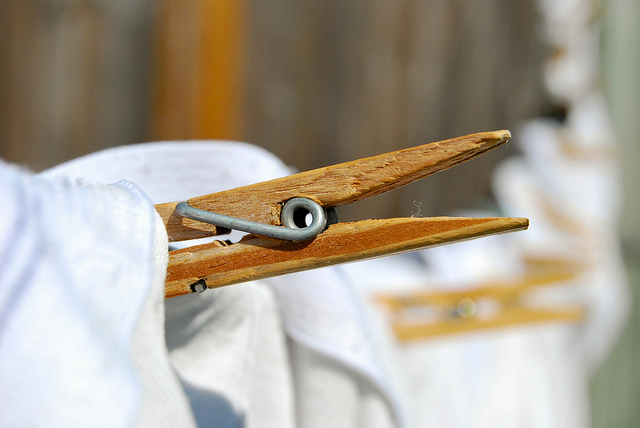
British Columbia prides itself on a commitment to renewable energy. Yet many British Columbians are forbidden from stringing up the simplest of solar devices: the clothesline.

These laundry-drying bans are written into the bylaws of strata corporations, which govern most of British Columbia’s condominiums, apartments, duplexes, and townhomes. Condos are a big and fast-growing housing choice in the province. In just 20 years, the percentage of Vancouverites dwelling in them has nearly doubled from under 25 percent to more than 40 percent. A similar trend is evident across the province where, in 2008, investments in condos and apartments outpaced investments in detached homes for the first time. Moreover, from 2002 to 2008, investments in townhomes and duplexes more than doubled.  British Columbia may have more than 1 million residents who are subject to strata bylaws.

Read more

Liar, Liar, Pants on Fire

Fire

The Chicago Tribune is “Playing with Fire.” In a weeklong series on flame retardants, a team of journalists eviscerates Big Chem, its star witness, and the astroturf groups that are “part of a decades-long campaign of deception that has loaded the furniture and electronics in American homes with pounds of toxic chemicals linked to cancer, neurological deficits, developmental problems and impaired fertility.”

Earlier this year, we examined the testimony of Dr. David Heimbach, star witness for Big Chem, suggesting Heimbach’s testimony was either deceptive or uninformed. Our fisking gave him the benefit of the doubt. The Tribune dug deeper. Its reporters studied Heimbach’s testimony from the past three years and found he wasn’t simply uninformed. He lied.

Read more

Toxic Couches: The Infographic

How dangerous can 12 seconds be? In the case of California’s 12-second rule, it can be pretty toxic. California requires that furniture be able to withstand a candle flame for 12 seconds without igniting. Because California’s market is so big, most manufacturers build furniture to pass the 12-second rule. No study has ever proven the … Read more

The Rain-barrel Connection

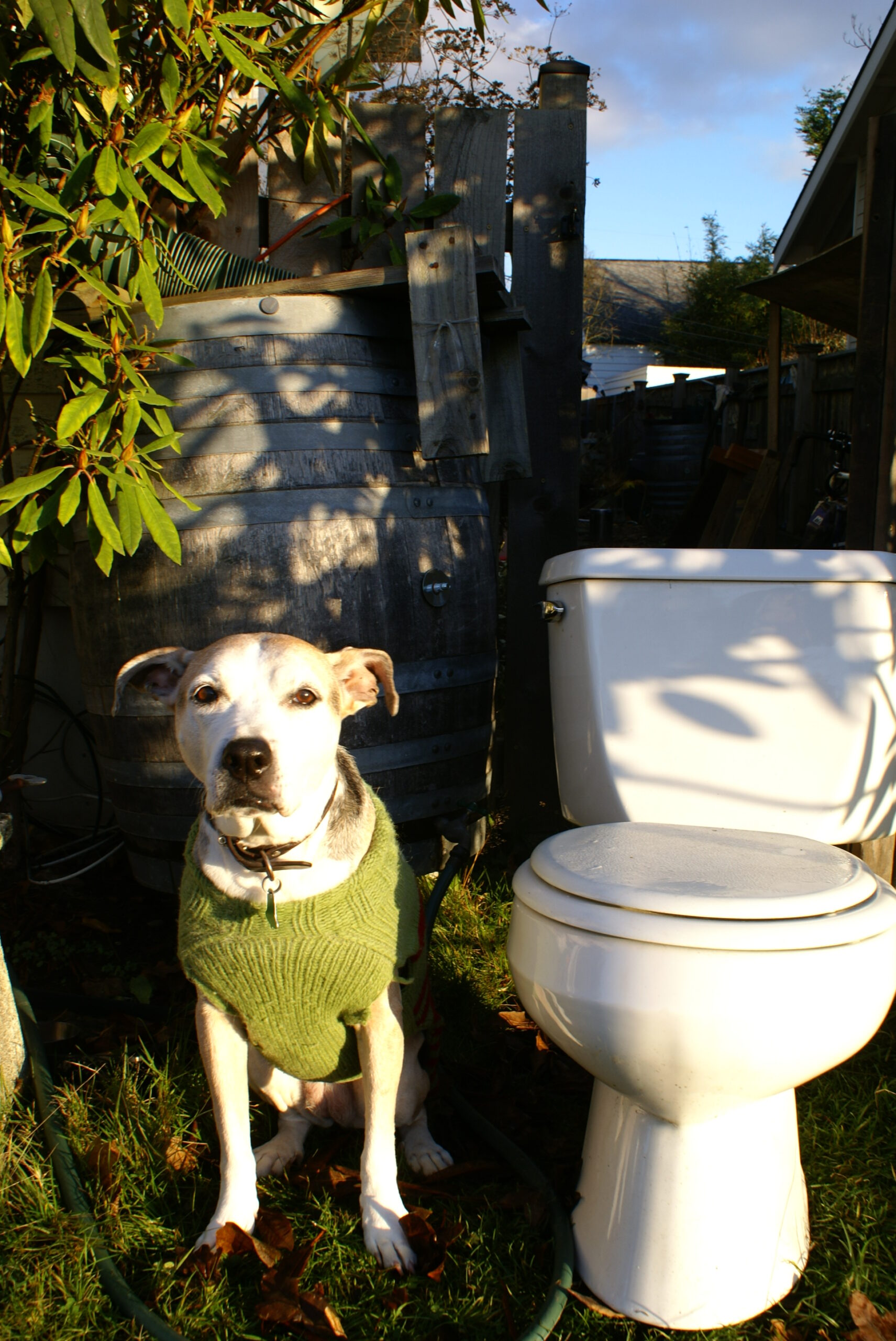
Call me a dreamer. I want to flush with rainwater. Rain barrels already anchor my downspouts. I want to hitch them to my toilet tank. It would save me money and leave the city’s drinking water for better uses.

Yet so far local plumbing rules aren’t helping me, or thousands of others in the Pacific “Northwet,” make the rain-barrel connection. It’s not so much that rules prohibit it but that even local authorities do not really understand what the rules mean. A little clarification—and publicity—would go a long way.

Already, outside my house in Seattle’s Ballard neighborhood, I’ve managed to irrigate my Victory Garden all summer from nothing but the 500 gallons of rain I collect in ten barrels. During the other three seasons, though, the garden doesn’t need extra moisture, so my barrels sit unused and, often, full to the brim.

Read more

Freeing Food Carts: Vancouver Update

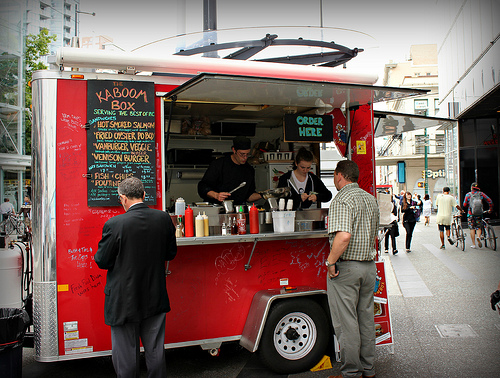
The Vancouver, BC, City Council just gave the nod to expand the city’s street food program by allowing a dozen new carts to set up shop this year—bringing the grand total to 103 carts operating in the city. And the people rejoiced: Yay. But those 12 carts were selected from 59 applicants. Despite all-around success for … Read more

Seattle On the Cusp of Making Sustainability Legal

Next week, the Seattle city council will take up a package of modest but important regulatory reforms. These are precisely the sort of fixes Sightline has been advocating: targeted updates that move us toward a more sustainable city—one that’s not only cleaner but that also offers richer economic opportunities to its residents.

Interestingly, many of them are actually “back to the future” type proposals. For example:

  • Coffee shop-size neighborhood commerce—the old corner stores—will once again be allowed in places zoned for low-rise density.
  • Outside of designated pedestrian zones, the city will relax the stringent requirements for ground-floor commercial space that isn’t supported by the market.
  • In places with good transit service, the law will return to the way it was when the city was built: officials will no longer force private property owners to supply a minimum number of parking spaces.

That last one is particularly popular with institutions like Seattle Central Community College. Consider the absurdity of the current situation: the college is located just a few minutes walk from downtown and it’s served by multiple bus lines, as well as a forthcoming streetcar and light rail station. Not surprisingly, its existing parking facilities are under-subscribed. Yet it cannot expand its classroom space without also building costly new parking structures. Oy.

The new reforms will scrub that requirement, letting the college spend its money on education rather than car storage.

Given the modest nature of the proposals, there’s been exceedingly little concern over them. True, in an article about the policy package, the Seattle Times did manage to find a few grumpy folks concerned about crowded on-street parking in central city neighborhoods. Yet an examination of the “problems” cited in the article serve to highlight how utterly undramatic the changes are.

Let’s take a quick look.

Read more

Freeing Food Carts: Seattle Follow Up

It seems folks have a lot to say about Seattle’s food carts. My post last week spurred several others, each with their own lively comment strings (see: the P-I, Crosscut, Seattle RedditPublicola, the Sun Break, and Seattle Transit Blog 1 and 2; and beyond Seattle: Vancouver Open File, Georgia Straight, Slate, and Grist).

The topic elicits mixed reactions, ranging from “who cares,” to ardent support, to harsh criticism of Seattle’s current program. I want to follow up with a couple of points that have come up in these discussions.

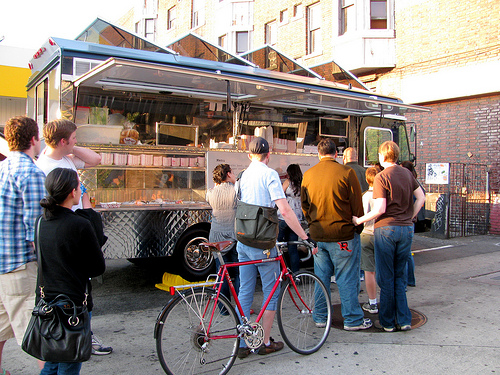
First: I want to make it clear that I think the verdict is still out on Seattle street food. Yes, the current numbers for applicants who are using city streets and sidewalks are low: around 10 applicants since the rules changed last August. But the numbers are deceptive—and clearer ones are harder to find. King County actually had 408 food carts in 2011. But about half of those were labeled “Risk 1”: basically coffee carts and hotdog vendors. Only 201 carts were “Risk 3,” and permitted to vend their cuisine of choice. To date in 2012, only 163 vendors have applied for Risk 3 permits. It’s very uncertain how many vendors we’ll see as we get closer to summer.

Read more

Legalize Used Pickle Jars

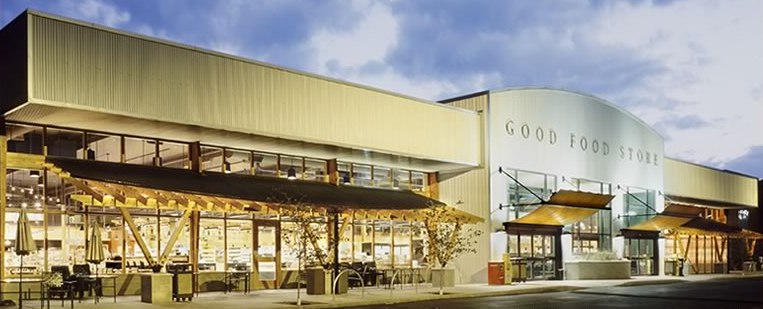
Good Food Store, Missoula, Montana

You’ve heard about the Great Pacific Garbage Patch and seen Chris Jordan’s shocking photos. Maybe you have even heard that the plastic in the oceans outweighs plankton six to one (at least, the nonwater-parts of the plankton and in some parts of the oceans). But have you heard about the elegantly simple solution lived out daily at Missoula, Montana’s Good Food Store?

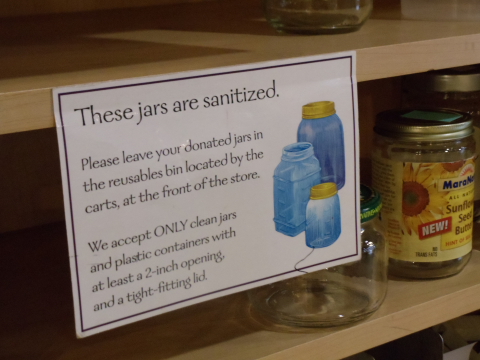
It’s called a sanitizer: think of it as a dishwasher that uses heat instead of soap. The Good Food Store, a grocery store, employs one to sterilize used yogurt tubs, pickle jars, and other containers, then puts them out for customers to refill.

Yes, a po-dunk grocery store in Montana, aka, eastern Cascadia, is leading the way with its understated solution to a Cascadian and global problem. (Full disclosure: your author is a Griz.)

Read more

Freeing Food Carts

Editor’s note: Eric posted Seattle and Vancouver follow ups to this piece.

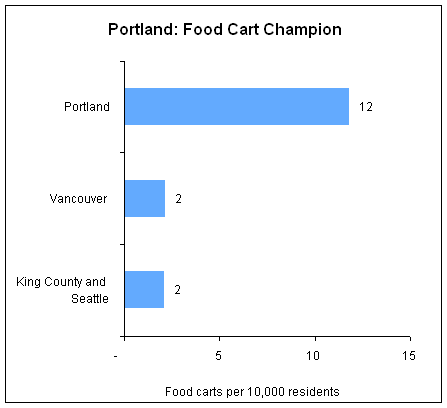
Whatever you’re craving, you can probably find it on sale at a parking lot in Portland. Barbecue jackfruit fried pie? Try Whiffies on Hawthorne. Foie gras over potato chips? Eurotrash on Belmont. Kimchi quesadilla? Koi Fusion on Mississippi. It’s no wonder Portland has been heralded as a world-class purveyor of street food.

But North American attention to the Rose City’s food cart scene has cities to the north green with envy.

For decades, Seattle and Vancouver, BC, had draconian laws limiting food cart cuisine. In the last few years, however, both have tossed old rules in the dumpster, hoping to unleash legions of carts.

Street food is smart for sustainability: it makes urban living more desirable to many, improves neighborhood walkability, provides affordable dining options, and opens doors for diverse entrepreneurs.

So far, though, neither Seattle nor Vancouver, BC, has cleared the way for street food to the same extent as Portland.

Portland: Ground Zero

Read more

Have Toxic Couches Finally Met Their Match?

Eureka! The California legislature will this spring consider a bill to modernize the 12-second rule, the state’s obscure furniture flammability standard that fails to protect us from fires even while it poisons homes across North America. Over the past seven months, we’ve described this scientifically discredited standard; provided nine (adorable) reasons to modernize the standard; refuted Big Chem’s star witness; and uncovered the engine of toxic political influence that shuns fire safety in favor of profits.

This time, we bring hopeful tidings.

Late last month, Rep. Holly Mitchell (D-Los Angeles) introduced AB 2197, a bill that will bring California’s flammability standard into line with 35 years of independent fire safety science and 20 years of research by the US government.

AB 2197, backed by a coalition of firefighters, scientists, businesses, consumers, and public health advocates, is simple, effective, and constructive. It’s worth a read.

Read more

×
Privacy Overview
Sightline Institute

More information about our privacy notice

Strictly Necessary Cookies

Strictly Necessary Cookie should be enabled at all times so that we can save your preferences for cookie settings.

3rd Party Cookies

This website uses Google Analytics to collect anonymous information such as the number of visitors to the site, and the most popular pages.

Keeping this cookie enabled helps us to improve our website.

Additional Cookies

This website uses social media to collect anonymous information such as which platform are our users coming from.

Keeping this cookie enabled helps us better reach our audiences.