Donate Newsletters

Climate Change in My Back Yard?

We’ve heard it a million times: Talk about local climate impacts and local solutions to help shrink the sometimes overwhelming issue of climate change to actionable proportions. In the same vein, I know I sound like a broken record when I say: Stop talking about polar bears and “future generations!” To win hearts and not just minds, climate change needs to be understood in the here and now.

Well, now there’s more research to show that this is good practice.

Read more

This Is Your Brain on Oceans

If the ocean has a direct, neurological impact on our brains, an awareness of this connection will change the way we treat it—and the policy implications could be profound. That’s the hope, at least, that motivated “neuro-conservationist” and turtle specialist Wallace J. Nichols to invite a group of neuroscientists, marine scientists, journalists and artists to start a conversation about our emotional connection with the sea.

Nichols thinks that our grey matter is actually uniquely tuned into the Big Blue. “When we think of the ocean—or hear the ocean, or see the ocean, or get in the ocean, even taste and smell the ocean, or all of those things at once,” Nichols said in an OnEarth interview, “we feel something different than before that happened. For most people, it’s generally good. It often makes us more open or contemplative. For many people, it reduces stress.”

Nichols aims to tap into this emotional response to oceans—what he calls the Blue Mind—to help build support for responsible stewardship of the world’s marine ecosystems.

Read more

The Economy: Operating Instructions for Communicators

To understand any big, messy concept, the human brain turns unconsciously to mental shortcuts—what communications experts call conceptual metaphors or frames.

Take common ways to talk about the economy: We say it’s accelerating or stalled; on track, going into the ditch, or crashing, like the whole thing is some kind of object in motion. Or we hear it’s thriving, flat on its back, needing resuscitation—as if the economy were a living body. Sometimes, the dollar “falls” and unemployment “rises”—like magic, all on their own!

As messaging expert and cognitive linguistics researcher Anat Shenker-Osorio reminds us, these familiar expressions aren’t merely flowery language. Our words actually shape what people think the economy is, how it should work, and what economic policies seem logical or right.

Read more

Talking to The Tea Party About Climate?

Striking up a conversation about climate change with somebody who denies the science? Usually I’d say ‘don’t bother.’ But if I’m right and there’s actually a little Tea Partier in all of us, maybe there’s a thing or two hard-core science deniers can teach us about climate communications more generally.

First things first. Where is the so-called Tea Party on climate change? Recent polling shows that it’s not a voting bloc that we’re likely to persuade. Indeed, research by Yale and George Mason University found that among conservatives, it is mainly members of the Tea Party who do not believe climate change is occurring. While the majority of Democrats (78%), Independents (71%) and Republicans (53%) believe in global warming,  only 34% of the Tea Party agrees with them—and 53 percent are pretty adamant it is not happening. (When you ask about man-made climate change, “belief” drops even further for the Tea Party: While 62 percent of Democrats say that global warming is caused mostly by human activities, most Tea Party members say it is either naturally caused (50%) or isn’t happening at all (21%).)

That’s no big surprise.

Read more

This is Your Brain on Climate Change

Remember those old anti-drug television commercials with an egg sizzling in a frying pan? Here’s a new twist: This is your brain. This is your brain on climate change.

I’ve written before that with or without multimillion dollar campaigns to discredit climate science (and scientists), our brains don’t seem very well equipped to fathom the scope or urgency of global warming (we are chronic optimists, fear shuts us down, we cherry-pick information that confirms what we already believe and reject that which challenges our take on reality, we tend to trust messengers who share our worldview and distrust those who don’t, etc., etc., etc.) To be clear, I do not point this out in order to excuse our inaction. Rather, I aim to arm us with an understanding of the brain in order to more effectively communicate about the problem and the myriad benefits of climate and energy solutions. To that end, I recommend Michael Shermer‘s Scientific American article, “The Believing Brain.”

Read more

Science Deniers’ Talking Points

This is nothing new to most of you—climate science deniers’ talking points seem to be in our face all the time and giving the “debate” any more airtime seems counterproductive. But maybe there’s something we can learn from the messages and frames (and messengers) that are working for the science deniers in order to better hone climate policy champions’ communications—especially those that tap into particularly American values like “personal freedom.”

Andrew Hoffman, the Holcim (US) professor of sustainable enterprise at the University of Michigan’s Ross School of Business, studied the core values or worldviews that define the science denial position on climate. He points out that “climate change has been enmeshed in the culture wars where beliefs in science often align with beliefs on abortion, gun control, health care, evolution, or other issues that fall along the contemporary political divide.”

To better understand this “distinctly American phenomenon,” he studied the way climate science deniers have consistently framed the issue. He’s boiled it down to three themes:

Read more

Want Votes? Go Green on Climate

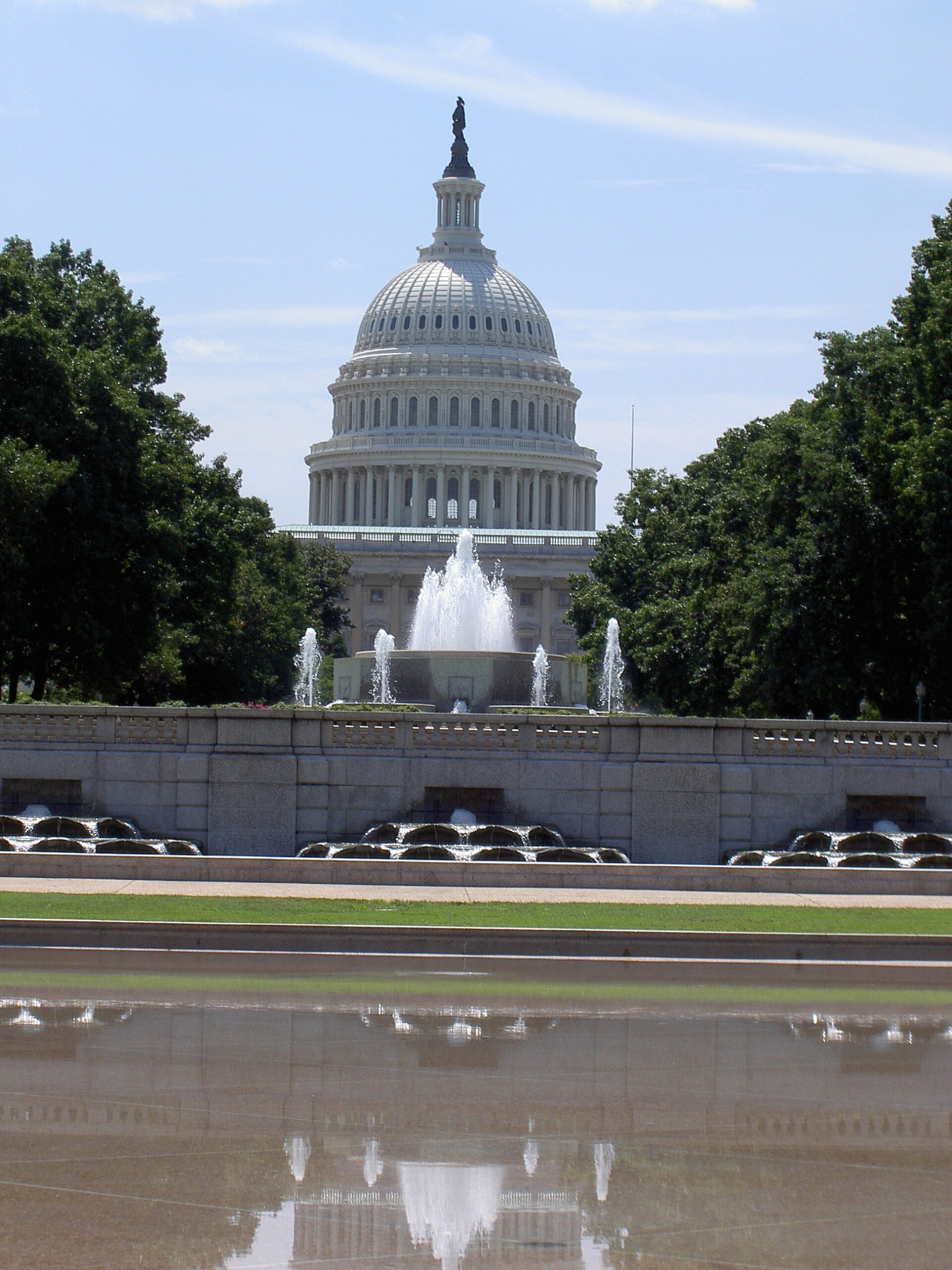
Photo of the US Capitol Building with the fountain in the foreground

Just when you thought climate had gone the way of partisan hot-buttons like guns and taxes, a national study released Tuesday by Stanford University shows that Republican candidates could win votes by taking “green” positions on climate change.

Yep. You heard that right. As The Daily Climate (via) Environmental Health News reports, “voters tend to favor political candidates who believe that humans have contributed to global warming and that the nation should take action by switching from fossil fuels to solar and wind power.” (At least as of last November when the survey was conducted.)

The team of researchers at Stanford’s Woods Institute for the Environment found that by taking a “green position” on climate, candidates of either party can gain the votes of some citizens without alienating others.

It’s encouraging to say the least. But these findings should be taken with a grain of salt, especially during primary season when the political calculus involves more than the age-old campaign mantra “50 percent plus one.” Now is the time that candidates must define themselves and differentiate their political personas within the culture of their own parties. Likely with a mind to fire up the base (which happens to be the most ardently anti-science wing of the party), Republicans—at least at the presidential candidate level—are pretty much steering away “from anything suggesting governmental action on climate change.”

Read more

Talking Climate Change

The water cooler talk today for Climate Nerds (and the Climate Coolsters too) is all about Al Gore’s Rolling Stone critique of President Obama’s failure to lead on climate change issues. Here’s the money quote on the singular agenda-setting power of the American president:

Yet without presidential leadership that focuses intensely on making the public aware of the reality we face, nothing will change. The real power of any president, as Richard Neustadt wrote, is “the power to persuade.” Yet President Obama has never presented to the American people the magnitude of the climate crisis. He has simply not made the case for action. He has not defended the science against the ongoing, withering and dishonest attacks. Nor has he provided a presidential venue for the scientific community — including our own National Academy — to bring the reality of the science before the public.

The point is that the public needs strong leadership on global warming. Otherwise we’re left confused and preoccupied with other pressing concerns. But it also brings up a long-standing question about whether more information is what Americans really actually need to get on board with climate action—in word and in deed.

Read more

To Drill or Not to Drill is Not the *Only* Question, II

fracking oil gas depreciation

A while back I wrote about how public opinion data are informed in great part by how survey questions are framed. Nothing shocking there. I used the American public’s increasing support for offshore drilling as an example. It turned out that when poll questions offered a choice between drilling and more investment in alternative energy, alternative energy came out ahead—by a mile.

But lots of polls don’t give respondents a full range of options, or alternatively, only some of the research findings are reported, so it winds up looking like drilling is all they want (because that’s all anyone asked them about or that’s the “juicy” headline). The pitfall is that the rosy numbers for drilling can be cherry-picked by the “Drill, Baby, Drill” folks lurking at the gates of ANWR.

Read more

Attitudes on Climate: Steady and Somewhat Sure

Here are highlights from the latest Six Americas research conducted by the Yale Project on Climate Change Communication and George Mason University Center for Climate Change Communication. The survey was in the field in late April and early May 2011 and the takeaway is that opinion is basically holding steady, even as media coverage of the issue is down and as we limp through the recession.

To me, with a few glaring exceptions, it seems like a fairly healthy baseline of belief in the problem (of course I hold expectations in check to keep my sanity).

Of course the glaring exceptions hit right where it counts–notably, that Americans have bought into the disinformation that there is “a lot of disagreement among scientists” about human-caused global warming. Additionally, while 43 percent say they’re “somewhat worried” about global warming, a paltry 9 percent says they’re “very worried.”

Also troubling, though not necessarily surprising, is that only five percent said that they agree that “humans can reduce global warming, and we are going to do so successfully,” while 41 percent (a plurality) said they believe “humans could reduce global warming, but it’s unclear at this point whether we will do what’s needed” and a full quarter said “we could reduce global warming, but people aren’t willing to change their behavior, so we’re not going to.”

Read more

×