










Research by Topic

Climate & Energy

Northwest Fossil Fuel Exports

fossil-fuels-050913

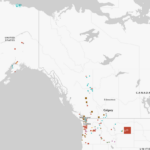
Across British Columbia, Oregon, and Washington, there are active proposals for seven new or expanded coal terminals, three oil pipelines, and six new natural gas pipelines. The projects are distinct, but they can be denominated in a common currency: the tons of carbon dioxide emitted if the fossil fuels were burned. Taken together, these projects would be capable of delivering enough fuel to release an additional 761 million metric tons of carbon dioxide into the atmosphere each year, equivalent to seven Keystone XL pipelines. The Northwest enjoys a reputation for leadership in clean energy and environmental policy. Yet the new … read more »

WA Extracted Fuel Tax Loophole Factsheet

For nearly six decades, Washington State has given away hundreds of millions of dollars in tax revenue through an “accidental” loophole with no clear public policy objective. Giving away millions to the state’s oil industry every year is hard to understand. At a time when the state is facing budget shortfalls and is trying to cut emissions, subsidizing Big Oil simply doesn’t add up. It’s for the legislature to decide whether we’ll close this loophole to help shore up the state budget or continue this hidden handout to oil companies. Read the factsheet here: .

Planned Northwest Coal Exports Would Not “Just Go to Canada”

A compilation of the coal industry’s leading thinkers explaining why the industry must have new coal ports in the Pacific Northwest. read more »

Ambre Energy: Caveat Investor

Ambre Energy Revenue, Expenses 2006-12

Would-be coal exporter Ambre Energy faces mounting financial, regulatory and other challenges that make it highly unlikely that the company will deliver on its promises. read more »

Chart: Union Share of Coal Jobs 2007-2010

Coal Mining Employment Union and Non Trend

Modern-day coal mining is highly mechanized and it employs relatively few workers, many of them non-union. In the Powder River Basin—home to the coal planned for export to Asia via the Northwest—coal miners are overwhelmingly non-unionized, and even less so in recent years. view graphic »

Chart: Union and Non-Union Shares of Coal Jobs

Coal Mining Employment Union and Non

Modern-day coal mining is highly mechanized and it employs relatively few workers, many of them non-union. In the Powder River Basin—home to the coal planned for export to Asia via the Northwest—coal miners are overwhelmingly non-unionized. view graphic »

Chart: Jobs Per $1 Million of Investment

Jobs Per 1M Investment

Modern-day coal mining is highly mechanized and it employs relatively few workers, many of them non-union. Economists at the University of Massachusetts’ Political Economy and Research Institute have shown it’s hard to make a worse jobs investment than coal. Sightline Institute converted the data to a viewer-friendly graph. view graphic »

Infographic: Visualizing 48 Million Tons of Coal

Visualize 48M Tons of Coal

The 48 million tons of coal slated to come through Seattle annually would make a pile 1/2 mile in diameter and ten feet taller than the Columbia Center. view graphic »

Carbon Tax Fact Sheet

A carbon tax would levy a charge on the CO2 emissions from fossil fuels purchased for combustion in the state, as well as on the carbon content of electricity imported from other states. In Washington, a carbon tax of $30 per ton of CO2 would net an estimated $2.3 billion each year. The proceeds could be used to reduce taxes on families and businesses, or to provide funding for transportation, clean energy technology, or public education. read more »

US Coal Exports and Uncertainty in Asian Markets

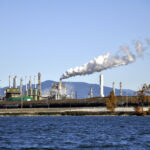
Photo by Daniel Dancer, used with permission.

With US demand for coal plummeting, coal companies are looking to Asia to shore up sagging sales at home. Since 2011, several groups have launched ambitious plans to mine low-grade coal from Montana and Wyoming’s Power River Basin and transport it by rail to ports in Oregon and Washington, where it will be shipped to overseas markets—particularly China. At full capacity, the proposed projects would send 140 million tons annually. The coal industry claims that Asia offers lucrative coal markets. Yet much of the available evidence is cautionary at best. Sightline’s memo, “US Coal Exports and Uncertainty in Asian Markets,” … read more »