
Document Actions
Document Actions

Wildlife Indicator - Chinook Salmon

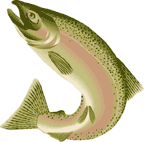
No creature, beside humans, penetrates the Pacific Northwest as thoroughly as salmon. The wildlife index tracks Chinook salmon returning as adults to the Bonneville Dam, the lowest dam on the Columbia River.

SalmonNo creature, beside humans, penetrates the Pacific Northwest as thoroughly as salmon. The wildlife index tracks Chinook salmon returning as adults to the Bonneville Dam, the lowest dam on the Columbia River. These mighty fish are a good indicator for the Northwest's once-prolific salmon runs and for the health of the vast river system that binds British Columbia, Washington, Oregon, and Idaho. Salmon chart

Geographic range: Salmon are located throughout Cascadia. The Columbia Chinook are the largest and most prolific salmon in the region's biggest and most extensive river system.

What salmon tell us: Because of salmon's ubiquity, they are probably the best biological indicator of ecological health in the Northwest.
Changes in their populations can indicate any number of a long list of man-made and natural activities, including--to name a few--hydroelectric dams, irrigation, cattle ranching, clearcutting, suburban sprawl and development, industrial waste, global warming, and stormwater management.

How they're doing: The Chinook salmon report card is mixed.

  • Yearly variation: First, it's difficult to get an accurate measurements of long-term trends in salmon population, because annual population counts can vary by huge margins. Returning Chinook at the Bonneville Dam--the lowest dam on the Columbia--vary by an average of 38 percent a year.
  • Only a fraction of historical abundance: Today on the Columbia, salmon return in only a fraction--perhaps 5 percent--of their historic abundance. And because most salmon on the Columbia today are hatchery-raised fish, the true picture of salmon is even less rosy. Wild Chinook may only now be 1 percent of their historic numbers.

What to do: Key reforms for protecting salmon include reducing pollution runoff into the Columbia and its tributaries; getting more accurate measurements of salmon health through methods such as biomonitoring; and removing dams such as those on the lower Snake River. Reducing reliance on hydropower, by shifting to alternative energy sources and conservation, also frees up more water for salmon to migrate past dams.

You can also volunteer for the many fine efforts to restore Northwest salmon and their habitat (see resources below).

Check the wildlife section of the blog for more on salmon. 

More resources

"The Same River Twice"
Tidepool article series on Columbia salmon

Save Our Wild Salmon

Long Live the Kings

Shared Strategy for Puget Sound
New salmon recovery plan

People for Puget Sound

Pacific Salmon Foundation

send feedback or bugs about sightline.org to ask_us@sightline.org
site credits | premium content icon = premium content; free registration required
Updates by Email
News and tools you need to make a difference
Now On the Blog
In the News: Rewriting History
When good news transcends positive spin.
Jennifer Langston 06/22/2009
The Wolves of Olympic National Park
What an 80 year absence means to Olympic rivers.
Eric de Place 10/10/2008
I Can See Clearcuts Now
Google knows what you're doing.
Eric de Place 09/02/2008