

With a toddler at home who eats like a fruit bat, each trip to the grocery store involves mental calculus of produce prices, my bank account balance, and how many different vitamins her diet ought to include. So I found a new USDA report full of data on fruit and vegetable prices oddly riveting.
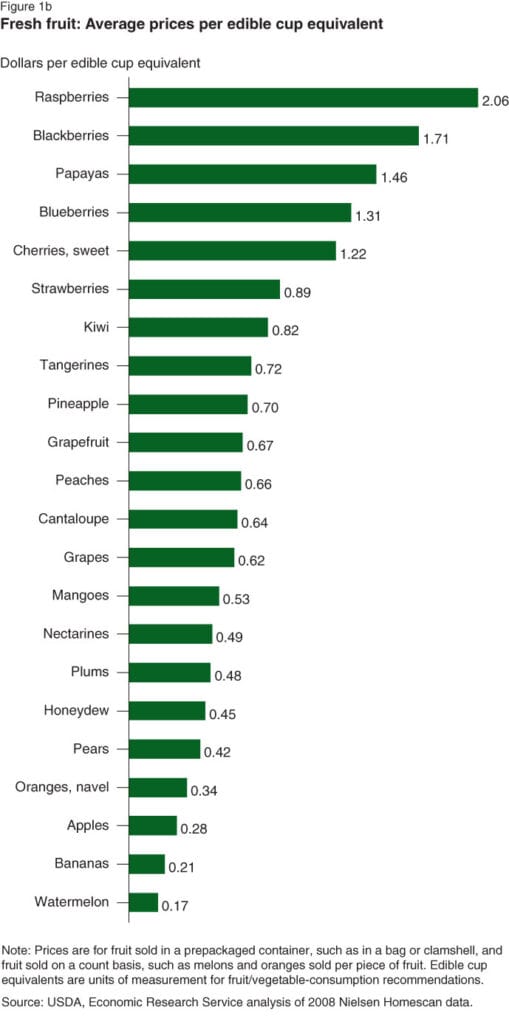
Rather than comparing prices per pound, the report looks at the equivalent costs of a single serving of apples vs. broccoli vs. carrots. That’s basically enough food to fill a measuring cup (after you discard the stems and thick peels and things most people pay for but don’t eat). Here’s how the fruits stacked up:
And here’s how the cooked vegetables fared (there’s a separate chart for raw):
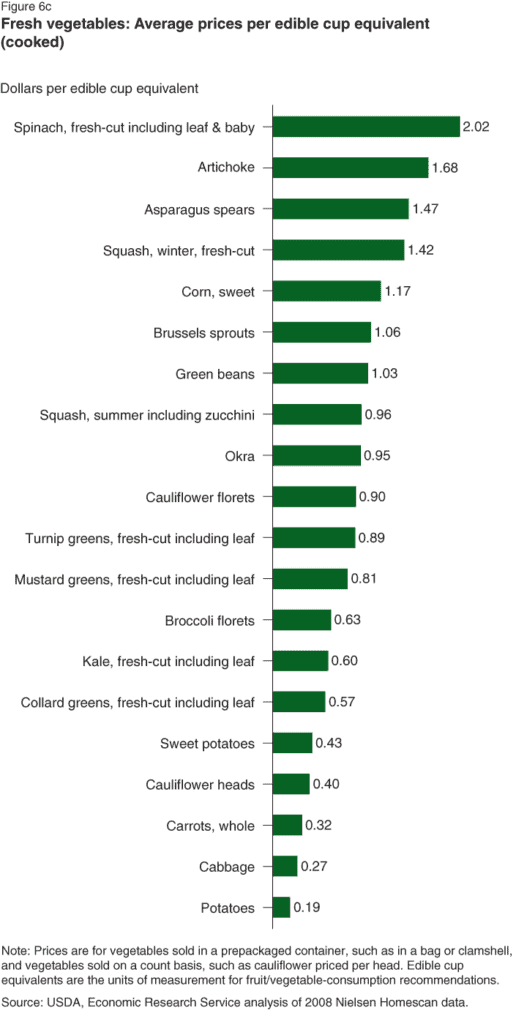
But these charts seemed to be missing something important. It doesn’t really seem smart to start loading my kid up on potatoes instead of spinach just because it’s cheaper by the cup. So this made me wonder which foods packed the biggest nutritional wallop for my nickel.
I’m not exactly sold on the Aggregate Nutrient Density Index (ANDI) scores that groceries like Whole Foods are using to tell customers which foods have the most nutrients per calorie. It seems wierdly proprietary and makes fatty foods like avocado probably look worse than they are. On the other hand, anything that tells people to eat more dark leafy greens probably isn’t all that wrong. So I used the scores anyway to get a ballpark idea of which fruits and vegetables were cheap and full of nutrition.
A few caveats here—the USDA prices are national averages, and I couldn’t tell whether the samples included conventional or organic items or both. Because I wasn’t willing to sign up online to get ANDI scores for every fruit and vegetable, I just compared the ones that were easiest to find. Then I divided each item’s ANDI score by the price-per-cup to reach the following conclusions about good choices for people who want lots of nutrients for little cash.
On the veggie side, the winner was… cabbage! It costs 27 cents per cup and is loaded with vitamins K and C—plus dietary fiber, manganese, vitamin B6, folate, thiamin, riboflavin, calcium, potassium, vitamin A, tryptophan, protein, and magnesium. My grocery bill would also apparently be lower if my daughter would learn to love collard greens, kale, spinach, carrots, cauliflower, and brussel sprouts. The fruits on the list that packed the most nutrients per penny were plums, oranges, apples, strawberries, cantaloupe, and bananas.
Because of our screwed-up food system and perverse incentives, food prices aren’t necessarily the best way to gauge what we ought to be eating. But I’m also pretty happy to shave a few dollars off my grocery bill when I can.
Update: For more complete rankings, Sightline’s Eric Hess tracked down more ANDI scores and made handy charts of the highest nutrition/least cost produce here.

Interesting analysis, but where are tomatoes?
Great post! I also looked at Eric Hess’s charts for fruits and veggies with the highest nutrition/least cost, and was cheered to think I’ve found ways to make the top picks palatable for my pretty picky three-year-old son. I’m happy to share my tips here.
Watermelon: Buy lots in season, cube and seed the sweet flesh, and freeze in a single layer. Then pack in quart containers and enjoy the frozen cubes for months after. My son loves frozen fruit, and frozen watermelon has a wonderful texture. A great snack for adults, too.
Cabbage: Green cabbage is not a hit, but somehow raw red cabbage sliced very thinly and nicknamed “cabbage noodles” is. I serve a little pile of these “noodles” as a side dish to almost any meal. He eats them with his fingers.
Good luck and happy, healthy eating!