


The venerable Todd Litman had an interesting piece in Planetizen earlier this week, comparing gas prices with wage trends—and he found, not surprisingly, that an hour of work buys a lot less gas these days than it used to.
Here’s a chart to illustrate the recent trends…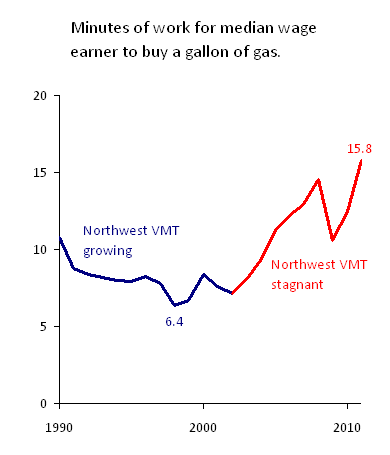 Back in 1998, it took a median wage-earner just over 6 minutes to buy a gallon of gas. In 2011, the time to buy a gallon had increased to nearly 16 minutes. Those figures combine two separate trends: the rising cost of gasoline at the pump, and the long-term stagnation and (recent declines) in real median wages.
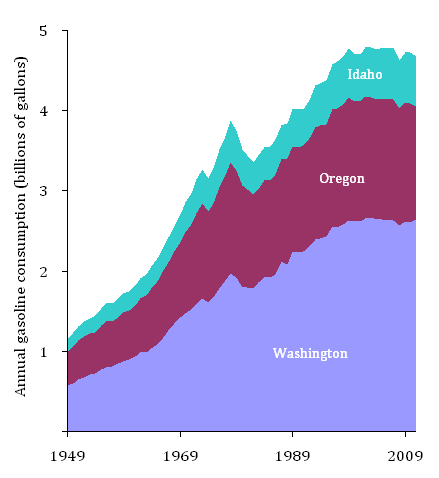
Apparently the combination has been enough to affect people’s relationship with their cars. As we reported earlier in the year, total miles logged on Northwest roads has barely budged since about 2002, and total gasoline consumption flatlined in the late 1990s. In fact, the most recent federal and state data confirm the trends we reported earlier in the year: with this year’s high gas prices, total fuel consumption in 2011 was actually a hair lower than it was in 1998.
 For me, the most important takeaway from the numbers is simple: drivers are responding to high prices by changing their behavior. For years, transportation planners assumed that higher gas prices would have little effect on how much people would drive. But it appears that the relationship between gas and income are powerful determinants of our appetite for driving.


I find myself doing more ordering from free delivery online merchants lately. Why spend an hour of driving around and using gas when I can order it in 2 minutes and it can be at my house within two days? In some markets, Amazon can delivery items same day for “just” $3.99.
Clark is illustrating Economics 101: When the price of something goes up, people buy less of it. The rising cost of gasoline is likely the most important reason people are driving less these days across America.
Another point — the stacked chart in the article shows declining fuel consumption in Washington State clearly enough but obscures the degree to which the same is happening in Oregon and Idaho.
Previous to the economic downturn, people paid little attention
to the cost of driving a car. But when it takes big bucks to fill the tank people notice. No longer do I drive jut to fill up the tank but I plan my shopping so that I can make several stops
while on the way to the station. I pool rides whenever I can.
If I could stand and wait at a bus stop I would do so but I can’t stand very long at any one time and I can’t walk uphill after getting off the bus downtown so I rarely go into the city anymore.
Luckily our little part of Seattle is almost self sufficient with shopping and entertainment events and such handy to my home.
This Christmas our family is exchanging White Elephants as they are called instead of buying more things so we don’t have to go out shopping. We save the gift bags from year to year so don’t have to buy any.
Life is becoming much less hectic.
Cheers, Georgie