

We’re putting together a new series about the many ways that parking regulations and mandates can affect the way that cities look, work, and feel. But first we need your help! All too often, zoning codes force developers to cram a site with extra parking, leading to urban and suburban spaces that work for cars but not for human beings. Some of the results are downright eyesores—and we want to compile a photo essay with the most outrageous examples!
So please send us your photos of buildings—single-family houses, apartments, and commercial construction—where cars seem more important than the people inside. Don’t have a camera? You can also leave a comment below suggesting locations for us to look.
Need some examples?
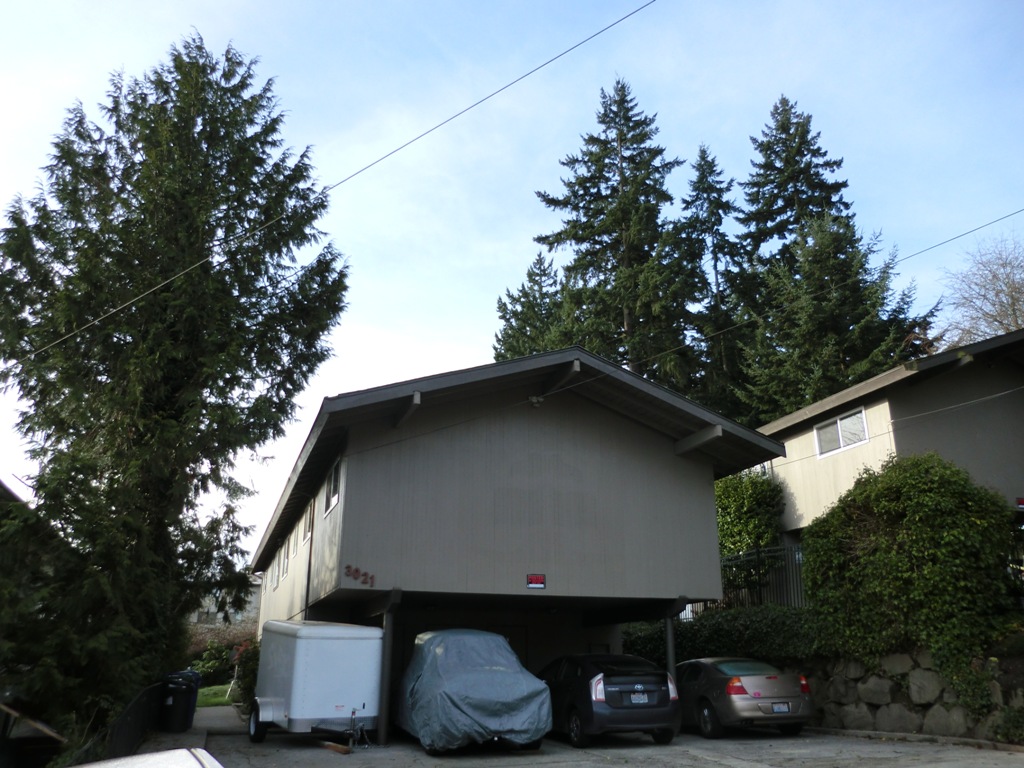
Or how about this one?
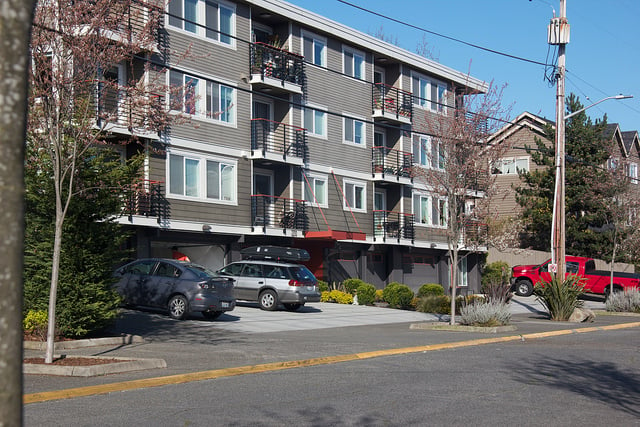
Here’s another.
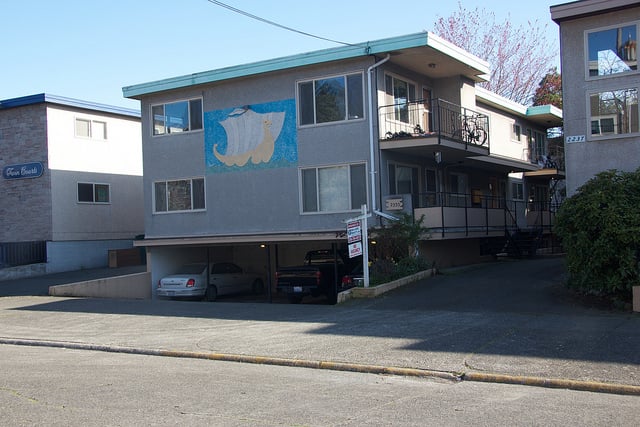
And one last example:

We’re looking for those unfortunate car-centric buildings—but not just houses, also apartment buildings, garages, and shopping centers—you name it—that result from cities’ parking requirements. There is probably a building (or many) in your community begging for our attention!
Send your submissions in to Serena Larkin, serena@sightline.org. You can also post them to Sightline’s Community Photopool at Flickr: https://secure.flickr.com/groups/sightlinecommunity/. Make sure to note the photo’s location in your caption as well as any photo credit you’d like us to include.

Maybe I missed something here, but isn’t our obsession for the SOV the problem here? I’d be more willing to consider parking space regulations if these parking spots were empty, but the only ones that are questionable are the McMansion car warts.
I suspect the issue being highlighted here is that a city or neighborhood that always presents a parking lot or garage does not encourage walkability or general friendliness. In these examples, it’s clear where your car belongs, but where is a human supposed to go? We can’t even see an entryway, or in the case of the duplex(?) the human entry is an afterthought, and certainly will never encourage casual interaction among neighbors (and the many social and safety benefits those interactions provide). The problem lies partly with jurisdictional parking requirements, but at least as much with lazy design, and/or an unwillingness or inability to pay for a human-centric alternative street face which meets parking requirements.
The 1st and 3rd photo are old buildings that were built before the trend towards pedestrian-centric designs. The 2nd photo has a pretty clear entryway, it’s red in the middle of the photo. The 4th photo is really the only one of the four that belongs in this collection.
I used to live in that building in the second photo, and I can tell you that the parking there is not due to some mandate by the city. It was built to satisfy tenant demand and make the apartment more appealing to live in. In addition to those garages, there was a parking lot in the back. There are less parking spaces than apartment units, so the property manager leases out the spaces for a fee (garages go for a higher fee). The zoning code at that property already waives any requirement for parking. Check out a new website King County recently put together at https://www.rightsizeparking.org/ which provides good estimates of how much parking is demanded by tenants. As long as zoning codes stay below the amount of parking indicated by this map, there is no problem.
Also, garages are typically facing the street because cars come from the street. It is just easier to park the car in the garage when you can go in and out of it straight from the street. Everyone I know with one of those town-homes with garages all facing each other in a shared driveway don’t actually park there cars in the garage because its just too difficult. So instead, they park their cars on the street or in front of the garage, which ends up being a waste of space. A street-facing parking stall is often the most efficient way to get a small amount of parking on a site when it isn’t feasible to build an underground garage.
I think the parking laws are more impactful when it comes to downtown districts and businesses are required to have certain amounts of parking even if half of it sits empty all day. This makes communities less walkable, especially when the parking is up front instead of out of sight behind the building. Let’s see some of these examples.