


In the US—and in Cascadia, people are talking about the latest Republican tax reform proposal. From all quarters, from supporters and critics alike, you’ll hear the usual anti-tax narratives that seem to be baked in to the American psyche. Even as some of us defend taxes, we find ourselves stuck in default vocabulary and storylines that trash them.
But we can train ourselves to communicate about the value and function of taxes in better ways. To that end, here’s a recap of our series of tax talking points, and articles highlighting bad habits we should break and ways to trigger more productive thinking about how we all contribute to our communities.
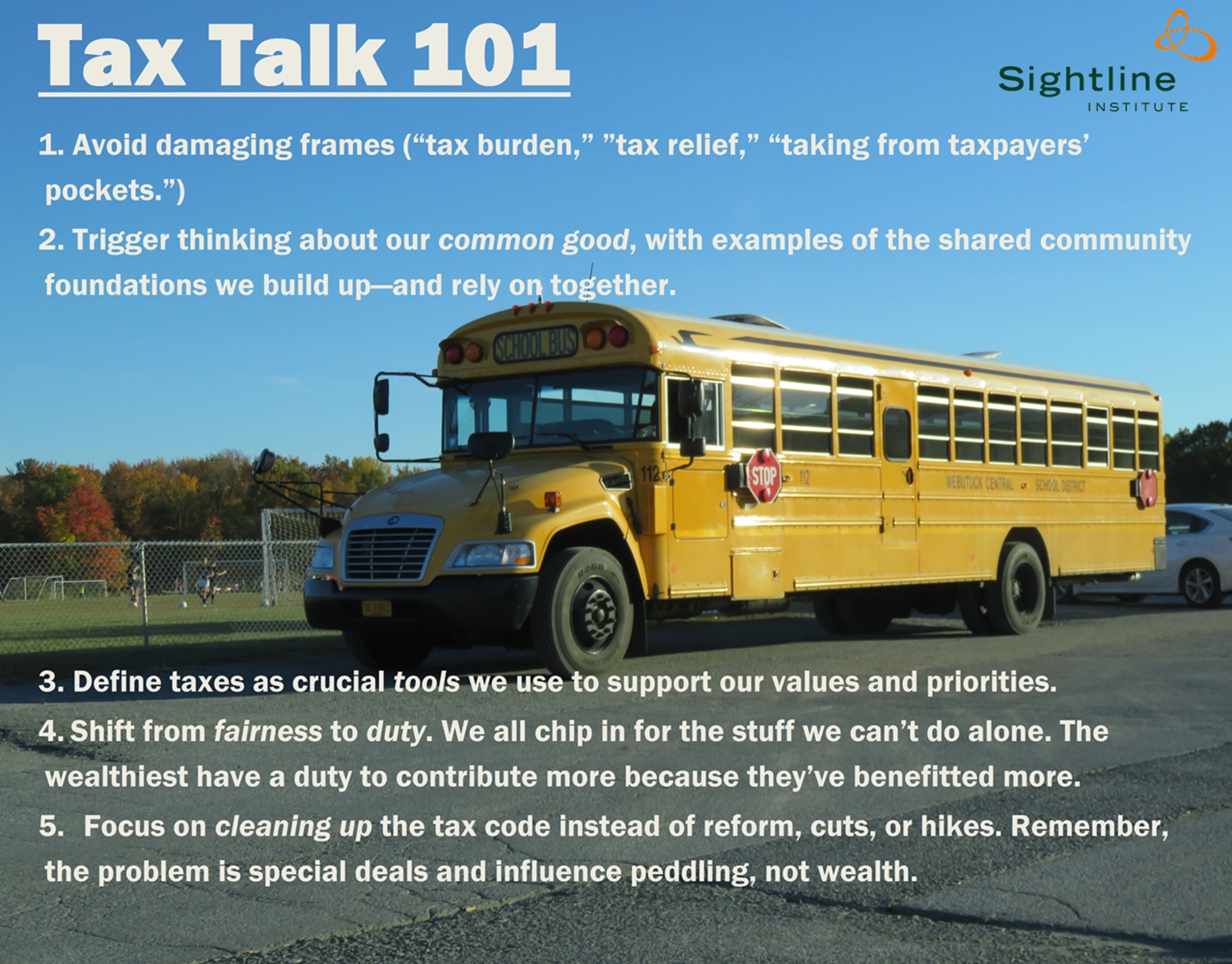
- The first rule, of course, is to avoid the most damaging frames—the ones so pervasive they really do roll off the tongue: “tax burden,” “tax relief,” “spending taxpayers’ dollars,” and “out of taxpayers’ pockets.” All of these familiar refrains reinforce taxes as bad along with individualistic, consumerist, and defensive thinking.
- Instead we should start with a “common good” frame—we’re in this together, we contribute together so we can all thrive. We can shift people away from short-term, consumerist thinking with language that triggers broadly held principles of collective responsibility and shared community benefits.
- We should define taxes as important tools that support our values and priorities. Say it loud and proud because people forget: Taxes are how we get things done together; the stuff that no one can do alone. The stuff that makes us all stronger. It’s how we set and invest in important shared priorities, how we plan for and build a secure, prosperous future. And don’t forget to give some concrete, familiar, and beloved examples to jog people’s memory about how we all benefit: excellent schools, first responders, clean water, transit, parks, and libraries. Taxes keep us going with roads, bridges, help in a disaster, medical research, protections for health, safety, and environment. In short: lots of things we need but that we often take for granted.
- Talking about fairness is also a dead end. People have wildly varying definitions of what’s fair. There’s also a pervasive tendency to conflate fairness with simplicity. The perception is that the most “fair” system is a flat tax—everyone pays the same. So we gravitate toward a regressive model despite near universal embrace of the principle that that rich people and wealthy corporations should bear greater burdens in the tax system. So, we should shift away from fairness to duty. It’s patriotic to contribute to your community and country (it’s unpatriotic not to). As Jill Lepore puts it, taxes are what we all contribute for civilized society, for modernity, and for prosperity; the wealthy have a duty to contribute more because they have benefited more.
- When we talk about reform, it’s good to focus on cleaning up our tax code rather than all this talk about cuts or hikes. Loopholes and special deals drain public investments. Cleaning up unlocks resources, holds those at the top accountable for special deals and influence-peddling. This helps shift blame from government (another pernicious default). Plus, it’s good to point out that manipulation is what we dislike, not wealth. It’s okay to be rich. It’s wrong for powerful special interests to get away with cutting special deals and influence peddling to serve themselves.
Research and tips from: FrameWorks Institute, Topos, Fuse, All In Washington, and Public Works.

