
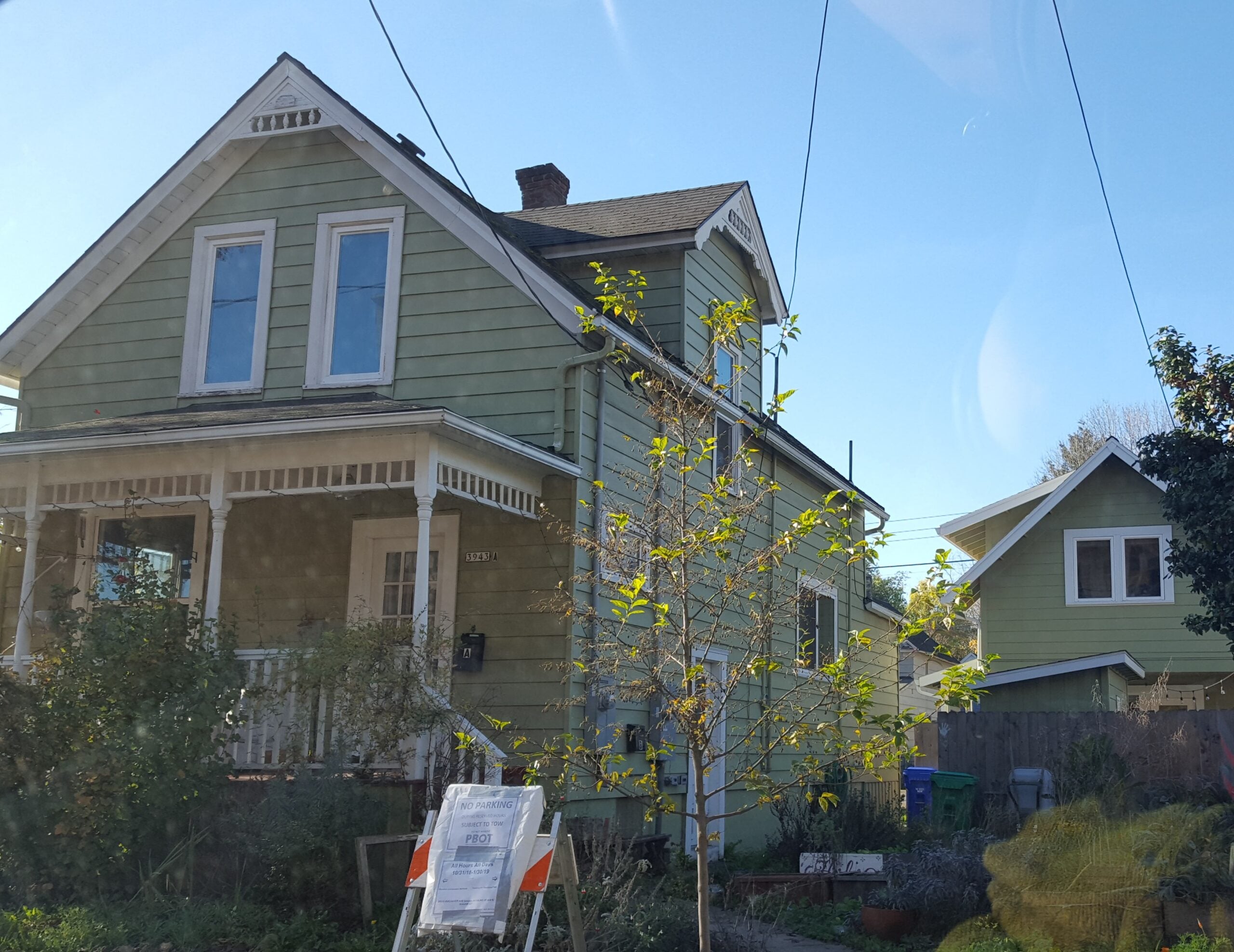



Mother-in-Laws do matter! But we’re not talking about our spouses’ moms. (Hi, Linda!) We’re talking about apartments over garages, daylight basement suites, and backyard cottages. This kind of home can be a great living solution for renters and owners alike—with benefits for the whole community too.
READ MORE: ADU Parking Quotas Are Climate Killers
A key tool to keep rents and home prices under control in cities big and small is to change rules that prevent all but the largest, most expensive homes. Giving owners more freedom to create accessory dwelling units—granny flats, laneway houses, mother-in-law apartments—in centrally-located neighborhoods gives flexibility for all kinds of households and all stages of life. An ADU might make it possible to stay in your home and age in community. You might be able to help out a family member. Or maybe you could use some income from a small rental. On the flip side, you might be a renter who cuts costs and commute time by finding a modest, affordable ADU home near work, school, or good transit.
An ADU opportunity in Washington state
Washington state legislators are sponsoring a bill (HB 1797/SB 5812) that could unleash the affordability and sustainability benefits of ADUs across the state. In cities of 2,500 people or more, and within urban growth areas, the bill would permit two ADUs wherever there is a single, detached house, duplex, triplex, or townhome. It would eliminate off-street parking, owner-occupancy, and minimum lot size requirements. It would cap impact fees, reduce burdensome utility connection fees and capacity charges, and give more flexibility in design and placement. In short, it would be easier and cheaper to add this kind of home to the mix in most neighborhoods.
Tips for talking up the many community benefits of ADUs
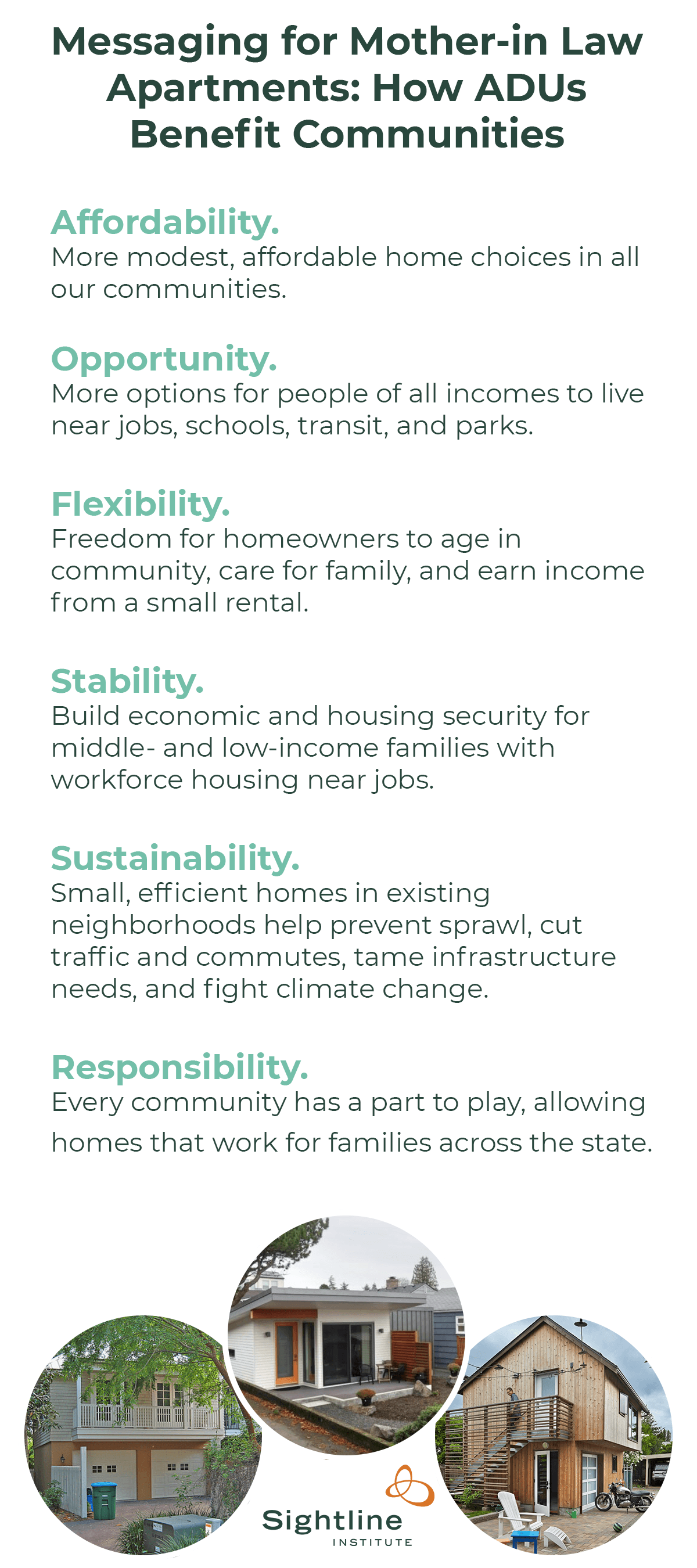
Small apartments in existing neighborhoods—often in existing homes or structures—offer multiple benefits. Here’s our guide for communicating about this low-impact, common-sense affordability solution. You can find the whole guide here. Here’s our cheat sheet:


First, NEVER use language like ADUs without at least once saying “Accessory Dwelling Units” (https://www.buildinganadu.com/what-is-an-adu/). This is particularly critical in articles about aging, since relatively few seniors are comfortable with initials.
Perhaps more important, however, is to not ignore multi-unit housing, or converting housing to include more than one family unit. Unlike you in the Northwest, we in the Northeast often have two and three family buildings in family ownership, and one of those units – usually on the ground floor, and often with fewer rooms – is for grandparents, who, in days gone by, were the owners of these multi-generational homes. Caregiving was a part of maturation, and building family was the purpose of home.
Finally, promoting ADUs without attending to density, transit, and neighborhood design and open space is merely justifying greed is good as a mantra for ownership, which is perhaps the most destructive pattern of contemporary American urbanism. Cross-generational housing is powerful for all generations participating, but hiding out in a former garage is shaming the victim.
The City of Bellingham has We changed many of our zoning regulations around ADU to support density and equity in our neighborhoods. I believe we all need to head this direction.