
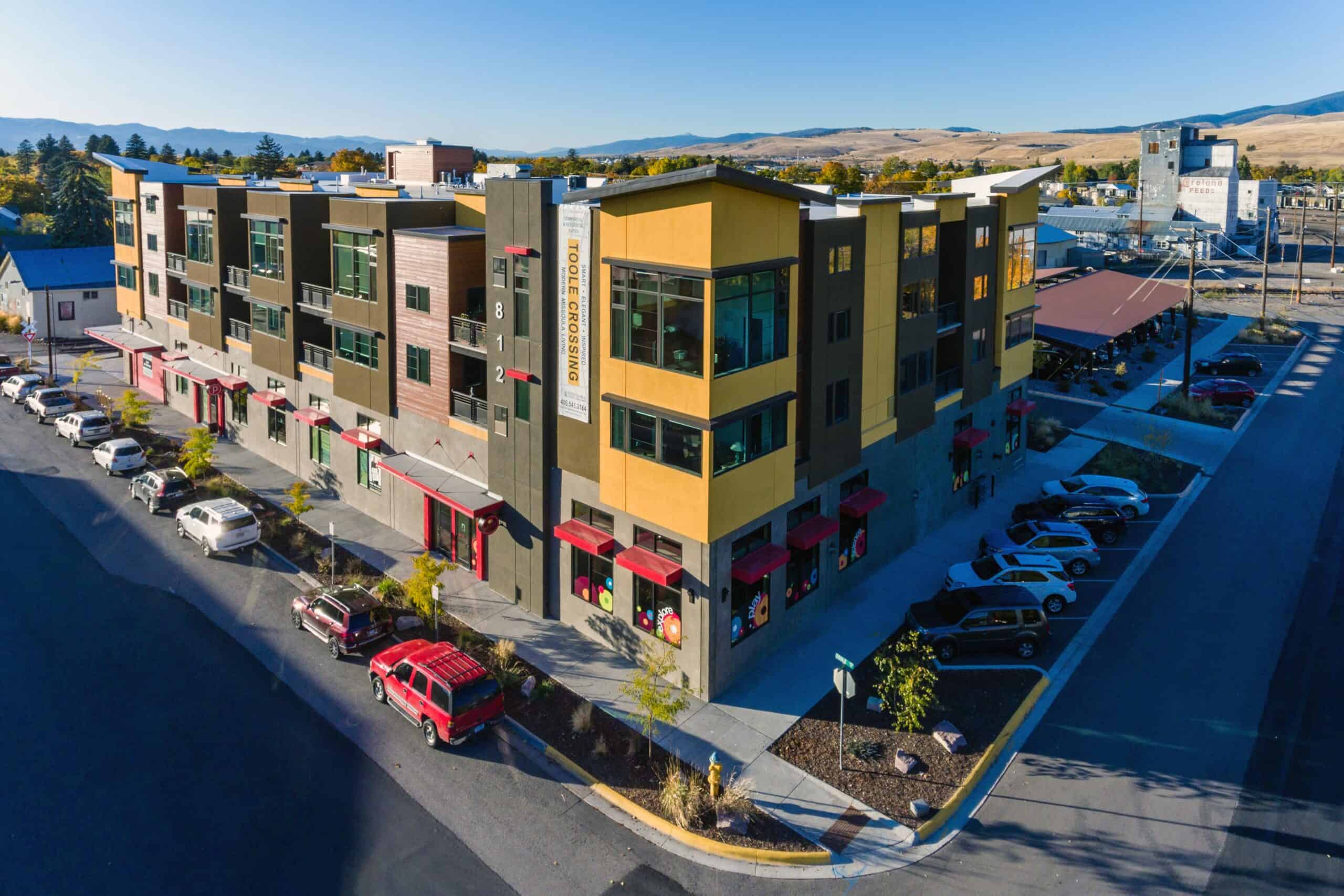

On a cold February night in Missoula, Montana, the City Council chambers hummed with energy. After three years of community meetings, draft revisions, and hours of public testimony, council members voted to approve the city’s new Unified Development Code—a sweeping rewrite of the rules governing how the city grows. “This code puts more homes in more places distributed across our neighborhoods,” Mayor Andrea Davis stated before the final vote, “and it puts in place clear rules that reduce costs and uncertainty.”
Missoula’s new code goes further, arguably, than any other similarly sized US city: It allows multi-family housing in all neighborhoods. It removes caps on the density of homes in most areas. It eliminates requirements for off-street parking everywhere. Most remarkably, small-scale mixed-use developments, like restaurants and shops with apartments above, are now legal on every parcel in the city.
Altogether, the changes steer Missoula toward a future where locals and newcomers alike can hope to build their lives.
A boomtown’s tipping point
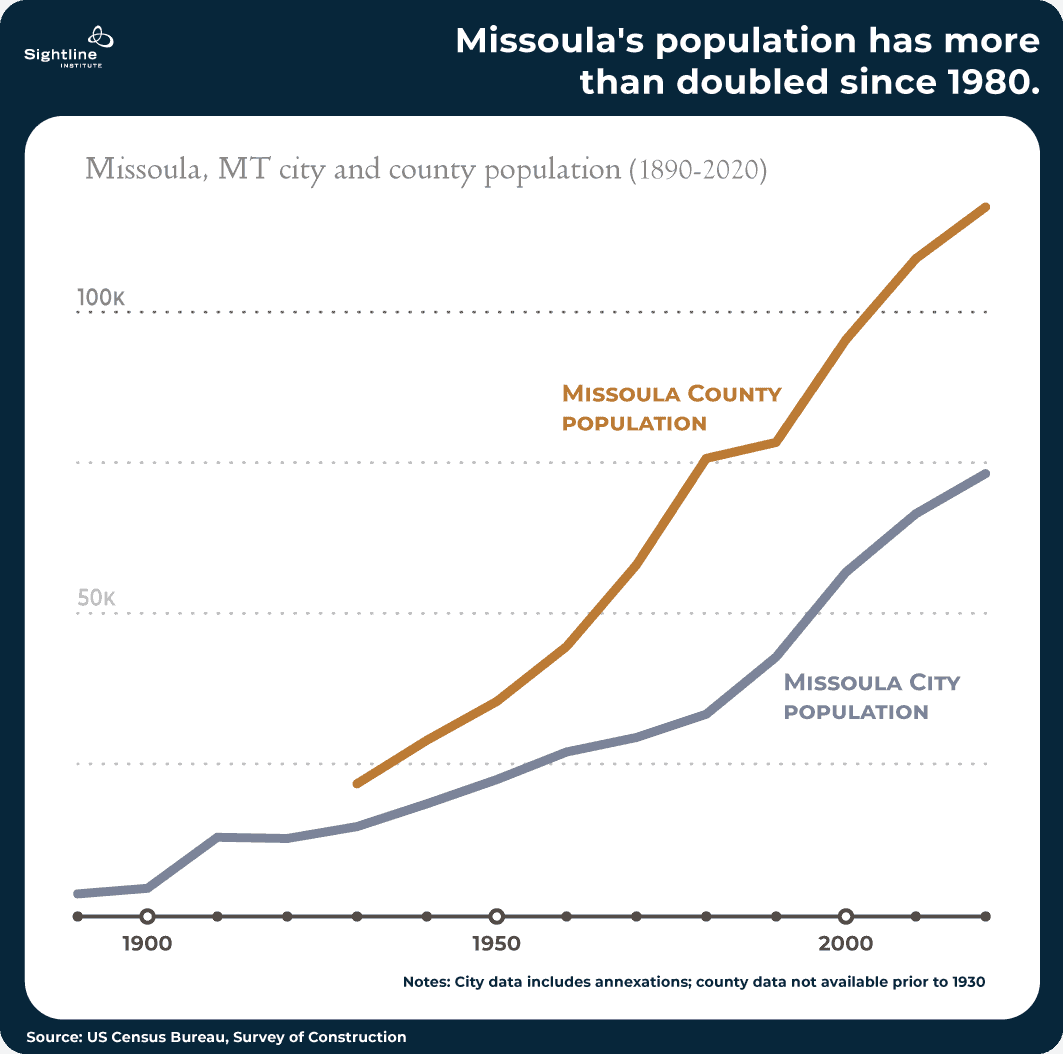
Missoula’s backstory is alike to many Western cities’. The college town is a magnet for outdoor enthusiasts of pretty much every stripe (even surfers). Decades of decline in the timber industry coincided with steady growth in the tourism, medical, and tech sectors. Then COVID hit. The pandemic saw a surge of newly remote workers, many who grew up in Montana but moved to bigger cities for work, return home for a higher quality of life. The pandemic also saw rapid growth in retiree relocation, including many who saw the Big Sky State as an ideal summer destination. These trends led to a sustained boom in housing demand, with not nearly enough construction of new homes to meet it.
Missoula’s old zoning code, written decades ago, was a major problem. Large swaths of low-density restrictions, suburban-style setback requirements, and ornate design requirements made it hard for homebuilding to pencil out. While the city’s population grew steadily year after year, these rules slowed housing construction to a trickle. The City’s own analysis showed annual production was about a third of what it needed to maintain a reasonable vacancy rate and keep prices under control, forcing middle- and working-class residents to leave for more welcoming cities.
Initial attempts at reform were small and mostly went nowhere. A 2012 proposal to expand where ADUs were allowed passed after a contentious multi-year battle, but restrictions added along the way meant only a handful of ADU homes were ever created. A few years later, the City updated its growth plan, ostensibly to begin addressing its housing shortage, but then repeatedly tabled efforts to pass a new zoning code to implement that plan.
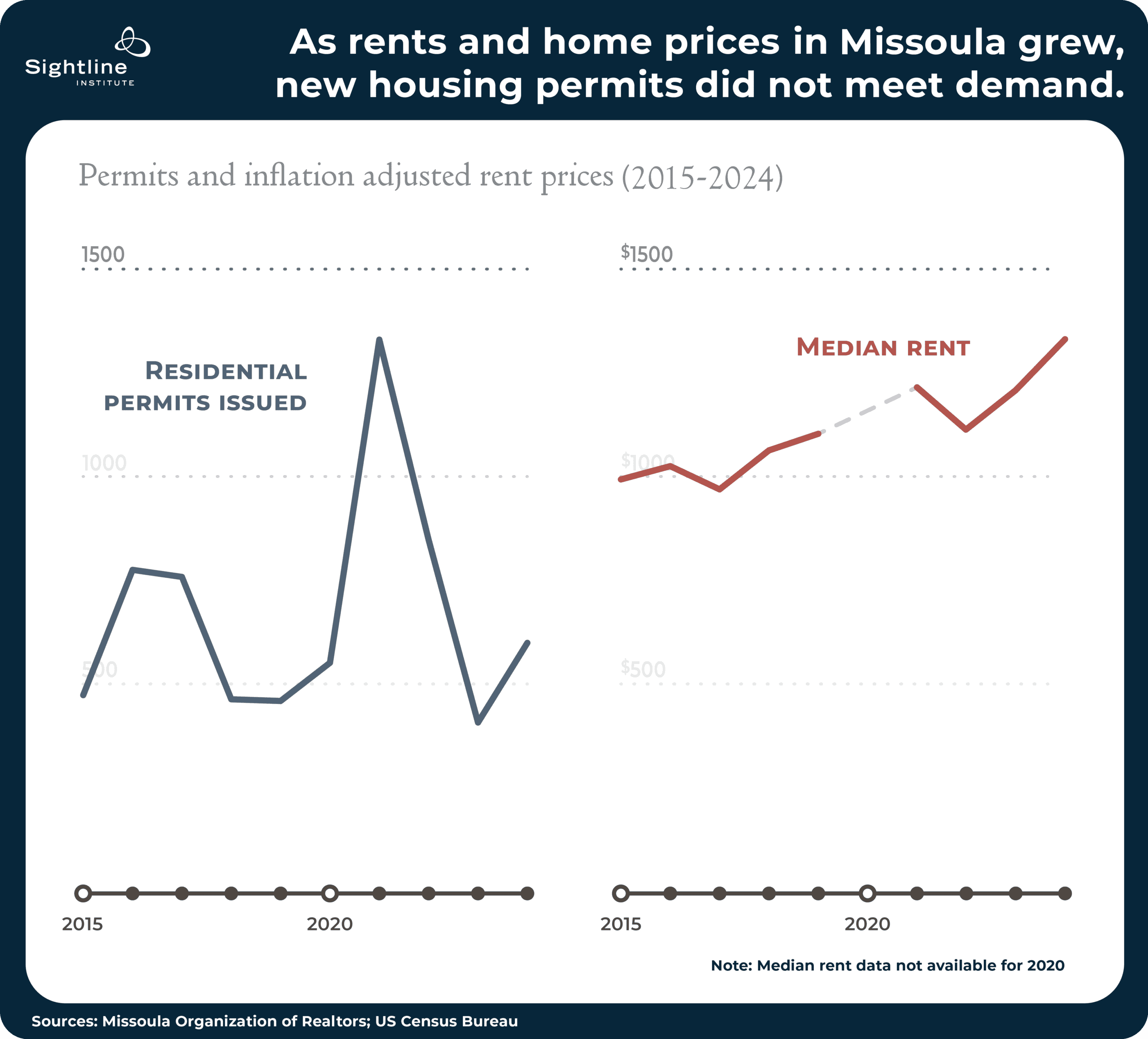
Driven by a sharp uptick in housing costs, state lawmakers began to take notice. In 2023, the legislature passed the Montana Land Use and Planning Act (MLUPA). MLUPA required Montana’s largest cities, including Missoula, to relax zoning regulations to increase infill homebuilding, and to adopt a faster process when reviewing proposed projects. The new state law gave cities a May 2026 deadline to comply. After years of resisting reforms, MLUPA forced Missoula to look forward.
“More homes in more places”—and less wasted, costly asphalt
Missoula’s new rules create room for more homes of all shapes and sizes: ADUs, over-garage mother-in-law units, apartment buildings, small-scale multiplexes and townhomes like those lining some of the city’s oldest (and often best loved) neighborhoods. On most blocks, all of these building types are now legal by right and have no density maximums. Mixed-use districts now have no restrictions on unit count or floor-area ratios that limit the size of buildings. The height limits in mixed-use zones now range from about 4 stories up to 10-12 stories. Nearly all residential neighborhoods now allow 3 stories, and several of the neighborhoods in Missoula’s central area allow 4.
Notably, off-street parking minimums are now a thing of the past, everywhere in the city. In this case, Missoula opted to go further than the state mandates. Representative Katie Zolnikov’s House Bill 492, passed in 2025, already narrowed Missoula’s ability to mandate off-street parking. City Council ultimately decided to eliminate the requirements altogether, a signal that the city understands the deep connection between parking mandates and the cost of housing.
“Our core goals are more homes, more choices, and more resilient, walkable neighborhoods,” City Council President Mike Nugent said prior to the final vote. “And one of the most significant pro-housing, pro-climate reforms we can make is to allow more of a site to be used for homes instead of mandatory asphalt.”

Related: The 4 Big Reasons Why States Should Ditch Parking Mandates | Parking reform unlocks more homes and great neighborhoods, while cutting red tape and excess asphalt, sprawl, and pollution.
The reforms had pushback, of course. Some residents of the Rattlesnake neighborhood, located close to downtown, pushed back on increased building heights, citing concerns about shade cast on nearby solar panels and garden beds. Others, citing Missoula’s “Garden City” nickname, lobbied for increased landscaping requirements to avoid a potential “urban heat island effect.” In response, City Council made small adjustments to a few zones, but for the most part maintained its ambitious new code and map. Organized advocacy throughout the process from volunteer groups like ProHousing Missoula ensured decisionmakers knew they had support from a broad range of locals. Ultimately, the city’s leaders chose growth and abundance and rejected voices calling to delay or reject change.
A mountain town-sized blueprint
What makes Missoula’s overhaul notable isn’t just its innovation—it’s its replicability.
The city isn’t a booming tech hub or a coastal metropolis with armies of planners and lobbyists. It’s a small city with limited staff, a modest budget, and the same political tensions over growth that exist in amenity-rich cities across the country. Missoula-sized cities have largely avoided the housing policy experimentation that has, however haltingly, taken root in Minneapolis, Portland, and Austin. Missoula now offers a template: a code built around clear place types, reduced barriers to density, and a public engagement process that gave the final product legitimacy, even among those who didn’t get everything they wanted.
There is no guarantee the new rules will produce the homes Missoulians need at the pace they need them. Zoning reform is a necessary condition for building enough homes, not a sufficient one. Construction costs have risen, credit is tight, and a culture of “slow growth” does not disappear overnight.
But for a city that spent years watching rents climb while its restrictive housing rules were frozen in place, the February vote was a turning point. The mountains haven’t moved. The rivers still run cold and clear. But Missoula has given itself, finally, permission to grow.

Related: Montana’s Housing Miracle Strikes Twice | Bipartisan efforts won a string of bills for more homes, lower costs, and less red tape for Montanans—with lessons for other states.

