
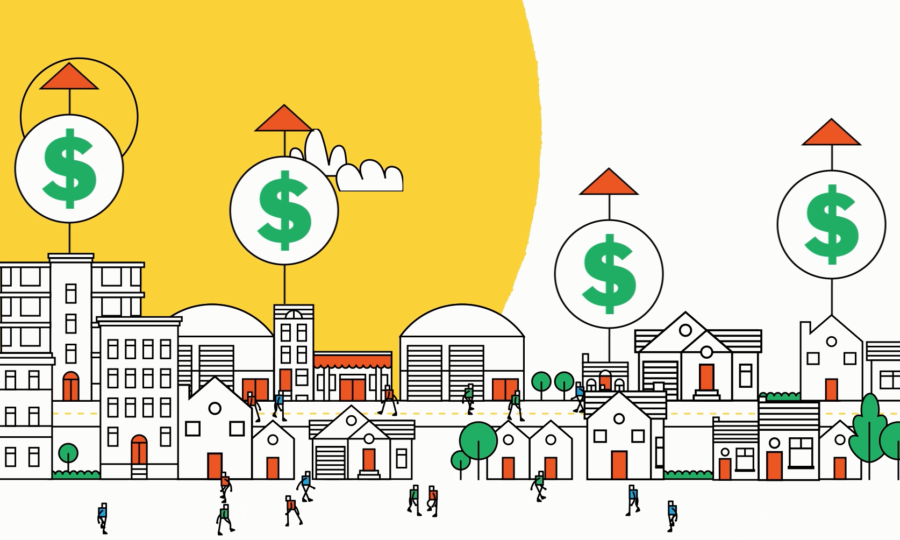

How does a growing, prospering city stay affordable for all kinds of people? At the most basic level, when there aren’t enough homes for all the people who want to live there, prices will keep rising. And when there are plenty of homes, it helps prices stay down. It’s like a huge game of musical chairs. If there aren’t enough chairs when the music stops, someone is left out. When there aren’t enough homes for people who live and work in a city, everybody has to compete for what’s available, and rents go up until people get priced out. In the housing market, instead of being fast, you just need to be rich to stay in the game.
A few months ago, Sightline produced a short video explainer of exactly this problem. But if you don’t have time for that, or if you’re wanting a version you can print out and share, we’ve got you covered with:
- the new infographic below, which you can click to enlarge;
- a downloadable PDF or PNG image file of the graphic, and
- a downloadable series of six slides you may use in your own presentations and handouts (zip file).
Speaking of sharing, we’d love it if you shared the graphic on Facebook and Twitter.
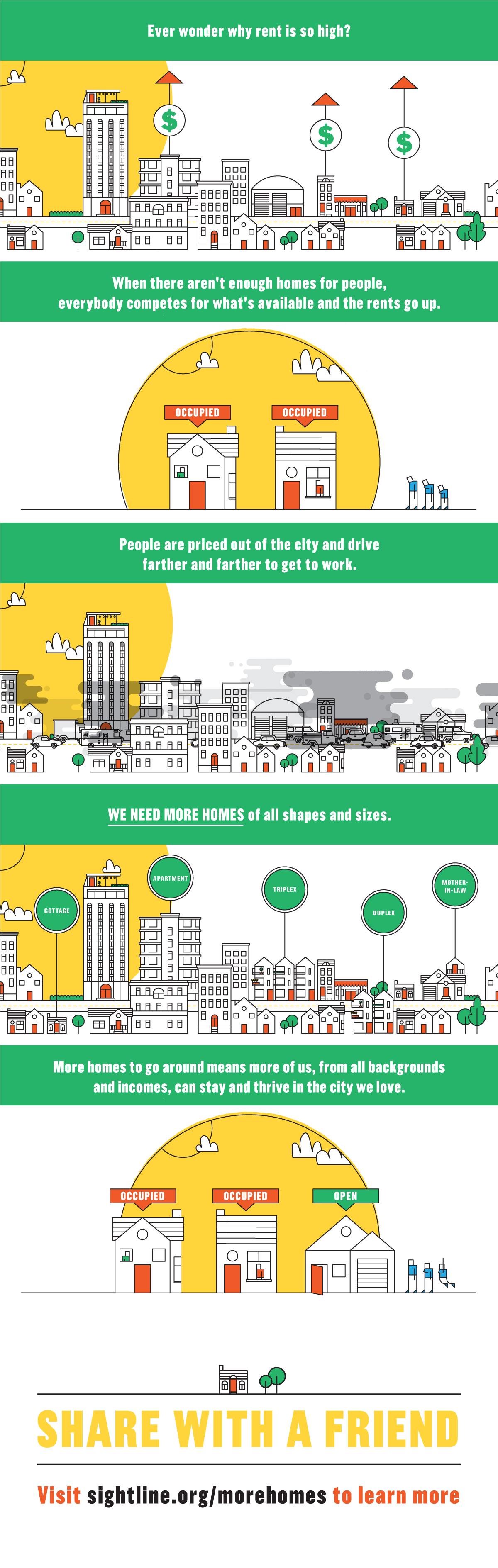
To fix our housing shortage, we need more homes in all shapes and sizes. That means more cottages, apartments, duplexes, triplexes, condos, and mother-in-law units. More homes allows more people to stay and thrive in their communities. It means more people can afford to live near jobs, great schools, and transit. Encouraging a variety of homes that fit a variety of people’s needs isn’t the only solution to keep rent and home prices down, but it’s an essential foundation for affordability. It’s the necessary building block on which all kinds of other community protections, anti-displacement measures, affordable housing investments, and neighborhood improvements are built.
Want to get involved? Find your local YIMBY (yes in my backyard) group here.
You can also find all of our housing and urbanism research here, including the following reader favorites from the past year:

