Donate Newsletters

Taxi vs. Lyft: My Commute (Part 2)

Last week I wrote about my experience commuting to work with Yellow Cab vs. Lyft, one of the new on-demand, smartphone-based “ridesharing” services that have recently started operating in Seattle. Personally, my experience with Lyft was much more efficient and pleasant. But that leaves out some important points for policymakers attempting to craft sensible regulations for a growing car-for-hire industry.

For starters, I’m fortunate enough to have the option of owning an iPhone, which gives me the choice to use services like Uber, Lyft, and Sidecar. Those new companies use smartphone apps as their dispatch systems, which put their services out of reach for certain consumers. There are plenty of people who need rides but can’t afford expensive data plans or who are intimidated by new technology.

Park Raving Mad

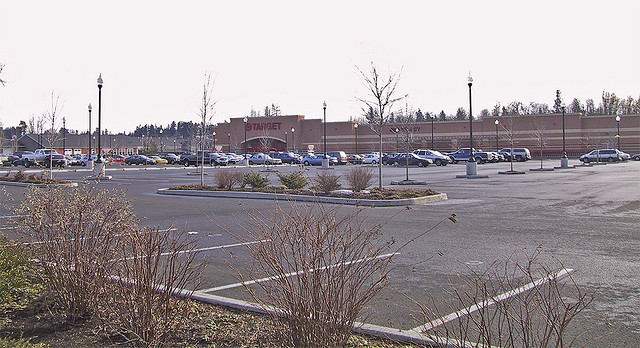
A department store in a mixed-use development still requires a large parking lot.

Off-street parking quotas are on the books in every city in Cascadia, because they are politically expedient. But the specific quotas—two spaces per apartment or ten per 1,000 square feet of retail floor space, for example—are based on little or nothing. Cities just make them up, then state them with precision, as UCLA professor of urban planning Donald Shoup has documented in The High Cost of Free Parking (see chapter 2).

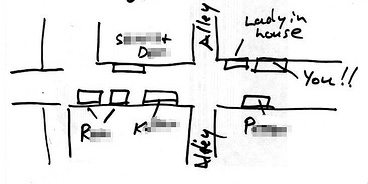
Here’s how it works. Territorial constituents push city leaders to defend free neighborhood curb parking from newcomers, so the leaders instruct city planners to recommend parking quotas sufficient to prevent spillover from new buildings. No visitor to any new development should ever park on the street, leaders tell planners.

Let’s say you’re a planner in a city department. What are you to do? Like all planners, you were trained in a discipline in which the main curricula and classic text books say nothing at all about parking requirements. You have exactly zero training in how to set a parking requirement.

“What I tell you three times is true.”

–Lewis Carroll
Tweet This
 

If you’re typical, what you do is call your peers in nearby jurisdictions and copy their mandates number for number: two off-street spaces per apartment; five per 1,000 square feet of office building; and so on. “It’s magical the way these numbers spread,” parking researcher Richard Willson told LA Magazine. Groupthink fills the void where analysis is lacking. Lewis Carroll, author of Alice in Wonderland, would have readily understood how cities set parking requirements.

Read more

Park Place

Maybe the inventors of Monopoly were onto something when they called their second most expensive property Park Place, because car storage is surprisingly costly.

We think of it as cheap, because we so rarely pay for parking at the time when we are using it. More than 90 percent of the time, our cars end their trips in spaces for which there is no charge.

But just because we’re not paying as drivers does not mean we are not paying in other ways—as residents, employees, and shoppers, for example. The costs of parking are concealed in higher rent and housing prices, lower profits and wages, and higher prices. We rarely think about the costs of parking, because parking itself is so ubiquitous. Because of city off-street parking mandates in land-use codes, it’s so commonplace we hardly notice it. Yet it’s a defining feature of modern cities: it’s one of the principal uses of urban and suburban land, as the image below of several blocks close to downtown Seattle illustrates. Consequently, it’s one of the principal uses of real-estate dollars.

This article quantifies just how expansive and expensive parking is. How much do we have? How much does it cost?

Read more

Taxi vs. Lyft: My Commute

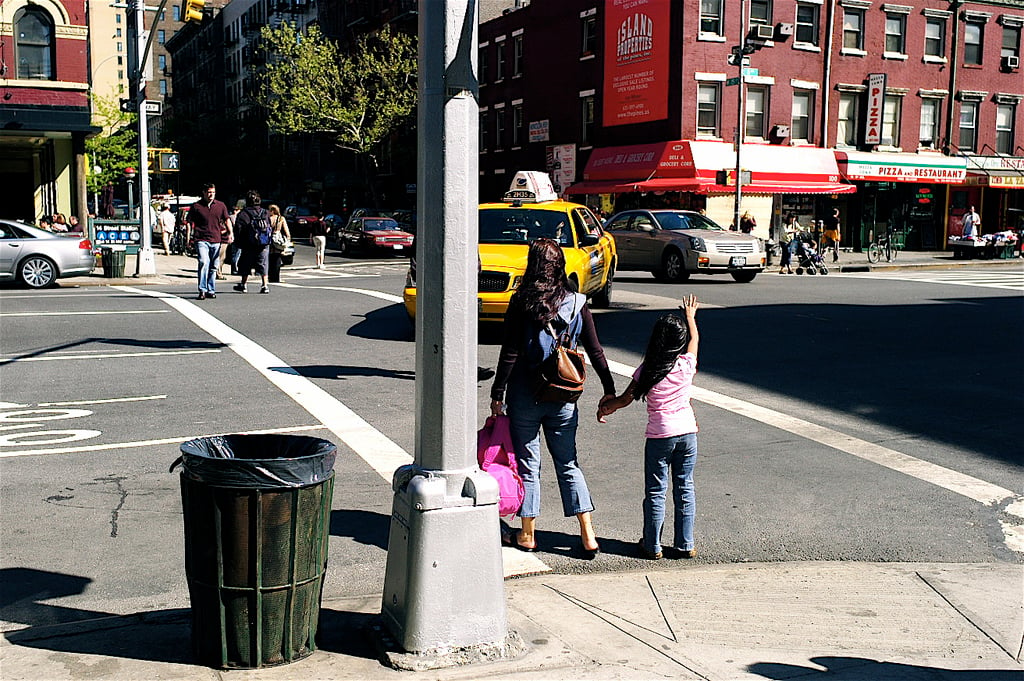
Monday morning I got to work in a plain old Yellow Cab. Tuesday morning I tried Lyft, one of the new smartphone-based, on-demand “ridesharing” services that allows a regular person to turn his or her car into what operates much like a taxi with a pink mustache.

My experience with Lyft was radically better (more on that below), but not in the ways that its marketing strategy emphasizes. I wasn’t looking for my driver to be my best friend, or to feel like I was a part of a community, or to have scintillating conversations about politics before 9 a.m. I’m a mom with a poky kid, trying to get to work as quickly as possible, and I did that 34 minutes faster with Lyft.

That simple fact says a lot about the upstart—and, for now in Seattle, wholly unregulated—services that allow a customer to summon and pay for a ride from a fleet of drivers roaming the streets in their personal cars using a smartphone app. You can see on the map how far away your driver is, and that he or she is really coming. It’s much less stressful than calling a grumpy dispatcher and waiting on the side of the road, wondering if your cab will ever show up.

Read more

Wide Open Spaces

Photo by Flickr photographer paulswansen.

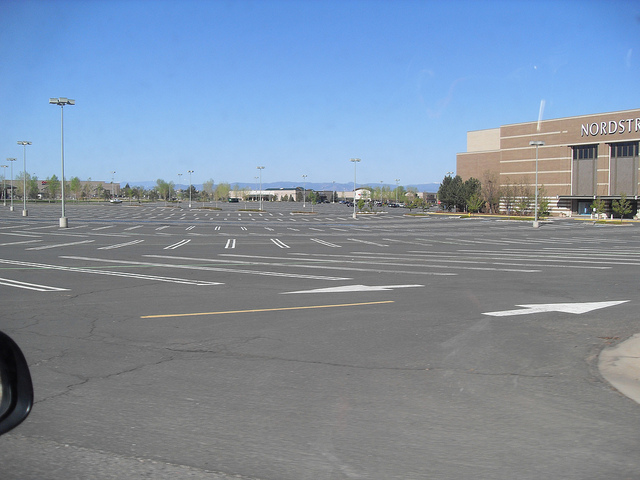
My younger son, almost 19, and my daughter, 20, are learning to drive this summer. (Car-less folks like us are sometimes late to the car-head rites of passage.) So I’m temporarily appreciating the wide open spaces of empty pavement at regional malls and big-box stores. Some of these parking lots are so big they generate their own mirages, and they’re vacant enough that my kids can’t do much damage.

Such parking expanses are a modern puzzle: they are so rarely full that you have to wonder why hard-headed business types ever built them. The answer is simple. They had no choice. Local laws made them do it.

Read more

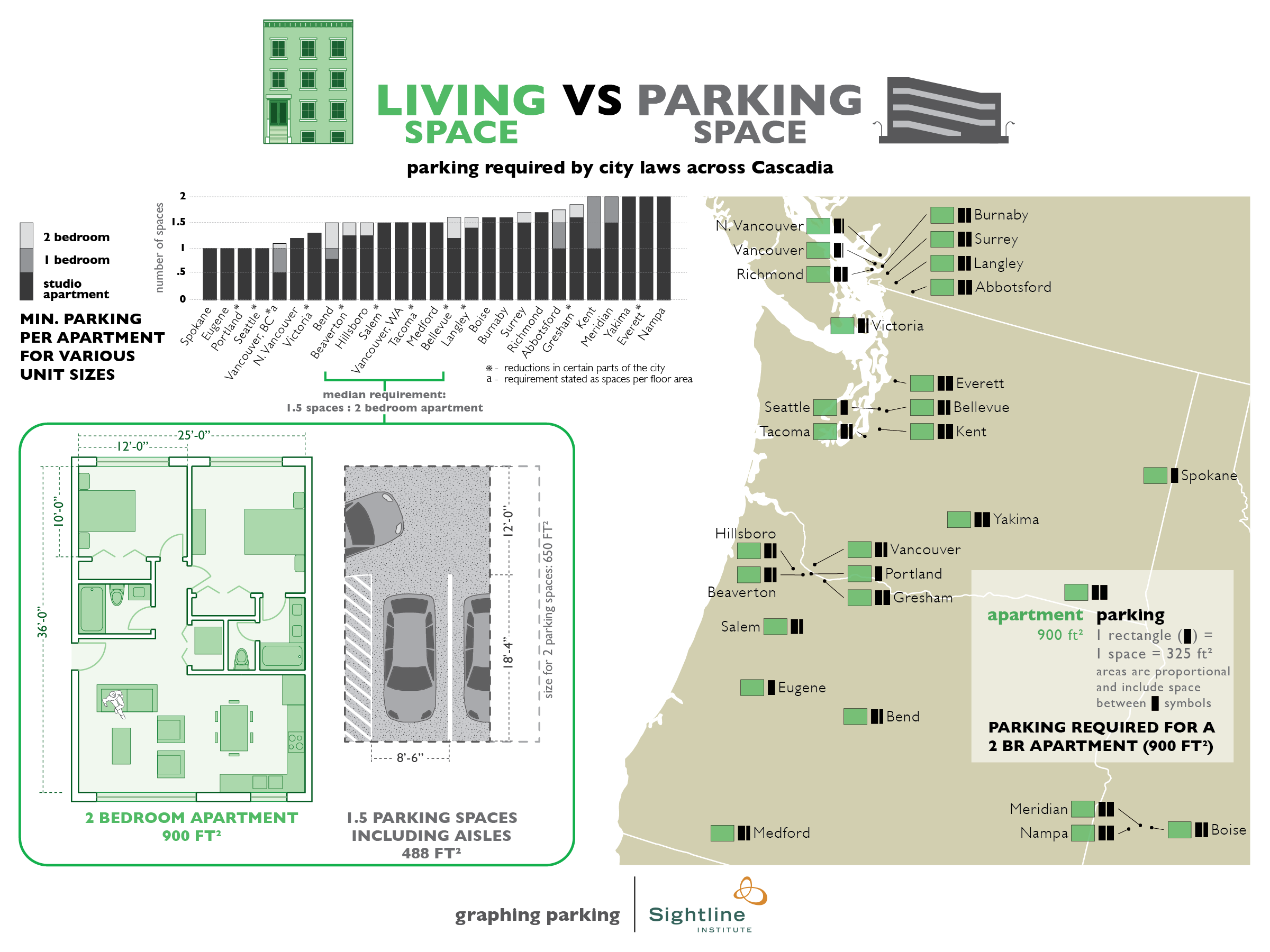
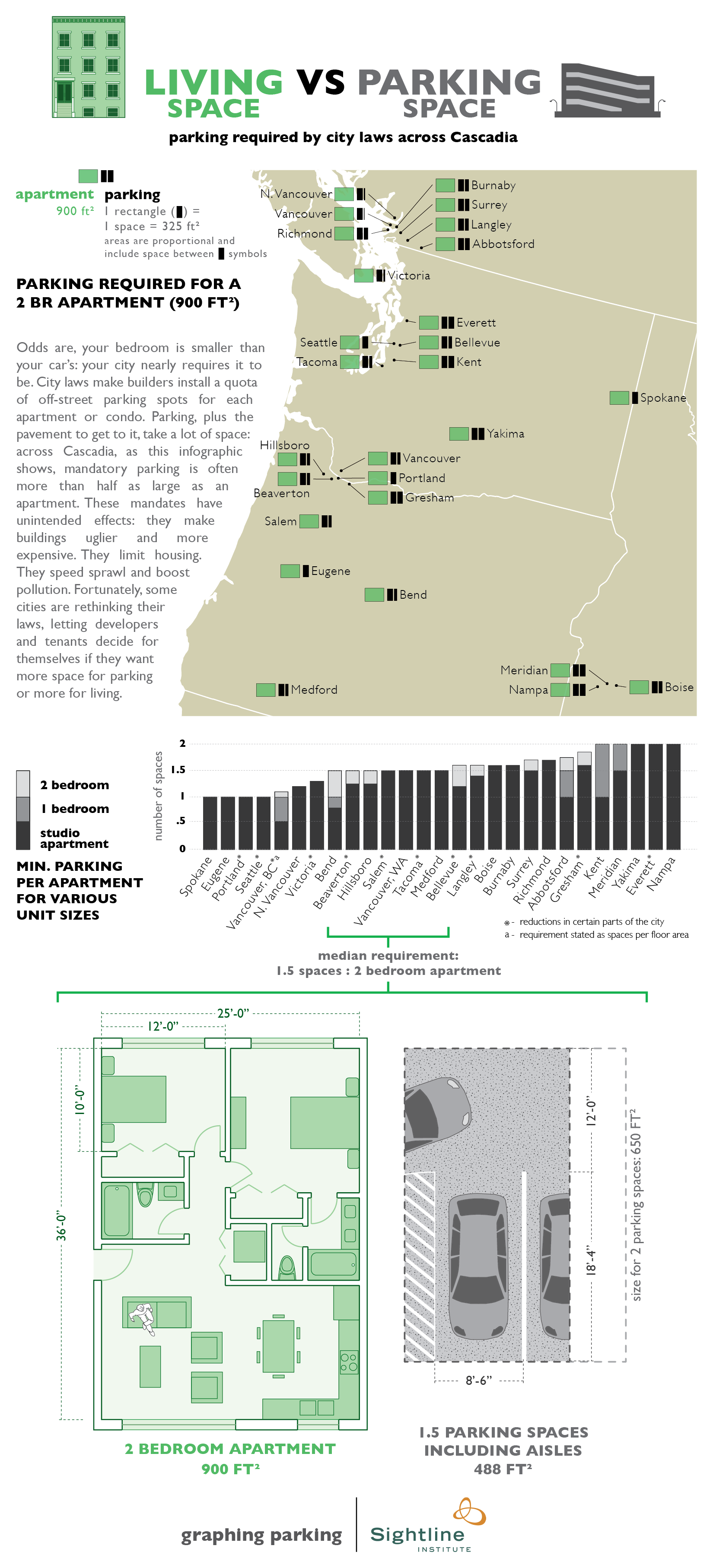
Infographic: Living Space v. Parking Space

Your bedroom is smaller than your car’s—that and other surprising facts stand out in a new infographic we’ve assembled with architect and designer Seth Goodman of Graphing Parking.

Living Space vs. Parking Space in Cascadia

Click here for the largest version of the infographic (zoom in for full resolution) or here for a landscape version.

Read more

Rain Gardens, the Glamour Issue

Flowers

Flowers
Plants suitable for rain gardens, “Rain Garden Handbook for Western Washington”

Foodies get to drool over countless images online and in print of perfectly posed burgers, mouth-watering slices of pies, and other culinary treats. Now rain garden junkies and the bioretention-curious can indulge in inspiring photos and illustrations of green stormwater solutions in the newly released “Rain Garden Handbook for Western Washington: A Guide for Design, Installation, and Maintenance.”

The handbook is a step-by-step guide on how to plan, build, plant, and maintain a smaller-scale rain garden. It explains how even a modest-sized rain garden will capture and treat significant amounts of polluted runoff that flow off rooftops and driveways.

Suitable to an experienced landscaper or even a novice, the guide provides straightforward instructions in layman’s terms and lots of images to illustrate what’s being discussed. The handbook also answers questions and fears about rain gardens, including the persistent worry about standing water and mosquitoes (well-designed rain gardens drain in one to three days, the guide explains, and mosquitoes go from egg to adult in four or more days).

Read more

BC Should Examine Its Carbon Ledger

Following British Columbia’s recent election, climate activist Kevin Washbrook and I have an op-ed in the latest edition of Business In Vancouver magazine. We make the case that fossil fuel export projects represent a clear danger to the Northwest—and that the threat transcends the border:

At a time when scientists report atmospheric carbon dioxide concentrations are breaking dangerous new records, the Pacific Northwest is considering a raft of ill-advised proposals to expand its carbon-intensive fuel exports. To date, the region has considered these fossil fuel projects each in isolation, an approach that makes sense no longer.

The election helped make British Columbians more aware of the controversies surrounding new oil and gas pipelines in the province. But they may be less aware of the furious debate raging south of the border, where proposals to build huge new coal export terminals in the U.S. Northwest are generating unprecedented levels of opposition.

In recent months, however, the arguments have crossed the 49th parallel.

Read more

×
Privacy Overview
Sightline Institute

More information about our privacy notice

Strictly Necessary Cookies

Strictly Necessary Cookie should be enabled at all times so that we can save your preferences for cookie settings.

3rd Party Cookies

This website uses Google Analytics to collect anonymous information such as the number of visitors to the site, and the most popular pages.

Keeping this cookie enabled helps us to improve our website.

Additional Cookies

This website uses social media to collect anonymous information such as which platform are our users coming from.

Keeping this cookie enabled helps us better reach our audiences.