Donate Newsletters

What’s in Your Garage?

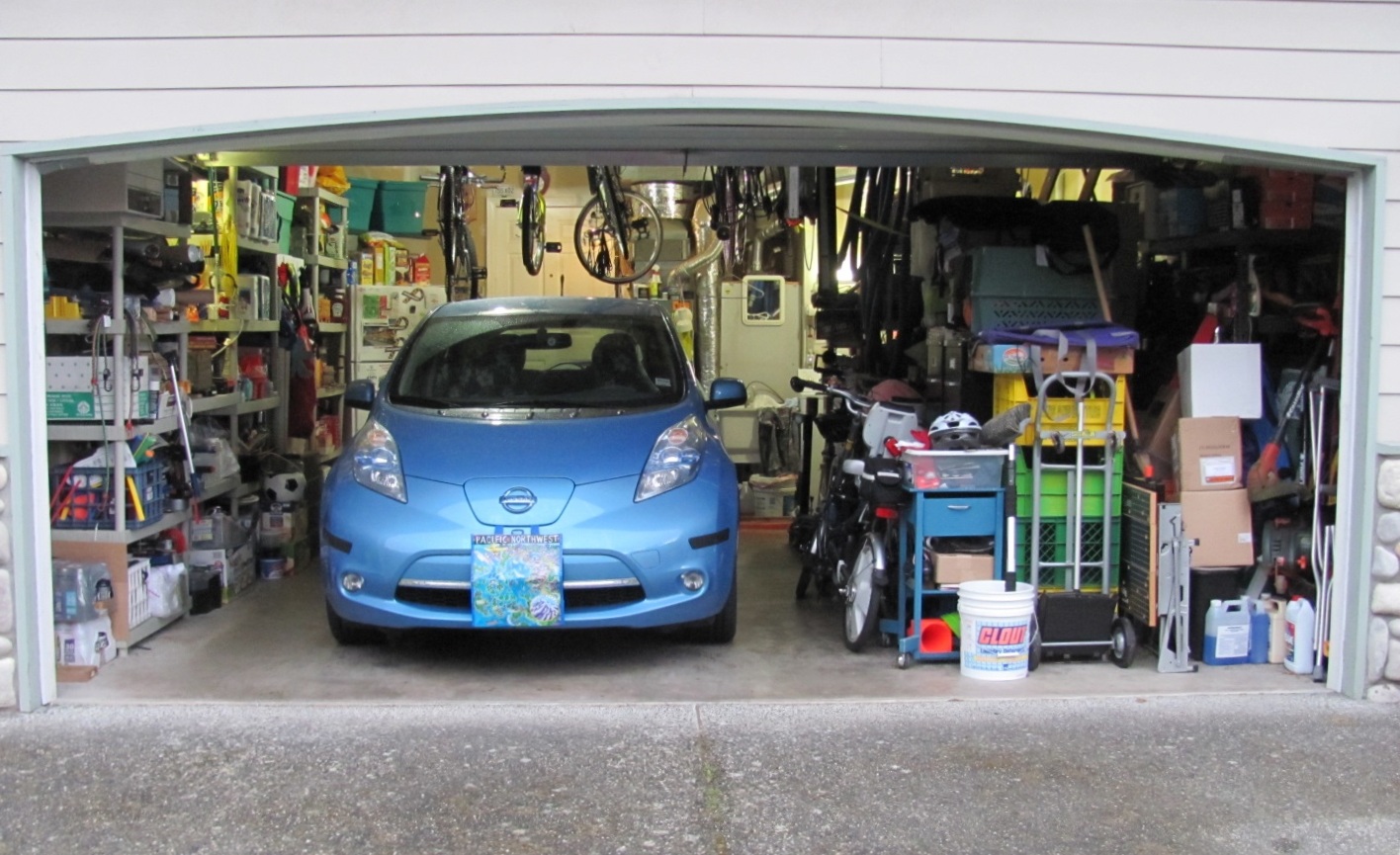
One car and lots of stuff in a two-car garage.
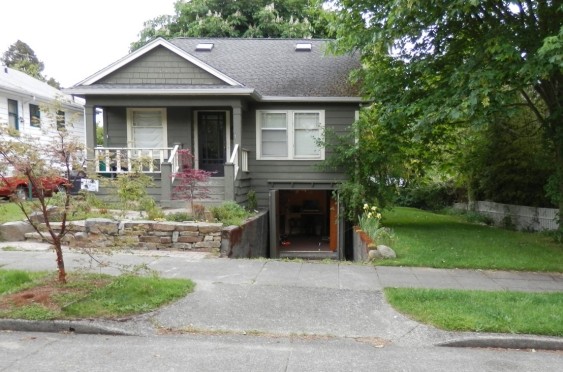
Alan's single-family home with single-car garage.
Photo by Alan Durning.

I have not owned a car in seven years, but I do own a garage. It’s pictured above. In fact, I am legally required to own an off-street parking space; that’s written in the land-use code for my city, Seattle, as for virtually every city. The driveway that leads to my garage, meanwhile, eliminates almost exactly one parking space from my street. Parking in front of a driveway is illegal, and a regular curb cut is almost exactly the size of a parking space, as illustrated below.
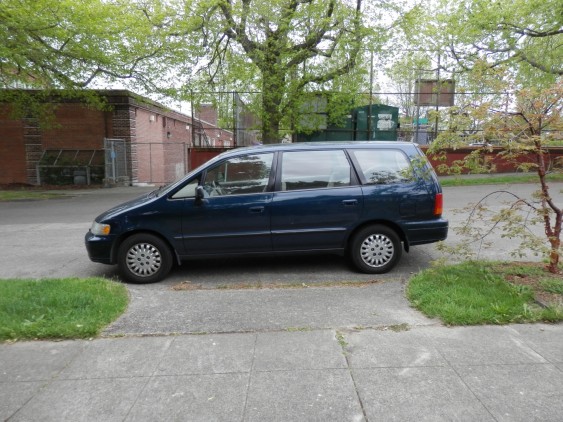
Driveway curb cut blocking street parking space.
Photo by Alan Durning.

The net effect—one mandatory off-street parking space plus one car-less household—is a one-space reduction of parking supply on my block. Repeat: my obligatory driveway and garage deprive the universe of one on-street slot. This is ironic, but it’s only the tip of the irony iceberg where car-storage is concerned.

Read more

WSJ on Vancouver’s add-on dwellings

Today’s Wall Street Journal includes a front-page feature on Vancouver, BC’s secondary suites and laneway houses and a video interview with Conor Dougherty, the author. The piece includes a nice Sightline quote; we were a major source for it. (Unfortunately, the full article is behind a pay wall.) To get a sense of how America … Read more

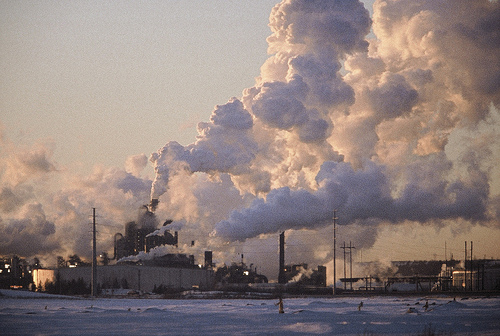
What a Coal Terminal is Really Like

This is required reading—and viewing—for anyone worried about how export terminals handle coal in reality: a jaw-dropping exposé on the pollution from Ridley Terminals at Prince Rupert, British Columbia. You absolutely must click through and see the photos collected by The Northern View newspaper in it’s excellent investigation of Ridley.

Here are a few of the alarming findings from the paper’s investigation into coal-handling at the facility:

“There’s a certain amount of coal that sticks to the belts, and as it makes its run underneath the belt back it falls off… There’s coal just falling everywhere… Everywhere there’s a corner it just builds and falls off and jams belts, and then it falls into the ocean,” a reliable source, who has authorized access to the site, told The Northern View.

And:

Read more

BC Opposes Major Tar Sands Pipeline

Huge news out of British Columbia just now: the province is officially opposing plans to build the Enbridge Northern Gateway Pipeline. The plan—which actually involves two separate pipelines, one moving condensate east to dilute sludge-like bitumen flowing west in a second line—is hugely controversial. It is opposed by a range of interests, including First Nations and environmental advocates who today notched a major victory against the tar sands industry.

The pipeline would initially carry 525,000 barrel per day, roughly the size of the Keystone XL Pipeline’s first phase, but it could be expanded to bring a staggering 800,000 barrels per day to the coast for export.

The government’s rejection of Enbridge gives lie to a claim often made by fossil fuel export boosters: that the fuel will find a way out no matter what. It’s a empty threat whether it’s made by the oil industry or would-be coal exporters. Moving fossil fuels from the remote interior of North America to consumer markets requires major infrastructure, and today’s decision underscores the obvious truth there is absolutely no guarantee the infrastructure will get built.

Read more

This Year, Waffles

Wow. What else can we say? HUGE THANKS to everyone who chipped in (and even chipped in extra!) to support Sightline during GiveBIG yesterday. All told, we raised $40,940 from 181 donors. From our first gift at 12:52 a.m. to our last at 11:42 p.m., you sent the message to us—over and over again—that you … Read more

Northwest Fossil Fuel Exports: New Sightline Report for Canada

In British Columbia’s provincial elections yesterday, the right-of-center Liberal party pulled off an astonishing upset to hang onto power. It was an election in which the politics of fossil fuel expansion played a meaningful role, particularly for the NDP, the major opposition party. With the Liberals forming another majority government, it makes sense now to reflect on the epic-scale fossil fuel exports planned for BC and the its neighbors in the US Northwest.

Today, Sightline is releasing a new report in Canada, one that tallies the potential carbon emissions from fossil fuel export infrastructure planned throughout the Pacific Northwest.

Northwest Birth Rates: A New Low

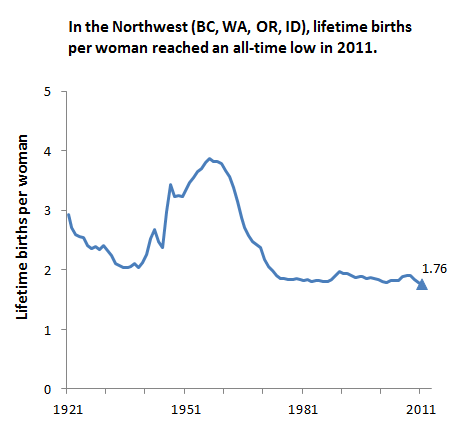
According to the latest figures, birth rates in Cascadia (British Columbia, Washington, Oregon, and Idaho) have fallen to what could very well be an all-time low. And when I say “all time” I mean it: it’s quite possibly the lowest birth rate since humans first came to the Northwest.

Of course, there’s no way to know with any certainty what the birth rate was before records were kept—but in times of high infant mortality, birth rates were generally far above what we see today. So it’s quite likely that the human inhabitants of what we now call the Northwest have never had such small families.

Recent Coal Export Trends: Q4 2012

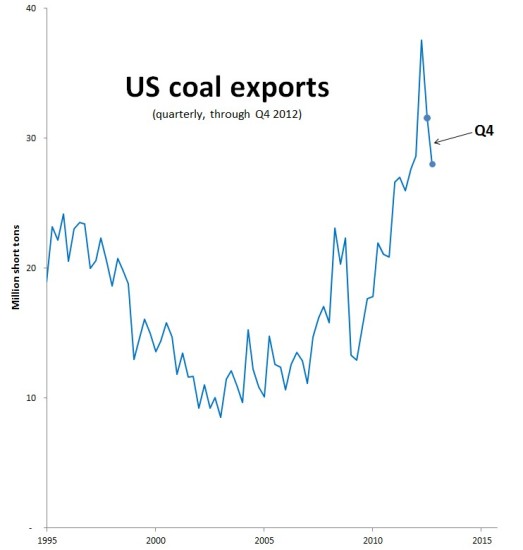
I’m a bit late getting to this, but here’s quarterly data from the latest coal report from the US Energy Information Administration, taking us up through the end of 2012:

us coa ex_q42012

Nationally, the big story was that coal exports fell for the second consecutive quarter. By the end of 2012, quarterly shipments were down by 25 percent from the historic highs registered during the second quarter. Still, at 28 million tons, coal exports remained very high by historical standards.

A bit player in the national coal export story, the Western Customs District exported a little more than 2.1 million tons in the fourth quarter, a 16 percent increase from the third quarter.

Read more

The Real Story of Puget Sound’s Disappearing Herring

Herring

Editor’s note: A revised version of this article is available as a pdf.

Herring
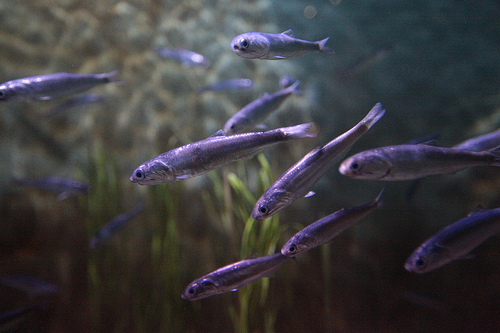
Pacific herring, SteveWyshy, Flickr.

Puget Sound’s Pacific herring are a small fish with a whale-sized slate of problems.

Many of the local herring stocks are in decline and despite some localized efforts to save them, their numbers haven’t bounced back. Scientists have identified numerous culprits that have likely contributed to the waning populations, including disease, pollution, increasing numbers of predators, climate change, shoreline development, and fishing.

But from this line up of offenders, no one has been able to pinpoint the villain that bears the greatest blame for the herring’s troubles.

It hasn’t been for a lack of trying.

Read more

×
Privacy Overview
Sightline Institute

More information about our privacy notice

Strictly Necessary Cookies

Strictly Necessary Cookie should be enabled at all times so that we can save your preferences for cookie settings.

3rd Party Cookies

This website uses Google Analytics to collect anonymous information such as the number of visitors to the site, and the most popular pages.

Keeping this cookie enabled helps us to improve our website.

Additional Cookies

This website uses social media to collect anonymous information such as which platform are our users coming from.

Keeping this cookie enabled helps us better reach our audiences.