Donate Newsletters

Two Wheels and High Heels

In the Seattle suburb where I grew up, the main transportation choice most residents face is what kind of car to buy. I moved to Seattle after college and, inspired by the “car-lite” lifestyles of several friends, decided to give cycling a try.

I fell in love with it. Urban cycling freed me from slow buses, parking meters, and mind-numbing elliptical machines. I arrived at work with more energy. I lost weight. I discovered charming neighborhood restaurants. I could smell fresh laundry and dinners in the oven while I pedaled home through residential streets. Getting from A to B on my bike became the best part of my day.

Recently, I won a fellowship and got to spend six months living life on two wheels in the world’s most bike-friendly cities. I brought home ten lessons, and thousands of photographs, for Cascadia:

1. Its the infrastructure, stupid!

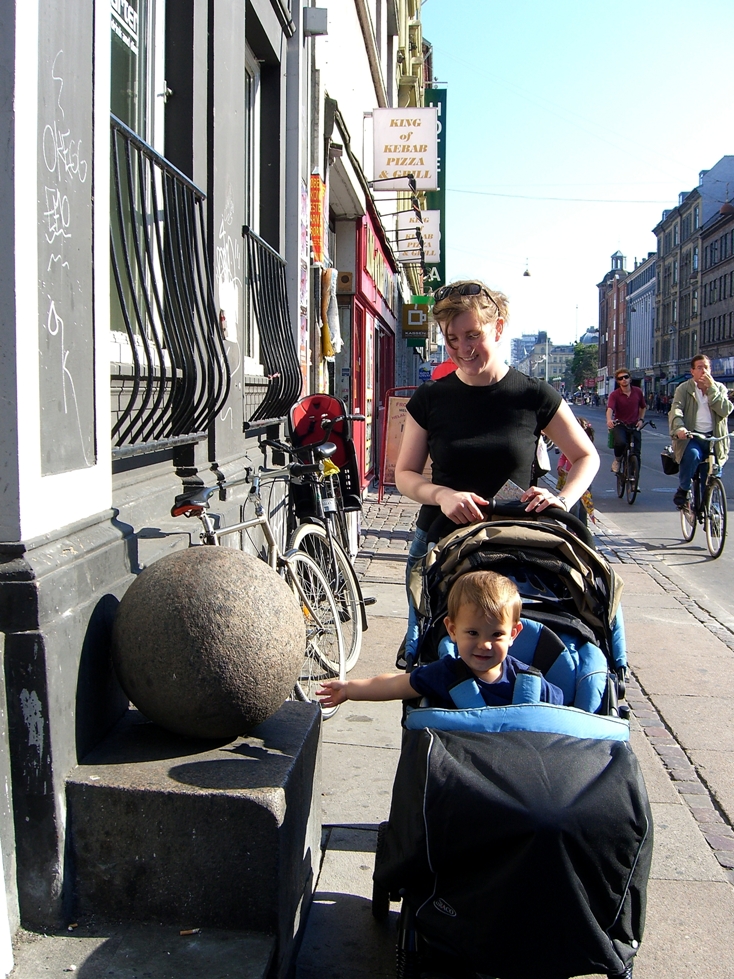
Amazing infrastructure makes cycling normal and safe in bike meccas, but not yet in the Northwest. For example, parked cars to the left of the bike lane not only provide a barrier between motorized traffic and cyclists, they also minimize a cyclist’s chance of getting “doored.” Most cars in Denmark (pictured) only have one occupant—the driver—and drivers get out on the left. Same goes for the Northwest.
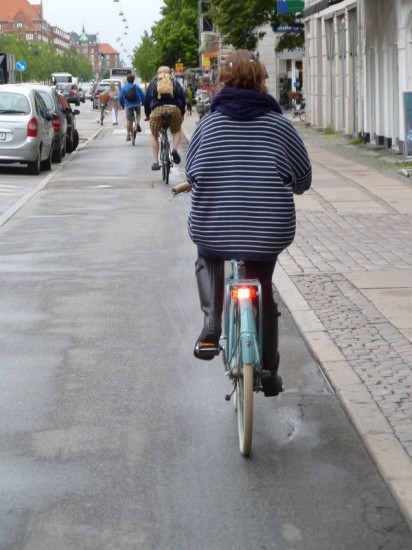
Denmark. Photo by Christine Grant, used with permission.

Read more

Why Railroads Care About Coal Exports

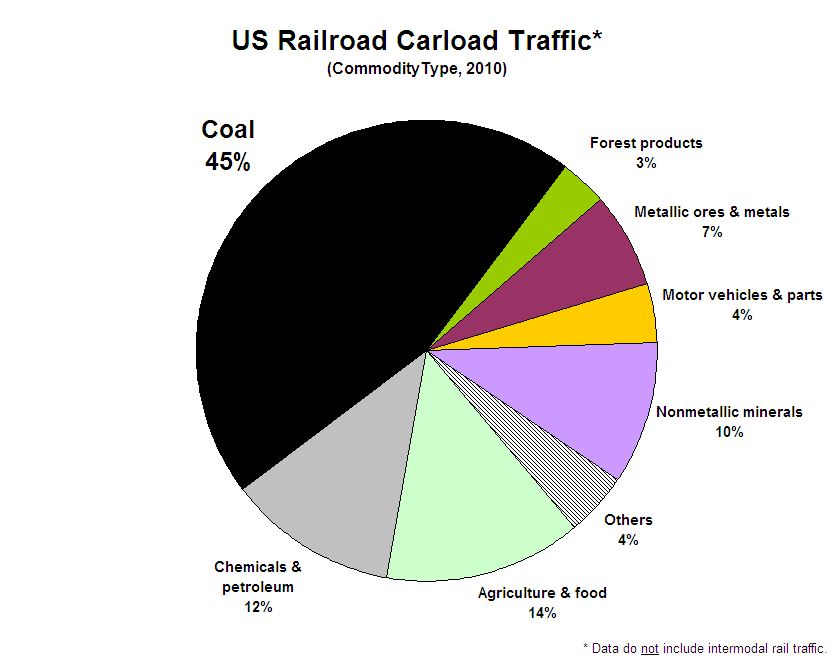
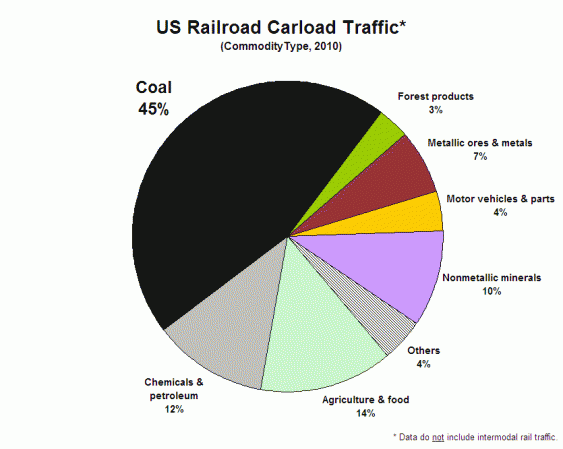
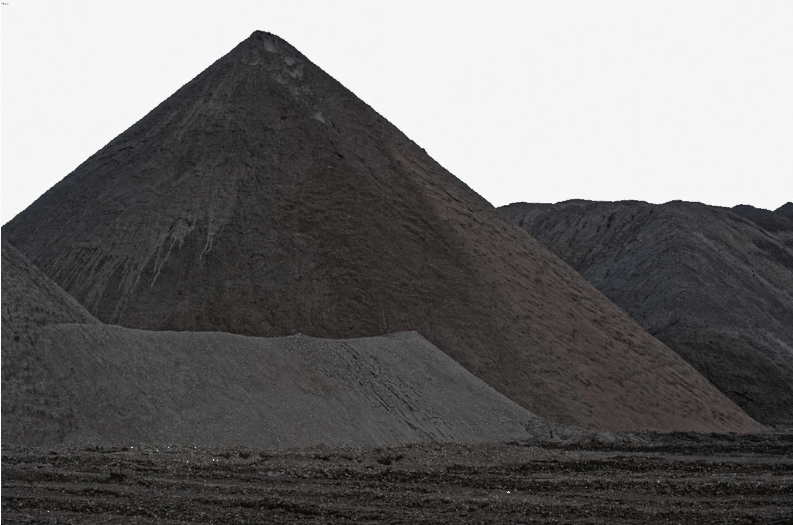
Here are three pictures that help explain why American railways seem to be supporting coal export proposals in the Northwest. It’s because railways are very closely connected to the coal industry. Consider:

Coal so dwarfs every other rail-hauled commodity that it is almost as important as all the other commodities combined. (N/B, this picture excludes “intermodal” freight.)

Read more

Your Wheels, on the Bus

Editor’s Note: As noted in the comments below, Seattle blogger Lynn Hamilton has started a petition on the topic of strollers.

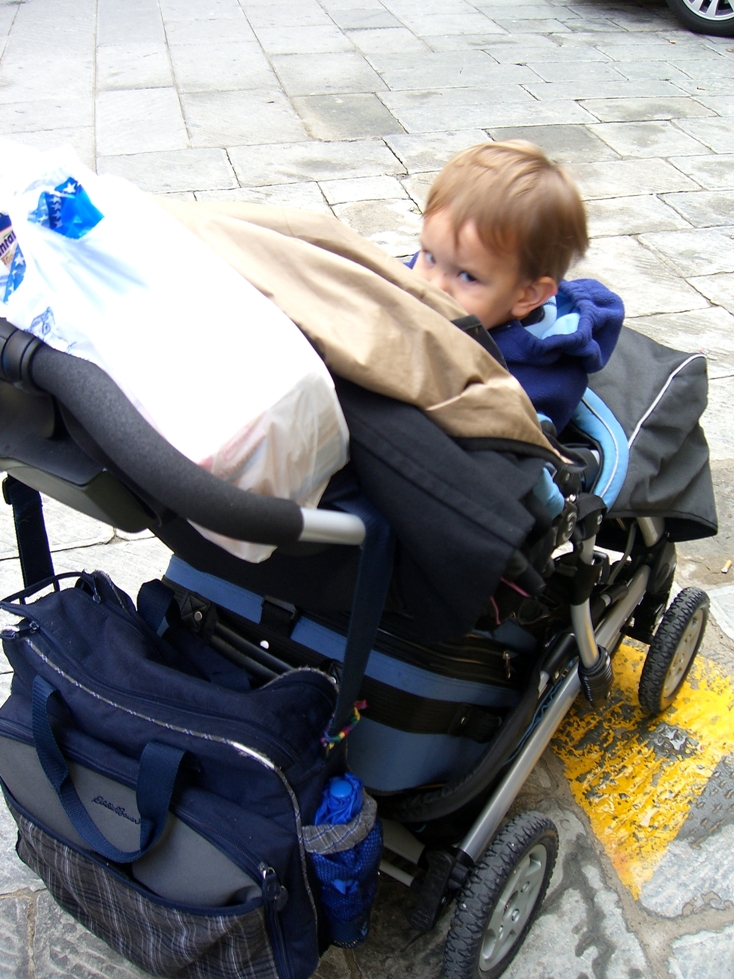
I recall vividly how embarrassed I felt the first time I waited for the bus with my baby boy—he bundled up in his stroller and me expecting the bus driver to welcome me aboard, lowering the wheelchair lift so we could roll on in style. In the stores and sidewalks of my neighborhood, people smiled as we ran errands. They made way for us—slowing so we could pass on a congested sidewalk or holding doors open while we rolled into a shop. Then the bus arrived. Instead of lowering the lift, the driver told me to fold Orion’s stroller. My cheeks burned red as I hastily unpacked—diaper bag, toys, blanket, and groceries—while holding onto my squirming bundle of joy. Then, with one hand, I attempted to fold the stroller and carry the load aboard, knowing that everyone was watching me, passengers cursing under their breaths and the driver reviewing his timetable.

For most parents, an experience like that would have eliminated any thoughts of ever again taking their wheels on the bus. But I had no real choice.

My husband and I had committed to staying in our apartment overlooking The Ave, the main street running through Seattle’s University District. Some parents trade up to a minivan or SUV, but we had sold our two-door Civic. We gained a child and shed a car.

Alyse Nelson

And, in most ways, I loved our car-free life. We explored our neighborhood together. People stopped to greet Orion on the sidewalk. I could point out interesting buildings or window displays. Outside our grocery store, the man selling the Real Change newspaper would always belt out, “Have a great day, little dude!” We soaked in the diversity of the city: new smells, sounds, and people. When we went somewhere in a car, Orion and I were both miserable. Seated in the backseat in his rear-facing car seat, he would often wail.

Read more

The Porous Road Less Traveled

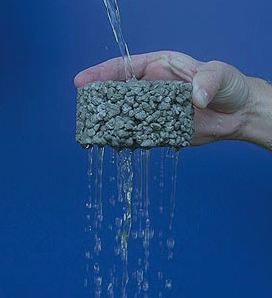
Pervious concrete

Permeable pavement can make old-school road engineers and pavement builders anxious. To them, the idea of water seeping through roads like they’re made of Swiss cheese just doesn’t seem right. Water runs off roads, not through them. Or at least it used to.

In the Northwest, there’s a growing acceptance of the use of pervious concrete and porous asphalt for roads, sidewalks, parking lots, and driveways. The unconventional pavement does a great job reducing the amount of polluted stormwater runoff that damages homes, streams and lakes. Instead of gushing from the roads carrying a slug of toxic chemicals, the water seeps through small pores in the pavement, soaking into the gravel and dirt beneath the road. Some of the pollutants get trapped inside or beneath the pavement, or are consumed by organisms living in the ground below it.

Those who’ve used the pavement praise the technology. Advocates can be found around the region, including a 32-acre eco-friendly development near Salem called Pringle Creek, where all of the roads and alleys were built with porous asphalt.

“It’s pretty remarkable to see water disappear into the street,” said James Santana, vice president of Pringle Creek. “We’ve been really impressed with how effective the streets have been.”

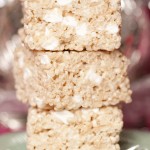
Rice crispy treats
Anna Fischer, Flickr.

The development, which was built in 2007, was deemed “the nation’s first full-scale porous pavement project” by the Asphalt Pavement Association of Oregon.

But fears about the technology persist. Can pavement that’s likened to rice crispy treats to illustrate its pervious nature take a pounding from countless cars, trucks, and buses and survive intact? How long can water seep through it before its pores are clogged with dirt and debris? Is it OK to put a bunch of water underneath a road?

Read more

Useless Northwest Christmas Geography

Here’s my Christmas gift to you: useless regional trivia that you can use to annoy your friends and family this weekend. Below, you’ll find all the geographic place names in the Northwest that include the word Christmas.

British Columbia

  • Christmas Creek (the northern one), flows into Hyland Lake way up north near the border with Yukon Territory.
  • Christmas Creek (the central one), flows into Eagle Creek near Wells Gray Provincial House and east of 100 Mile House. An expansion of this creek is named Christmas Lake.
  • Christmas Hill is just north of Swan Lake in the city of Saanich, a town that also boasts a Christmas Avenue.
  • Christmas Point, nearby, is on the west side of the Finlayson Arm that extends south from the Saanich Inlet near Victoria.
  • Christmas Island is an unofficial name for an island in the Columbia River just south of Revelstoke.

Read more

Grow Your Farmer

In the Northwest, small-scale farmers are the new rock stars. The New York Times writes about them glowingly. Filmmakers follow them around. Lots of people dream of becoming one—from unfulfilled tax accountants to newly minted public policy graduates to carpenters whose jobs dried up in the recession.

The explosion of farmers markets and growing number of mud-spattered entrepreneurs willing to deliver produce or sell you a percentage of a grass-fed cow clearly shows this is by no means impossible.  But the average income from a “beginning” farm in 2010 was a negative $888, according to the USDA. And in a region with such abundant options for buying locally-produced food, it’s easy to overlook the formidable barriers that new farmers have to overcome.

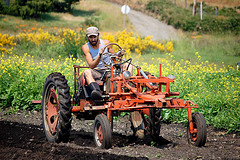
I spent some of my spare time over the last growing season following some of the new farmers at Viva Farms, an incubator in Skagit County, Washington, that aims to give aspiring farmers an affordable place to learn and build their business. It’s also one of the first in the country to serve two different populations with similar problems: 1) newbie career changers and interns coming off organic farms, as well as 2) experienced Latino farmworkers who want to work for themselves. You can read my cover story in this week’s High Country News (a free trial subscription is required) but here are some observations about what I learned.

First off, here’s a quick run-down of the problem:

Read more

Coal Company Destroys Key Argument for Coal Terminal

Cloud Peak Energy says they will ship 4 million tons of coal from British Columbia’s Westshore Terminal this year. That means Cloud Peak is almost solely responsible for current US coal exports to Asia via BC. (See here and here for US Customs figures.) Yet in a new investor report, Cloud Peak says they can’t increase coal shipments to Asia because there’s not enough room at BC export terminals.

This is precisely the opposite of what Washington coal terminal supporters claim. They say that if Washington doesn’t build coal terminals, the coal will just go out from BC instead. In an August research memo, Coal Exports From Canada, I showed there is simply not enough room at BC’s ports, not even if they undergo planned expansions. But terminal supporters just keep repeating the falsehood anyway. (See here, for example). Now, the coal industry itself is knocking down supporters’ claims.

Here’s what Cloud Peak’s latest investor report says:

…next year’s exports will again be limited by available terminal capacity. In 2012, we will aim to export similar tonnage [4 million tons] through Westshore by working to maximize shipments as opportunities arise through the year. There are currently 0.3 million tons contracted to go through the Ridley terminal in 2012. As previously disclosed, exports through the Ridley terminal incur significantly higher rail costs than through Westshore due to the longer multi railroad haul.

In other words, the coal industry is weighing in on my side: if Washington doesn’t build coal export terminals, the coal can’t go.

Read more

Report: Northwest Ocean Acidification

Editor’s Note 8/11/2015: Everyone in the Northwest is feeling the heat this summer, and the Pacific Ocean is no exception. Record-breaking warm water temperatures have negative impacts on marine ecosystems, from toxic algae blooms to early shellfish closures and salmon deaths. Possibly worse than rising ocean temperatures is ocean acidification, the absorption of carbon dioxide into the sea. Ocean acidification also negatively affects mollusks and other marine animals, and hurts lucrative Northwest industries. Want to learn more about ocean acidification and its impact on the Northwest? Here’s your primer.

This primer is also available in a two-page summary format.

Tiny sea butterflies dissolve before researchers’ eyes. Baby oysters die by the tankful. Sea urchins grow deformed. These are a few consequences of raising marine creatures in increasingly corrosive water. And they could preview what’s in store for the Northwest as carbon dioxide pollution from cars, power plants, and other human sources changes the chemistry of our marine waters.

Easy As Pizza Pie

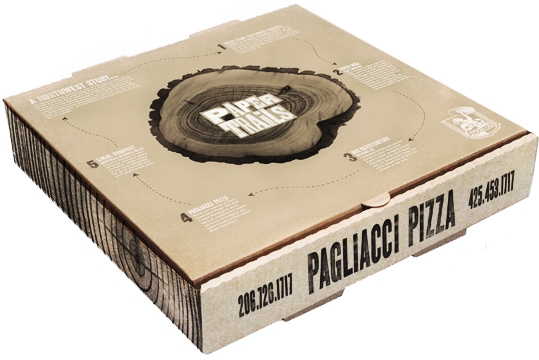
The effects of some food labels on our eating habits are debatable. But it’s still exciting to see businesses making an effort to educate their customers about the sustainability of their products. Seattle pizza chain Pagliacci’s is taking one step in that direction. They’re switching to Forest Stewardship Council-certified cardboard, and using the cardboard itself … Read more

×
Privacy Overview
Sightline Institute

More information about our privacy notice

Strictly Necessary Cookies

Strictly Necessary Cookie should be enabled at all times so that we can save your preferences for cookie settings.

3rd Party Cookies

This website uses Google Analytics to collect anonymous information such as the number of visitors to the site, and the most popular pages.

Keeping this cookie enabled helps us to improve our website.

Additional Cookies

This website uses social media to collect anonymous information such as which platform are our users coming from.

Keeping this cookie enabled helps us better reach our audiences.