Donate Newsletters

How Coal Is Already Congesting Washington’s Railways

Washington’s rail system is congested in places. Adding dozens of coal trains each day, without also big new capacity improvements, could cripple the system with gridlock. All that is common knowledge. Less well-known is this: coal shipments are already causing problems.

To understand what’s going on, it’s useful to zero in on the northwest portion of the state’s railway system. Here’s a close look at northwest Washington, the area most directly affected by Cherry Point coal exports:
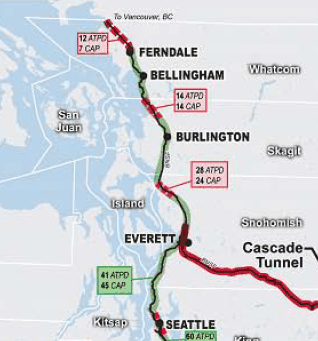
This Cambridge Systematics map from 2006 is the most recent comprehensive analysis of the state’s rail system. The green on the mainline between Everett and Canada indicates adequate capacity, but the numerous red dots indicate hotspots of local congestion that plague the system.

What’s happening on the ground there now? In May 2011, the regional rail experts at the Cascadia Center produced the “Cross-Border Freight Rail Improvement Study,” for the Whatcom Council of Governments (along with a companion volume “Cross-Border Passenger Rail Improvement Study). It turns out that things in the area are not going smoothly.

There are a variety of reasons, but one reason is coal.

Read more

Licensed to Work

Alan Durning: Food Handler

I just got my Oregon Food Handler’s Badge. It took 52 minutes online and cost $10. Now I can work legally in Oregon restaurants!

If, however, I wanted to work braiding hair African-style in Oregon, or kickboxing for prize money in Washington, or selling timeshares in Montana, or promoting concerts in Alaska, or as an athletic trainer in Idaho or as scores of other things across the Northwest, I’d have to endure a more onerous licensing process.

Much more onerous.

Consider African-style hair braiding. To braid hair for money in Oregon legally, I would need (in addition to actual braiding skills—no small thing), a hairstylist or barber license. Earning a cosmetology badge requires 1,700 hours of training and classes. That’s often two years of coursework, and it costs thousands of dollars. Worse, the schooling is largely irrelevant to African-style hair braiding.

Read more

How Real Is the Threat of Coal Dust?

Here’s a coal terminal that wants to be a good neighbor:

…a new process the company is implementing to help homeowners deal with coal dust on their property. Residents affected by the dust can now fill out a form and drop it off at the district office to be relayed to RTI.

RTI will then send out a contractor to power wash the coal dust off a homeowner’s property.

Get that? If you’re lucky enough to live near the Prince Rupert coal export facility in northern BC, now you can fill out a form to request that a contractor power wash the coal dust off your house. For free!

Thanks, coal company! Thanks for agreeing to have someone wash off the toxic dirt that you coated my home with!

I’m being sarcastic, but this is no laughing matter: coal dust is well known to harm human health.

If you don’t think coal dust is a problem near export terminals, then take a look at this photo taken in June 2011 near BC’s Ridley Terminal. I’m serious: go look at it.

Read more

Decriminalizing Graywater

“In most places there is a legal requirement to intentionally pollute drinking water with human excrement.” That’s how the Cascadia Green Building Council frames the problem with recycling water. By law and by practice, the region has historically made it illegal, or at least highly impractical, to reuse water, even for uses that obviously don’t require clean drinking water such as flushing the toilet or washing the car. There’s no good reason why we should fill our toilet bowls with clean drinking water rather than lightly used recycled “graywater.”

The Northwest’s water reuse policies are changing, and not a moment too soon. Even in the rainy west side of the region, population growth is pressuring water supplies, just as climate change begins to yield weather mayhem. Water supply problems can be even more intense in the region’s drier places, and in much of the world.

Long ago, health concerns motivated strict no-contact rules for used domestic water: Every ounce of it must leave the area and flow to a waste treatment plant. The laws have scarcely changed until recently. That policy may have made sense when building trades were not very sophisticated in the Northwest, when inspectors were scarce, and when water was bountiful. Now, plumbers and plumbing inspectors are highly professionalized, many builders are creative and green-minded. Plus water is increasingly scarce and expensive.

Fortunately, several jurisdictions in the Northwest are leading the way to legalizing sensible, low-cost water-recycling solutions.

Read more

Northwest Coal Exports II

Sightline is releasing a new and updated research backgrounder today: it’s a “frequently asked questions” about coal exports from the Northwest.

In the new version of “Northwest Coal Exports” we set out some basic facts about coal exports: how much North America currently exports, what the new proposals involve, and what the pollution consequences might be. We take a hard look at the scientific literature on the health impacts of coal dust, and we draw some lessons from coal export facilities elsewhere in North America. We also tackle some of the more vexing questions, like whether British Columbia ports have the capacity to handle the export proposals, and whether US coal exports add to global greenhouse gas emissions.

Moving Planet

Saturday September 24 will be a worldwide day of action calling for solutions to climate change: Moving Planet. Events will be happening across the globe, including here in Cascadia—from the big cities to smaller towns like La Grande and Ashland. Seattle will boast activities like electric bike riding, and a rally at Lake Union Park. … Read more

Home, Home on the Lane

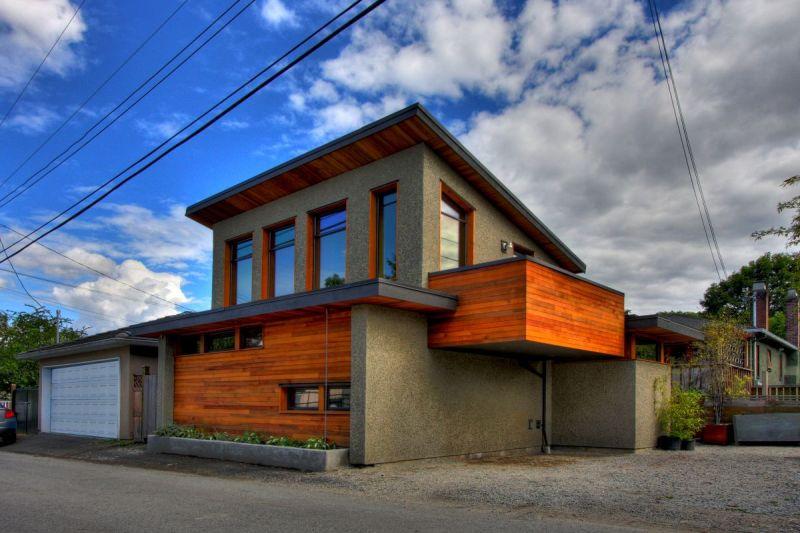
There’s an alley renaissance going on around the world. It was born of a renewed love for urbanity that came along with the droves of young, artistic types shunning the ‘burbs and re-populating North America’s inner cities. They brought with them a desire to turn what have traditionally been neglected and ugly inner-city dumping grounds into vibrant, art-adorned, pedestrian-friendly public spaces.

Vancouver, BC—the city that has served as a North American icon for creating liveable inner cities—is having its own “laneway” renaissance (as alleys are known here). However, in Vancouver, the revival was spawned by sky-high real estate prices, a lack of affordable housing, and an ingenious plan to create ‘hidden density’ in the city’s most desirable single-family neighborhoods.

Tackling the Other Carbon Problem

In this blog series, we’ve explained how carbon dioxide pollution is making the oceans more acidic, demonstrated that it’s happening now, looked at which marine creatures are most at risk and talked to oyster growers, commercial fishermen, and Native American teenagers about their prospects if the ocean systems that support their businesses and culture collapse.

So what can we do about ocean acidification? Here are some of the key solutions:

  • Reduce carbon emissions by developing policies that assign a cost to that pollution and encourage a shift away from fossil fuels and towards clean energy.
  • Use existing laws—from local land use planning to building codes to the Clean Water Act—to curb pollutants that make the problem worse.
  • Invest in research and monitoring to see how important marine species will be affected, inform fisheries and ocean management plans, and help seafood producers adapt.

Read more

Carbon Dioxide: The Evil Ninja

To explain ocean acidification to second graders, here’s a start: Think of carbon dioxide as an evil ninja.

He’s buried in the ground in the form of coal, oil or some other fossil fuel. Someone digs him up and lights him on fire, sending him up into the atmosphere in a plume of smoke, or perhaps a polluting helicopter. The stealthy ninja parachutes out and lands in the ocean, where he begins to turn the ocean more acidic.

The ninja also runs into a happy clam, whose shell is made of calcium and carbonate. But the evil ninja breaks the molecule apart, kidnaps the carbonate and locks it away where no one can get to it. With that fundamental bond broken, the shell dissolves, the clam inside dies, and sea life as we know it is under attack.

That, at least, is the way students from the Suquamish Tribe Middle School see the situation unfolding in our oceans, as they brainstorm ideas for an animated video that will help younger kids understand the mechanics of ocean acidification. It’s a problem that people like Paul Williams, the shellfish management policy advisor for the tribe, sees as a grave threat to their culture. As he explained to a room of 11- to 14-year-old students on a recent summer day:

The goal today is to make videos to explain what’s going on out on the water because this is your future. If any of you want to be fishermen or fisherwomen, it’s really up to you guys. This is something that’s happening right now and it’s getting worse. If we want to have any alternative to McDonald’s, we’re going to have to work on this. And I have to apologize to you because my generation couldn’t do it. It’s a shame to have to tell you guys that this is your problem…but it’s the truth and I think you guys are old enough to be told the truth.

Read more

×
Privacy Overview
Sightline Institute

More information about our privacy notice

Strictly Necessary Cookies

Strictly Necessary Cookie should be enabled at all times so that we can save your preferences for cookie settings.

3rd Party Cookies

This website uses Google Analytics to collect anonymous information such as the number of visitors to the site, and the most popular pages.

Keeping this cookie enabled helps us to improve our website.

Additional Cookies

This website uses social media to collect anonymous information such as which platform are our users coming from.

Keeping this cookie enabled helps us better reach our audiences.