Donate Newsletters

Making Sustainability Legal

Some of the smartest, most innovative solutions for building thriving and sustainable communities in the Northwest are, at present, simply illegal.

Even the best-intended rules to protect people and shared assets can become outdated. From business strategies (think buggy whips and typewriter ribbons) to the stuff forgotten in the back of your fridge, almost everything has an expiration date. Luckily, weeding out the counterproductive rules rendered irrelevant by time can have a big impact—making it easier and cheaper to do the right thing.

Take the problem of the urban stormwater runoff that threatens the health of Puget Sound and other waterbodies throughout the Northwest. Low Impact Development (LID) solutions—including such strategies as rain gardens, street-side swales, porous pavement, and green roofs—can treat stormwater more effectively, and for less money, than the costly “hard” infrastructure of downspouts, pipes, and sewers. Yet many development codes mandate the more-expensive, less-effective plumbing solution. If only codes would allow LID as an alternative, the region could see a proliferation of lower-impact techniques that could spare government coffers in lean times, and give developers and homeowners a financial break—even while providing cleaner water and patches of urban habitat.

Read more

What A Coal Export Terminal Looks Like

Bellingham photographer Paul K. Anderson recently traveled to the Westshore Terminal in British Columbia to document what a coal export facility looks like. His images are an arresting preview of what could be in store for Longview, Bellingham, and other communities.

paul k anderson_chuckanut conservancy_dozer

Bigger version here. (Copyright Paul K. Anderson, Chuckanut Conservancy. Used with permission.)

The photos below provide a good sense for just how dirty these facilities are.

Read more

A Reluctant Cyclist Hits the Road

I have a confession to make: I don’t own a bike. (Don’t tell any of my bike-loving coworkers.) Truth is, I hadn’t ridden a bike in over a decade—until last weekend. Six months ago I sold my broken-down, paperweight of a car and have been mooching rides for trips too far outside my neighborhood ever since. … Read more

All You Need to Know About Stormwater Runoff

Editor’s note: This blog is also available as a printer friendly pdf, and a similar version was published this week in Trim Tab, the publication of the Cascadia Green Building Council. 

A woman drowns when the basement of her Seattle home suddenly fills with a torrent of filthy water.

An overflow of 15 million gallons of sewage and stormwater fouls the shoreline of picturesque Port Angeles, putting the waterfront off limits to the residents and visitors of the Olympic Peninsula town due to health concerns.

Portlanders are socked with some of the nation’s highest water utility rates in order to pay for the city’s $1.4 billion “Big Pipe” projects.

Northwest scientists document coho salmon dying in urban streams with their bellies full of eggs, perishing before they can spawn.

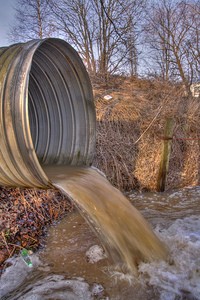
Storm pipe_Flickr_Mike AncientThe culprit in each of these stories is the most mundane of villains: the rain. As rainwater streams off roofs and over roadways and landscaped yards, it mixes a massive toxic cocktail. It scoops up oil, grease, antifreeze, and heavy metals from cars; pesticides that poison aquatic insects and fish; fertilizers that stoke algal blooms; and bacteria from pet and farm-animal waste. A heavy rainfall delivers this potent shot of pollutants straight into streams, lakes, and bays—threatening everything from tiny herring to the region’s beloved orcas to our families’ health.

Stormwater doesn’t match the traditional image of pollution. There are no factory smokestacks belching waste, no pipes with a steady trickle of noxious industrial effluent. Despite appearances, stormwater packs a wallop. Polluted runoff long ago surpassed industry as the number one source for petroleum and other toxic chemicals that wash into the Northwest’s water bodies.

Each year, the Puget Sound is sullied by 14 million pounds of toxic chemicals and oil and grease—and that’s a conservative estimate.The amount of petroleum waste is so vast, it’s as if more than 70,000 cars pulled up to the beach and emptied their tanks straight into the Sound each year.*

Read more

Sustainability on Shaky Ground

Editor’s note: This blog post was contributed by guest blogger Edward Wolf, a Portland writer and contributing author to Worldchanging: A User’s Guide for the Twenty-First Century.

Seismograph-flickr-tonyjcaseI have always been eager to understand the natural and human capital of the Pacific Northwest, the attributes of people and place that shape the possibilities of our home. I tend to frame sustainability in these bioregional terms.

But I’ve noticed that even the most dedicated bioregionalists treat geology, if they consider it at all, more as a passive template than an active force. I think it’s time to broaden that notion. We may be approaching one of those infrequent moments when geology meets history.

The Cascadia Subduction Zone is a plate-boundary fault that stretches from Cape Mendocino to Vancouver Island. It spawns earthquakes and tsunamis as powerful as any on earth. Barely known 25 years ago, Cascadia is now the most thoroughly studied subduction zone on earth.

New evidence suggests that Cascadia ruptures far more often than was believed even a few years ago. Cascadia has generated more than 40 earthquakes of Magnitude 8 or greater (i.e., comparable to the Chilean earthquake of February 2010) in the last 10,000 years. The most recent rupture of the fault has been dated precisely to January 26, 1700—311 years ago. About 80 percent of the intervals between those 40 documented earthquakes appear to be shorter than 300 years.

Geophysicists assess probabilities in a variety of ways, but their conclusions boil down to “we are living on borrowed time.” The best-informed people I know expect the next Cascadia quake and tsunami in our lifetimes, certainly in our children’s lifetimes. No aspect of our infrastructure has been built to withstand the shaking or the waves we will experience. Strange to say and harder to accept, in our vulnerability we may resemble Haiti more than we resemble Chile or New Zealand.

Read more

Canadians Believe in Climate Change!…and Government!?

A report detailing Canadian and US public opinion on climate change and based on the results of two national surveys was released Wednesday by the Public Policy Forum and Sustainable Prosperity (full report here, pdf).

The big takeaways:

  • Far more Canadians than Americans believe climate change is real (80 percent vs. 58 percent).
  • Canadians, unlike their US counterparts, see clear government responsibility in addressing climate change (65 percent vs. 43 percent).
  • And unlike the bulk of Americans, Canadians are willing to pay for global warming solutions (twice as many Canadians as Americans support both a cap-and-trade system for industry and the idea of paying a carbon tax of up to $50 a month).

Support for Climate Policies in the US and Canada—and Willingness to Pay


Note: Support levels represent the percentage of respondents who indicated that they either “strongly supported” or “somewhat supported” the policy option.

Read more

Time for BC to Index the Minimum Wage?

According to this piece in the Vancouver Sun, British Columbia’s aspiring political leaders are mostly lining up in favor of an increase in the provincial minimum wage.  Which is perfectly reasonable: BC’s minimum wage hasn’t budged for almost a decade, and now stands far lower than that of any other Canadian province. (This fact sheet from … Read more

BPA Ban Debated in Oregon

Sippy Cups Flickr.com Slice of Chic Creative Commons

Oregon is looking to ban BPA from baby bottles, sippy cups, baby formula cans, and reusable sports water bottles. Washington did a similar ban last year—minus a ban on formula cans. And Oregon is proposing an interesting add-on to its proposed rules: requiring manufacturers to label cans as containing BPA.

Then shoppers get to decide if they want a can of peaches lined with a known endocrine disruptor for their toddler’s lunch, or if they will opt instead for a non-BPA can, or maybe frozen or fresh peaches.

The Oregon Environmental Council is drumming up support for the legislation—numbered HB 3258—on this BPA-Free Oregon Facebook page.

Transparency in ingredients and packaging is a great tool for moving us toward safer consumer goods, and one that manufacturers are hard pressed to argue against. If they stand behind the safety of their products and the chemicals they’re using, they’ve got nothing to hide. If BPA and my other favorite family of hormone disruptors, phthalates, are so fantastic and necessary, the chemical industry and manufacturers should tell me they’re in their products—and specifically which chemicals—heads held high.

Read more

Stormwater Stomachache

Pepto_Miche11e_FlickrStormwater obviously causes problems for the environment and infrastructure, washing away salmon eggs in torrents of runoff and flooding basements. But does it threaten human health as well? You bet it does, and in ways that might surprise you.

Polluted runoff flushes raw sewage across beaches, triggers blooms of toxic algae in our drinking water systems, and contaminates shellfish and seafood we eat with bacteria and dangerous chemicals.

Over the past three years, sewage-tainted runoff has forced the closure of 32 Washington beaches, some for a couple of days, others for weeks. The problem is caused when rainwater mixes with the sewer system—sometimes by design and sometimes thanks to old sewer pipes that let the rain seep in. The cocktail of polluted runoff and raw sewage overwhelms the sewage treatment plant, forcing the combined sewer overflow (or CSO) to dump the waste into a nearby river, lake, or bay.

And what’s in that lovely concoction? Researchers find everything from salmonella bacteria to the parasite giardia, to Norwalk-like viruses. Ailments resulting from exposure to sewage-tinged water include:

diarrhea, vomiting, stomach cramps, fever, hepatitis, bronchitis, pneumonia, and swimmers itch.

People get sick by swallowing the water either when recreating in or when their drinking water becomes contaminated. You can get sick simply by inhaling small droplets, or through contact with skin, eyes, ears, and cuts. Children, pregnant women, the elderly, and any immuno-compromised people are most at risk. (This 2004 EPA report to the Congress gives a great overview of CSO health impacts.)

Grossed out yet? Let’s delve deeper.

Read more

×