Donate Newsletters

Unbanning Clotheslines

Editor’s Note: We’ve followed up on this post here and here, documenting how many bans are actually void.

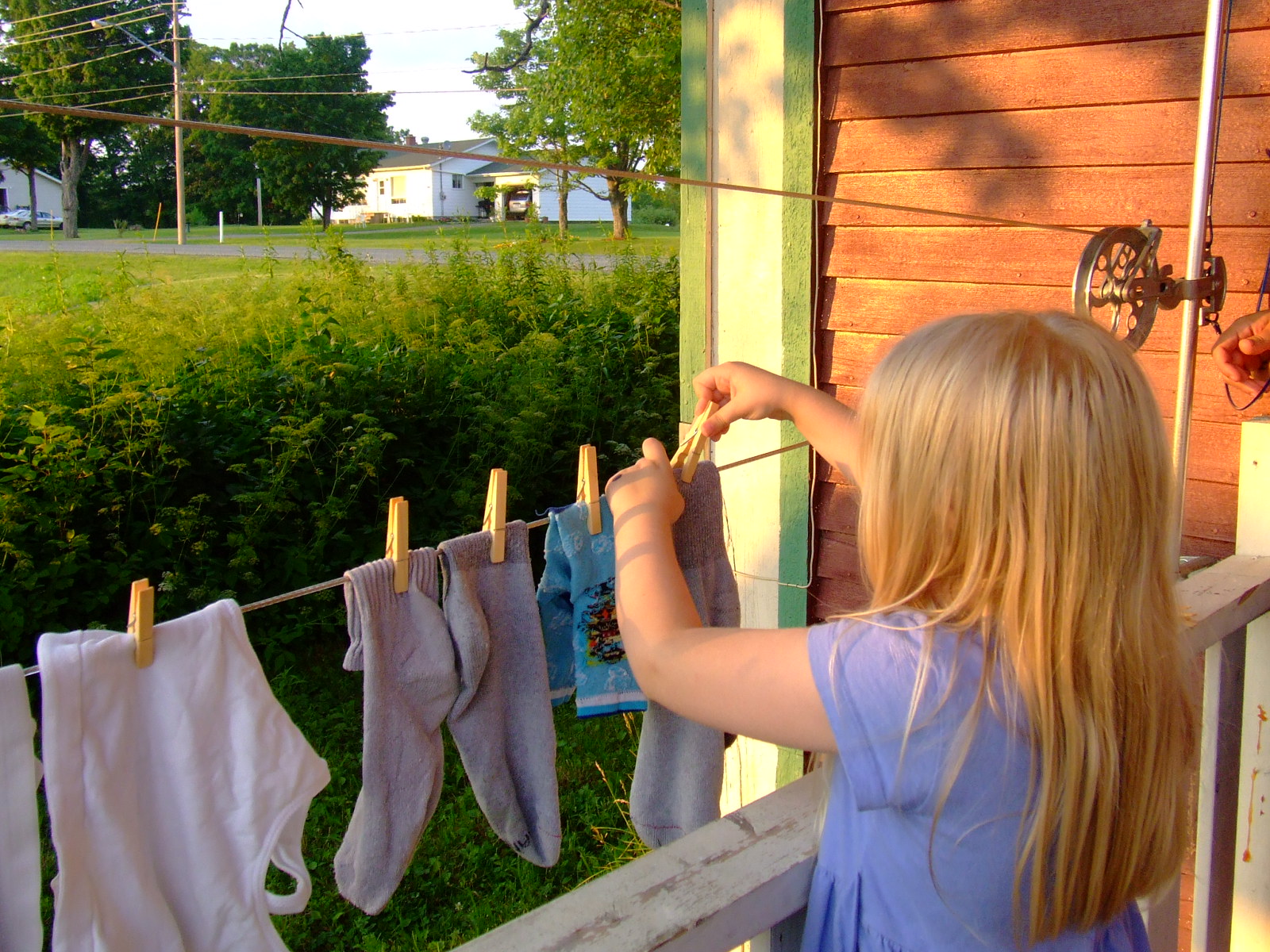
Elizabeth Morris and her family bought their house in the High Point neighborhood for a reason. “High Point is the City of Seattle’s premier ‘Green Community,’ having been touted internationally as such, as well as [for] mixing Seattle Housing Authority [SHA] rental properties and private home ownership,” she explained. It’s a compact, walkable, mixed-income, energy-efficient, green-built neighborhood peppered with bicycle commuters and rain barrels. So Morris was shocked to find that at High Point, clotheslines are banned.

“Homeowners have even been warned that it is illegal,” Morris said. “Not only are owners not allowed to save energy by hanging out laundry but those who rent from SHA (read: low income) aren’t allowed to save on their energy bills either.”

Like over 60 million other Americans and Canadians, Morris lives in a neighborhood governed by a homeowners association (HOA). These quasi-private governments, along with some apartment blocks and condominiums, are largely free to set rules as they see fit. Penalties for violations range from fines to forced expulsion. Imagine being banished by your neighbors for drying your clothes!

Clothesline bans are wrong headed, because line drying’s advantages are numerous. For one, anyone who hang dries will tell you that clothes last much longer: all that lint in your dryer filter has to come from somewhere! Benefits go beyond that, however: according to the Northwest Power and Conservation Council, households in the Northwest states use 4.3 percent of their annual electricity consumption to dry laundry. To put that into perspective, even our refrigerators only gobble up 3.5 percent. As the New York Times highlighted in an article last year, the typical US household could prevent 1,500 pounds of carbon dioxide from entering the atmosphere each year simply by turning off its dryer and hanging out the wash. Oh, and clotheslines never burn down your house; in the US alone, dryers cause more than 12,000 residential fires annually.
Read more

Are You a Banker or a Gambler?

Not every commercial fisherman is convinced that curbing carbon emissions is necessary to stop global warming. But the evidence that fossil fuel pollution is making the oceans more corrosive—and removing basic building blocks of the marine world—starts to get their attention.

In Alaska, commercial fishing supports one-sixth of the state’s economy and employs 70,000 people in high season, more than any other basic industry. Mark Vinsel, the executive director of United Fishermen of Alaska, the state’s largest commercial fishing organization, last year ranked his concerns about ocean acidification this way:

I’d say probably on a scale of 1 to 10, it would be 20 or 30.

If you sliced open the bellies of our most popular eating fish, at one point in their life cycle you would probably find krill, plankton, oceanic snails or other shelled creatures—the kinds of species likely to run into trouble as the oceans absorb more carbon dioxide from burning fossil fuels and other industrial processes.

As those carbon emissions rise, seawater becomes more acidic and sea life has more trouble finding calcium carbonate, a material that many creatures need to construct shells or skeletons, and, ultimately, to survive.

So if creatures at the bedrock layer of the marine food chain start to struggle in more corrosive seas, how might that affect an industry that provides nearly one-sixth of the world’s animal protein, not to mention $3.9 billion in personal income in Washington (roughly 2 percent of net earnings in the state) and more than $400 million in personal income in Oregon (one-half percent of net earnings)?

Here’s how Jeremy Brown, a Bellingham-based commercial fisherman who has spent nearly three decades fishing for salmon, halibut, black cod and albacore tuna, sees it:

Read more

Bremerton Seeks More Bang for its Clean-Water Buck

The city of Bremerton on the western shore of Puget Sound has scored a serious environmental achievement. The Navy town has become Washington’s first city to unravel a complicated system of mixed sewage and stormwater waste, dramatically shrinking the amount of pollution dumped into the Sound. The city recently celebrated its $50 million achievement, receiving kudos from the governor and head of the Ecology Department.

But as I explore in a story posted today on Crosscut, even as the city officials feel the love of their eco success, some of them wonder if it would have benefited local waters more to have spread that money around to other green endeavors.

Read more

Law and Order and Parking Lots

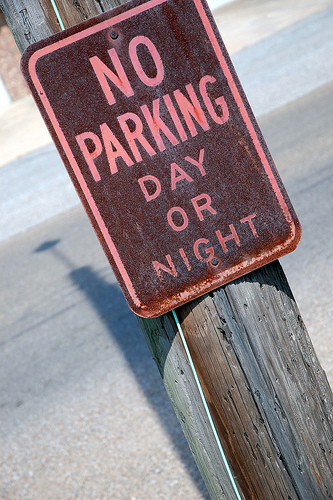
There’s no better measure of our perverse relationship with cars than the fact that nearly every city and town in North America has laws requiring drinking establishments to provide parking, and yet roadside memorials to victims of drunk driving are mostly illegal. A single year of alcohol-impaired driving kills more Americans than the last decade of war has, but our land use codes practically encourage driving home from taverns. Bar owners can be held legally liable for their patrons who imbibe too much, but our laws force owners to offer parking for their customers.

Can we stop the madness?

In this post, we take a look at how Northwest municipalities deal with parking at drinking establishments. Who gets it wrong, and who gets it (almost) right? The answers may surprise you. At the end, I’ll explain how easy it would be to fix the problem.

Let’s start with the laggards.

Despite its vaunted reputation for sustainable urbanism, Vancouver, BC may have among the worst parking mandates in the region (code, p. 9). Calculated based on the amount of floor space open to the public, the baseline requirement for businesses that sell liquor for on-site consumption is 1 parking space per 60 square feet (5.6 square metres).

Given that a typical parking space somewhere in the range of 170 square feet, and that the smallest parking space Vancouver allows is 148 square feet, it means that in many cases Vancouver bars must provide nearly three times more space for cars than for drinkers. Factor in the non-stall parts of a parking lot and the multiple is higher yet.

Vancouver’s “cabarets” that sell liquor must provide 1 for each 100 square feet (9.3 square metres). The city’s “neigbourhood grocery stores” need not provide any parking at all, but “neighbourhood pubs” must, by law, provide 1 per 200 square feet (18.6 square meters). Even designated “detoxification centres” are required to house 1 parking space per 300 square feet.

Vancouver’s parking laws seem almost directly at odds with British Columbia’s toughest-in-the-region alcohol-impaired driving enforcement. As of late 2010, police can impound vehicles and fine drivers who register a 0.05 blood alcohol level or higher, as compared to the usual criminal level of 0.08. Much to its credit, BC’s new enforcement provisions seem to be substantially reducing alcohol-related fatalities. Yet even so, drinking and driving is still killing more than 4 residents of BC each month, on average.

Read more

Decriminalize Green, Affordable Car Insurance

Imagine if state law made it difficult for pizza joints to sell by the slice. You’d have to buy and eat a lot of pizza when you got a hankering. Either that, or you’d have to give up pizza entirely. By-the-slice pizza lets light eaters save money.

The car insurance market today is like an alternate reality where no pizza joints sell by the slice. You have to buy a lot of insurance, even if you only drive a little, or you have to give up driving. If you’re poor, you may drive illegally without insurance.

The equivalent of by-the-slice pizza is by-the-mile auto insurance. It gives families a new way to save money, by driving less. It also lets low-income drivers buy just a little insurance. It gives consumers more choices. And it creates a gentle, money-saving incentive to find alternatives to driving alone. This incentive yields fewer car crashes, less consumption of imported gasoline, less congestion, and less air pollution.

Read more

Trouble on the Half Shell

gautsch.net, flickr

Four summers ago, Sue Cudd couldn’t keep a baby oyster alive.

She’d start with hundreds of millions of oyster larvae in the tanks at the Whiskey Creek Shellfish Hatchery in Netarts, Oregon. Only a handful would make it.

Sometimes, they’d swim for a couple of weeks. But they’d stop developing before they grew a critical shell structure, or maybe the foot or eyespot. They’d feed poorly. One day, the larvae would simply die. A hatchery that has supplied seafood businesses for three decades had virtually nothing to sell for months, said Cudd, who owns the hatchery.

They would just sort of fade away…It was really devastating. We’re kind of the independent growers’ hatchery, and we had always been reliable up until that point. People were just shocked. I heard a lot of times how it was ruining people’s businesses.

It’s tough to say with scientific certainty that ocean acidification is the sole cause of the die-offs that have plagued two of the Northwest’s three major oyster hatcheries in the last few years.

But this much seems clear: young oysters have a hard time surviving in conditions that will only become more widespread as carbon dioxide from cars, coal plants and other industries cause the fundamental chemistry of the ocean to become more acidic. (For more on that process, see our earlier posts here, here and here).

Read more

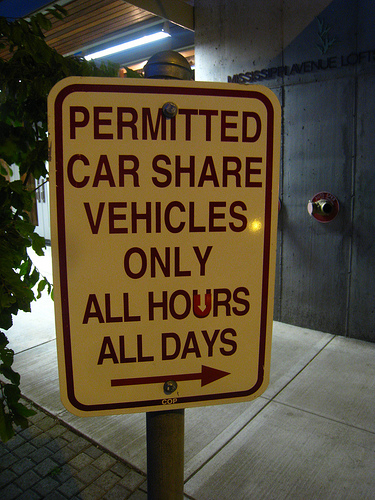
Legalize Personal Car-Sharing

What if a stupendously enormous business opportunity were hiding in plain sight before our eyes? What if this same business opportunity would bring gigantic environmental and social dividends? And what if all that was required to unleash these benefits was a simple legal reform?

Personal car sharing is such a business opportunity: a chance to trim emissions, crashes, and fuel costs, all while generating a profit for car owners and giving everyone a new way to save money. Only one legal barrier—an obscure change to insurance regulations—stands in the way.

The Pacific Northwest’s rolling stock of cars and trucks constitutes a mind-boggling amount of underutilized capital. The region has substantially more motor vehicles than licensed drivers. Everyone in the region could climb into a vehicle and no one would have to sit in the backseat. What’s more, the typical car is parked 23 hours a day. Most of us have more money tied up in our cars than in any other physical assets aside from our homes, and all that wealth is just sitting there in the driveway depreciating.

But circumstances are ripening to turn this colossal overstock into an equally massive economic and environmental opportunity.

Read more

Making Sustainability Legal

Some of the smartest, most innovative solutions for building thriving and sustainable communities in the Northwest are, at present, simply illegal.

Even the best-intended rules to protect people and shared assets can become outdated. From business strategies (think buggy whips and typewriter ribbons) to the stuff forgotten in the back of your fridge, almost everything has an expiration date. Luckily, weeding out the counterproductive rules rendered irrelevant by time can have a big impact—making it easier and cheaper to do the right thing.

Take the problem of the urban stormwater runoff that threatens the health of Puget Sound and other waterbodies throughout the Northwest. Low Impact Development (LID) solutions—including such strategies as rain gardens, street-side swales, porous pavement, and green roofs—can treat stormwater more effectively, and for less money, than the costly “hard” infrastructure of downspouts, pipes, and sewers. Yet many development codes mandate the more-expensive, less-effective plumbing solution. If only codes would allow LID as an alternative, the region could see a proliferation of lower-impact techniques that could spare government coffers in lean times, and give developers and homeowners a financial break—even while providing cleaner water and patches of urban habitat.

Read more

×
Privacy Overview
Sightline Institute

More information about our privacy notice

Strictly Necessary Cookies

Strictly Necessary Cookie should be enabled at all times so that we can save your preferences for cookie settings.

3rd Party Cookies

This website uses Google Analytics to collect anonymous information such as the number of visitors to the site, and the most popular pages.

Keeping this cookie enabled helps us to improve our website.

Additional Cookies

This website uses social media to collect anonymous information such as which platform are our users coming from.

Keeping this cookie enabled helps us better reach our audiences.