Donate Newsletters

Washington Legislative Session 2025: Housing Update 

MEDIA CONTACT: Martina Pansze, Sightline Institute, martina@sightline.org    Article:  Housing bills to watch in Washington’s 2025 Legislative Session  OLYMPIA, WA – Regional, nonpartisan think tank Sightline Institute analyzed over two dozen housing-related bills under consideration in Olympia to identify the legislation that would best address Washington’s deep statewide housing shortage.   The following pieces of legislation … Read more

WA Senate approves parking reform bill

MEDIA CONTACT: Catie Gould, Sightline Institute, catie@sightline.org    OLYMPIA, WA – Washington state Senator Jessica Bateman’s Parking Reform and Modernization Act, SB 5184, was approved by the state Senate in a 40-8 bipartisan vote on February 19.  The bill would cap how many parking spots local governments can mandate for new housing and commercial buildings and … Read more

A Magic Boost for Low-Turnout City Elections

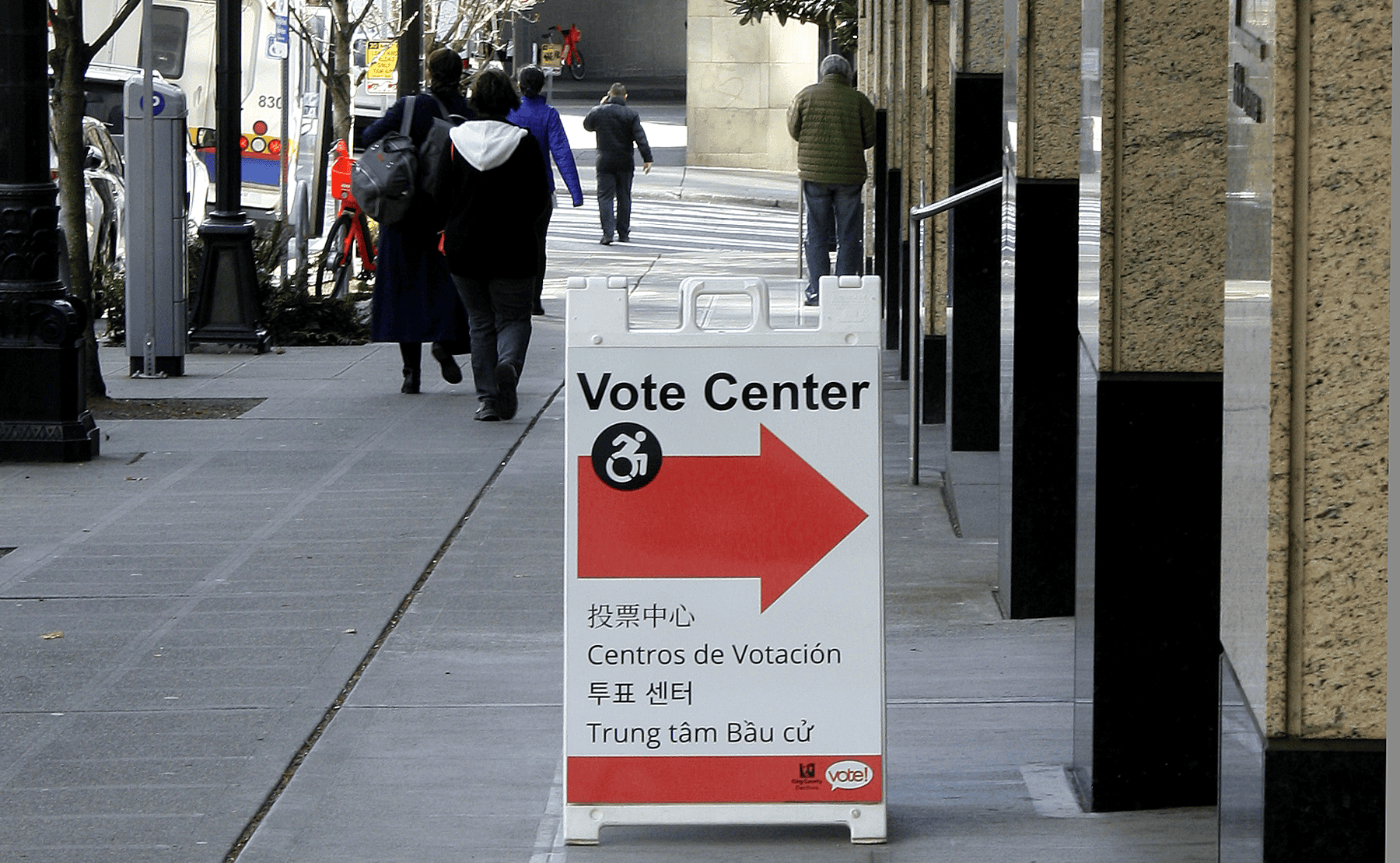
Seattle, WA - March 3, 2020: King County voting center sign at a Seattle county building.

Takeaways Find audio versions of Sightline articles on any of your favorite podcast platforms, including Spotify, YouTube, and Apple. First-time candidate for Seattle City Council Alexis Mercedes Rinck just got more votes in her 2024 race than the city’s mayor, Bruce Harrell, when he won in 2021. In fact, she got more votes than any … Read more

One of Washington’s Anti-Climate Initiatives, 2066, Eked Out a Victory. Why?

Takeaways

  • Washingtonians narrowly approved Initiative 2066, the ballot measure that will hinder the state’s efforts to reduce climate pollution from buildings, even as they soundly rejected Initiative 2117 and defended the Climate Commitment Act. Why the split results?
  • The campaign against I-2066 suffered from a meager budget, misleading messaging from the “yes” campaign, an error-ridden Seattle Times “yes” endorsement, and less organizational backing than the campaign to defend the Climate Commitment Act.
  • That nearly half of Washingtonians voted against 2066 despite these headwinds is testament to how popular climate action is in the state, a signal for leaders to keep moving forward, not stall or backtrack.
  • State leaders can keep working to ensure Washingtonians enjoy clean, efficient, healthy homes, including by appointing a climate-forward utility regulator and holding gas companies accountable to reducing their pollution in line with the overwhelmingly popular Climate Commitment Act.

Washingtonians narrowly approved Initiative 2066, the ballot measure that will hinder the state’s efforts to reduce climate pollution from buildings. It is the only one of the four state ballot measures backed by conservative group Let’s Go Washington that voters passed. I-2066 squeaked by with a 3-point margin, according to the latest vote tally, with 90 percent of ballots counted. That’s compared to the whopping 24-point margin by which voters rejected I-2117, which would have repealed the state’s cap-and-invest law, the Climate Commitment Act. (Environmental groups are promising legal challenges to the constitutionality of I-2066.)  

The choice to pass I-2066 but reject I-2117 is contradictory, as I wrote before the election. In essence, it was a vote to maintain a cap on emissions, while rejecting tools that could actually reduce emissions.  

What explains this inconsistency? And where does the effort to stop burning gas in Washington’s buildings go from here?  

One lesson may be that future gas transition policies need to clearly paint a picture of what people gain by going all-electric—cleaner air, more comfortable homes, thicker wallets—not just what they’d be missing—in this case, the indoor air pollution that comes from gas-powered appliances and the greenhouse gas emissions that come from fracking for gas in the first place, among other drawbacks.  

Moving forward, legislators and Governor-elect Bob Ferguson would be wise not to interpret I-2066’s narrow passage as a signal from voters to slow climate progress. Instead, they can take inspiration from Washingtonians’ overwhelming rejection of I-2117 and hold gas utilities accountable to fulfilling the intent of the immensely popular Climate Commitment Act.  

Money, messaging, and movement backing: Why voters rejected one anti-climate initiative and passed the other 

Of the four Let’s Go Washington measures on Washingtonians’ ballots, Initiative 2066 was the most likely to pass, according to pre-election polling. Initiative 2066’s confusing language certainly played a part. Five percent of voters left the question about I-2066 blank, the most of any of the four initiatives, according to the No on 2066 campaign.  

But the effort to oppose I-2066 faced several other headwinds, which could help explain why voters approved the measure even though they signaled strong support for state climate solutions by resoundingly rejecting I-2117.  

Scant funding and a misinformed Seattle Times endorsement made for an uphill battle against I-2066  

The campaign against I-2066 ran on a shoestring budget, compared to the campaign against I-2117 to protect Washington’s Climate Commitment Act. No on 2066 raised less than 2 percent of the money that No on 2117 pulled in: $301,645 compared to more than $16 million. (Let’s Go Washington had more than $9 million at its disposal to support all four of its ballot measures.) The top two contributors to No on 2117—protecting the well-known Climate Commitment Act—included high-profile billionaires Steve and Connie Ballmer and Bill Gates, whereas the top two contributors to No on 2066 were local nonprofit environmental organizations Washington Conservation Action and Climate Solutions. 

A misleading, error-ridden “yes” endorsement from the Seattle Times no doubt also helped I-2066 eke out a win. The two measures that the Seattle Times recommended voters reject, I-2117 and I-2109, both failed by more than 20-point margins. By contrast, the other initiative (besides I-2066) that the Times recommended a “yes” vote for, I-2124, failed by a narrower 10-point margin. 

Voters could already see tangible wins from the Climate Commitment Act, helping the opposition to I-2117 

One advantage that the No on 2117 campaign had over the No on 2066 campaign was the vested interest the Climate Commitment Act has already created across the state of Washington. The cap-and-invest program has raised more than $2 billion for diverse projects statewide in the less than two years it has been in effect. That money is going to fund real benefits for Washingtonians, from free transit passes for youth to cleaner, healthier school buildings. The spread of this funding throughout the state likely also helps explain how even counties that president-elect Donald Trump won voted to keep the Climate Commitment Act.  

In other words, a “no” vote on 2117 likely felt like protecting benefits that Washingtonians already enjoy or feel invested in.  

“Gas ban” disinformation confused voters and drowned out messaging about electrification benefits  

By contrast, a “no” vote on 2066 may have felt like giving something up. The Yes on 2066 campaign’s repeated fearmongering about a ban on gas stoked this sentiment. Efforts by advocates to explain to the electorate that Washington does not and would not have any gas ban, regardless of the 2066 outcome, may have inadvertently reinforced the yes campaign’s loss or sacrifice framing.  

To be clear, there are plenty of good reasons to give up burning natural gas in our homes and businesses. Burning gas for heat is responsible for about half of Washington’s carbon emissions from buildings. (Buildings are the second highest-emitting sector in the state, after transportation.) Gas that Washingtonians burn in their homes is also supremely dirty. It’s mostly fracked, an environmentally destructive extraction method linked to low birth weightswater pollution, and abrogation of First Nation treaty rights. And study after study shows that burning gas to cook food is a hazard to human health, with gas stoves emitting cancer-causing benzene and asthma-causing nitrogen dioxide, including in home kitchens with small children nearby—and their sensitive, developing lungs. 

Still, a lesson for advocates may be the opportunity to doubly emphasize the major upsides that transitioning off gas makes possible. A vote to keep Washington hooked on gas locks people into a dirty, antiquated energy system, limiting their energy freedom and precluding the benefits of electrification. Like a cooler, more comfortable home to get through summer heat waves. Lower housing construction costs. A few extra dollars in your bank account each month, thanks to lower utility bills. And the carefree pleasure of cooking with your kids breathing the air nearby.  

The law 2066 took aim at didn’t have the same movement backing as the Climate Commitment Act 

Another key difference between I-2117 and I-2066 was the breadth and depth of support from advocates for the underlying policies that each sought to repeal. A broad array of organizations across Washington supported the original Climate Commitment Act. Detractors included some environmental justice groups, such as Front and Centered, which nonetheless urged its supporters to reject the I-2117 repeal effort. By contrast, the policies that I-2066 took aim at did not enjoy the same big tent of supporters.  

Most notably, one of the laws that I-2066 repeals in part is House Bill 1589. The legislature first considered a similar law in 2023, ultimately passing a final version in 2024. The idea and original drafts of that bill were brought forward not by advocates but by Puget Sound Energy (PSE), the state’s biggest gas and electric utility and the company at the center of 1589’s focus. (Interestingly, PSE did not endorse the No on 2066 campaign.)  

In between the 2023 and 2024 legislative sessions, a handful of organizations that represent environmental and low-income consumer concerns, including Sightline Institute, spent several months developing recommendations for lawmakers who were considering re-proposing HB 1589. For example, several groups believed the legislature should take up a bill focused on decarbonizing all gas utilities in the state, instead of using the 2023 version of HB 1589 as a starting point, which only focused on PSE. Most groups also wanted to see a bill that required gas utilities to start piloting geographically targeted electrification and gas infrastructure pruning, something that could protect low-income gas customers from rising utility bills.   

In the end, lawmakers declined to take up these recommendations, moving forward with a bill that focused only on PSE. That bill asked PSE to assess the potential for geographically targeted electrification but did not go so far as to require the utility to propose pilots for doing so. Initiative 2066 repealed that requirement from HB 1589.  

Perhaps partially as a result, the No on 2066 coalition counted roughly 200 supporting organizations, compared to the nearly 600 groups that joined the No on 2117 effort.  

Make a donation

Sightline’s work is made possible by the generosity of people like you.

Donate


Lawmakers now have another chance to put forward policies to shift Washington’s buildings off gas. By incorporating more of advocates’ recommendations, legislators may find their proposals to be more durable this time around.  

What’s next: How WA leaders can hold gas utilities accountable to the Climate Commitment Act’s goals 

The legislature cannot, according to the Washington state constitution, repeal the laws that I-2066 enacted for two years—at least not without a two-thirds majority in each legislative chamber. But there’s nothing stopping legislators from passing a new, stronger policy than HB 1589 that holds all gas utilities in the state to meeting Washington’s legally mandated climate targets.  

When developing a new gas decarbonization policy, legislators would be smart to lean into the decisive victory of the Climate Commitment Act and more clearly communicate how the two policies connect. As I’ve written elsewhere, the gas utilities in Washington do not actually plan to reduce their emissions in line with the state’s greenhouse gas targets to comply with the Climate Commitment Act. Instead, they intend to buy allowances to keep pollution levels nearly unchanged over the coming crucial decades, according to their most recent integrated resource plans filed with regulators.  

In fact, if the gas utilities in the state proceed according to their plans—complying by paying rather than by decarbonizing—they will require more allowances in 2050 than the program’s budget should allow to stay consistent with Washington’s greenhouse gas targets. What happens if that occurs? The state can issue more allowances, above the budgeted cap. That’s because lawmakers wrote an allowance price ceiling into the law: if demand for allowances exceeds supply, therefore pushing prices above the ceiling, the state can simply increase the supply of allowances to pull prices back down. (Most cap-and-trade laws include a price ceiling; this is not unique to Washington’s program.)  

But counting on the price-pressure release valve of extra allowances defeats the purpose of the Climate Commitment Act, which is to encourage entities like PSE to find creative efficiencies, invest in cleaner infrastructure, and plan ahead for a steady path to lower emissions. Companies continuing to pay to pollute at levels close to today was likely not what voters had in mind when they rejected I-2117. A gas decarbonization policy could fill the gap.  

Models from Massachusetts and WA’s own clean electricity law 

Massachusetts’ 2021 Climate Roadmap bill offers perhaps the best example of a gas transition policy that Washington could emulate. That law, which applies to all gas utilities in Massachusetts, holds companies accountable for meeting their proportional share of the state’s greenhouse gas emissions reductions. It also makes explicit utility regulators’ mandate to prioritize “reductions in greenhouse gas emissions to meet statewide greenhouse gas emission limits.”  

Another way to think of a stronger, more comprehensive gas transition policy is like a Clean Energy Transformation Act (CETA) for gas utilities. CETA is Washington’s clean electricity law, a law that, interestingly, neither of the anti-climate initiatives on this year’s state ballot targeted for dismantling. Under CETA, electric companies must generate power free from greenhouse gas emissions by 2045, with interim targets between now and then. Electric utilities, like gas utilities, are covered under the Climate Commitment Act’s emissions cap. But it’s CETA, not the Climate Commitment Act, doing the heavy lifting to reduce these companies’ pollution. A similar measure to CETA for gas utilities makes sense. 

Appoint a climate-forward commissioner to the Utilities and Transportation Commission 

If the 2025 legislature does not take up a new gas transition policy in the wake of I-2066’s passage—or even if it does—the most promising place for Washington to keep curbing pollution from buildings will be the state’s Utilities and Transportation Commission (UTC). The UTC regulates investor-owned gas utilities, among its other duties. As such, as I wrote last week, one of the first and most important climate decisions Governor-elect Bob Ferguson will make is whom to appoint to fill the soon-to-be-open seat at the Utilities and Transportation Commission. 

Arguably, the legislature does not need to pass any new laws for the UTC to lead on climate. Lawmakers have already given the UTC instructions to: 1) consider “environmental health and greenhouse gas emissions reductions” when determining if a gas utility’s proposal for a rate increase is in the public interest; 2) develop new performance measures to assess utilities (a shift from traditional regulatory incentives) and consider factors including “attainment of state energy and emissions reduction policies”; and 3) study how gas utilities can decarbonize, a process that resulted in the finding that “regulatory agencies and utilities need to plan for a decadal drawdown of natural gas consumption.” 

What could a climate-forward UTC that honors these mandates accomplish?   

  • It could require all gas utilities to show how they will achieve the state’s greenhouse gas emissions reductions mandates. 
  • It could demand that gas utilities plan for electrification, which study after study, including Washington’s own 2021 state energy strategy, shows is the cheapest and most efficient way to decarbonize buildings. 
  • It could prevent gas utilities from profiting from gas system expansion if non-gas alternatives, such as electrification or energy efficiency, are viable (a position Massachusetts regulators adopted in 2023). 
  • It could require that gas companies identify opportunities to shrink the gas system, to save ratepayers from paying for a bloated gas system.   

With voters’ approval of I-2066, climate leadership at the state’s utility commission becomes more critical than ever.  

Washingtonians want a cleaner, healthier future; a transition from gas to electricity is instrumental to getting there  

Initiative 2066, the only one of the four conservative Let’s Go Washington ballot measures that voters passed—and narrowly so—benefited from an under-resourced “no” campaign, an endorsement from the Seattle Times, and confusing ballot language. That nearly half of Washingtonians voted against the measure despite these headwinds is testament to how popular climate action is in the state.  

The opportunity ahead for state leaders, then, is to help constituents better understand the future denied to Washingtonians when the state is locked into a gas-fired system, as I-2066 tries to do. A future hooked on gas prevents Washingtonians from accessing best-in-class heating and cooling options to keep comfortable year-round and cleaner indoor air for workers and families going about their daily lives.  

Washingtonians want a future of abundant energy options, clean air and water, and the benefits they enjoy from making polluters take responsibility for their pollution. They made that clear in their full-throated defense of the Climate Commitment Act. From Governor-elect Bob Ferguson to the legislature to the Utilities and Transportation Commission, the state’s leadership can help ensure we get there. 
Experts, resources for journalists covering elections in PNW, N. Rockies states

Numerous states in the Pacific Northwest and Northern Rockies are voting on measures concerning climate and energy choice (Washington state), and electoral upgrades like open primaries and instant runoff or ranked choice voting (Alaska, Idaho, Montana, Oregon).   Sightline Institute is a nonpartisan, nonprofit regional think tank whose experts, research, and data visualization resources can inform … Read more

Correcting the Record on Initiative 2066

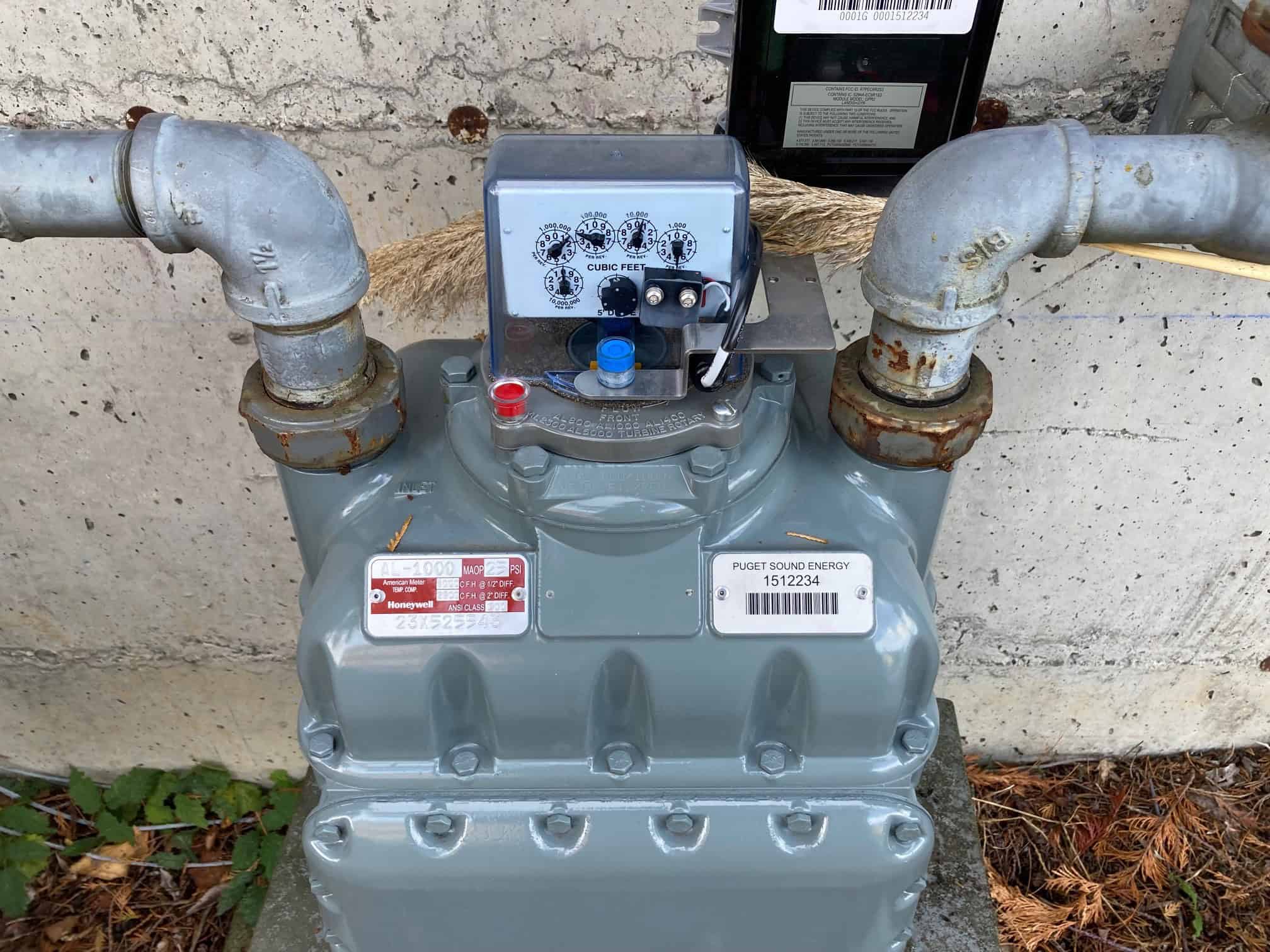
Gas meter. Photo by Emily Moore.

Takeaways

  • The Seattle Times editorial board recently endorsed Washington state Ballot Initiative 2066. The board’s reasoning consists of misleading information and gas industry talking points, while eschewing critical facts.
  • Sightline is not endorsing or opposing any ballot initiatives in 2024. But we have extensively studied the policies Initiative 2066 would and could affect.
  • Here we note and correct the Seattle Times editorial board’s erroneous claims and provide accurate information the editorial board left out.

On October 4, 2024, the Seattle Times editorial board encouraged its readers to vote yes on Washington Ballot Initiative 2066. That endorsement is riddled with misleading statements and omits critical facts about the issues at hand. 

The endorsement focuses almost exclusively on critiquing House Bill 1589, a law passed by the state legislature in 2024. In doing so, the editorial board implies (incorrectly) that Initiative 2066 would repeal HB 1589 in its entirety. In fact, Initiative 2066 selectively takes aim at some of the most climate-friendly provisions of HB 1589, leaving much of the law intact. 

More important, the editorial board glosses over other potentially further-reaching consequences of Initiative 2066, such as those on the state energy code. The editorial board also misleads readers on the facts of the energy transition. (For instance, it erroneously implies that converting gas pipes to pump green hydrogen into homes is a worthy and viable climate solution.) 

Sightline is not endorsing or opposing any ballot initiatives in 2024. But as an independent nonpartisan research organization, we have extensively studied the policies that Initiative 2066 would repeal and others it could affect. The Seattle Times editorial board is entitled to an opinion, but for the paper of record in Washington state to take a stand, the opinion should be based on fact, not fiction. Below we correct the errors and fill in the gaps in the Seattle Times’ endorsement of Initiative 2066. 

The Seattle Times editorial board glosses over how Initiative 2066 could affect the Washington energy code. 

“Tacked on was a concurrent repeal of new state building codes that make installation of gas furnaces nearly impossible.” —Seattle Times editorial board 

FACT: Initiative 2066 could prevent Washington from encouraging the most energy-efficient heating and cooling systems in new buildings. 

The editorial board devotes just a single sentence to one of the biggest potential effects of Initiative 2066: a new restriction on the state energy code. 

The energy code sets the standards for all new construction of buildings in Washington. Since 2009, Washington state law has required that the energy code be designed to construct “increasingly energy efficient homes and buildings” and help achieve a statewide goal of emissions-free new construction by 2031. 

Initiative 2066 would add new language to state statute that prevents the state energy code from “prohibiting, penalizing, or discouraging” the use of gas in any building. The initiative would also eliminate Washington’s longstanding requirement that the energy code help achieve emissions-free new construction. In practice, this new restriction could be used to challenge Washington’s 2021 state energy code

To be clear, the 2021 energy code (which is currently in effect) does not prevent gas in new construction. But because the energy code must be designed to construct “increasingly energy efficient homes,” it does incentivize the most efficient heating system on the market: electric heat pumps. Air-source heat pumps can earn an efficiency rating of 300 to 400 percent compared to the highest-efficiency gas furnace, which tops out at 95 percent efficiency. 

If a builder wants to construct a new dwelling with a gas furnace, they can. But to meet Washington’s overall efficiency standards, they’ll need to devote resources to other (likely more expensive) efficiency measures, such as reducing air leakage. 

Plus, the editorial board fails to remind readers that not constructing new homes that burn fossil fuels is one of the easiest, cheapest climate actions Washington can take. The state will add nearly one million new residential units between 2024 and 2050, according to forecast data from the Northwest Power and Conservation Council. (Never mind that building new all-electric homes is cheaper than building new homes with gas hookups—another point the editorial board misses.) 

The Seattle Times editorial board omits Initiative 2066’s possible impact on Seattle’s new clean buildings law. 

FACT: Initiative 2066 could lead to challenges of one of Seattle’s major climate laws: the Building Emissions Performance Standard. 

The editorial board completely fails to mention that Initiative 2066 would write new language into state statute that bars cities, towns, and counties in Washington from actions that “prohibit, penalize, or discourage” gas for heating or other uses in buildings. 

In practice, this could affect Seattle’s new Building Emissions Performance Standard (BEPS), a law the city passed in December 2023. It is one of Seattle’s most significant climate policies; buildings make up more than a third of the city’s carbon emissions. 

BEPS requires Seattle’s existing buildings larger than 20,000 square feet (think high-rises, shopping centers, and grocery stores) to meet progressively declining greenhouse gas emissions targets until they achieve net-zero emissions in 2050. The city expects BEPS to reduce Seattle’s building emissions by 27 percent by 2050

Like Washington’s 2021 energy code, Seattle’s BEPS does not ban gas. However, BEP’s standards will be difficult to achieve unless Seattle’s big buildings transition from burning gas to using clean electricity. Almost 90 percent of the city’s buildings sector emissions come from burning gas. Initiative 2066 could thus potentially be used to challenge BEPS on the grounds that it discourages the use of gas. Readers of the Seattle Times’ endorsement of Initiative 2066 remain oblivious to this possibility. 

The Seattle Times editorial board incorrectly implies that HB 1589 pushes a haphazard and hasty transition from gas to electrification. 

“[Legislators] rushed a flawed but wide-ranging bill giving Puget Sound Energy, the state’s largest utility, new abilities to assess and request rate hikes to advance electrification. Initiative 2066 on this fall’s ballot is a course correction, requiring them to slow their roll and rethink their haphazard approach to this momentous transition.” —Seattle Times editorial board 

FACT: HB 1589 makes utility planning processes more orderly and streamlined and protects ratepayers from rising bill costs. 

The core purpose of HB 1589 is to improve, coordinate, and streamline utility planning processes as Washington decarbonizes. That’s hardly “haphazard,” as the editorial board has branded the law. 

Specifically, the law asks Puget Sound Energy (PSE), Washington’s largest gas and electric utility, to plan for decarbonization jointly across its gas and electric business lines. That’s a change from the status quo, in which PSE (like all Washington utilities) develops and submits to regulators separate gas and electric plans. 

HB 1589 requires PSE to propose an “integrated system plan” to regulators by 2027 that outlines scenarios for how the company’s gas and electric operations will contribute to Washington’s greenhouse gas reduction requirements, which have been on the books since 2008 and were updated in 2020. Joint planning will allow PSE’s electric business to better anticipate growing demand for power as more households convert from gas to electricity—a far more thoughtful and organized approach to decarbonization than the siloed planning happening to date.  

Further, nothing in HB 1589 guarantees that regulators will approve PSE’s integrated system plan or any requests for rate hikes. The law lays out several criteria that regulators at the Washington Utilities and Transportation Commission (UTC) must use to assess PSE’s plan, including whether it “would maintain system reliability and reduces long-term costs and risks to customers.” If this and other conditions are not met, the UTC can reject the plan. 

Initiative 2066 selectively strikes out the most climate-friendly provisions in HB 1589—the ones that move PSE from a haphazard approach to electrification to an intentional forward-looking one. Namely, the initiative would do away with requirements that PSE 1) develop a plan for cost-effective electrification of end uses served by natural gas, such as home heating, 2) assess alternatives, such as energy efficiency, to spending PSE customer money on new gas pipes, and 3) consider geographically targeted (or neighborhood-scale) electrification as an alternative to expanding the gas system. 

Without these provisions, Washington will fall further behind states such as Colorado and Massachusetts, which are leading the way with even more ambitious improved climate planning requirements for gas utilities. 

The Seattle Times editorial board mistakenly argues that HB 1589 will stress the region’s electric grid, thereby increasing greenhouse gas emissions. 

“Puget Sound Energy and other utilities face long timelines to plan, permit and construct a bigger, greener electricity grid. If the state’s power demand grows too quickly in the interim, utilities will have no choice but to ramp up or import greenhouse gas-emitting sources for electricity. Strain on the grid—exacerbated by power-hungry data center development—is growing. Meanwhile, a PSE consultant found that, if gas customers all switched to cold climate heat pumps, an additional 8 gigawatts of peak electricity will be needed on the grid in 2045.”—Seattle Times editorial board 

FACT: HB 1589 will not drive electricity demand spikes, and it improves grid planning. Plus, shifting more buildings from gas to electricity will actually reduce Washington’s overall energy demand. 

As the editorial board points out, demand for electricity in the Northwest is rising. But what it gets wrong is why; converting buildings from natural gas to electricity is not it. Less than 10 percent of the Northwest’s growth in electricity demand between 2025 and 2050 will come from converting residential buildings from burning fossil fuels such as gas to using electricity. Far more of the rising power demand over the next 25 years (more than half) will come from electrifying transportation. Plus, as the editorial board notes, energy-hungry data centers are behind much of the uptick in power demand in the region. 

Make no mistake, grid upgrades are necessary for meeting Washington’s climate goals, as Sightline has studied extensively. But the editorial board’s evocation of the overloaded grid in the context of HB 1589 and Initiative 2066 is a red herring. Planning for residential electrification will not break the grid. 

In fact, HB 1589 improves grid planning. If PSE proposes a project to electrify part of its gas service territory (something, to be clear, the law does not require), it must proactively coordinate with the relevant local electric utility to preserve system reliability and ensure sufficient grid capacity. Initiative 2066 would repeal this grid-planning provision. 

More broadly, HB 1589 requires PSE to propose a workable plan for meeting the state’s climate goals, rather than winging it. The law asks the utility to map out what it would entail in practice to follow the recommendations in study after study (including Washington’s own 2021 state energy strategy), which show that electrification is the cheapest and most efficient way to meet state goals to curb emissions from buildings. 

The editorial board also fails to mention that electrifying buildings reduces the state’s demand for energy, compared to keeping them hooked up to gas. That’s again because of heat pumps’ superior efficiency ratings relative to their gas counterparts. Residential and commercial buildings in the Northwest will use 30 percent more energy in 2050 if they keep burning gas than if they electrify. 

The editorial board also misleads readers into thinking that HB 1589 jeopardizes the region’s greenhouse gas targets. But since it passed the Clean Energy Transformation Act in 2019, Washington has required all utilities, including PSE, to achieve 100 percent clean electricity standards by 2050. Nothing in HB 1589 changes that requirement. 

The Seattle Times editorial board repeats gas utility falsehoods about pumping hydrogen into gas pipes to address climate change. 

“[Gas] pipeline infrastructure could also be converted to carry another cleaner fuel like hydrogen.” —Seattle Times editorial board 

FACT: Only a small amount of green hydrogen, with minimal environmental benefits, can safely be injected into existing gas pipes. 

Natural gas utilities are touting green hydrogen as core to their decarbonization strategies, and the Seattle Times editorial board seems to have accepted these promises without scrutiny.  

To be clear: renewable hydrogen, also known as green hydrogen, does have its place in a climate-friendly future, namely in cleaning up hard-to-decarbonize sectors like steelmaking, long-haul shipping, and aviation. But natural gas utilities are proposing pumping green hydrogen into their gas pipes to heat homes, an idea that is far more expensive, less effective, less efficient, and likely less safe than electrification. (Sightline has studied gas utilities’ claims about hydrogen extensively and has published a primer on decarbonizing with hydrogen).  

In truth, only small volumes of hydrogen, perhaps up to a ratio of 20 percent green hydrogen to 80 percent natural gas, can safely be injected into existing gas pipelines. But a 20 percent blend of green hydrogen only shaves off around 7 percent of the combustion emissions of a system running on 100 percent natural gas.  

What’s more, blending higher ratios of hydrogen into existing natural gas infrastructure to achieve greater emissions reductions could cost billions. Most gas distribution pipelines would need to be replaced or extensively retrofitted to safely accommodate the new fuel, since hydrogen at volumes higher than 20 percent can degrade pipelines. Further, higher ratios of hydrogen are incompatible with existing appliances such as stoves and water heaters, meaning that consumers would need to buy new hydrogen-compatible appliances. 

To make matters worse, hydrogen is less efficient than electricity for heating homes. A 2022 study found that “it takes about five times more electricity to heat a home with hydrogen than it takes to heat the same home with an efficient heat pump.” For all its concern about the Northwest’s overextended grid, the editorial board seems to not have done its homework. 

The Seattle Times editorial board sows confusion about nonexistent “gas ban”.

“HB 1589 contained a ban on PSE hooking up any new customers to its natural gas system, something 52 Democrats voted for. … Eventually, it slid through on a 27-22 vote in the Senate, but not before removal of the ban on PSE hooking up any new gas customers.” —Seattle Times editorial board 

FACT: HB 1589 contains no “gas ban,” nor does any other Washington law. 

The editorial board contributes to ongoing confusion about whether HB 1589 contains a ban on gas. To be clear, it does not. 

The endorsement first mentions how an original draft of HB 1589 included a prohibition on PSE selling gas to new customers. The editorial board fails to mention that the original bill had exceptions for manufacturing facilities, hospitals, military facilities, and residential customers using gas for backup generators in an emergency. (To be clear: no bill draft ever included a ban on gas for current gas customers).

The editorial board also may have been unaware that the prohibition on new PSE gas customers in the original 2024 bill was a technical holdover from a draft bill in 2023. As anyone who was involved in developing the 2024 bill will acknowledge, lawmakers reintroduced the 2023 bill as-is for procedural ease, but they had already committed to dropping that provision before the 2024 legislative session began. 

In a later paragraph, the editorial board acknowledges that the bill that became law does not contain any provision banning new PSE gas hookups. But readers skimming the Seattle Times’ endorsement could easily miss this follow-up. When the proponents of Initiative 2066 have branded their effort as “stopping the gas ban,” the editorial board has a duty to its readers to be crystal clear on this point. 

The Seattle Times editorial board urges a slower gas transition—one incompatible with climate science. 

“It was only a few years ago ‘natural’ gas was itself hailed as a clean energy solution. Made up of mostly methane, it is now known as more detrimental in the atmosphere but shorter lived than carbon dioxide. The Legislature must acknowledge residents are experiencing a policy whiplash. Lawmakers will need to build trust on this path to decarbonization.” —Seattle Times editorial board 

FACT: The climate-warming effects of extracting and burning gas are well-established, and the need to curb fossil fuel use is urgent. 

The editorial board correctly points out that some in climate circles once promoted gas as a “bridge fuel” that could help ease the transition from coal to renewables. But those days are long in the past. 
Scientists have made it clear that continuing to burn and extract gas—a fossil fuel—is incompatible with global climate goals. More than a decade ago, for example, the Union of Concerned Scientists published an article on the environmental impacts of natural gas. (Sightline refuted the idea of natural gas as a bridge fuel more than five years ago.) 

Gas is mostly methane, as the editorial board points out. Methane is the second largest contributor to climate change after carbon dioxide (CO2). It is 80 times more potent in terms of warming the atmosphere than CO2 in the 20 years after it is released. When natural gas is burned, it releases CO2 (and other air pollutants, such as nitrogen dioxide, which is linked to childhood asthma). 

Also missing from the editorial board’s discussion of gas: where it comes from. Much of Washington’s gas is fracked in northeast British Columbia and Alberta. Fracking has been linked to human health impacts such as low birth weights; extensive environmental degradation, including water pollution; and abrogation of First Nation treaty rights

The editorial board suggests that the legislature is acting capriciously when taking up decarbonization of the state’s gas system. The opposite is true. When most Washingtonians think their local governments should do more to address climate change, the legislature would be wise to seize this mandate.   

The Contradiction of a Split Vote on Washington’s Anti-Climate Ballot Initiatives

Drop box on an autumn day. Photo by Emily Moore|

Two of the four measures on Washington state’s ballots this fall, Initiatives 2066 and 2117, take aim at the state’s climate policies. I-2117, the better known of the two, would repeal the state’s cap-and-invest law, the Climate Commitment Act. I-2066 would restrict Washington’s ability to decarbonize buildings, the state’s second highest emitting sector.   Yet support for the two … Read more

WA’s climate-related ballot initiatives, explained 

CONTACT: Emily Moore, Sightline Institute, emily@sightline.org  October 11, 2024 SEATTLE, WA – Two measures on Washington’s November ballot, Initiatives 2117 and 2066, will affect the state’s climate goals. Nonpartisan regional research group Sightline Institute does not endorse or oppose ballot measures or candidates, but offers research-based analysis of the initiatives’ potential impacts.  Initiative 2117 would … Read more

×