Donate Newsletters

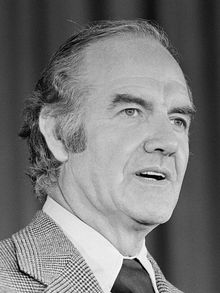
Talking McGovern[ment]

George McGovern.

Because the term itself has been so systematically loaded with negative connotations, talking about government is one of the greatest challenges for American communicators who believe in policy solutions for our health, safety, security, environment, and economy.

This Flashcard is one in an occasional series meant to help NW communicators talk more effectively about government, examining, in particular, how communications experts and some of government’s natural defenders define its role.

George McGovern understood government as a key tool for building strong families, a secure American middle class, and a better future for our kids. As the New York Times related yesterday, he “never retreated from [his] ideals, insisting on a strong, ‘progressive’ federal government to protect the vulnerable and expand economic opportunity.”

McGovern passed away yesterday in Sioux Falls, South Dakota. He was 90.
Read more

Lakoff Riffs on Government

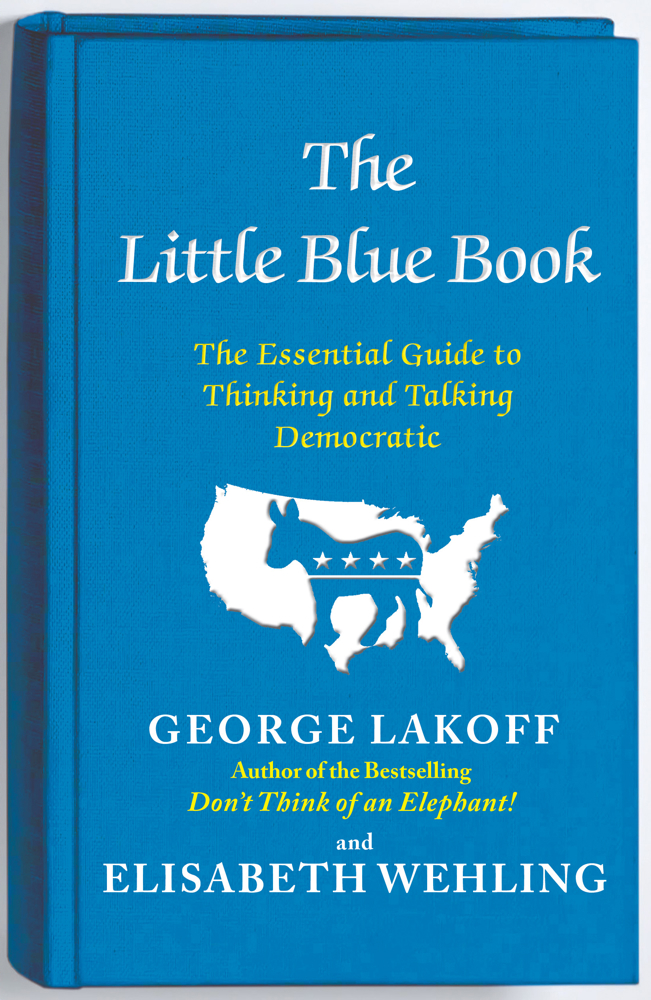
George Lakoff, The Little Blue Book

Last week I boiled down George Lakoff’s latest book into a handful of bullet points—a sort of Lakoff Messaging 101. At the heart of The Little Blue Book there is also an extensive examination of how we talk about our government in moral terms. And it deserves a second Lakoff crib sheet!

Lakoff and his co-author, Elisabeth Wehling, insist that we “must openly and regularly talk about the function of the public. The public is, and has always been, requisite for our freedom, our success, and our humanity as a nation.” I agree: we need to find better ways to talk about government—how together, through our democratic government, we build the foundation for a thriving private sector with successful businesses and individual prosperity and freedom.

Read more

Crib Notes for Lakoff’s Latest

Crib notes for The Little Blue Book by George Lakoff and Elisabeth Wehling.

Love him or leave him, agree or disagree (…with his science or his conclusions or his politics…), George Lakoff has been enormously successful in getting lots of us thinking about how the brain processes words and language—about framing.

And while many of his specific frame recommendations over the years may have been too complicated or too lofty to put to work, his insistence more generally that language is never neutral and his pleas to proactively frame the debate and to link our values and moral convictions to policy solutions undoubtedly took us in the right direction.

Lakoff’s latest framing handbook is hot off the presses: The Little Blue Book: The Essential Guide to Thinking and Talking Democratic (co-authored by Elisabeth Wehling). The book is most successful 1) as a reminder to never check your values and morals at the door when talking policy; and 2) as a thoughtful treatise on how we define our vision for the nation and how we talk about government in moral terms.

But despite promising sounding chapter titles like “A Phrasebook” and talking points under headings declaring “Here’s what to say,” the book left me hungry for clearer takeaways.

Read more

My Messaging Pet Peeves

Two dogs on leashes.

Even seasoned communicators slip into a bad habit or two. And from time to time, we all make messaging missteps that we could easily avoid.

So, in this month’s Flashcard I tackle three of my top (small-scale) messaging pet peeves: Using too many acronyms—even familiar ones, overusing the passive voice, and forgetting to swap lackluster articles for powerful pronouns. (I call these “pets” because they’re some of my own worst habits—and they’re easy to fix!)

Read more

Channel Surfing: Tips for Online Writing

In today’s rapid-fire digital landscape, it’s not unusual to find ourselves writing for a bunch of different platforms—websites, blogs, emails, Facebook, Twitter, and others—during any given day (or hour!).

We’re naturally inclined to take shortcuts, but with a hasty cut and paste from one format to another, we may be missing an opportunity to make important connections and grab attention for our content.

Read more

Now You’re Talking Climate and Weather

Little good can come from weather catastrophes. But, at the very least,  out of the destruction and heartbreak will rise a frank discussion about climate change.

That’s why my First Rule of Talking Climate and Extreme Weather is simply: Talk about it!

But, how do you talk about it when the science is complicated and the politics are so charged?

Here’s the first step. And please do not skip this step! The point here is that the order in which you say things matters—a lot.

Rule #2: Start With the Basics

When weird weather strikes, what people want to know is what we’re quite sure of. And when I say “basic,” I mean it. Is climate change happening? Is it caused by humans? Does it play a role in our weather?

The answers here are simple and clear: yes, yes, and yes.

Whatever their level of knowledge about the science, people need to hear those basics, consistently and persistently. So, start with what is well known about climate change.

Read more

Video: Five Tips for Talking About Polluted Stormwater

Editor’s Note 11/19/15: Welcome to the Northwest’s infamous rainy season! As rainwater streams down roads and roofs, it creates a potent mixture of pollutants that travel straight into neighboring waterways. So, how can we prevent polluted runoff in this rainy region? Sightline’s bringing back the first-ever video Flashcard, which provides tips on how to talk … Read more

Tips from Bill Clinton: Talking About Government

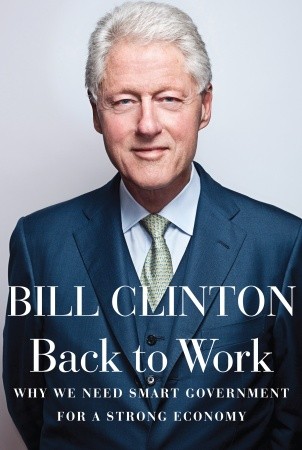
Cover of "Back to Work"

In his new book, Back to Work, Bill Clinton defends government. “To develop an effective strategy to get the jobs engine going again and deal with our long-term debt problem,” Clinton writes, “we have to take off the blinders of antigovernment ideology and focus on what role government must play in America’s renewal.” Whatever you … Read more

The Art of Talking Climate Science

Let’s face it; few of us speak in perfect, clear, stirring, and memorable soundbites. But scientists are particularly apt to load their communications with so many caveats and so much detail that non-scientists have a hard time determining whether they’ve said anything definitive at all!

Scientists have good reason to be cautious in their communications—and in a politically charged environment, climate scientists are particularly gun shy. Too much simplification—let alone personal or emotional appeals—may tread too far outside the scientific norms of dispassionate objectivity, and put a scientist’s credibility on the line. For many scientists, the moral dimensions of their work are self-evident. But articulating them is risky.

The problem is that political opponents of climate action often portray the caveats and caution as evidence that scientists are unsure of their findings.

So, what should a scientist do?

Read more

×