Donate Newsletters

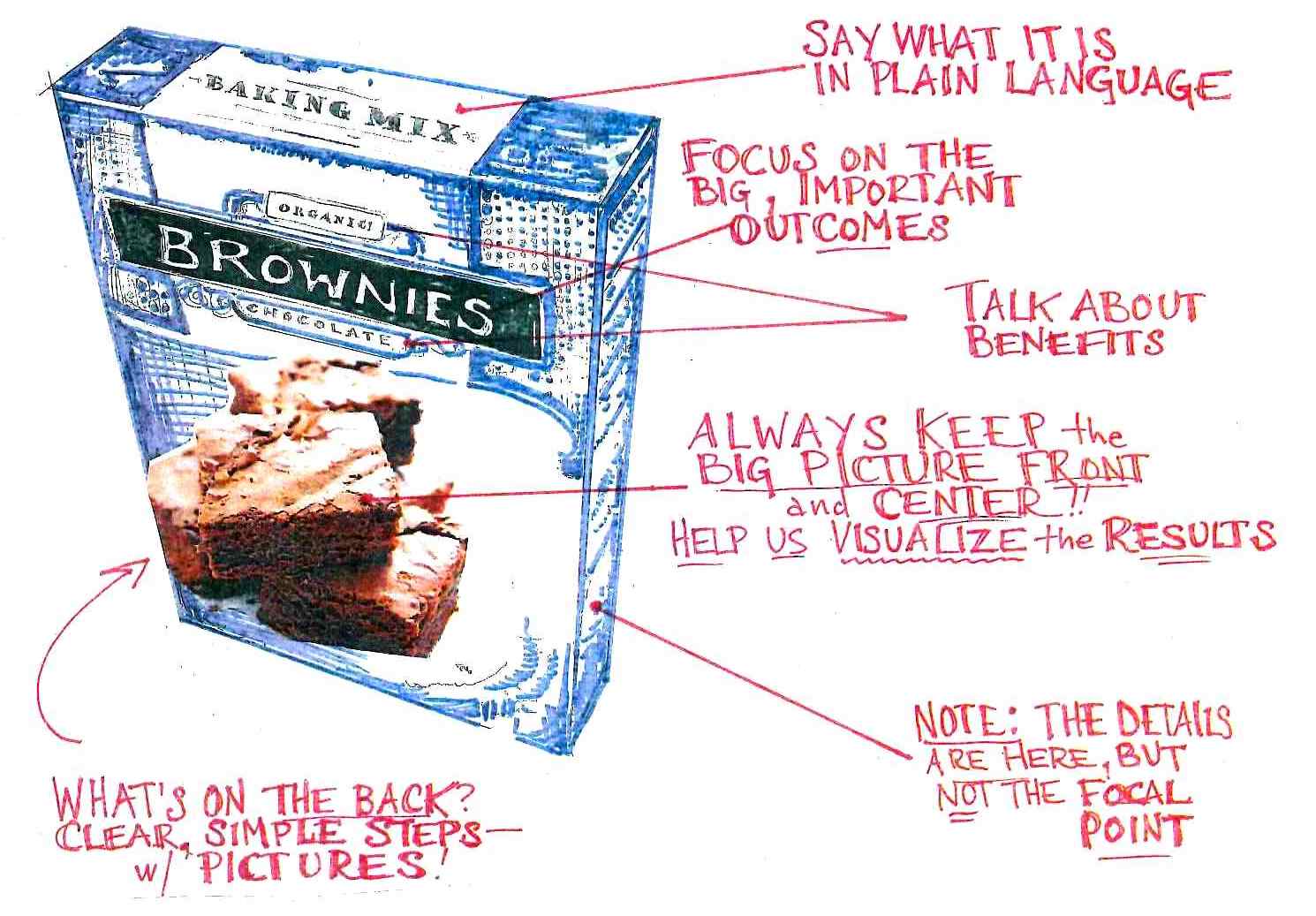
Got Policy Solutions? Think: Brownies

We’re policy nerds here. (You may have gathered that.) It means sometimes we know just about every last detail of a particular policy solution. It means we sometimes go a little overboard telling other people about all those details—because we’re excited about the possibilities. (Okay, maybe a lot overboard!)

Most of the other nerds we know do this too. And even quite a few of our non-nerd friends do it. It’s mostly because we are keen on fixing problems.

Of course, knowing the specifics is important for us. We put policy ideas through the wringer for a living. And all the little details are really, majorly, crucial for making any policy work correctly.

But as we’re talking about policy solutions, we sometimes get bogged down in the details. That’s when our audience can miss not only the basics and our enthusiasm, but also the most important thing: The Big Picture.

What people want to know—what they really need to know, in fact—is what good a policy will do and why it matters. In other words, our job is to help them see what it’s going to look like.
Read more

2014’s Five Fave Flashcards

Sightline’s messaging memos—Flashcards—cover all kinds of sustainability topics and best practices in strategic communication, from storytelling techniques to smarter ways to frame government and taxes. We draw on all kinds of research and experts. But this year, our audiences of professional communicators, electeds, and advocates have told us—with their clicks—that their favorite Flashcards in 2014 … Read more

The Hero’s Journey: Pro tips from Star Wars

Variations on a basic, familiar story have been told over and over across centuries and cultures, knitting communities together through shared values and beliefs. Joseph Campbell, scholar of religion and mythology, gave us a name for it: the hero’s journey.

The hero’s journey does indeed manifest in all kinds of stories—from creation myths and folk legends to children’s books and blockbuster movies. These are the stories we tell to shape and reinforce how we understand ourselves and our world. These stories can call us to action too, rallying people around a common purpose when things aren’t right. As Campbell put it, when you hear such a story, you respond “Aha! this is my story. This is something I always wanted to say but wasn’t able to say.”

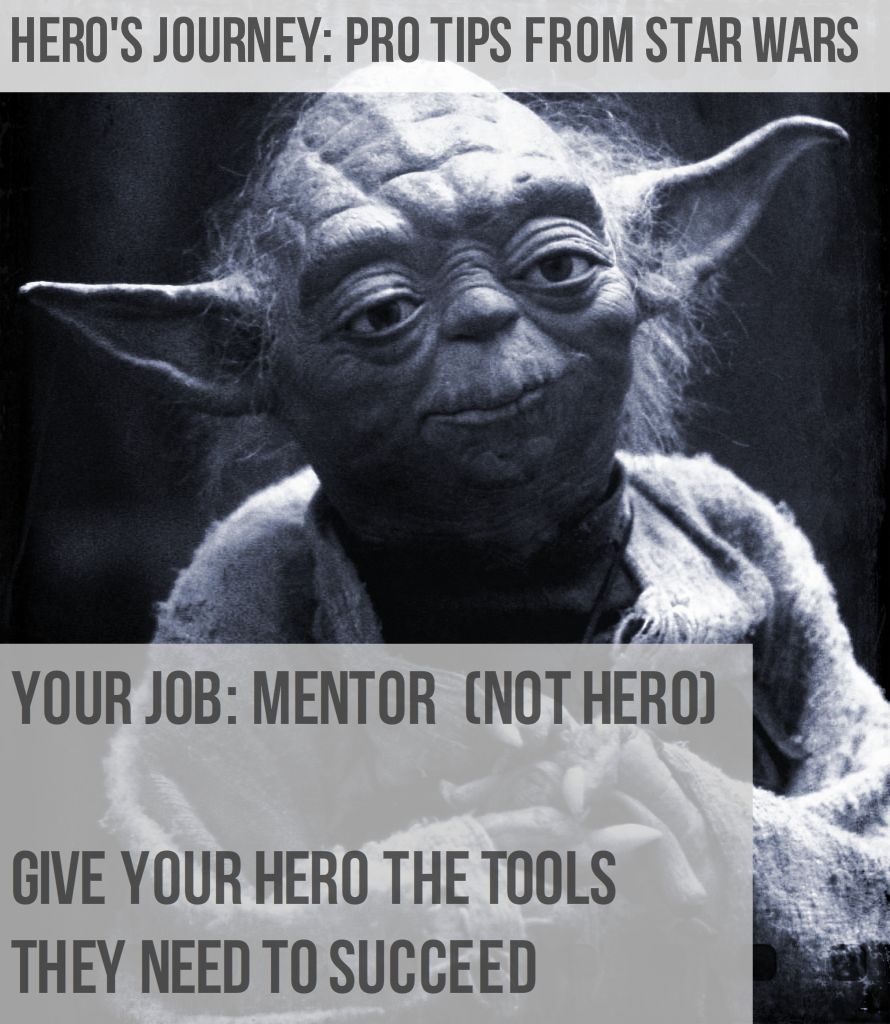
Essentially, the hero’s journey is this: An (often reluctant) hero sees a threat to his—or her—values and what he holds dear. (Think: Luke Skywalker). His world is out of balance. He is not powerful but he is moved to action. He embarks on a quest to make things right. He takes on the villains who pose the threat. And he’s helped along the way by a mentor (think: Yoda) who gives him the tools to succeed (not just lightsaber skills, but confidence—lessons in using The Force). He does it all for the good of his community, not just for himself.

Read more

Cap and Trade—In 3 Pictures

We all rely on mental shortcuts to make sense of new information. Often, metaphor and analogy—or pictures—help us get a handle on abstract ideas.

Right now, far-reaching climate and energy policy is back in the news, this time at the state level on the west coast where California has an established cap and trade system, Oregon and Washington are thinking seriously about putting a limit on climate pollution, and British Columbia has a successful carbon tax shift in place.

The time is right to deploy the most compelling illustrations of how smart climate and energy policy works for people and our economy. Here are three mental shortcuts for talking about cap and trade:

Read more

Empowerment Messages, Not Inadequacy

Most of the marketing we see (especially commercial advertising) is of the inadequacy variety—messages designed to create anxiety or insecurity about what we lack (beauty, youth, sex-appeal, status). Inadequacy stories rely on our most childish impulses and emotions, jealousy, greed, selfishness, vanity. They cast the product or service being touted as the hero, something people can buy that fills a hole (a hole that the story has convinced us we need to fill).

A far more powerful, memorable, and engaging type of message is what Jonah Sachs, author of Winning the Story Wars, dubs empowerment marketing, stories that emphasize not where we’re deficient, but how we can grow and find personal satisfaction.

Read more

Climate Change in Plain Language

Editor’s note January 2017: Are you participating in this morning’s #ClimateFacts “Twitter storm” (details here)? We are! And we’ll look forward to keeping up the drumbeat for climate science and activism in years to come, on our Twitter feeds and elsewhere. Of course, how we message is just as important as what we message, so we’re … Read more

Messaging Basics to Live By

As we gear up for a busy autumn, with election season looming and new legislative efforts on the horizon, it seems a good a time as any to take stock of some of our favorite, enduring strategic communication recommendations from the past year or so.

It’s three Flashcards in one!

First, communications researcher and advisor Anat Shenker-Osorio reminds us to show our true colors, saying what we really stand for—confidently and consistently—and not just because she says so, but because it’s a strategy empirically tested to fire up our base and bring the so-called “middle” our way.

Next up: Resource Media’s visual storytelling guide is a must-read in today’s digital media landscape. You can’t do social without mastering the art and science of putting photos to optimal use.

And, finally, what are six principles that can make your message “go viral”? Put a kitten on it, right? Well, that’s one way. But Wharton marketing professor Jonah Berger goes beyond cute, fuzzy animals and cracks the code on contagious content.

×