Donate Newsletters

Meet Reggie

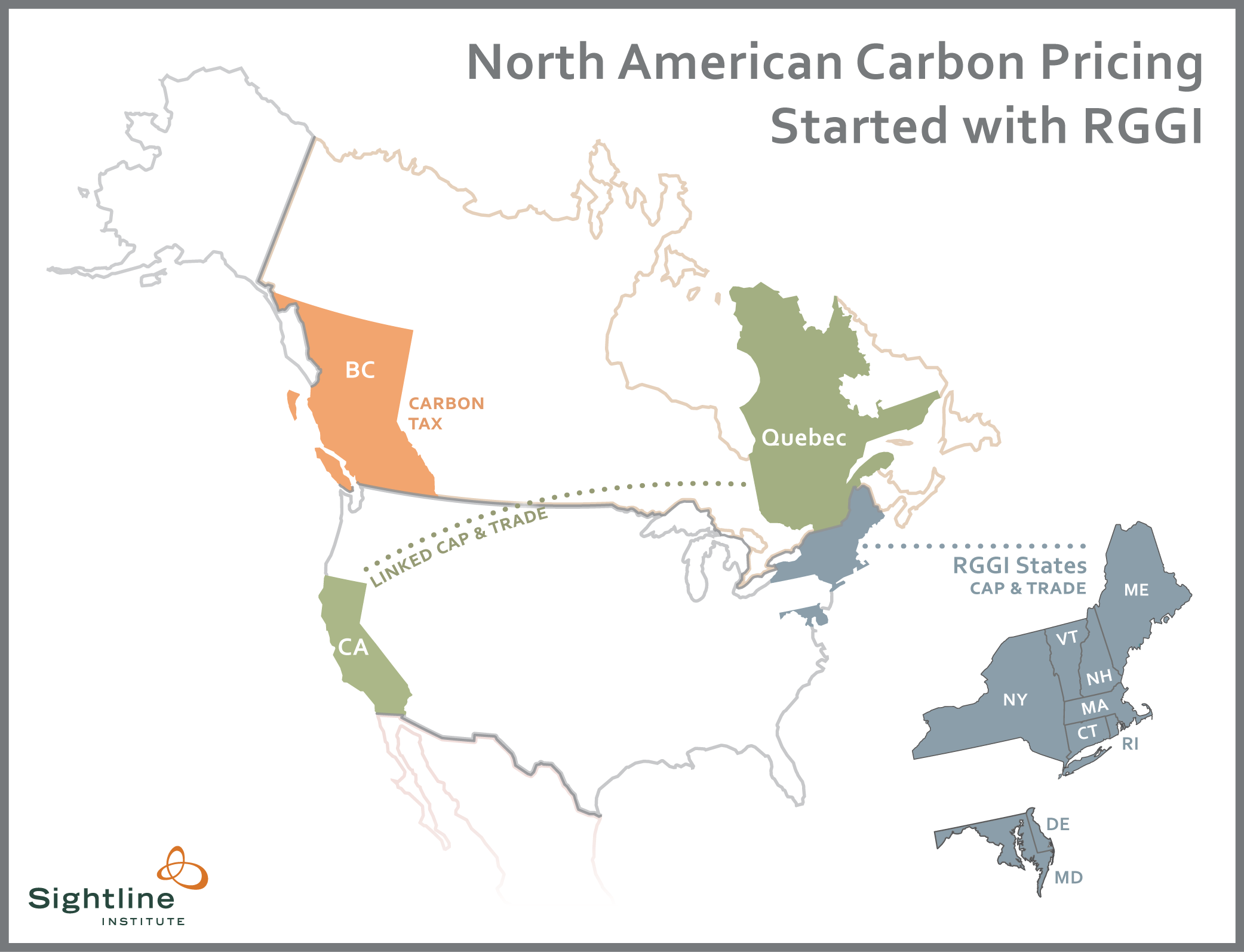
Carbon pricing’s time may have come. California Governor Jerry Brown is crusading for climate regulation, Washington Governor Jay Inslee is considering cap and trade, and government leaders in Oregon are contemplating a carbon tax. New US Environmental Protection Agency (EPA) carbon regulations may drive states across the country to join the Northeast’s well-established cap-and-trade program.

What’s that you say? You didn’t know the Northeast has the oldest carbon pricing program in the US?

Despite years of seamless market operations and nearly $1 billion in auction revenue reinvested in the local economy, the Northeast’s Regional Greenhouse Gas Initiative (RGGI—pronounced Reggie) has gone largely unnoticed out here in the Northwest.

So here are four things that will help you understand RGGI.

(1) RGGI has been operating seamlessly for years.

RGGI was established in 2005, held its first auction of CO2 allowances in 2008, and the cap was implemented in 2009. After a 2012 program review, the states agreed to an Updated Model Rule in 2013. RGGI has held 24 quarterly auctions to date, selling more than half a million allowances and collecting nearly $1 billion in auction revenue. All that, with nary a hint of market manipulation or price volatility.
Read more

17 Things to Know About California’s Carbon Cap

While Cascadian climate hawks have been fighting rearguard actions against proposed pipelines and coal trains, California has been rolling out an ambitious carbon cap. Such a cap is the principal alternative to a carbon tax—such as British Columbia’s carbon tax shift—as a method for putting a price on carbon in Oregon and Washington. It’s an option Oregon will consider next year in its impending revenue-reform debate. In Washington, the Golden State’s cap appears to be the model that Governor Jay Inslee favors: he recently convened a panel of leaders to design a state “Cap and Market” system.

The panel, after deliberation, may conclude that the best choice is for Washington to simply photocopy California’s rules and join the Golden State’s system. California actually designed its carbon market so that other states can plug themselves into it. Or the panel could opt to design its own system. Either way, Cascadia’s climate warriors would do well to study how their southern neighbor put a price on carbon, because the Golden State’s rules form the dominant carbon trading market in North America. Just last week, the state auctioned more than 20 million carbon-emission permits at $11.50 apiece.

Here are 17 things worth knowing about that market. Some of them are details, even arcane ones, but the details of a carbon pricing system matter enormously. They matter more than whether the underlying mechanism is a tax or a cap. (Sightline laid out the details of good design in Cap and Trade 101.)

1. The cap is strong . . . until 2020.

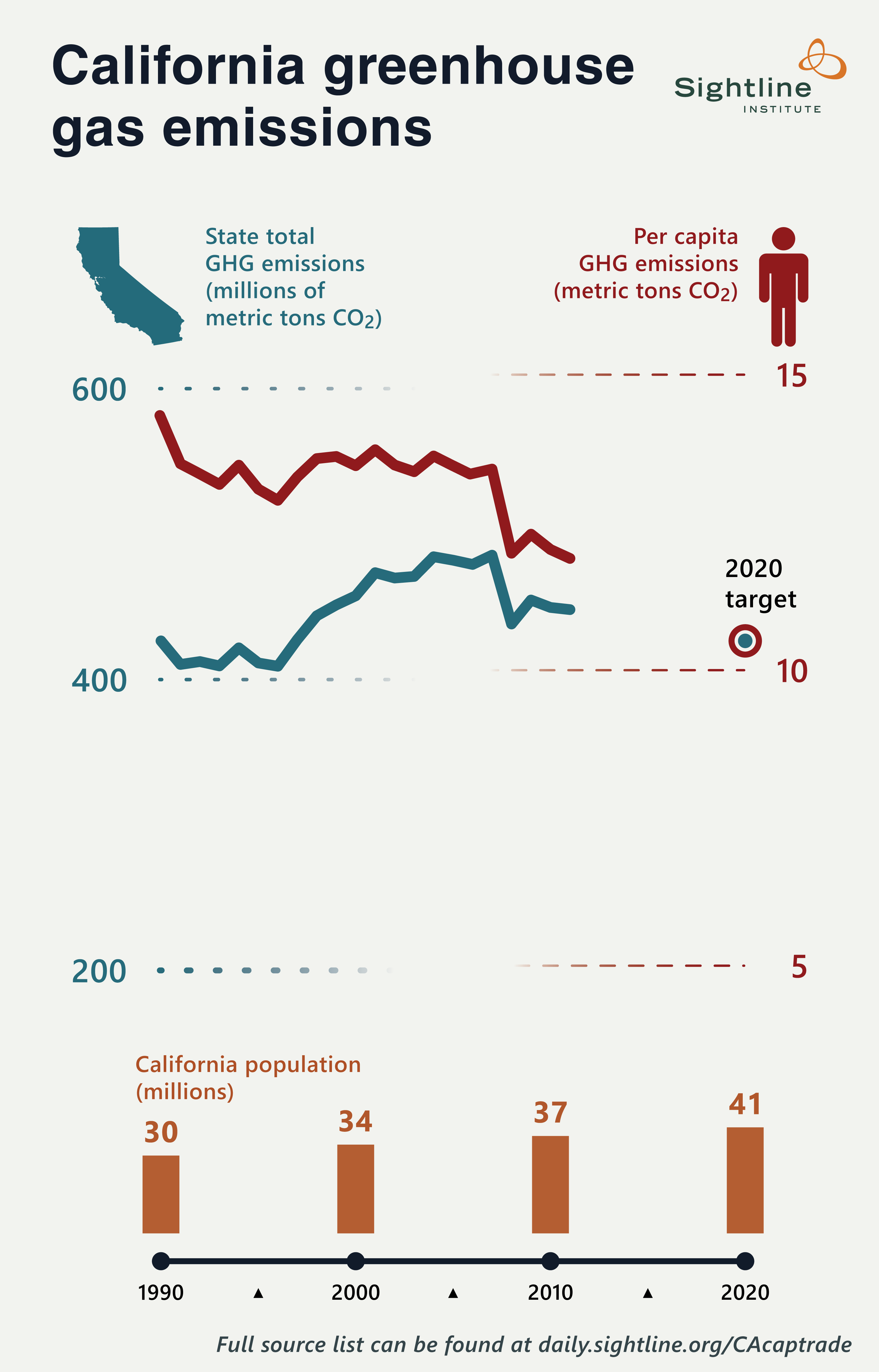
California’s carbon cap—the flagship in an armada of global warming policies launched in 2006 as Assembly Bill 32 (AB 32)—came into force in January of 2013, initially covering the electric-power sector and large factories with giant carbon footprints. Next year, it expands to the carbon dioxide from gasoline, diesel, natural gas, and other fossil fuels (and to other greenhouse gases such as methane). By then, the Cali cap will be the most comprehensive, though not the most aggressive, carbon-pricing regime in the world.

Read more

×
Privacy Overview
Sightline Institute

More information about our privacy notice

Strictly Necessary Cookies

Strictly Necessary Cookie should be enabled at all times so that we can save your preferences for cookie settings.

3rd Party Cookies

This website uses Google Analytics to collect anonymous information such as the number of visitors to the site, and the most popular pages.

Keeping this cookie enabled helps us to improve our website.

Additional Cookies

This website uses social media to collect anonymous information such as which platform are our users coming from.

Keeping this cookie enabled helps us better reach our audiences.