
For years Washington’s leaders have fingered stormwater runoff as Puget Sound enemy No. 1. Now the state has real data to back the charges, and decision makers will be able to use this information to better inform regulatory and policy decisions. Right now the state Department of Ecology is working on a draft plan for new stormwater rules, and the Puget Sound Partnership, the agency spearheading the restoration of Washington’s inland sea, last week approved its ecosystem goals for 2020.
Ecology published its best pollution data to date for Puget Sound in a study called the “Toxics in Surface Runoff to Puget Sound: Phase 3 Data and Load Estimates,” in which scientists sampled streams at 16 spots in the Puyallup and Snohomish river watersheds. The goal of the research was to try to get a better idea of how much pollution is flushed from the region’s neighborhoods, business and industrial areas, farms, and forests.
I recently wrote an article about the research that ran in Crosscut, an online news site. The over-simplified takeaway message: the most toxic runoff is coming from industrial and commercial sites, so that would be a smart target for projects that clean up and control stormwater. The study also showed that the least polluted runoff came from forests, highlighting the importance of preventing sprawl in undeveloped areas.
 New rules approved by Washington’s lawmakers will cut the amount of salmon-harming copper, toxic coal pollutants, and algae-stoking fertilizers that foul local waterways. Oregon legislators are halfway to approving a ban on copper brake pads—a ban that Washington approved last year.
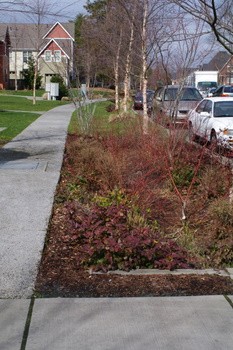 Researchers have pointed the finger at stormwater runoff as the top source of pollution that’s getting into Puget Sound and other Northwest waterways. And because runoff comes from just about everywhere—roofs, roadways, parking lots, farms, and lawns—the solution has to be just as widespread.
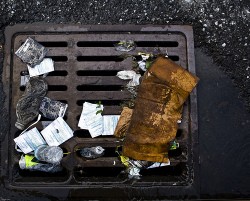
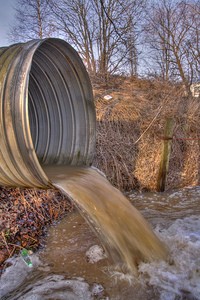 The culprit in each of these stories is the most mundane of villains: the rain. As rainwater streams off roofs and over roadways and landscaped yards, it mixes a massive toxic cocktail. It scoops up oil, grease, antifreeze, and heavy metals from cars; pesticides that poison aquatic insects and fish; fertilizers that stoke algal blooms; and bacteria from pet and farm-animal waste. A heavy rainfall delivers this potent shot of pollutants straight into streams, lakes, and bays—threatening everything from tiny herring to the region’s beloved orcas to our families’ health.
 As
As  Stormwater obviously causes problems for the environment and infrastructure, washing away salmon eggs in torrents of runoff and flooding basements. But does it threaten human health as well? You bet it does, and in ways that might surprise you.
 There are a couple of ways to tackle the problem of polluted runoff: keep the water from getting fouled in the first place, or clean it up once it’s contaminated. It doesn’t take a hydrology expert to figure out that in many cases, it’s cheaper and easier to deal with a pollutant at its source before it’s dissolved in water and spread far and wide.