Donate Newsletters

Weird Weather = Climate Impacts

Another installment of the Yale/George Mason research project on American climate attitudes (pdf) is out. The latest report is focused on how Americans are connecting changes in weather to global warming. It’s based on a survey fielded in early April.

The takeaways of note: Even though our memories appear to be short—the recency of events affects how we answer questions about weather—there’s an upward trend when it comes to associating weird weather of many different types, from many different seasons, with climate change. Increasingly, even if respondents hadn’t experienced harmful weather first hand, somebody close to them did. They are likely to have talked about it with friends and family, and many have thought about how to be prepared for weather disasters in their own local communities.

  • About six in ten Americans (58 percent) say “global warming is affecting weather in the United States.” In the West, 54 percent say this.
    Read more

Americans See Climate Change, Here and Now

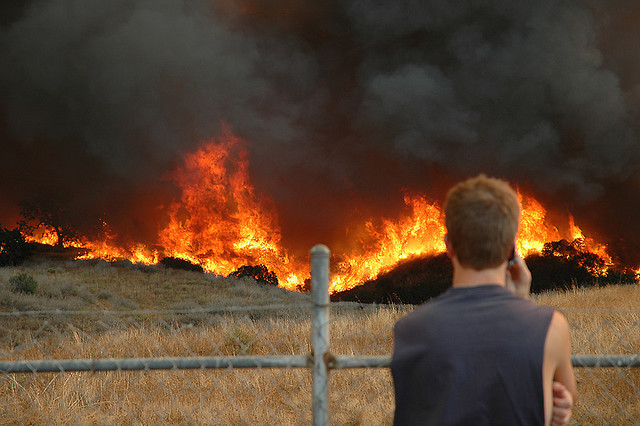
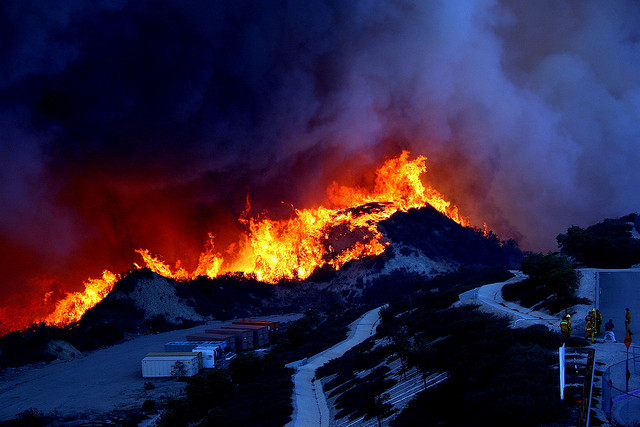
Wildfire in the West.

Whether we’re tuning in to the TV news or suffering firsthand the devastation of a heat wave, drought, or wildfire, Americans see with their own eyes that climate change is happening, here and now. As Climate Central’s Andrew Freedman points out:

From desiccating drought to blistering heat, the lower 48 states have taken it on the chin so far this year when it comes to extreme weather events. In fact, as measured by the federal government’s Climate Extremes Index, the January-through-September period has been the most extreme such nine-month period on record.

But even if voters’ attitudes about climate action have sometimes seemed fickle and our memories about weather can be short, the trend is that for families across the country, it’s becoming more and more difficult to ignore disruptive weather.

Opinion research bears this out.

A new installment by the Yale Project on Climate Change Communication and the George Mason University Center for Climate Change Communication (pdf) shows that Americans are not only increasingly likely to make connections between extreme weather and global warming, but in growing numbers, they report experiencing extremes firsthand.

Read more

Wildfire Reporting Avoids Climate

Wildfire on the horizon

The science is clear. Human-caused climate change is creating conditions where wildfires in many parts of the US are more likely to start, bigger, and harder to put out.

But, sadly, I’m veritably bowled over when a mainstream media outlet mentions climate change in their reporting on the wildfires currently devastating the West. (Just ask my husband how I’ve been yelling at the radio lately.) Of course, it’s refreshing when a paper like the Washington Post makes the wildfire-climate connections—even if I find a lot to hate about the three initial paragraphs of caveats and the scientist saying “I told you so” frame.

I’m probably not alone.

Media Matters for America, a nonprofit media watchdog, analyzed recent mainstream news coverage of wildfires and found that news outlets are avoiding the topic of climate change in wildfire stories.

Read more

Climate and the Colorado Fires

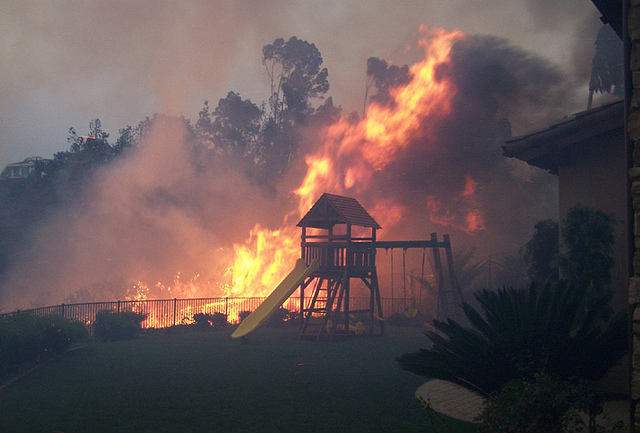
Wildfire rages in somebody's backyard

How to meaningfully put the devastating wildfires raging in Colorado and elsewhere around the West into the context of climate change? Here’s my “best of” from four recent expert responses:

Dave Roberts, Grist

First up: David Roberts—always on point.

I’ve written recently about getting past the “blame” question, recommending that we instead focus on questions (and definitive answers) that are more basic and get people the info they actually need to hear (over and over): Is climate change happening? Is it caused by humans? Does it play a role in our weather? The answers here are simple and clear: yes, yes, and yes.

In Did Climate Change ‘Cause’ the Colorado Wildfires? Roberts goes deeper on the causality issue, making the distinction between proximate and distal causes of any given event. For instance, every fire has a proximate cause—a spark. The Colorado fires happened to be started by lightning. That’s their proximate cause—the most immediate and closest. But there are also a range of distal causes—the conditions or context that make something more likely.

Read more

Climate’s Weathercaster Problem

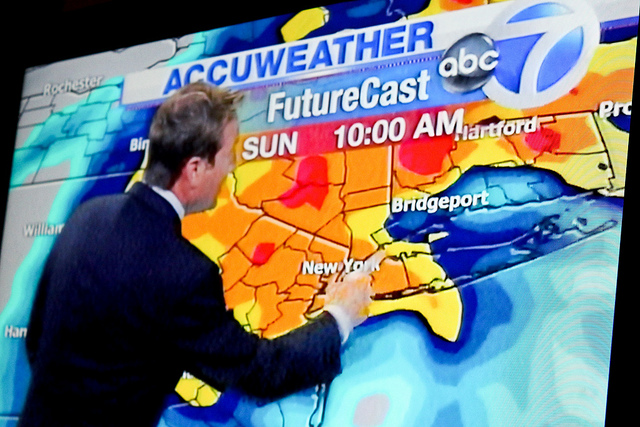
Television weather report

We humans are warming our climate—mostly by burning up fossil fuels. And we’re seeing a range of serious impacts in our own backyards and across the globe, including the increased frequency and magnitude of some types of extreme weather.

Americans seem to get it. Polling from 2011 shows that a majority of us now link an unnaturally warming climate to droughts, floods, and other extremes. But, according to opinion research by George Mason University, only 19 percent of television weather forecasters acknowledge the established science of climate change. An earlier study found that 27 percent of TV meteorologists call global warming a “scam,” while over half denied that humans are the cause.

It’s a cryin’ shame too, because as trusted local “personalities,” weathercasters are in a unique position to help interpret climate science and impacts through the lens of local weather.

If there’s a silver lining here, it’s that some weathercasters are coming around on their own—and there are several campaigns to help the others catch up.

Read more

Climate—A Winning Wedge Issue At Last?

Brookings has released a new survey that shows American public understanding of climate science is rebounding.

When Brookings asked Americans if the earth’s climate was warming in 2008, 72 percent of Americans said ‘yes.’ By 2010 the number had sunk to a low 52 percent—and it stayed in the 50s for several years. Today it’s back up to 65 percent.

Not too shabby—especially as it reinforces a trend seen in other polling (see here, here, and here.)

The partisan divide is still alive and well. But, quite significantly, Independents have moved in the direction of hard climate evidence by a whopping 20 points—from 52 to 72 percent.

Now You’re Talking Climate and Weather

Little good can come from weather catastrophes. But, at the very least,  out of the destruction and heartbreak will rise a frank discussion about climate change.

That’s why my First Rule of Talking Climate and Extreme Weather is simply: Talk about it!

But, how do you talk about it when the science is complicated and the politics are so charged?

Here’s the first step. And please do not skip this step! The point here is that the order in which you say things matters—a lot.

Rule #2: Start With the Basics

When weird weather strikes, what people want to know is what we’re quite sure of. And when I say “basic,” I mean it. Is climate change happening? Is it caused by humans? Does it play a role in our weather?

The answers here are simple and clear: yes, yes, and yes.

Whatever their level of knowledge about the science, people need to hear those basics, consistently and persistently. So, start with what is well known about climate change.

Read more

Americans Connect Weather and Climate

A poll released yesterday by Yale Project on Climate Change Communication and the George Mason University Center for Climate Change Communication shows that Americans are connecting the dots between recent extreme weather and global warming.

The New York Times summed it up in a front page story: “a large majority of Americans believe that this year’s unusually warm winter, last year’s blistering summer and some other weather disasters were probably made worse by global warming. And by a 2-to-1 margin, the public says the weather has been getting worse, rather than better, in recent years.”

Read more

Latinos: A Moral Obligation to Cut Climate Pollution

Several recent surveys reveal Latino voters to be some of the most stalwart supporters of environmental protections, including robust climate solutions.

Most recently, a 2012 Colorado College “State of the Rockies Conservation in the West” poll found that “across multiple issues, Latino voters express stronger pro-conservation views than their Anglo counterparts.” The survey was conducted in Arizona, Colorado, Montana, New Mexico, Utah, and Wyoming in January.

Seeing Impacts Trumps Climate Science

Are Americans waking up (again) about climate change?

A survey fielded this past December by the Brookings Institution (pdf) found that 62 percent of Americans think the earth is getting warmer—the highest level since the fall of 2009, and up from 55 percent last spring and 58 percent a year ago. Twenty-six percent say there’s no solid evidence. The rest are unsure. (This mirrors recent Pew findings).

What might be behind an uptick? Co-author Christopher Borick says that “seeing is believing.” Nearly half the people who say global warming is happening point to observations of temperature changes and weather as their main reasons.

Read more

×
Privacy Overview
Sightline Institute

This website uses cookies so that we can provide you with the best user experience possible. Cookie information is stored in your browser and performs functions such as recognizing you when you return to our website and helping our team to understand which sections of the website you find most interesting and useful.

Strictly Necessary Cookies

Strictly Necessary Cookie should be enabled at all times so that we can save your preferences for cookie settings.

3rd Party Cookies

This website uses Google Analytics to collect anonymous information such as the number of visitors to the site, and the most popular pages.

Keeping this cookie enabled helps us to improve our website.

Additional Cookies

This website uses social media to collect anonymous information such as which platform are our users coming from.

Keeping this cookie enabled helps us better reach our audiences.