


Editor’s note 10/17: There’s an updated version of this video here.
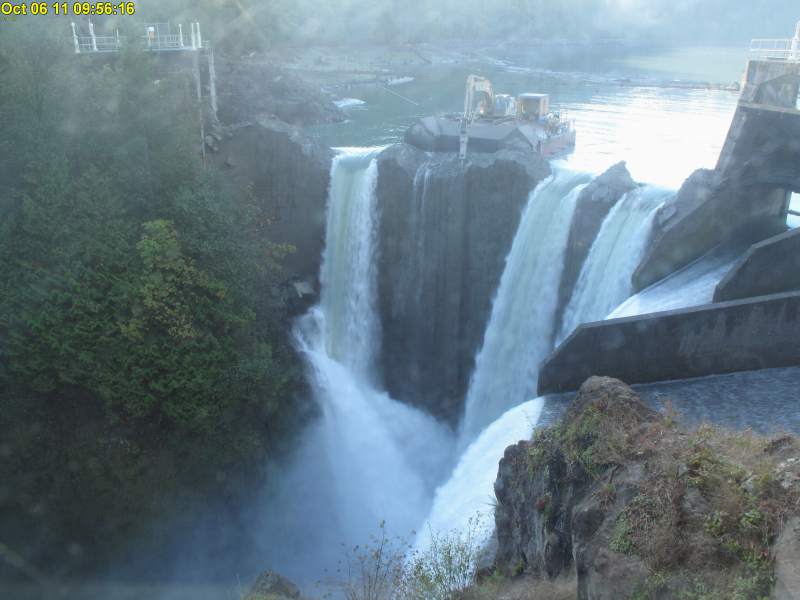
My hobby this week has been watching the demolition of the two dams on the Elwha River via webcams. The long awaited dam removal is opening the pristine waters of the Elwha inside Olympic National Park to wild salmon for the first time in a century.
I cobbled together video of breaching the Glines Canyon Dam in four places, from October 3 to 6, using the slightly clunky webcam stream.
And here is a similar, longer video of trenching around the Elwha Dam, from mid-September to October 6.
In Cascadia, most of our problems, like these dams, are things we made ourselves. We can unmake them, too. All it takes is effort. A lot of it. Sometimes for a long time. It took more than two decades of tireless exertion by the tribes and others on the Olympic Peninsula to bring down these dams, which produced very little electricity while undermining fishing, tourism, and our natural heritage.
Videos captured from this website. Images are used by permission of the National Park Service.


Very cool. Thanks, Alan.
Congratulations on your work, well done !! So far, up to 350 little dams have been demolished for environmental purposes in Spain.
You’re right Alan, it is a powerful metaphor.
Thanks for sharing this! Great images. Thought you might enjoy our videos about the restoration of the Elwha and the White Salmon at https://vimeo.com/29983985 — definitely an exciting time for river restoration here in the Pacific Northwest.
Your videos are beautiful, Amy. Thanks!
In the early 1980’s, I lived on Buck Creek as it entered the White Salmon River at the head of the lake. At that time the pool behind the dam was nearly full of silt and debris, and only a few feet deep.
We had some great times living there and it was my daughters first home, but I always wondered what it use to look like before the dam.
In the early eighties we had to campaign to stop a hydro project that would have emptied a large portion of the upper White Salmon river.
A few of us with close ties to the lake and river will be there in late October to see the beginning of the end of Condit dam. When the river is restored to it’s natural course it should prove quite spectacular.
Everyone should look at the ‘Vimeo’ videos that Amy linked to.
As a salmon biologist employed for over two decades with tribes, I have had the unique privilege of working to remove both the Elwha dams and Condit Dam which will be breached on October 26. It will be truly exciting to watch these watersheds recover with natural processes over the next few decades after being bottled up for 100 years! Thanks for the great video documentation and I’m sure there will be a good one produced for Condit as well.