Donate Newsletters
Home » Environment » Video: Five Tips for Talking Stormwater

Video: Five Tips for Talking Stormwater

SwatchJunkies

February 9, 2012

Here at Sightline, our goal isn’t just to provide you with the most effective sustainability solutions; we also help you talk about them.

Toxic stormwater runoff is the perfect example: the problem is big and when experts start talking policy solutions, it’s easy to get lost in technical jargon. The good news is that by talking about the issue in a way that gets at our shared values and highlights local success stories, we can get more people excited about solutions and why they matter.

For example, connecting the dots between pollution in our local waterways and the food and water our families use can be more effective than focusing only on vulnerable ecosystems. People don’t necessarily think about themselves as part of an ecosystem—or a watershed!

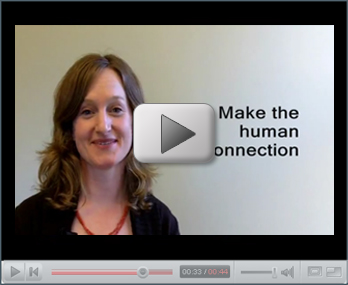
Sightline’s communications strategist, Anna Fahey, has produced a short, three-minute video with five tips for talking about polluted stormwater. We hope you like it! If so, please share it!

You can download the entire messaging memo or see the five tips.

Talk to the Author

SwatchJunkies

Talk to the Author

Eric Hess

About Sightline

Sightline Institute is an independent, nonpartisan, nonprofit think tank providing leading original analysis of democracy, energy, and housing policy in the Pacific Northwest, Alaska, British Columbia, and beyond.

2 thoughts on “Video: Five Tips for Talking Stormwater”

  1. Thanks for the excellent video, which shows how the stormwater runoff problem can be simply and effectively communicated to those who know nothing about it.

    Unfortunately, I wasn’t able to note down the webpage given at the end of the video, which presumably repeats the 5 points and gives additional information.

    How about including a link to this webpage in the text below the video?

    (I did click on the”entire messaging memo” and didn’t find this to be the 5 points, although maybe they were just stated in a different way.)

Comments are closed.

For press inquiries and interview requests, please contact Martina Pansze.

Sightline Institute is a 501(c)3 non-profit organization and does not support, endorse, or oppose any candidate or political party.

See an error? Have a question?

Find the author's contact information on our staff page to reach out to them, or send a message to editor@sightline.org.

Thanks to James V. Wavada for supporting a sustainable Cascadia.

Our work is made possible by the generosity of people like you.

×
Privacy Overview
Sightline Institute

More information about our privacy notice

Strictly Necessary Cookies

Strictly Necessary Cookie should be enabled at all times so that we can save your preferences for cookie settings.

3rd Party Cookies

This website uses Google Analytics to collect anonymous information such as the number of visitors to the site, and the most popular pages.

Keeping this cookie enabled helps us to improve our website.

Additional Cookies

This website uses social media to collect anonymous information such as which platform are our users coming from.

Keeping this cookie enabled helps us better reach our audiences.