Donate Newsletters
Home » Climate + Energy » Fossil Fuel Transition » Governor Inslee Closes Key Tax Loopholes

Governor Inslee Closes Key Tax Loopholes

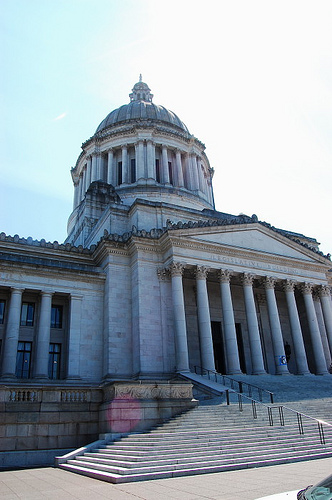
Photo by Andrew Back, cc.

SwatchJunkies

March 28, 2013

Photo by Andrew Back, cc.

Editor’s note: Later posts in this series revise the loophole’s size to $59 million, according to newly available 2014 data from the WA OFM. The $41 million noted below is based on earlier calculations.

Governor Inslee’s budget, released just minutes ago, tightens or closes several tax loopholes.

At least two of them are stellar public policy choices that will help tilt the state’s economy away from pollution and toward a cleaner and more equitable future.

  • His budget restores the extracted fuel tax use exemption to its intended scope, focusing on hog-fuel manufacturers rather than on the oil industry that by sheer historical accident came to dominate 98 percent of the exemption’s value. Fixing this tax preference will redirect more than $41 million per biennium from oil companies to the public’s coffers. (Sightline has written extensively about this loophole here and here.)
  • His budget also tightens the perverse trade-in loophole, an archaic and confusing giveaway that benefits car dealerships and high-income consumers. Tightening this loophole will claw back roughly $100 million per biennium for the public’s benefit. (Sightline has written extensively about this loophole here and here.)

Tax policy often sounds obscure, but it matters. The two loopholes I’ve mentioned here amount to big distorting giveaways that have simultaneously hurt the state’s economy and subsidized pollution and purchasing expensive cars.

That Governor Inslee is willing to take on the entrenched interests who back these giveaways—oil refiners and car dealerships—is a triumph of good policy over bad politics.

Talk to the Author

SwatchJunkies

Talk to the Author

Eric de Place

Eric de Place spearheaded Sightline’s work on energy policy for two decades. A leading expert on coal, oil, and gas export plans in the Pacific Northwest, he is an authority on a range of issues connected to fossil fuel transport, including carbon emissions, local pollution, transportation system impacts, rail policy, and economics.

About Sightline

Sightline Institute is an independent, nonpartisan, nonprofit think tank providing leading original analysis of democracy, energy, and housing policy in the Pacific Northwest, Alaska, British Columbia, and beyond.

For press inquiries and interview requests, please contact Martina Pansze.

Sightline Institute is a 501(c)3 non-profit organization and does not support, endorse, or oppose any candidate or political party.

See an error? Have a question?

Find the author's contact information on our staff page to reach out to them, or send a message to editor@sightline.org.

Thanks to Wayne & Natalie Suyenaga for supporting a sustainable Cascadia.

Our work is made possible by the generosity of people like you.

×
Privacy Overview
Sightline Institute

More information about our privacy notice

Strictly Necessary Cookies

Strictly Necessary Cookie should be enabled at all times so that we can save your preferences for cookie settings.

3rd Party Cookies

This website uses Google Analytics to collect anonymous information such as the number of visitors to the site, and the most popular pages.

Keeping this cookie enabled helps us to improve our website.

Additional Cookies

This website uses social media to collect anonymous information such as which platform are our users coming from.

Keeping this cookie enabled helps us better reach our audiences.