
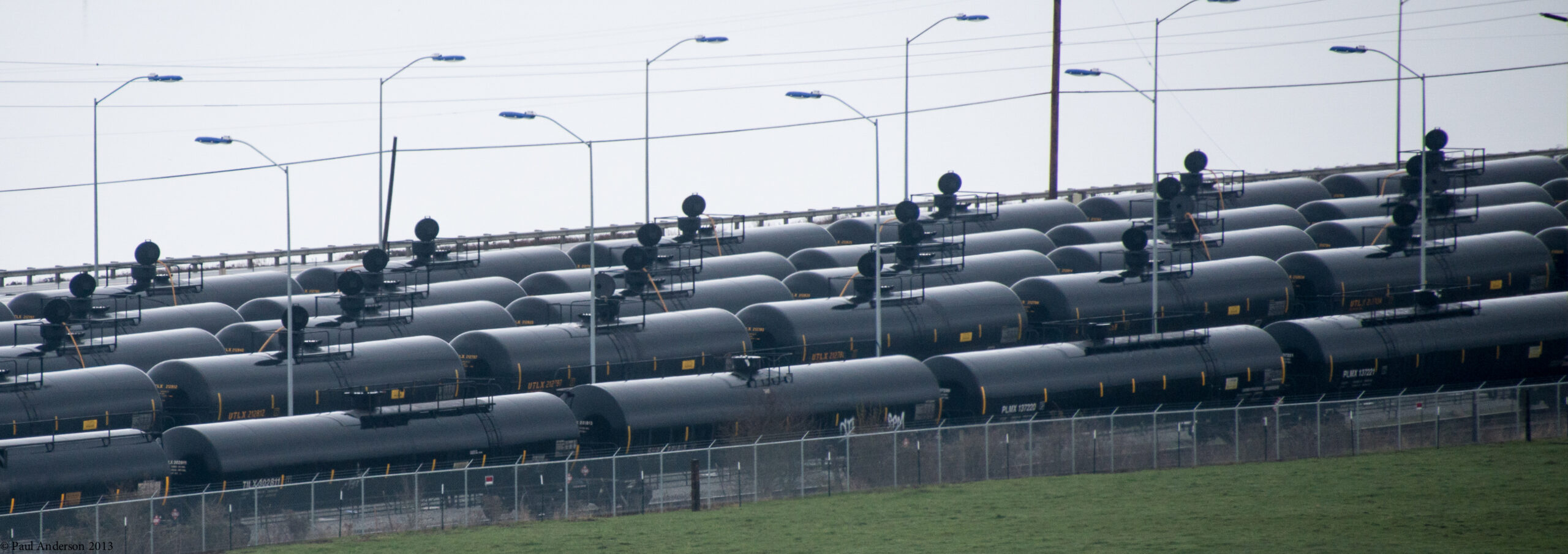


Last week, Sightline’s policy director Eric de Place discussed the alarming growth of oil train traffic in the Northwest, as well as the implications of large-scale methanol production in Tacoma. Eric looked at the costs and consequences of these new projects proposed for Tacoma and examined how these projects are connected to a range of other proposals around the Northwest for coal exports, oil pipelines, and petrochemical sites.
Here is the entirety of the presentation thanks to the University of Washington Tacoma. Enjoy the video and share it with someone unfamiliar with the topic. Together, our region can stand tall against coal and oil companies’ plans to turn the Northwest into a superhighway for dirty energy. Please continue to spread the word on what we all can do to help keep the Thin Green Line strong. If you’d like to get involved further, you can connect with other leading advocacy organizations like Power Past Coal, Stand Up To Oil, and Citizens for a Healthy Bay in Tacoma.
Highlights
- Eric’s presentation begins at 3:40, with a personal account about his recent brush with a wildfire in Twisp, WA.
- At 7:05: In the wake of drought and increased consequences of global warming, we are still building all of the wrong infrastructure.
- Eric provides a breakdown of the oil project proposals which the Northwest currently faces at 16:00.
- Then at 22:17, he delves into the risks and complications associated with hauling oil by freight, from impacts on local jobs, to traffic issues, to devastating explosions.
- What’s more, oil companies are vastly under-insured, placing the financial burden of these disasters on taxpayers (28:25).
- At 35:49, Eric proceeds to explain why we should be wary of the fast-moving methanol proposals in Tacoma.
- At 38:36, Eric explains how the staggering amount of water consumed by methanol refineries is just one reason why methanol is not quite the clean energy solution that some say it is.
- Still there is hope. At 40:52, Eric reminds us that the Pacific Northwest is “where energy projects go to die.”
- We can stand together against fossil fuel exports, preventing the Northwest from becoming a pit stop on an energy highway to Asian markets. Together, we are the Thin Green Line (45:45).
- At 46:50 Eric’s presentation ends and the Q&A session begins.


Super presentation!! Thank you Sightline, Eric, and UW.
Especially appreciate introducing concerns about light hydrocarbons. Please note the methanol project farthest along is NW Innovation Works in Kalama, supported by Gov. Inslee. Besides the extraordinary amount of water required by converting natural gas to methanol, an equally extraordinary amount of energy/electricity is required. The Kalama project decided against burning natural gas for their power because of costly air pollution regulations and will impact the local public utility district instead. The draft environmental impact statement is estimated to be released this winter.