
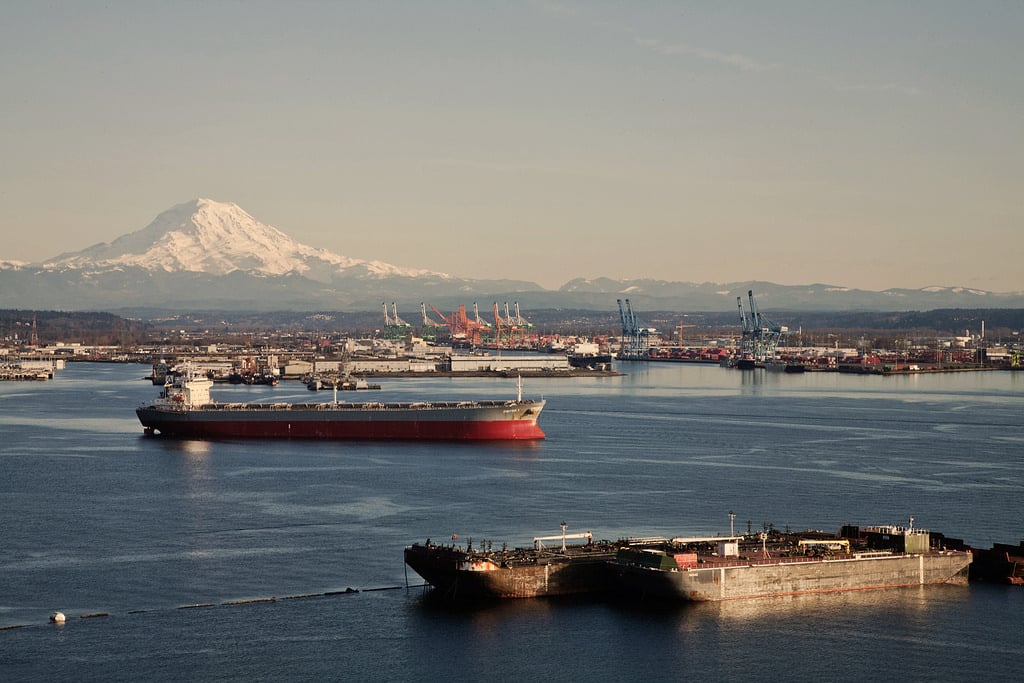


Few infrastructure projects in the Northwest have engendered as much controversy as the $3.4 billion methanol production facility proposed for Tacoma. In the coming months, Sightline will explore some of the more complex facets of the proposal, but as a starting point, we have compiled some of the key features of the project.
At a glance, the graphic below captures some essential facts about Tacoma’s methanol refinery:
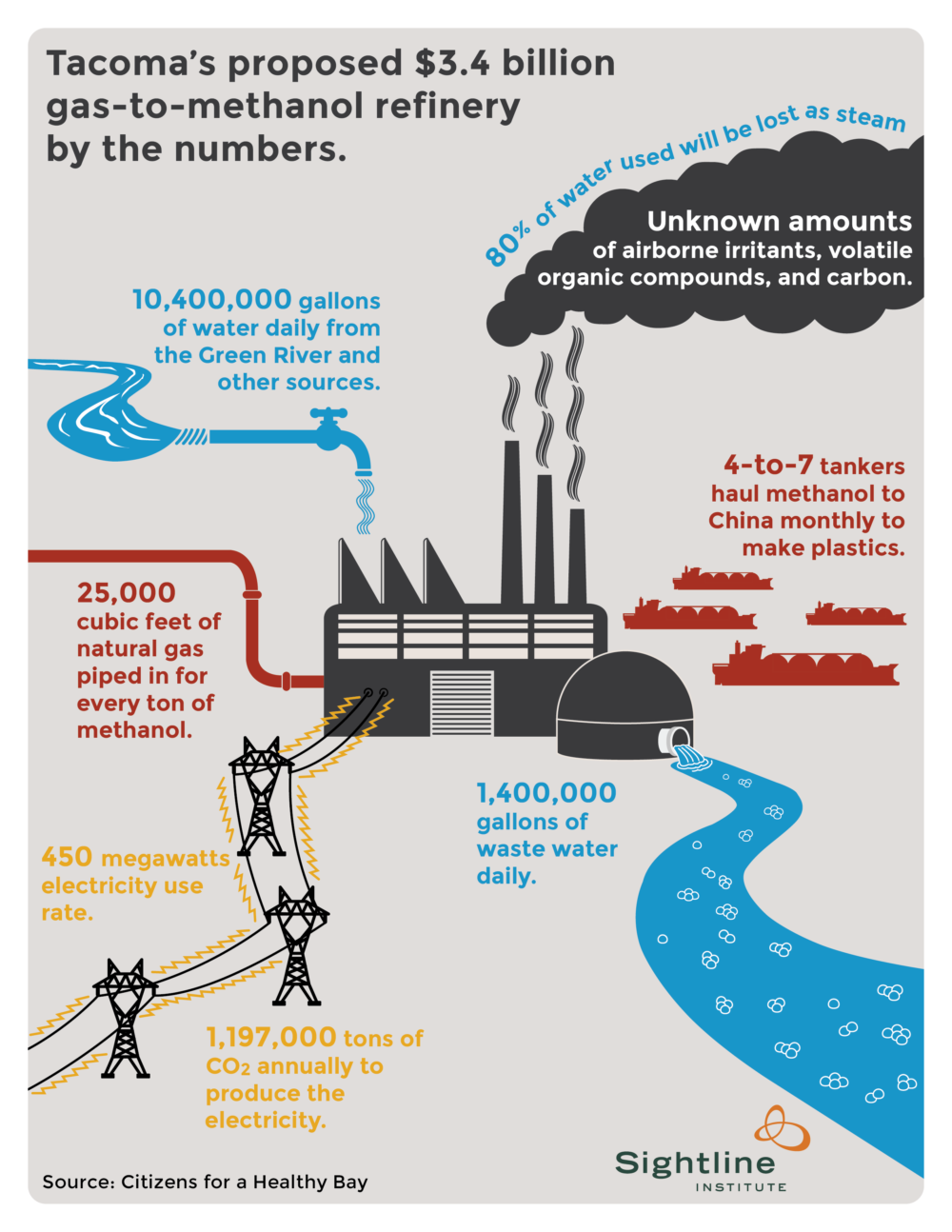
It would be a big operation by any measure, the largest methanol producer in the world, in fact. Not surprisingly, the refinery would require large quantities of water, natural gas, and electricity to make the petrochemicals that would be shipped to China for use in plastics manufacturing.
As a measuring stick, it’s useful to compare the proposed methanol refinery to Tacoma’s current-day use of electricity and water, as well as to the city’s biggest existing user of resources, the Westrock Paper Mill.

If built and operated at capacity, the methanol refinery would increase Tacoma’s power use by fully 82 percent above current levels. It would also increase water consumption by 19 percent, a potentially troubling figure for a city that issued drought restrictions for its residents during the summer of 2015.
Sightline thanks Citizens for a Healthy Bay, a Tacoma-based NGO that publishes valuable fact-based research about the proposal that helped make these graphics possible. Thanks also to Devin Porter at Goodmeasures.biz, who designed the graphics.
[button link='{“url”:”https://www.sightline.org/2015/08/17/what-methanol-means-for-the-northwest/”,”title”:”Learn more about the proposed methanol plants in the Northwest here.”}’ color=”green”]


thank you so much for putting this together. You expertise, intellect and knowledge have been a positive key factor in this fight. Seems like the only proponents of this disaster are those that will gain monetarily or politically. The people of Tacoma and the area thank you for being our supporter.
I thought this project had been withdrawn.
do we have to say no to everything? I read that our coveted Chinese cheap products are manufactured by spewing coal and that this rejected plant in an industrial part of Tacoma would actually clean up that process. Of course that’s in China and our NO society could care less about that as long as we can still buy these products at our local Wal Mart. Enough said but this whining and sniveling about every single project needs to stop or we will go nowhere.