
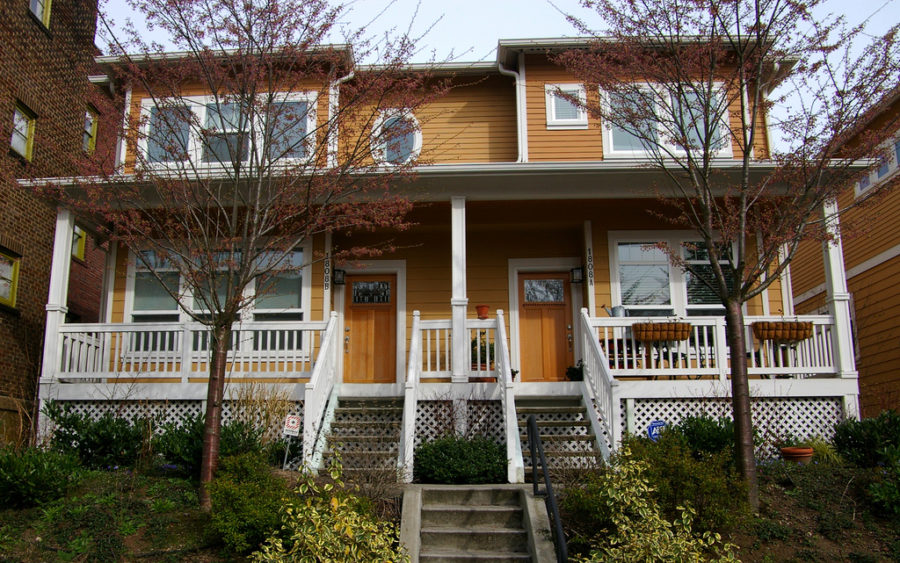

Most North American cities have outlawed everything except stand-alone houses on large lots on three-quarters or more of their residential land. These zoning rules shut out all but the wealthy in two ways: they quash the number of homes allowed, and they mandate that the few homes which can be built are expensive.
Efforts to revoke exclusionary zoning laws have been gaining momentum at the local, state, and federal levels. Oregon led the way by legalizing fourplexes in 2019, and last month California legalized duplexes and lot splitting. Meanwhile, Washington has lagged on addressing its statewide shortage of homes.
I’ve written previously on how exclusionary zoning robs communities of their best qualities. Summarizing, here are nine reasons to abolish exclusionary zoning:
1. It inflates home prices and rents
This is the fundamental offense of exclusionary zoning: by making housing more expensive, it disproportionately harms those with less.
2. It widens wealth inequality
When zoning restrictions cause a shortage of homes, owners—who tend to be wealthy—are the winners, as their home values shoot up. Meanwhile renters—who tend to have less wealth and income—are the losers as inflated rents swallow a bigger slice of their paychecks.
3. It segregates neighborhoods by class
Tight zoning rules breed class segregation by creating exclusive enclaves where people with lower incomes cannot afford to live. Researchers have documented higher levels of income segregation in cities with more restrictive zoning.
4. It perpetuates racial segregation
Black people have been systematically shut out of the wealth-building opportunities of home ownership and are disproportionately hurt by the price and rent inflation caused by exclusionary zoning. Multiple studies have found that low-density zoning increases segregation.
5. It blocks upward mobility and access to opportunity
Zoning laws that escalate housing costs thwart residents of poor places from moving to places that have greater economic opportunity. Compounding the problem, residents of neighborhoods that are more segregated by class or race also have less upward mobility.
6. It puts good schools out of reach of those who most need them
High-quality public schools are commonly located in neighborhoods made expensive by exclusionary zoning, effectively barring access for poor families. One study documented higher school test-score gaps as zoning restrictions increased.
7. It prices people out of their neighborhoods through economic evictions
When a shortage boosts rents, people who can no longer pay are forced to leave their homes. Conversely, new research has shown that the construction of market-rate apartments leads to reduced rents in the surrounding neighborhood, increased availability of lower-cost rentals, and less displacement.
8. It causes homelessness
In cities throughout the United States, high rents and low vacancy rates are the strongest predictors of homelessness. A 2012 study estimated that a $100 increase in median rent causes a 15 percent increase in homelessness.
9. It drags down national economies and makes everyone poorer
When homes are scarce, we price out people who would contribute more to national prosperity if they could work in the most productive and innovative metro areas. By one estimate, the hit to the US economy could be as much as 10 percent.
More homes of all shapes and sizes for all our neighbors
Policymakers who keep exclusionary zoning laws on the books are sanctioning the deep harms listed above. Undoing the damage starts with legalizing more modest housing choices in places currently locked down against everything but the most expensive kind of home: a detached house with a big yard and driveway. Allowing middle housing types, such as triplexes and townhomes, can help curb prices and give people more affordable options close to jobs, shops, family, and schools.
And the best way to make that change happen is through state legislation. Because housing shortages bleeds across municipal boundaries, local electeds have little motivation to take on the political risk of zoning reform if neighboring cities aren’t doing the same. Statewide zoning standards coordinate cities and empower local leaders with the flexibility they need to do their part.
Now that two of the three lower 48 West Coast states have eradicated exclusionary detached-house zoning, will Washington be next?

