
Find audio versions of Sightline articles on any of your favorite podcast platforms, including Spotify, YouTube, and Apple.
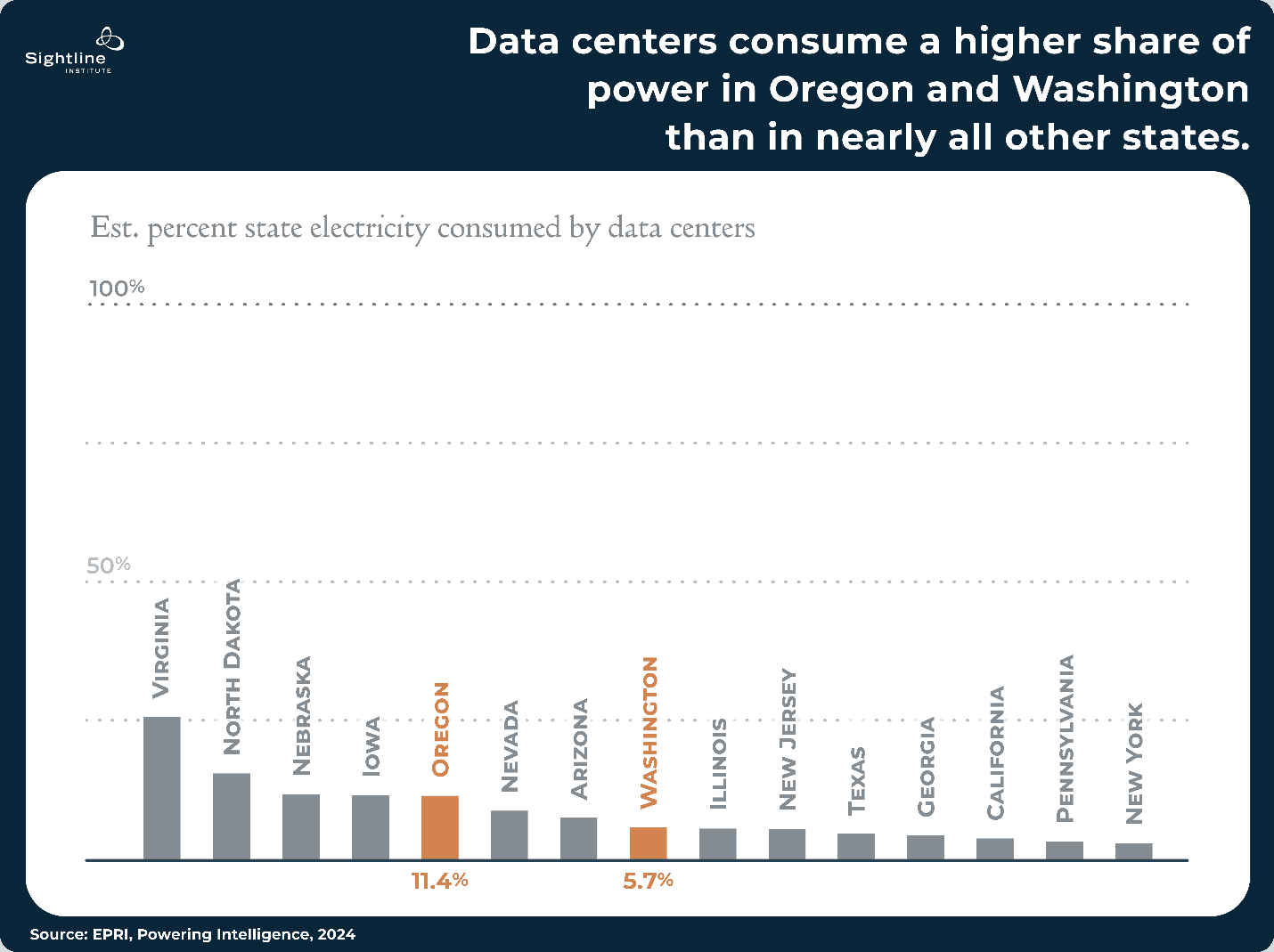
Each week seems to bring a new warning about a looming, unprecedented surge in electricity demand in the Northwest, with data centers largely to blame. Tech companies, with their seemingly insatiable appetite for power, appear to be blowing the region off its climate course. Meanwhile, stories from other parts of the country offer cautionary tales—like in Tennessee, where Elon Musk’s A.I. data center, powered by unregulated gas turbines, is now one of the biggest emitters of smog-producing nitrogen oxides in majority-Black and already heavily-polluted Shelby County.
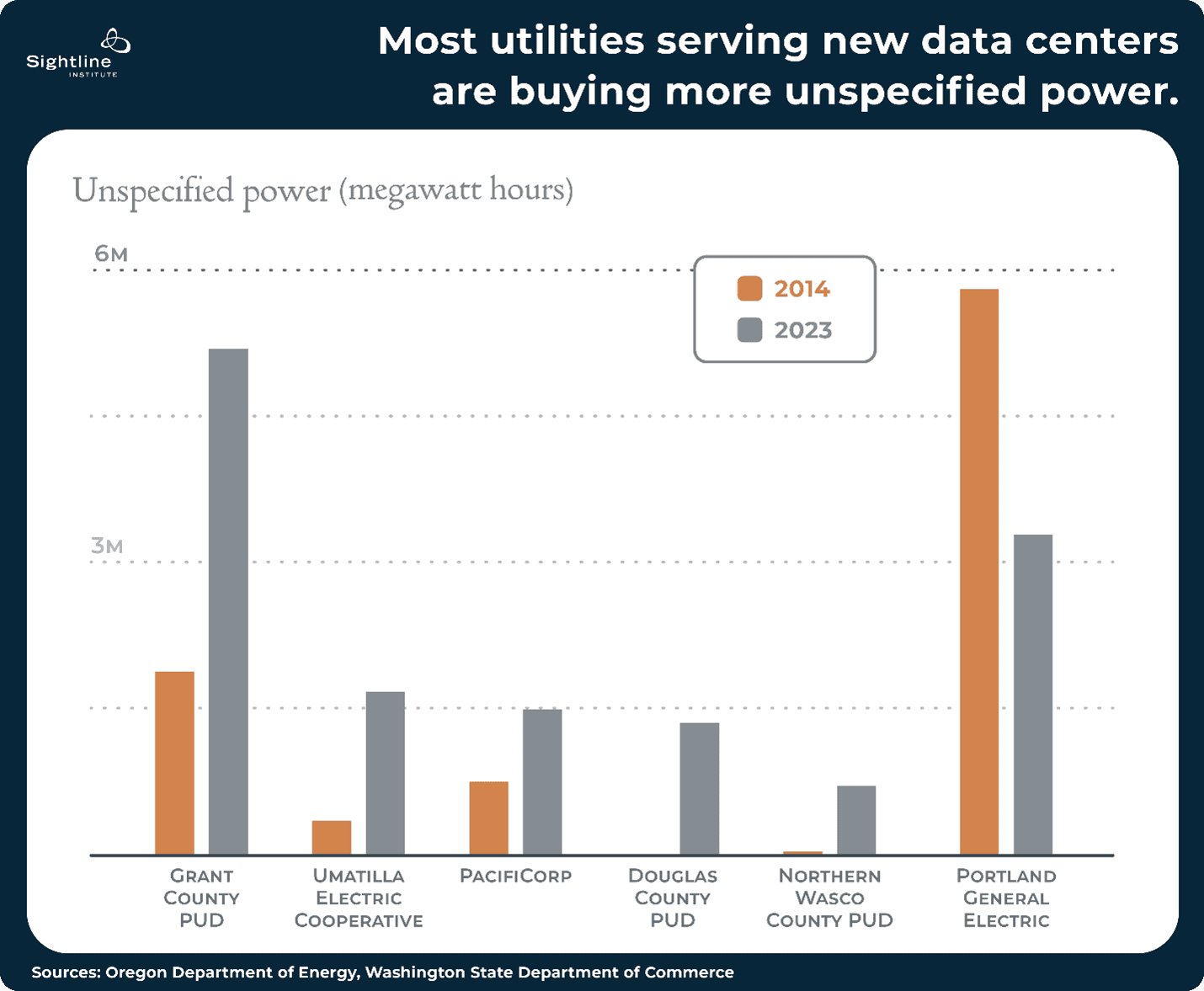
Sightline’s newest report, A Climate Hawk’s Guide to Northwest Data Centers, helps climate- minded policymakers and advocates contextualize and make sense of these warnings. It focuses specifically on the data center industry’s energy consumption and resulting climate impacts rather than its non-climate effects, such as rising residential electricity rates or water use (these issues have been extensively covered by other groups).
Sightline’s analysis offers some reassurance to the climate-concerned reader, while acknowledging the further strain demand data centers will place on our grid—a grid already trying to support a massive shift to electrification for our cars, buildings, and industry over the coming decades.
Rather than pushing data centers to regions of the country with dirtier electricity sources and weaker environmental protections than the Northwest, policymakers in Oregon and Washington could enlist data center corporations in accelerating the broader economy’s transition to abundant clean energy. Sightline’s latest report names four opportunities, with an eye to mechanisms that balance the realities of corporate interests in siting and profiting from data centers here with the climate-forward values that voters in Oregon and Washington have supported time and again. These include:
- Accelerate grid build-out, with investment from data center operators
- Leverage tech companies’ risk tolerance for clean energy innovation by removing caps on green tariff programs
- Lift limits on data center companies’ clean energy procurement through direct access programs
- Make better use of existing grid capacity by facilitating data centers’ participation in utility demand response programs
Understandably, not everyone wants to see data centers set up shop in the Northwest. But most climate advocates do hope to see demand for clean electricity rise over the coming decades, since that will mean less polluting cars, healthier homes and buildings, and cleaner air and water. With concerted action from policymakers, data centers might help make that picture a reality. The fact is: data centers are here. The opportunity is: turning them into a catalyst for clean energy transformation.
Related
- Series: Building a clean electric grid: Research and policy recommendations to remove the barriers to new electric transmission capacity in the Northwest.
- Press release: Report: Data centers’ climate impacts in the Pacific Northwest
- Email newsletter: A personal note of introduction and context from report author Emily Moore, Data centers: What’s a climate hawk to think? (Subscribe to Sightline’s Climate and Energy newsletter here)
- Social media: Posts on Bluesky, LinkedIn, Instagram, Facebook, X
- Charts: Download all charts from the report, free to use and publish elsewhere with credit and link (e.g., “Courtesy of Sightline Institute”).