

Takeaways
- Tiny homes on wheels, aka mobile dwelling units (MDUs), are helping families across Washington find low-cost, flexible housing solutions for their needs.
- Unfortunately, they’re largely illegal outside of manufactured home parks, which themselves are growing increasingly scarce and pricey.
- In a state with a severe housing shortage and resulting sky-high rents and home prices, leaders should support housing solutions of all kinds—especially MDUs.
- Doing so could ensure a stable, affordable home for aging parents, young people starting out, live-in caregivers, and others simply seeking a convenient housing option that’s right for them.
Find audio versions of Sightline articles on any of your favorite podcast platforms, including Spotify, YouTube, and Apple.
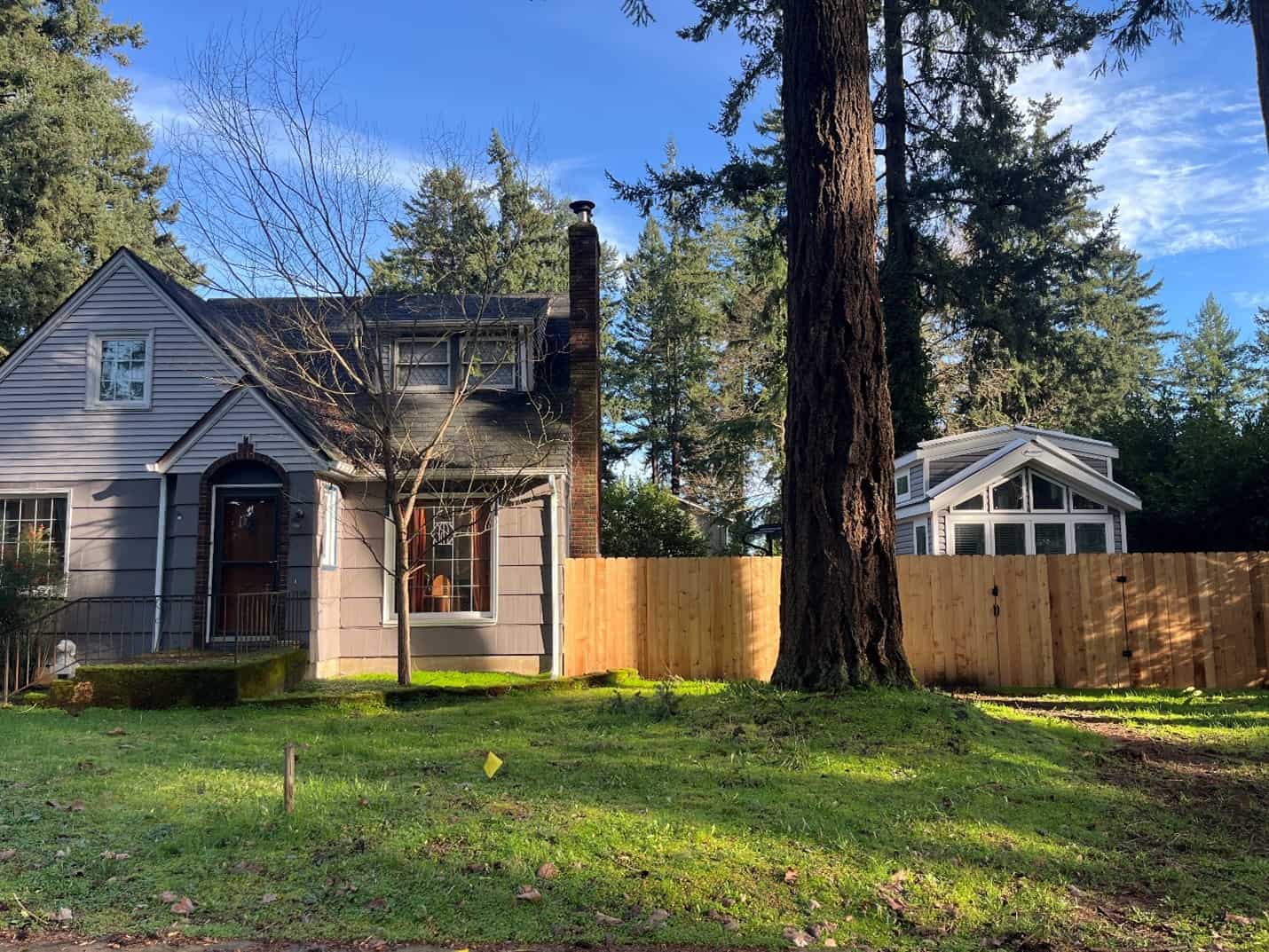
Since NW Tiny Homes opened on Columbia Boulevard in Portland, Oregon, last July, business has been good. By September, the company had already hit its sales goal for the year. It sells stylish park model RVs ranging from $49,900 to $83,000, making them great options for people who are otherwise priced out of the housing market. Unfortunately, owner Jimmy Hickey frequently has to deliver bad news to prospective customers: in their city, it’s illegal.
“Pretty much every week or every couple days, we’re running into someone that’s excited for one of these and then, ‘oh sorry,’” said Hickey. He recalls one family in Gresham, Oregon, that was hoping to move their mother out of a nursing home and have her live with them. “We had tears of joy turned into tears of sadness in the same transaction.”

Portland is one of the few cities that allows people to live in mobile dwellings on any property that already has a house. But elsewhere across Cascadia, local zoning codes prohibit them, forcing people with limited financial means into scarce manufactured housing parks or living under the radar and hoping for the best.1 City and state officials are trying to change that, with Washington State Representative Mia Gregerson leading the charge. Her proposal, HB 1443, would allow these low-cost dwellings in backyards around the state.
Few options to park a mobile dwelling
Living in RVs, like the ones NW Tiny Homes sells, has been allowed in Washington state for nearly twenty years, but only in manufactured housing parks. Opportunities to live in these communities are limited. The ten manufactured home parks in Bellingham, Washington, for example, can fit just two percent of the city’s households combined.

Since the Great Recession, demand to live in these places has soared. Jax, who lived in White River Estates in Auburn, Washington, saw the change firsthand. The 204-home park had been purchased by a California company, which raised her rent every six months. Over the years, her monthly rate more than doubled, from $400 to $900. The financial strain was compounded by a car accident that left Jax disabled. “We realized, if we didn’t do something, we were going to end up living in a car.” She estimated that by the time she left in 2015, only five families remained who had lived there prior to 2008. Even her three-bedroom trailer in the park had risen in value. She was able to sell it for $80,000, five times what she paid for it a decade prior.
Jax then purchased a tiny home for herself and her youngest son to live in for $45,000. Designed by an Oregon builder, their home is a certified RV that can go totally off-grid. “Long story short, it has been the best thing we could have done. Our quality of life has been better because of that,” she said. Since then, Jax and her son traveled regionally, towing their house behind them to Seattle, Gold Bar, and Seabeck, before buying a rural property of their own.
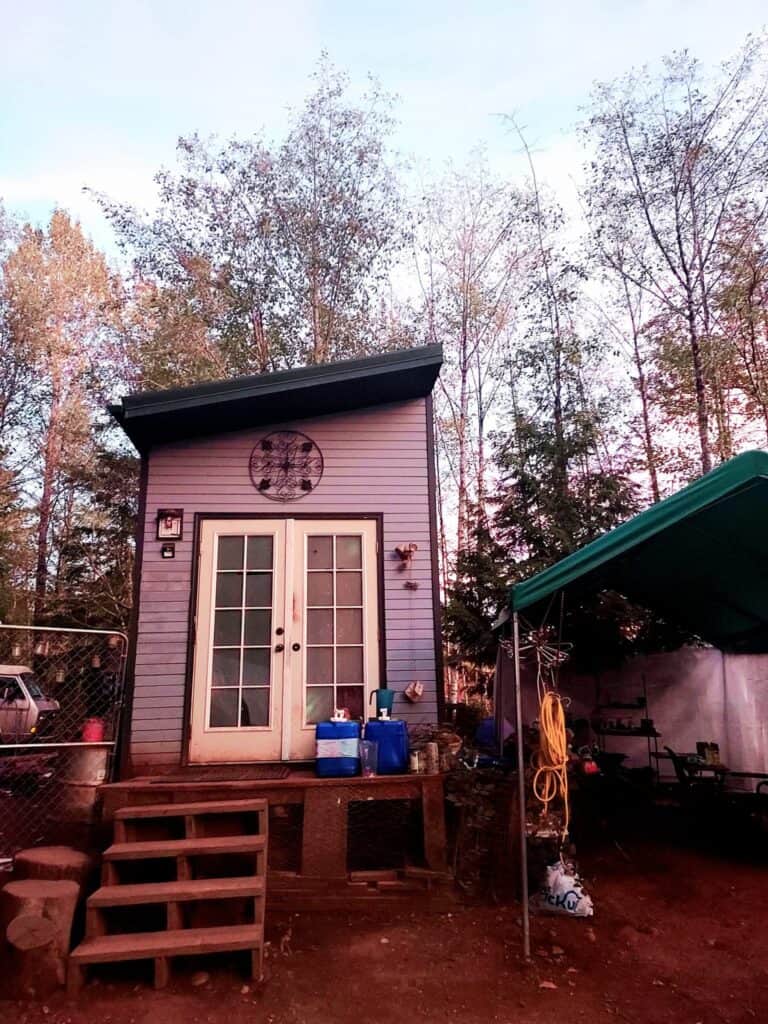
Despite the stability her tiny home has brought, what she’s doing is technically not allowed. “We own the land. We own the house. But technically, we’re not living legally in either one.”
Outside of manufactured housing parks, jurisdictions typically only permit RVs to be inhabited for a prescribed number of days or under special circumstances, like while you are building a permanent house nearby. This is a huge missed opportunity, according to Jax: “Tiny homes are a perfect niche spot for affordable housing that is really not taxing on the government. You can put aging parents in the backyard and keep them out of the nursing home, and keep the corporate nursing home from stealing all the family income. I’ve seen too many of my friends lose their inheritance.” Jax warned this issue would worsen as the population ages. “There are a lot of people who are seniors—in their 50s and 60s, a lot of Gen X—who are going to need tiny homes. We don’t have retirement. We’re screwed as a generation.”
“We own the land. We own the house. But technically, we’re not living legally in either one.” –Jax, who owns and lives in an MDU on her property
Jax has been advocating to legalize tiny homes for years, emailing legislators and even serving on the ASTM International subcommittee for tiny houses, to no avail. “Washington state has this tendency to hear the word RV or manufactured home and immediately assume it belongs in a trailer park. They want to cram anything on wheels into a trailer park, whether you call it a mobile home, a modular home, a manufactured home, a tiny home or an RV. They don’t care. They want to put it in a mobile home community that charges an exorbitant amount of rent.”
Navigating a legal gauntlet
For the past two years, Laura has been caretaking for Julie, her deceased mother’s long-time partner. A bout of cancer compounded Julie’s chronic health conditions and left her unable to care for herself or maintain her property. By the time Julie sold her house in Spokane, it fetched a paltry $90,000. That’s how she came to live in Laura’s finished basement while they figured out a more permanent arrangement.
“I’m calling all these ADU places seeing what can happen, crunching numbers, and it just wasn’t going to pan out,” Laura recalled. They settled on an RV in the yard instead, adding a concrete pad, upgrading the electrical panel on the house, and connecting it to water. Julie doesn’t pay any rent, just utilities. “I’m glad I can provide this for her,” Laura said.

Julie had been living in the RV for a year-and-a-half when a neighbor filed a complaint, claiming the owners were dumping raw sewage on the ground. The accusation was upsetting. In reality, they paid a company $175 to pump the tank every three to four weeks. “I’m the last person who’s going to be dumping sewage,” Laura explained, citing the medications Julie was on as well as the garden crops she cares to protect.
The notice Pierce County mailed to Laura and Julie stated that penalties for code violations could include a fine of up to $1,000, with each passing day counting as a separate violation. This was especially surprising because Laura had already submitted a temporary use permit for the RV, but it was only valid for 120 days. “How does this make sense?” Laura asked. “I don’t want to be nefarious or do anything wrong.”
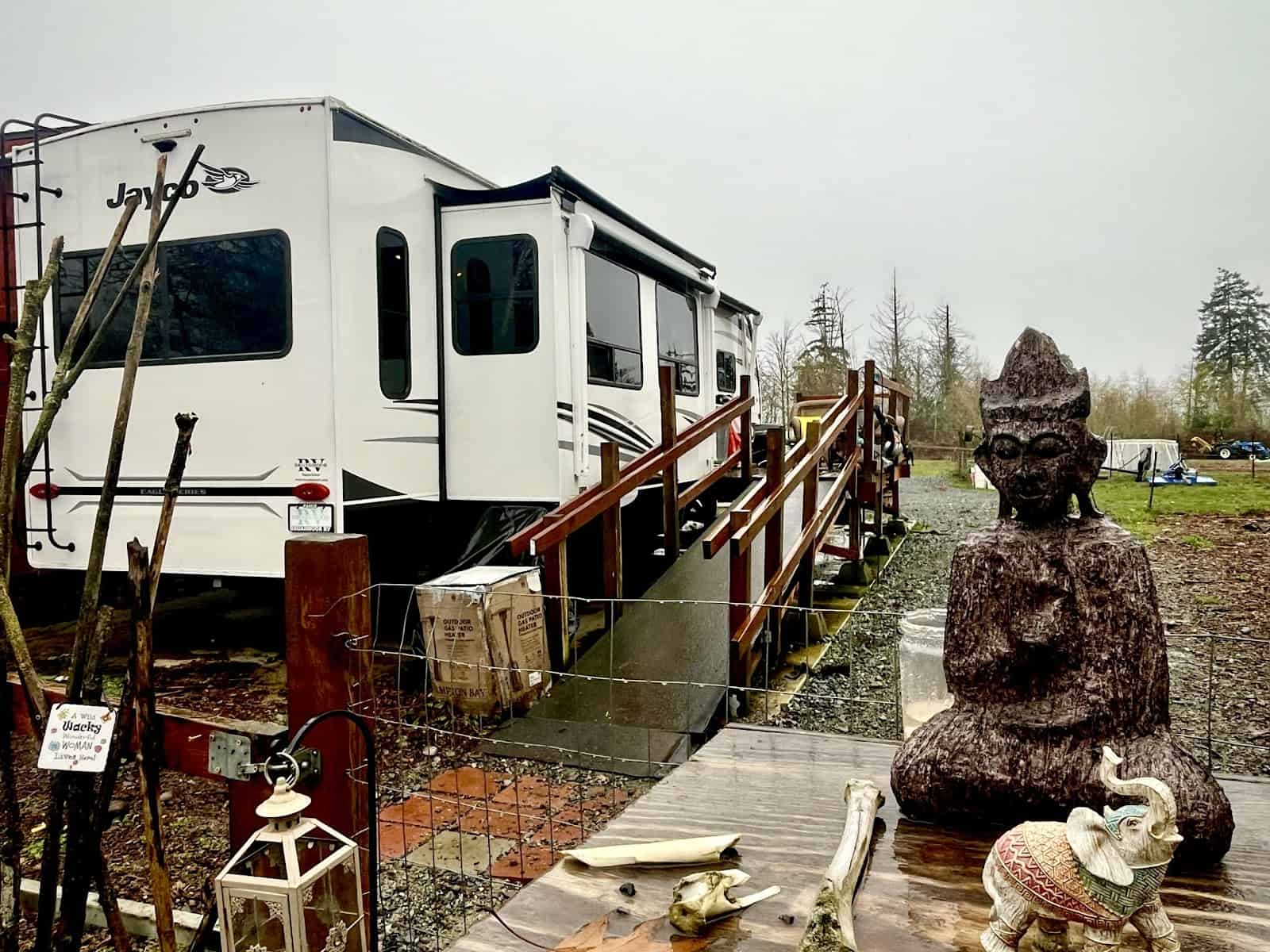
Through this ordeal, Laura and Julie learned that Pierce County has a special permit to allow temporary housing for family members incapable of caring for themselves (Julie’s mobility is extremely limited, and she hardly ventures past her porch). They will still have to renew it every six months, paying a $200 fee each time.
It’s been frustrating to Laura that letting someone stay in an RV on your own property isn’t allowed outright. “It’s surprising and unfortunate, especially right now when things are so tight for Americans,” said Laura. “It’s great that she has an RV. Who knows if she would have been able to afford, you know, the cost of living?”
Flying under the radar
When local zoning codes entirely outlaw mobile housing options outside of designated parks, people must weigh their risk tolerance against getting the home best suited for their needs. That’s the conundrum Chris’s family found themselves in after they asked their local planning department if they could add a tiny home on wheels to their property for his mom Louie. The answer was a disappointing no.
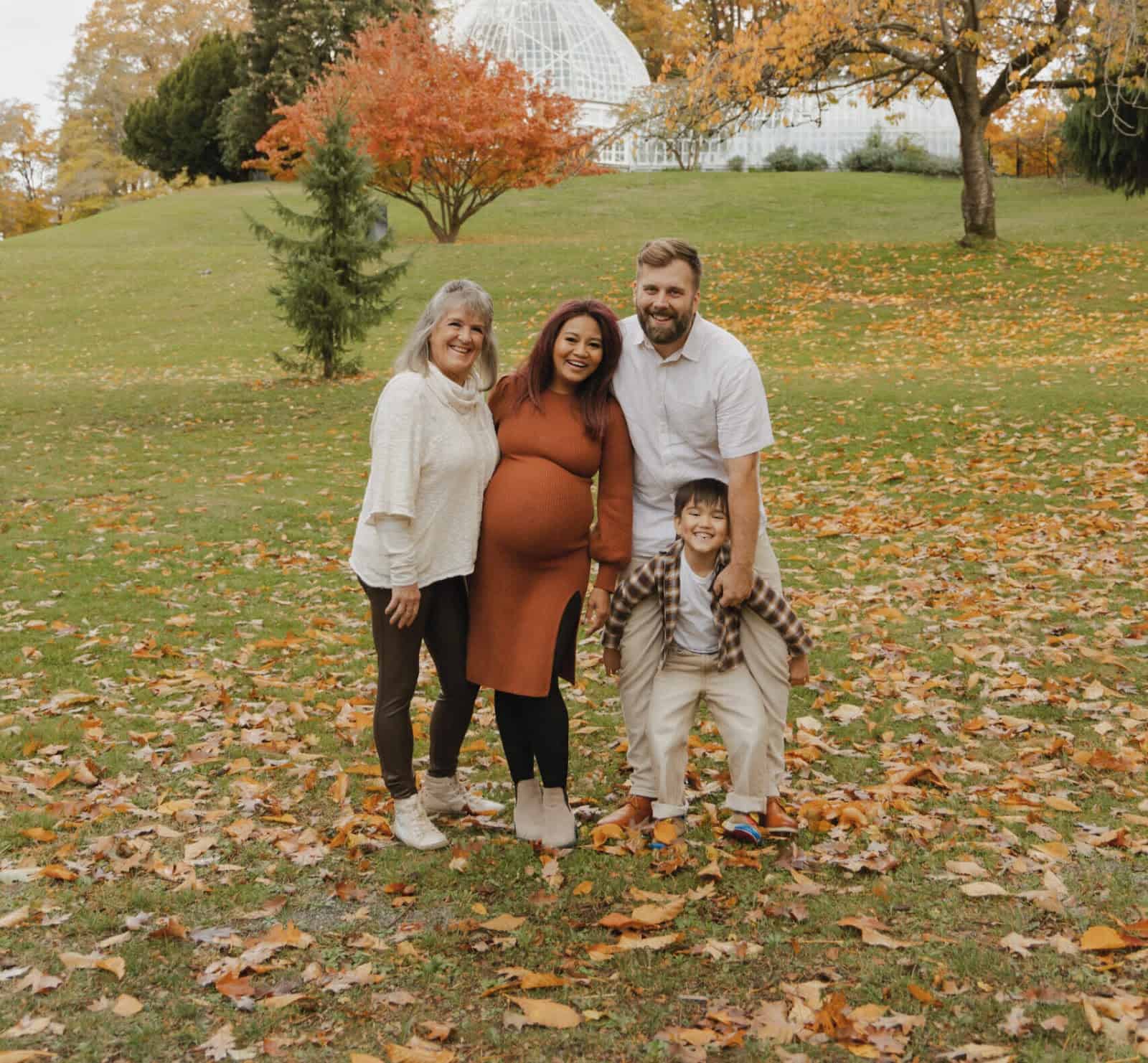
But Chris’s family didn’t have an extra bedroom, and they couldn’t afford to build a detached ADU. Companies were quoting them between $250,000 and $350,000 for a 500-square-foot cottage in the backyard. They seemed to be out of options when Chris’s neighbor suggested his mom should just live out of a fifth wheel in the driveway. If code enforcement ever came, they could claim the trailer was for camping. So that’s what they did.
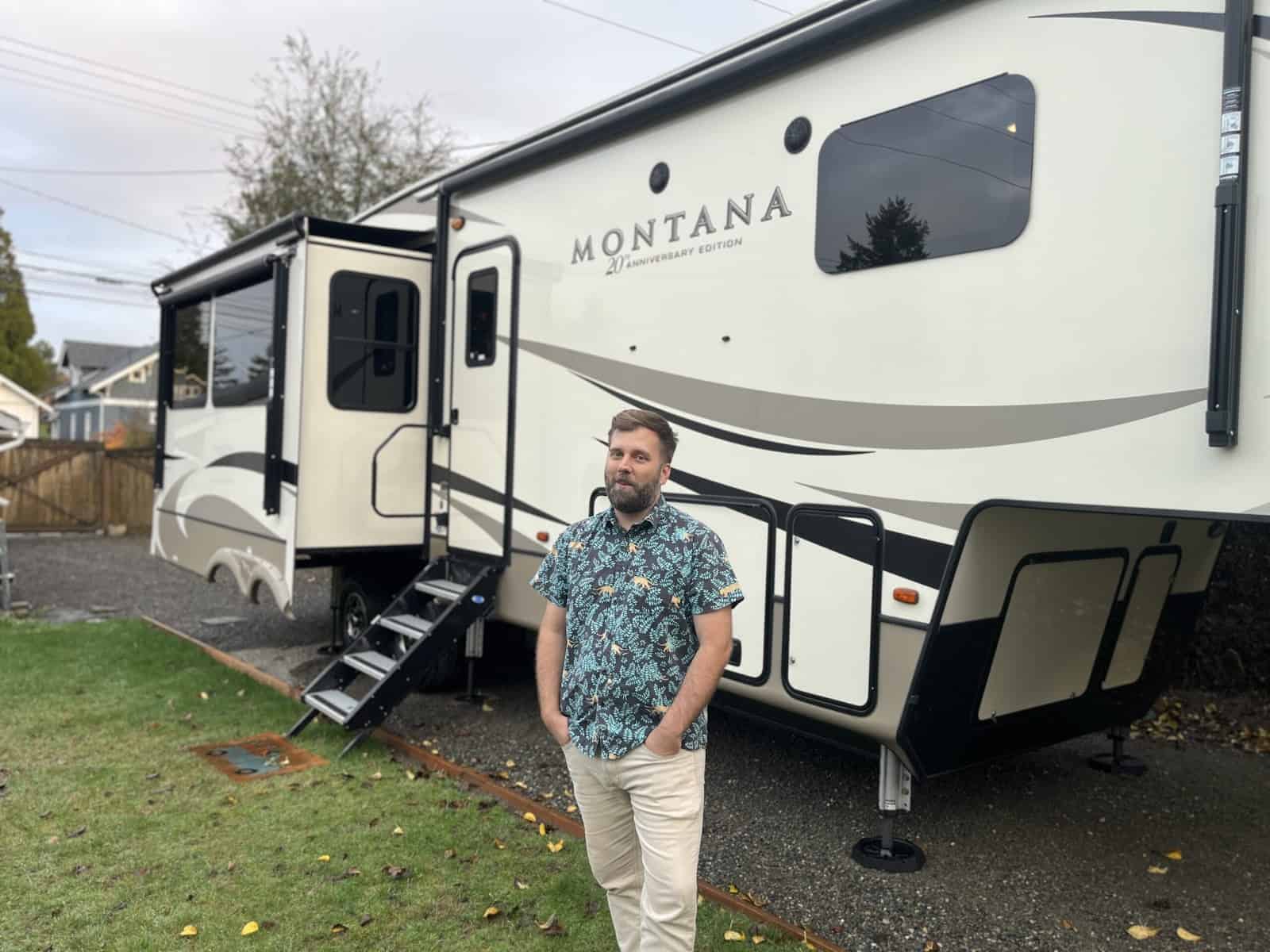
The used RV they purchased works for now, but it’s not the cute tiny home they would have preferred to buy. It’s also less accessible. In addition to stairs on the outside, the bedroom is several steps above the rest of the living space, instead of being a single level. It’s not the outcome the city likely wants either. No inspectors ever came to ensure the sewer line was connected into the house correctly. By banning MDUs as a lowest-cost housing option, no one ultimately got what they wanted.
Elsewhere in Washington state, enforcement against mobile dwelling units can displace residents outright. One woman in Seattle relegated her tiny house to a storage shed after she received a notice threatening fines of $500 a day. In another case, an emergency room worker in Clark County had to leave the five-acre property he was living on after the property owner received a letter in the mail. With just three weeks’ notice, he turned to the tiny house forums to find a new place to live. At last update, he was hoping to move to Portland, Oregon, where tiny homes are fully legal, to avoid this situation happening again.
Tiny homes for a big quality of life
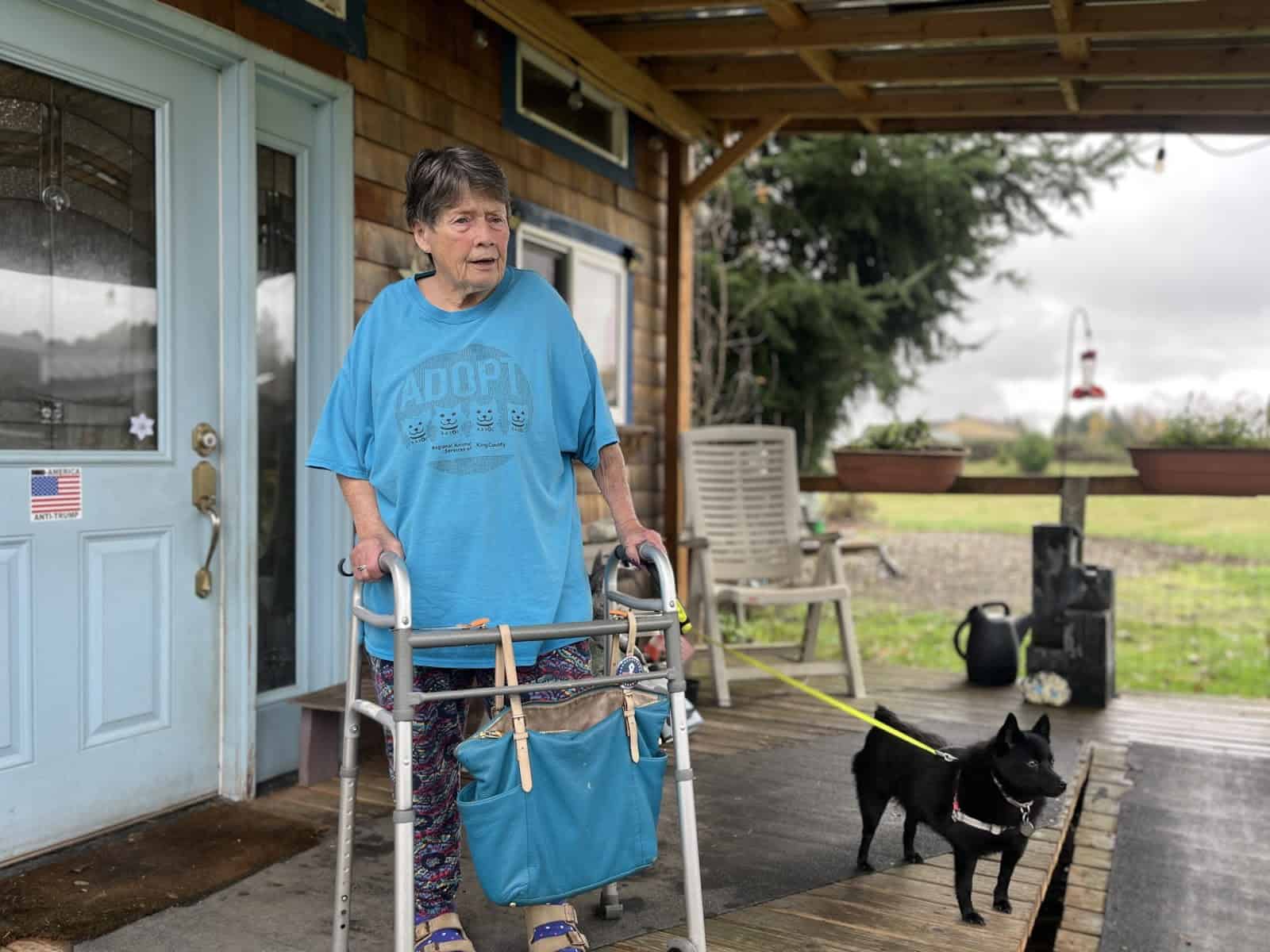
Mari has been living in her tiny house for the past decade. “I just love it here,” she said. “I’m lucky because this was specifically built for all of my needs.” Mari showed off the custom features: a cabinet to store her walker just inside the front door, kitchen shelves that are low enough for her short stature, a cutting board that opens into a scrap bucket below. Elements from her old house—like wallpaper—were incorporated to make her feel at home, and for her three cats, a catwalk that runs the length of the wall.
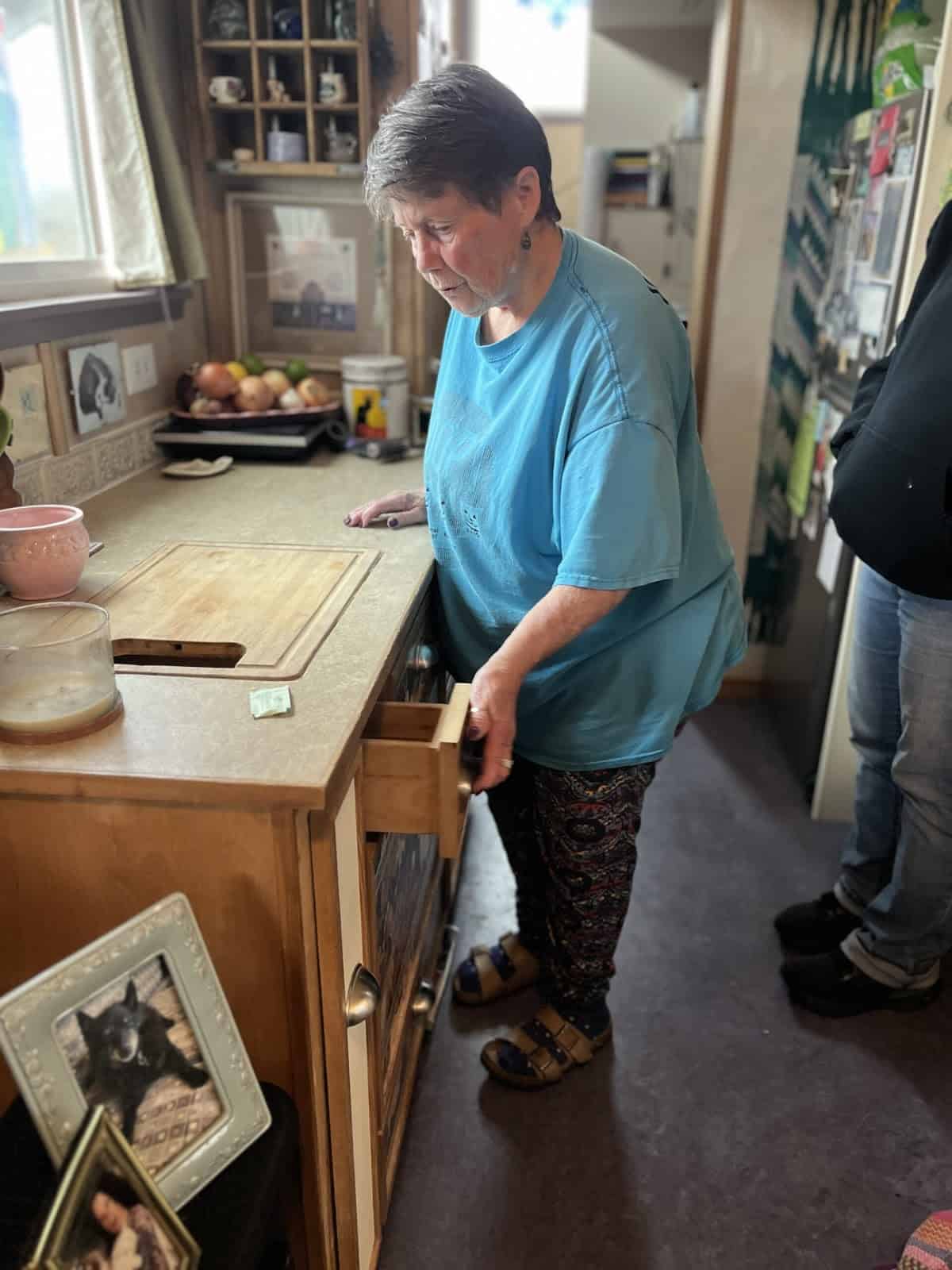
Previously, Mari owned a house in West Seattle, but rising utility costs were hard to keep up with alongside other maintenance needs for an older home. She connected with a woman in the next town over who had built a tiny house on wheels and spent a night there to test it out.
Mari ended up paying the woman $100,000 to build her a tiny house, too. Now, she can’t imagine living anywhere else. “It just really enhances the quality of my life,” she said. “I’m 72, you know. I couldn’t ask for anything better than what I have now.”
Rather than stay at an RV park, she found a rural property outside Seattle with several other women. The price is right: just $500 a month, including utilities. After a career doing mental health outreach for families experiencing homelessness, Mari relies on social security as her sole source of income. “I’m lucky,” Mari repeats. “A lot of people my age don’t have housing.”
Opening more backyards to homes on wheels
More people would have opportunities like Mari did if Representative Mia Gregerson of Washington state has her way. Last year, she introduced HB 1443, which would have allowed one to two mobile dwelling units on residential lots within urban growth areas. The bill made it through the House Housing committee but stopped short of getting pulled for a floor vote.
Since then, with federal budget cuts to aid programs, continued inflation, and rising health insurance costs, financial pressures on Washington families have only worsened—and interest in MDUs has grown. A 2024 census survey estimated that more than 22,000 Washingtonians live in moveable shelters, a category that included recreational vehicles, vans, and boats. This is triple the number from a decade ago, making mobile dwellings the fastest-growing housing type in the state.
A 2024 census survey estimated that more than 22,000 Washingtonians live in moveable shelters, a category that included recreational vehicles, vans, and boats. This is triple the number from a decade ago, making mobile dwellings the fastest-growing housing type in the state.
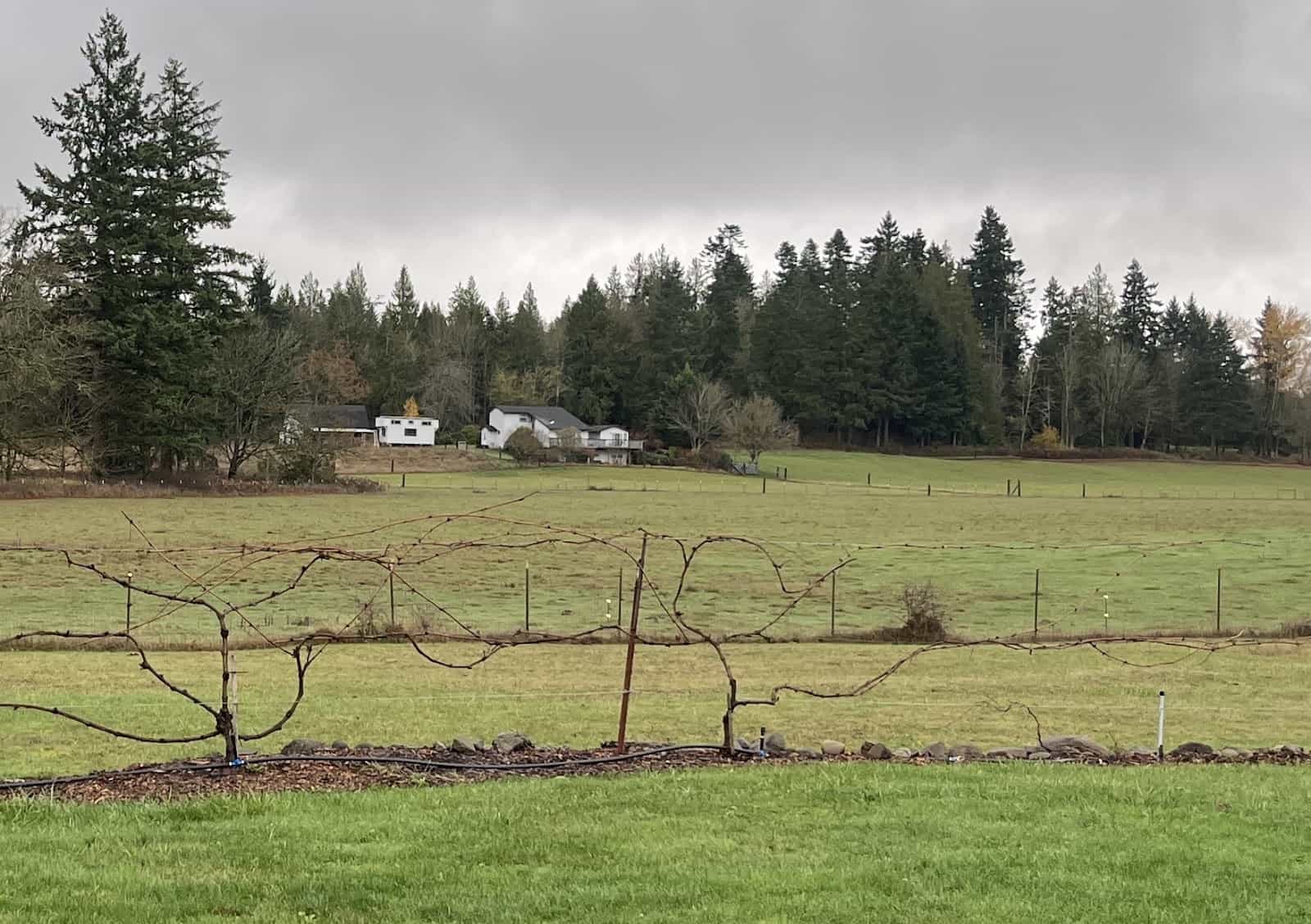
Portland-based NW Tiny Homes sees the demand in Washington. The company just signed a lease for a second location in Snohomish, a city on the fringes of the Seattle metro. “Higher population, higher average income, higher cost of living… so higher demand for more affordable living,” explained owner Jimmy Hickey. Even though no large city has legalized these outright like Portland, Jimmy said people are still buying these for RV parks, have obtained special permits to live in one while building a house, or just live in a rural area with a lot of acreage and are willing to risk the code violations. “Pretty much daily,” Jimmy explained, people are posting in the community groups, “‘Hey, I’m moving here, I want to get one,’ or ‘I’m looking into one, what do you recommend?’”
Fortunately, Rep. Gregerson has reintroduced HB 1443 for the 2026 session. The bill would offer stability and peace of mind to the growing number of people turning to mobile dwelling units for their unbeatably low cost and speedy move-in-ready timeline.
Among them are Jax, Julie, Mari, and Chris’s mom, who have all made this flexible, low-cost housing option work for their families, despite legal obstacles. Their stories show MDUs are here to stay, giving more Washingtonians a place they love—and can afford—to call home.

Related: Homes on Wheels are Filling a Big Gap in Portland | Three personal stories show how these small, affordable, flexible homes provide big solutions for families.

