

Takeaways
- Washington just passed the United States’ first meaningful reform to lower the cost and size of elevators, which will grow their numbers in new apartment and condo buildings.
- Elevators in the US and Canada cost three to four times as much as they do elsewhere in the world, meaning they’re often excluded from building plans or tank proposed housing projects altogether.
- Senate Bill 5156, sponsored by Senator Jesse Salomon, will mean more affordable and accessible apartment and condo homes for Washingtonians—a critical element as the state builds more middle housing options.
- Opposition from the elevator trade association meant the bill as passed ultimately lacked even a non-binding intent statement for Washington agencies to support efforts to harmonize the state’s elevator codes with global standards.
- Harmonization will be a bigger effort down the road, but this bill can spur and inspire reform efforts elsewhere in the US and Canada.
Webinar: Going Up! Or, How to Get More Elevators as We Win More Homes
Join Sightline Institute and Welcoming Neighbors Network for a free online discussion and Q+A all about elevators, Friday, April 10, featuring an all-star slate of panelists. Learn more.
The humble elevator, an underappreciated workhorse that makes tall cities possible and upper floors accessible to all, has stayed mostly under the radar of the pro-housing movement. That is, until 2024, when Stephen Smith, founder of the Center for Building in North America, published a 122-page report entitled simply: Elevators.
The report described in exacting detail the many barriers to elevator construction in the US and Canada—barriers that make this continent’s elevators three to four times more expensive and far less likely to be included in smaller apartment buildings.
Two years later, Washington has become the first state to pass legislation to reform elevator codes. Senate Bill 5156, sponsored by Senator Jesse Salomon (D-Shoreline), allows smaller, less expensive elevators in small-scale condo and apartment buildings. It’s a groundbreaking first step on reforming obsolete codes that rob cities of more accessible homes and age-friendly infrastructure.
There’s more work to do, of course. Due to opposition from the elevator trade association NEII, the bill as passed ultimately lacked even a non-binding intent statement for Washington agencies to support efforts to harmonize the state’s elevator codes with global standards. Such harmonization would go a long way to cutting costs and getting more elevators into new apartment buildings.
Still, it’s a solid step in the right direction—and another example, after middle housing, co-living, TOD, and parking wins, of Washington state leading the way on policies that address its deep housing shortage and deliver more homes, in all shapes and sizes.
The US and Canada’s elevator problems
1. Shut out from the international market
If you haven’t been elevator-pilled yet, a user-friendly place to start is this 14-minute video by Uytae Lee. Or to understand the high stakes for accessibility, try this Seattle Times op-ed. Or if you have a hankering to immerse yourself in all the gory technical details, Stephen Smith’s elevator report is your ticket.
The gist of it is the US and Canada are worldwide outliers on elevators, and not in a good way: elevators typically cost at least three times more here, and we have far fewer of them. There’s a long list of reasons, but the overarching culprit is a morass of regulations that has led to market domination by four elevator manufacturers and no access to the global market.
The code reforms needed to open access to the less expensive elevators common in the rest of the world face strong bureaucratic headwinds, as well as hostility from entrenched corporate interests, and will likely hinge on a long-term effort involving multiple states cooperating.
2. Mandates for mega sizes
There are also near-term ways states can chip away at flawed elevator codes, chief among them being minimum size requirements. Washington, like most states, mandates that elevators in residential buildings must be large enough to accommodate a seven-foot-long medical gurney. That typically translates to a footprint 21 percent larger than the minimum required by federal disability law, which only specifies that elevators must also be large enough for wheelchairs to turn around inside of them—the feds have no federal stretcher-size requirement. Because federal law supersedes state law, the most states can do on their own is go down to the federal minimum (and that’s exactly what SB 5156 does; more below).
European wheelchair standards are smaller still, because they’re designed under the assumption that it’s okay for wheelchair users to back out of an elevator, with buttons easily accessible on the side walls rather than on the door wall. They typically take up 46 percent less floor space than a US or Canadian stretcher-sized elevator.
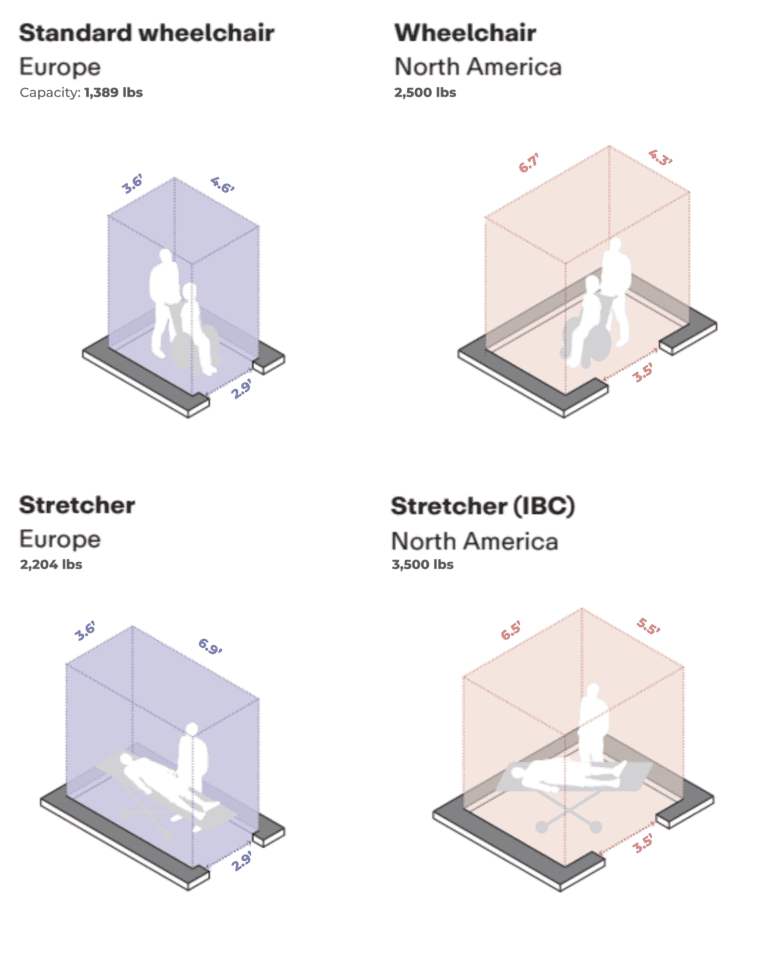
Typical sizes of elevators that code requires to accommodate stretchers or wheelchairs, in Europe vs. the US and Canada. Source: Elevators, by Stephen Smith.
3. Fewer elevators; less accessibility
As more jurisdictions relegalize small apartment buildings to address their housing shortages, the high cost of stretcher-sized elevators, in dollars and floor space, takes a bigger bite out of a building’s budget and footprint, making the inclusion of an elevator less financially workable.
Data from Seattle reveal how common it is for builders to forgo elevators: for small-scale (5–49-unit) apartment buildings that are three or more stories tall, two out of three buildings lack elevators (see Table below). That adds up to 34,000 elevator-less homes in 2,300 buildings, just in Seattle. Meanwhile in Europe, it’s almost unheard of for buildings of that scale not to have an elevator.
Over recent years, Washington (like many states) has passed multiple bills intended to boost the construction of small-scale multifamily housing, including middle housing, co-living, single-stair apartments, and condo liability reform for buildings up to four stories. As these new allowances play out on the ground in new homes, whether or not they are accessible will come down to whether or not they include elevators.
Under the status quo in Washington, the most commonly built homes by far in zones that allow middle housing are three-story townhouses with stairs only. To help correct that imbalance, Seattle’s recently adopted new zoning allows greater capacity and density for stacked flat apartment buildings than for townhouses—good timing for smaller elevators!
Seattle Apartment/Condo Buildings of 5 to 49 Homes
| Building stories | Homes with elevator | Homes without elevator | Share of homes without elevator |
|---|---|---|---|
| 3 | 5,653 | 25,174 | 82% |
| 4 | 13,670 | 7,669 | 36% |
| 5 | 3,907 | 891 | 19% |
| 6+ | 4,735 | 223 | 4% |
| Total | 27,965 | 33,957 | 55% |
Source: Data from US Census, King County Assessor, and City of Seattle, compiled by Sightline Institute contractor Michela Zonta
How WA won more elevators: Two times a charm
Washington took its first crack at an elevator bill in the 2025 legislative session. That year’s SB 5156 did two things. First, it directed the State Building Code Council (SBCC) to adopt standards “to allow passenger elevators no larger than those that accommodate a wheelchair for apartment buildings with at most six stories and at most 24 units.” That size cap aligns with the state’s cap for single-stair buildings, which typically fall in the size range for which big, expensive elevators can be prohibitive.
Second, the bill directed the SBCC to adopt standards for elevators to meet “global safety and related standards.” In practice, this provision is far more complicated than its concise wording, and the state’s Department of Labor and Industries estimated a cost of $7 million over six years to develop the new regulations.
During the Senate floor debate, Senator Salomon quoted AARP Washington’s statement that “for the growing population of older adults in Washington State… a small elevator is better than no elevator.” SB 5156 passed the Senate 42–6, but that was before the eye-popping cost estimate was issued. The bill then died in committee in the House due to concerns over the high price tag as well as members’ unfamiliarity with a new policy.
Related: Video: Fixing North America’s Big Elevator Problem | Our bans on smaller elevators block accessible homes, and our insistence on unique standards drives up prices.
In 2026, Senator Salomon brought back SB 5156 with three changes:
- A non-binding intent statement, instead of a mandate, to harmonize with global standards
- Clarification that the allowed minimum size would still be ADA-compliant
- A new directive for SBCC to do cost-benefit analysis of requirements for hoistway opening protection and two-way visual communication devices1
This new version of SB 5156 passed the Senate 41–7. Subsequently, when heard in the House Housing committee, the bill had broad support, including from all the relevant unions and AARP Washington. In fact, the only stakeholder not testifying in favor or signed in “pro” was the elevator trade group NEII, which opposed the reference to global standards even though it was non-binding language.
NEII’s hardline opposition and its influential lobbyist Tom McBride were enough to compel Housing chair Strom Peterson to amend out the intent statement to avoid the risk that drawn-out debate could end up killing the bill entirely, especially in the pressure cooker of the two-month-long “short” session. The House then passed the downsized bill 93–1.
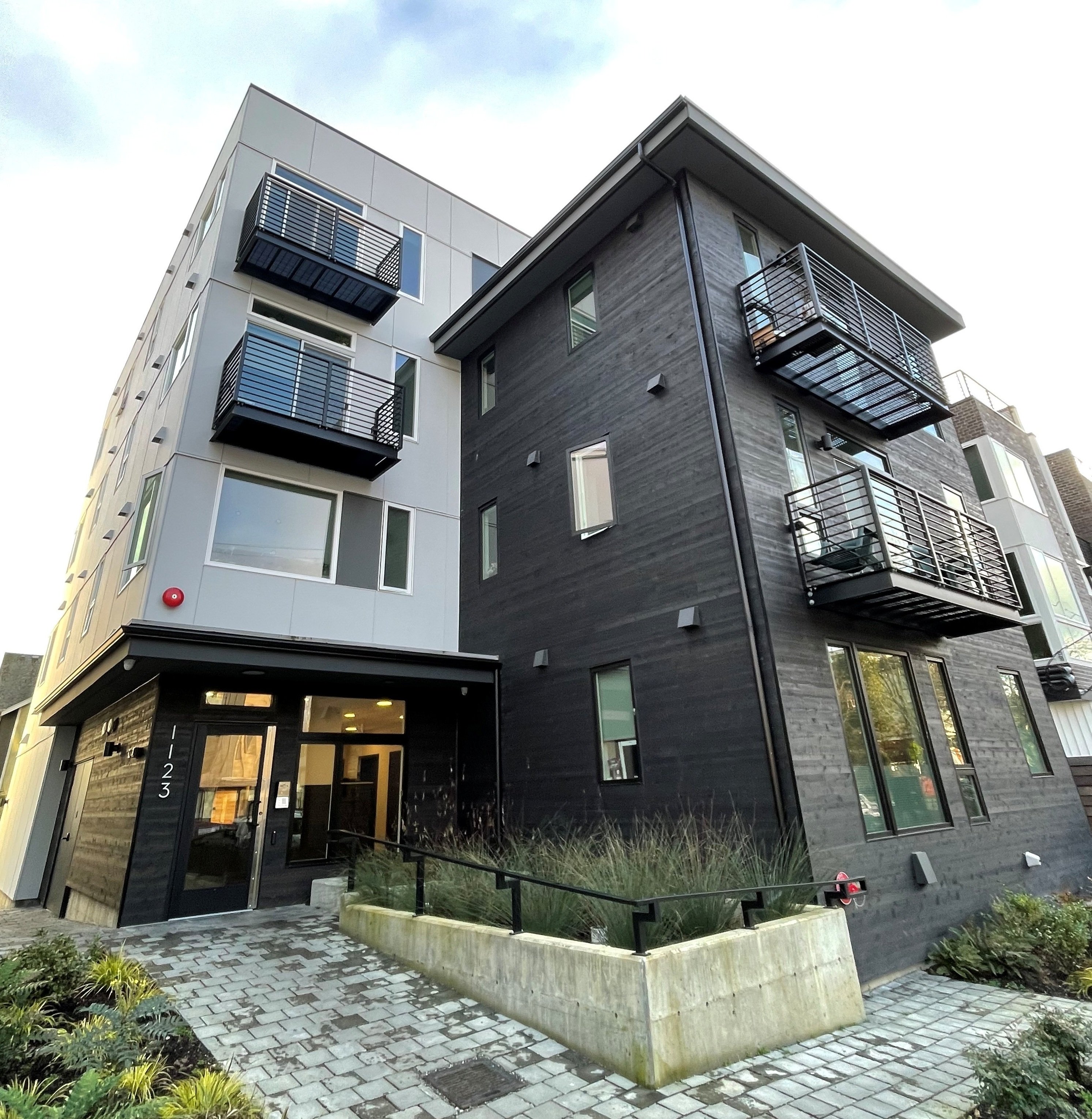
How smaller elevators deliver savings
Reducing from stretcher-size to wheelchair-size typically translates to about one-fifth less floor space taken up by a building’s elevator on every story, as well as a drop in capacity from 3,500 to 2,500 pounds. Stephen Smith estimates a cost savings of 15 to 20 percent, thanks to the lower cost of the elevator and shaft plus the reclaimed rentable space in the building. Assuming a typical elevator installation cost of $150,000, that translates to as much as $30,000 in savings on the balance sheet for developing a new building.
These smaller elevators are already available for purchase in the US and Canada. The big four manufacturers (Otis, Schindler, Thyssenkrupp, and KONE) currently make 2,500-pound cars that meet federal accessibility standards because they are already legal to use as an additional elevator in buildings that have a stretcher-sized one, as well as (in some states) in buildings of three or fewer stories.
In December 2025, a working group established by the Maine legislature recommended removing from its state building code “provisions that require the installation of smoke curtains and two-way, text-based communication protocols in elevators.” In Washington, if the SBCC reaches the same conclusions after conducting the assessments directed by SB 5156, it will yield additional savings of about $10,000 per floor on smoke curtains and about $5,000 per elevator (plus ongoing monitoring costs) on two-way visual communications devices.
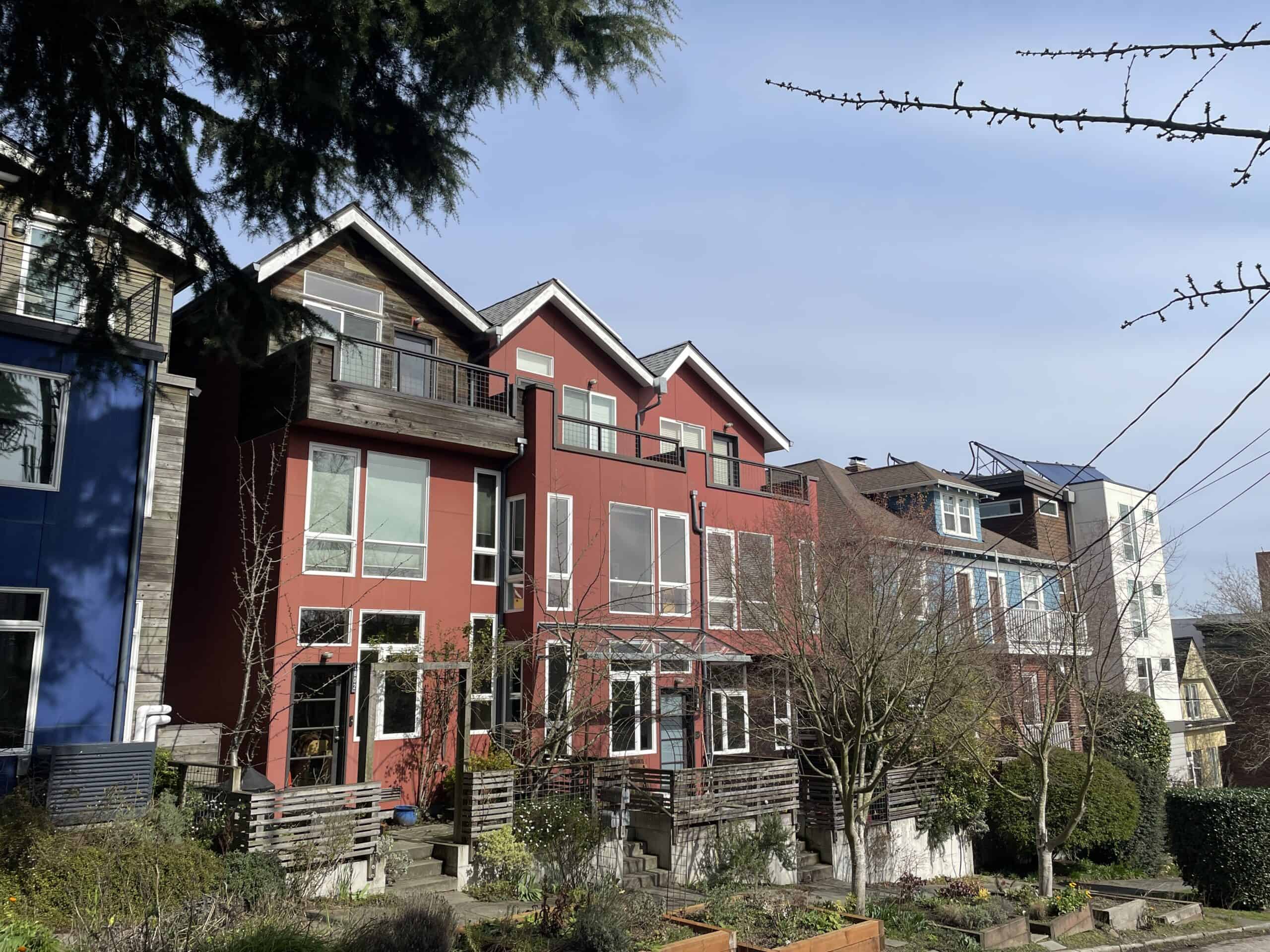
What’s next: WA’s win as a bellwether
Washington’s elevator bill may be a small step on a long path of reforms necessary to meet the state’s growing need for accessible homes and neighborhoods. But it is also a giant leap for the elevator conversation more broadly that can spur reform efforts elsewhere across the US and Canada.
No one has a good enough crystal ball to project the uptake of smaller elevators, but Washington will be a laboratory. The state has lots of homes to build, along with lots more land where it’s now legal to build small-scale multifamily homes, thanks to the 2023 middle housing bill. The 34,000 elevator-less homes in Seattle show what happens under the status quo. Even if just a fraction of those buildings had elevators, that’s thousands more homes that a parent with a stroller, a shopper with armfuls of groceries, a person using a wheelchair, and an elderly relative with bad knees can all now easily access or even call their own.
And hopefully, soon Washington won’t be the only laboratory. This year, Connecticut and Indiana both introduced bills with similar size-reduction language, though neither survived. Maine and Rhode Island have also explored more elevator possibilities, and Oregon is expected to jump in with a bill in 2027.
In both the US and Canada, legalizing elevators sized down further to the European wheelchair standard will require federal action. Both countries will have to relax laws that require elevators big enough for wheelchairs to turn around inside the cabin. Promisingly, though, advocates—including disability rights leaders—have begun to beat that drum, because an elevator from which wheelchair users back out is inarguably better than no elevator at all.
The bigger prize will be reforming standards so that more of North America can benefit from the international elevator marketplace’s far lower costs of installation, maintenance, and repair. In theory, it’s simple: adopt the EN 81 standard that most of the world uses. In practice, it’s a bureaucratic juggernaut, because states and provinces have jurisdiction over most elevator regulations and there is no standard formula. On top of that, if NEII’s opposition to Washington’s bill is any indication, the big four elevator companies that dominate the market in the US and Canada will try to thwart harmonization efforts.
One strategy is for states to band together to create a movement for global standards with enough momentum to bring along the rest of the country. That’s the thinking behind the non-binding harmonization statement in this year’s initial version of SB 5156: one state giving an official nod makes it easier for other states to join in.
In the United States, mandating global standards top-down from the federal level is improbable. In Canada, though, perhaps there’s an opportunity. Given current geopolitical tensions, Canada’s federal government may be inspired to break from the US and adopt the EN 81 global standard nationally. And that would only up the pressure for the US to do the same.
Thank you to Michela Zonta for researching the numbers of Seattle residential buildings with and without elevators.

