

Takeaways
- Utilities in the Northwest are sounding the alarm over rising electricity demand to rally support for gas-fired power plants, risking locking in customers to an increasingly outdated, expensive energy system.
- But arguments for new gas plants are largely based on the results of a single study, which does not consider the potential for programs that reduce or flex customers’ power demand to meet near-term resource needs.
- Instead of jumping to gas plants as the solution to rising electricity demand, leaders should push for data center flexibility, demand response programs, energy efficiency, and an expanded grid.
- Rushing to build new gas-fired power plants would be a costly mistake—and would hold back Northwesterners from the climate progress they are eager to advance.
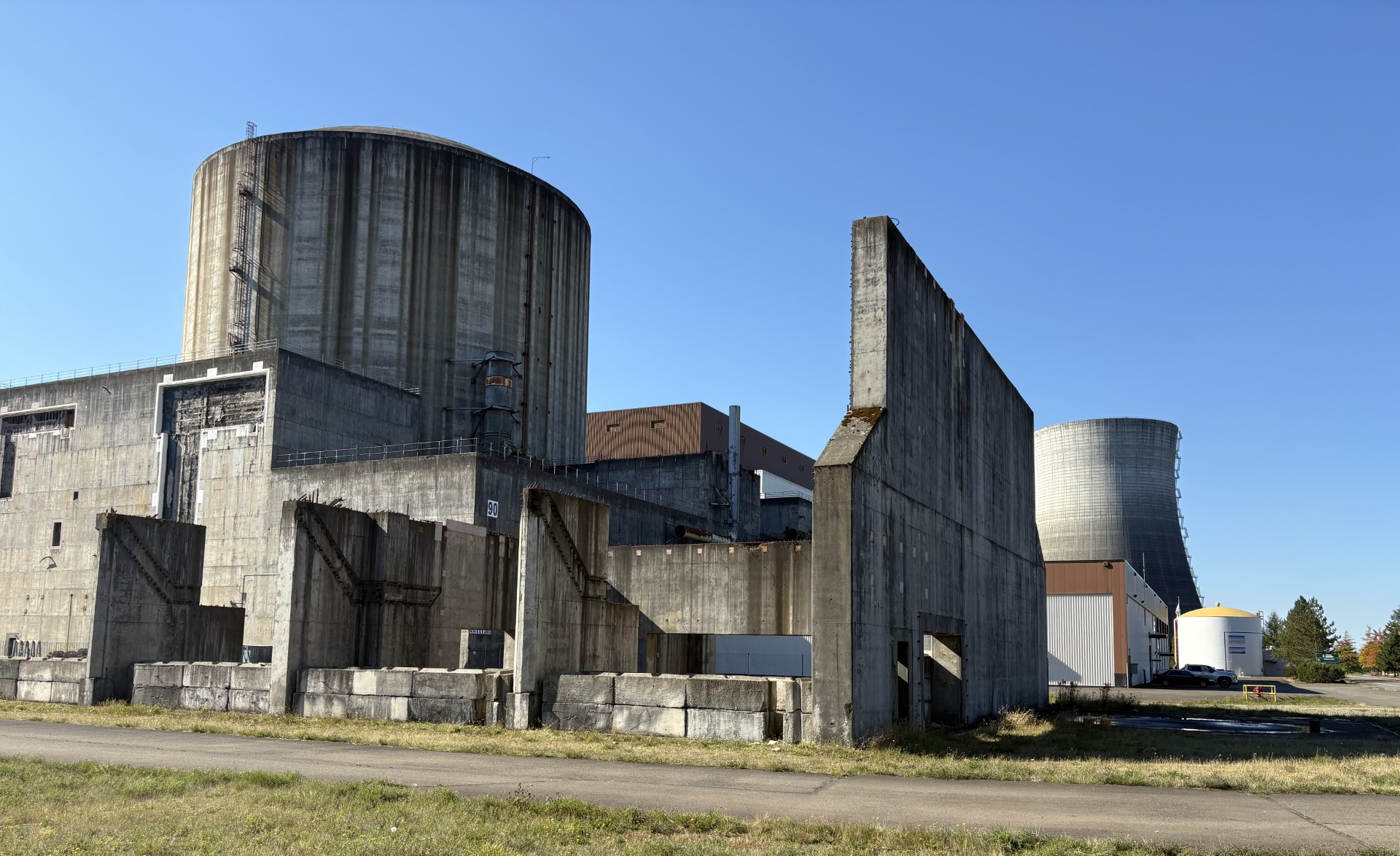
In the 1970s, utilities across the Pacific Northwest warned that electricity demand was about to explode. New power plants, they said, were unavoidable. Acting on those forecasts, the Washington Public Power Supply System (WPPSS) rushed to build five nuclear plants. But the new loads never arrived, undercut by rising prices, inflation, and energy efficiency. What did arrive were half-finished reactors and billions of dollars in debt on which WPPSS—now derisively referred to as “whoops!”—ultimately defaulted. This has qualified as one of the most infamous utility planning failures in US history, and one that Washington state’s ratepayers will be paying off through 2043.
Four decades later, the Northwest finds itself gripped by a familiar story. Once again, warnings of impending electricity shortages are spreading. Once again, utilities are telling policymakers and regulators that the region needs new power plants imminently. This time, though, they’re touting polluting gas plants as the solution, threatening to undo the region’s climate progress.
Behind much of this urgency is a high-profile resource adequacy analysis that consultancy Energy and Environmental Economics (E3) released in September 2025, which assesses whether the broader Northwest can keep the lights on when electricity demand spikes. The study, which the region’s utilities funded, concludes that the Northwest region faces a nearly nine-gigawatt (GW) shortfall by 2030—about the amount of energy that powers the state of Oregon today.
Regional utilities have begun citing the analysis to suggest that new natural gas plants may be unavoidable. Some in the energy industry are now suggesting that state clean energy laws should be loosened to accommodate a buildout of more natural gas infrastructure The US Department of Energy even leaned on the report to justify its order to keep Washington’s last coal-fired power plant open past its slated retirement date of December 31, 2025.
But a rush toward new gas plants in the Northwest would be a colossal mistake. A separate study by Sylvan Energy Analytics, a firm founded by two E3 alumni, found that requiring data centers to power down during times of grid stress (a strategy the state of Texas already employs) could close most of the region’s resource gap through 2030.
Rather than lock the Northwest into more polluting fossil fuel infrastructure, leaders can do a few things: 1) mandate that large electricity users, like data centers, temporarily cut back during grid emergencies, 2) require utilities to invest in energy efficiency and commonsense programs to encourage people to use power when it’s widely available, and 3) accelerate grid upgrades, buying time to mature new clean technologies until the region really needs them. Doing so would deliver for the region’s residents the healthier climate outcomes they have repeatedly voted to support and steward limited ratepayer dollars toward a system of cleaner and cheaper energy.
Utilities are advocating gas plant expansion despite Northwest clean energy laws
Both Oregon and Washington have cut off most avenues to building new gas power plants or importing polluting power. Oregon prohibits the state’s siting agency from approving new fossil fuel-generating facilities, including gas-fired power plants, and both states have enacted 100 percent clean electricity laws.
But new fossil fuel infrastructure is not impossible. Both Washington’s Clean Energy Transformation Act (CETA) and Oregon’s Clean Energy Targets Act (better known as HB 2021) allow utilities to seek exemptions from compliance through one or both of two large loopholes: if they claim reliability is jeopardized or costs are too high. (Plus, Oregon’s HB 2021 does not apply to the state’s consumer-owned utilities.)
Utilities could exploit these provisions if they and regulators frame the need for new gas resources as immediate and unavoidable, which they seem increasingly ready to do. The chair of the Washington Utilities and Transportation Commission, Ann Rendahl, told a regional energy symposium in October 2025, “We need to build electric generation and transmission, and we need to build gas pipelines, which is not something that someone from Washington has said in a long time.” Matt Steuerwalt, an executive of Washington’s largest utility, Puget Sound Energy (PSE), echoed that sentiment in December 2025: “[The region] is going to have to add natural gas peaking plants as a critical backstop for reliability when the sun isn’t shining or the wind isn’t blowing.”
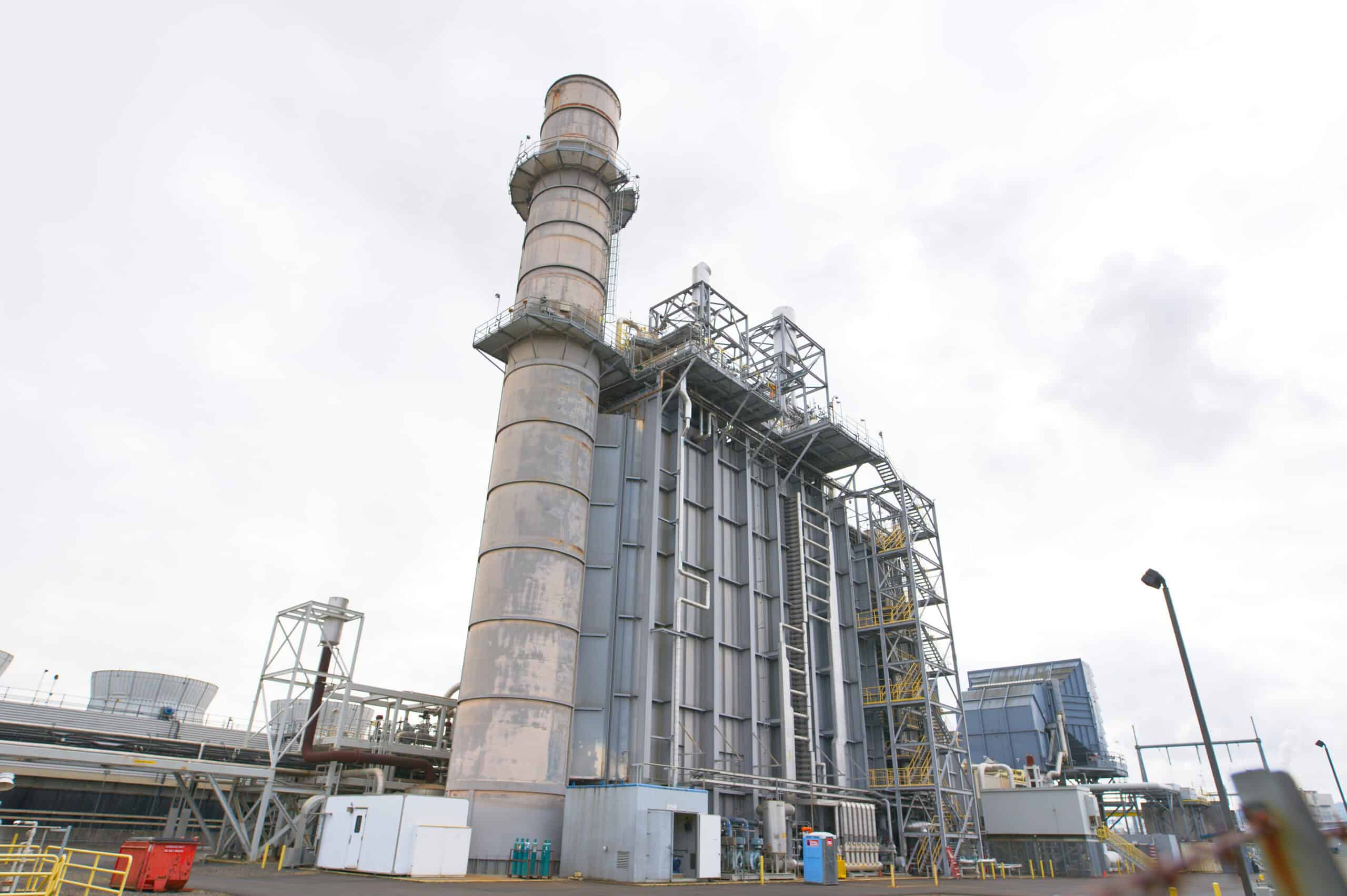
Even before PSE offered this projection, the utility had contracted for six new gas turbines to build a new gas power plant at an undisclosed site in Washington. It’s the first step that a utility has made under CETA to expand fossil fuel infrastructure for electricity. In its heavily redacted filing, PSE does not publicly disclose how it intends to offset or reduce the new plants’ pollution.
More Washington utilities could follow suit. Grant County Public Utility District (Grant PUD), a central Washington public utility that serves an area popular for siting data centers, recently approved a new (it claims, temporary) 12-megawatt (MW) natural gas plant. The utility cited a lack of electric transmission capacity as the reason it needs the polluting resource.
Both PSE and Grant PUD could deploy alternatives, especially programs that reduce electricity demand that neither utility has seriously tried. While PSE has built a fairly large demand response pilot (a system where customers voluntarily reduce power use during peak periods), enrolling nearly half of its customers, the program’s outcomes are disappointing, shaving off less than 2 percent of peak demand. Utilities in other regions average savings of 10 percent of peak demand.1 A 2024 law requires PSE to ramp up its demand response program to save 10 percent of peak demand starting in 2027. Grant County PUD isn’t yet trying demand response at all, despite releasing a study it commissioned that found that with such a program, the utility could harvest 70 MW of capacity savings in the summer alone.
The alarming “nine-gigawatt shortfall” headline is misleading
Back to that high-profile analysis that’s been driving gas-expansionist conversations in the Northwest, though. Utilities, represented by the Public Generating Pool, commissioned the E3 study for the seven-state greater Northwest region that includes Idaho, Oregon, Washington, and parts of California, Montana, Nevada, Utah, and Wyoming. (Public Generating Pool is a trade association representing both consumer-owned and investor-owned utilities.)
The analysis that E3 released in September 2025 is the first of two parts, Phase 1 and Phase 2, and it examined the “state of resource adequacy”—i.e., whether the grid can reliably keep the lights on, especially during extreme cold or extreme heat and when hydropower output is low. It’s an analysis built on three key predictions:
- How much new electricity demand will arrive from data centers, electric vehicles, and building electrification?
- How much power will the region’s existing resources realistically produce?
- How much new generation and transmission will the region build?
Most recent reporting has cited E3’s projection of an 8.7-GW shortfall—enough to power the entire state of Oregon—for meeting the region’s power needs by 2030 (rounded up to 9 GW in most media coverage).
But that number isn’t a true reading of the underlying analysis. New generation resources under construction, like the Carriger solar project in Washington and those already undergoing conversions, like PacifiCorp’s Dave Johnson coal plant in Wyoming (which the company is converting to run on gas), are absent from the dominant headlines and talking points. Once these already planned sources are included, the 2030 gap E3 estimates shrinks by more than a third, to roughly 5.6 GW.
Technically, the Phase 1 analysis does not recommend how the region should address its forecast resource adaquacy gap, leaving that to Phase 2, still under development. But already Phase 1 is bolstering claims that natural gas generation is the best path to achieving grid reliability. The analysis states that “natural gas is the only viable near-term firm capacity option.”2 Study sponsors have contributed to that framing, suggesting that the Northwest may be unable to avoid building more gas infrastructure, even while acknowledging that “siting new gas plants is extremely challenging.” Gas turbine supply chains are backed up to 2030, and permitting battles to site a new fossil fuel-fired plant would no doubt delay, if not kill, such projects.
However, if utilities account for a range of possible scenarios for electricity demand and the untapped potential for flexible power use, energy efficiency, and grid expansion, new gas-fired power will look increasingly like the bad bet it is.
Nobody knows how much power A.I. data centers will actually demand
All regional forecasts, including both the E3 and Sylvan studies, broadly agree on one fundamental point: electricity demand in the Northwest is likely to grow through 2030 (and beyond) as people transition their cars, homes, and businesses away from fossil fuels and onto the grid and as new data centers come online. But forecasting demand is inherently uncertain, particularly during an energy transition and artificial intelligence boom. No one knows whether the speculation around data centers for artificial intelligence will be realized nor how quickly consumers will electrify their homes and vehicles. (It’s worth noting that, unlike Oregon, Washington’s statewide electricity demand has not grown at all in recent years; in fact, it fell 2 percent from 2014 to 2024.3 )
Most regional analyses explicitly account for this uncertainty by modeling several possible scenarios for winter electricity demand growth through 2030, ranging from negative0.5 percent to 3.2 percent annually.4 By contrast, the E3 study uses only a single estimate of about 2.5 percent annual load growth through 2030. In doing so, E3 ignores its own advice: “Effective forecasting is not about predicting a single outcome but about outlining a credible, data-driven range of possibilities that supports flexible investment, proactive risk management, and informed regulatory decisions,” the company wrote in a report on forecasting large electricity loads.
Taken together, regional forecasts all reinforce the claim that the Northwest needs additional capacity in the next decade. But the studies do not definitively support E3’s conclusion that the region faces an immediate shortfall or its suggestion that gas is the answer.
Related: Northwest Data Centers: A Climate Test and Potential Opportunity | A Sightline report finds that—with the right policies—the region could harness data center demand for clean power to decarbonize the broader economy.
Asking data centers to briefly power down could resolve much of the region’s shortfall
Asking data centers to temporarily reduce their electricity use when the grid is stressed, even just for a handful of days per year, could help the region’s grid withstand extreme conditions, without the need to walk back climate laws. The Northwest could add at least 3.8 GW of new electricity demand if data centers cut their power demand for an average of about one week annually (and for a few hours at a time), according to a 2025 Duke University study.
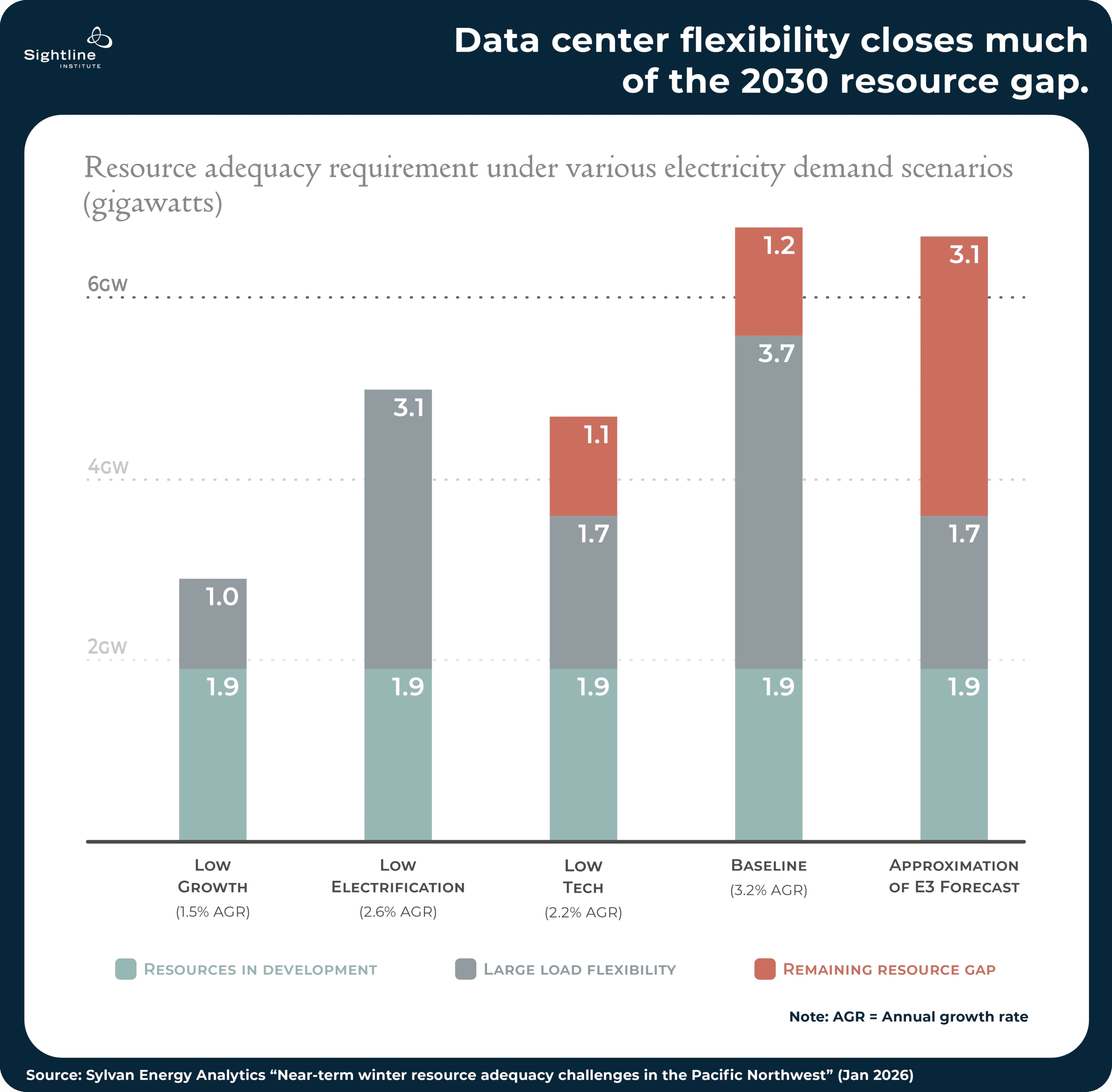
However, the E3 scope (for both Phases 1 and 2) omits the potential for this type of flexibility from data centers and other large electricity users. By contrast, Sylvan’s study found that powering down large data centers during the rare winter periods when the grid is stressed eliminates the resource adequacy gap in two of five 2030 scenarios and limits the gap to under 1.2 GW in another two.5 The Sylvan study also found that developers and utilities are already building most of the new renewable resources necessary to meet that 1.2-GW gap, with many more projects in the pipeline.
However, when Sylvan’s model used E3’s single estimate for growth in demand, the region fell short by 3.1 GW by 2030, even with data center flexibility. That’s because E3 used a low estimate for data center demand, limiting the impacts of large load flexibility, and a high projection for vehicle and building electrification. Again, by modeling a single view of growth rather than a range that accounts for uncertainty, E3 ended up magnifying region’s capacity gap, thus making additional natural gas generation appear inevitable.
Northwest states are not yet requiring data center power reductions during grid stress, though policymakers are starting to consider it. Versions of Washington’s 2026 data center bill (HB 2515) would have given utilities authority to manage large data center loads through mandatory power cutbacks during system stress and through participation in demand response programs. However, technology companies pushed back hard and ultimately succeeded in killing the bill.
Oregon’s 2025 data center law, the POWER Act (HB 3546), requires utilities to bill large energy users like data centers for the power and grid upgrades they require. The law doesn’t ask data centers to reduce their power consumption during grid emergencies, but regulators could choose to include this provision in ongoing rulemaking.
Portland General Electric isn’t waiting for regulators to act. The utility is offering data centers faster grid connection in exchange for agreeing to reduce power use during periods of grid stress. So far, more than 400 MW of new data center loads will be online under this agreement by 2029.
Other Northwest states haven’t yet put forward policies to encourage or mandate flexibility for large loads to support grid reliability in the region—but Texas has. As of 2026, the state requires new large electric loads over 75 MW, including many data centers, to be able to power down and to comply with emergency load shedding directives from authorities as a condition of connecting to the Texas grid. A tradeoff, though: Texas’s law allows data centers to operate on backup generation during these cutbacks, much of which consists of dirty diesel generators—a risk Northwest lawmakers would need to weigh.
Other flexible power demand programs, energy efficiency, and an expanded grid would reduce the need to build new gas plants
Of course, the options for addressing the scenario forecasted by E3 without natural gas are not limited to data center flexibility. Encouraging electric vehicles to charge and buildings to heat or cool themselves at off-peak times could also shrink how much more generation utilities need to build, as could increased energy efficiency measures. These approaches require no new fossil fuel power plants, no pipeline expansion, and no amendments to state climate laws. They can be deployed faster than new gas plants and are among the lowest-cost resources for reducing peak demand, which translates into lower electricity bills for consumers.
Utilities are not taking full advantage of these commonsense solutions in the Pacific Northwest. Few of the region’s utilities offer time-of-use rates (pricing that varies by time of day to encourage off-peak electricity use), beyond small pilots. In a region with relatively high adoption of electric vehicles and broad public commitment to addressing climate change, it makes little sense not to encourage car owners to take the small step to charge at times of day when there is plenty of grid capacity. And while some investor-owned utilities offer voluntary demand response programs, none of the Northwest’s consumer-owned utilities has moved beyond small pilots. That’s in contrast to other regions where consumer-owned utilities like Sacramento Municipal Utility District (CA), Austin Energy (TX), and Salt River Project (AZ) manage demand response programs to help manage grid stress.
E3’s Phase 2 evaluation is expected to include demand response and energy efficiency resource options for meeting near- and long-term resource adequacy challenges under its growth projections for electricity demand. However, the consultancy has already signaled that it believes energy efficiency is insufficient to improve resource adequacy, stating that it has “limited potential vs. cost” and “cannot serve existing load.” These claims fly in the face of the region’s experience keeping demand growth flat to declining for decades by relying primarily on energy conservation.
An expanded electric transmission grid can also improve the Northwest’s grid resilience by allowing it to import power from neighboring regions when local demand spikes. For example, expanding the grid between Montana and Washington would allow Washington, Oregon, and Northern California to import more than 11 GW of high-capacity, low-cost wind from Montana and Wyoming by 2050. A study by Grid Strategies, a power sector consulting firm, found that grid planners consistently underestimate the potential of interregional transmission, especially by excluding from estimates “non-firm” imports—that is, the surplus power that a neighboring region can spare during an emergency, even if it’s not guaranteed year-round. The E3 study excludes these non-firm imports and does not model how expanding the Northwest’s transmission capacity could reduce the region’s resource adequacy shortfall. Discounting the potential of an expanded grid encourages utilities to overbuild local generation, at unnecessary cost to ratepayers.
The region has cleaner, faster options than a return to natural gas
The WPPSS project “whoopsed” because utilities acted on forecasts that felt urgent and inevitable at the time but turned out to be wrong. Today’s debate over new gas infrastructure echoes that moment. Highly uncertain demand projections and a failure to consider cheaper, faster alternatives are lending credibility to calls by utilities and others for prolonging the region’s reliance on polluting fossil fuel infrastructure.
There is little dissent among experts that the region needs to build more generation and transmission in the coming decades. Flexibility and energy projects already in development may carry the Northwest through the near term, but additional supply-side resources will be necessary after 2030, particularly if electrification and data center growth accelerate.
Today, most of the clean supply options on the table are wind, solar, and short-duration batteries. Those resources can meet much of the region’s energy needs, and they provide meaningful summer capacity value in places like Idaho and inland northwest Oregon, where summer’s demand exceeds winter’s. But winter reliability during extreme cold events remains challenging because those times are precisely the conditions when wind and solar output can dip. Emerging clean technologies, like enhanced geothermal or long-duration storage, could eventually fill that role, but they are not yet commercially mature at scale. That is precisely why near-term flexibility is so valuable: it buys time. Time to build the thousands of megawatts of wind and solar already in the queue. Time to expand transmission lines. Time for new clean technologies to mature.
What the Northwest cannot afford is to let one study reliant on a single high-growth scenario, an incomplete solution set, and a misleading headline dictate irreversible infrastructure decisions. Natural gas plants and pipeline expansions are long-lived, capital-intensive assets that would shape the region’s energy mix for decades. Before opening emergency loopholes in clean energy laws or backtracking hard-won policies to cut climate-warming pollution, lawmakers and regulators can insist that utilities exhaust their options with large load flexibility, demand response, energy efficiency, and grid upgrades—in other words, faster, lower-cost, lower-risk options already within reach.

