The Trump administration is running a dragnet through the US federal government, trying to eliminate anything tagged as climate action. Yet climate philanthropists and leaders, dispirited by watching so many of their hard-won advances reversed, have one surprisingly impactful opportunity still open to them. They could log gratifying victories for the climate in the immediate future by investing in housing reform. They have it in their power to help unleash the construction of millions of all-electric, decarbonized homes in walkable, low-carbon neighborhoods at no cost to the public treasury and without anyone ever uttering the word “climate.”
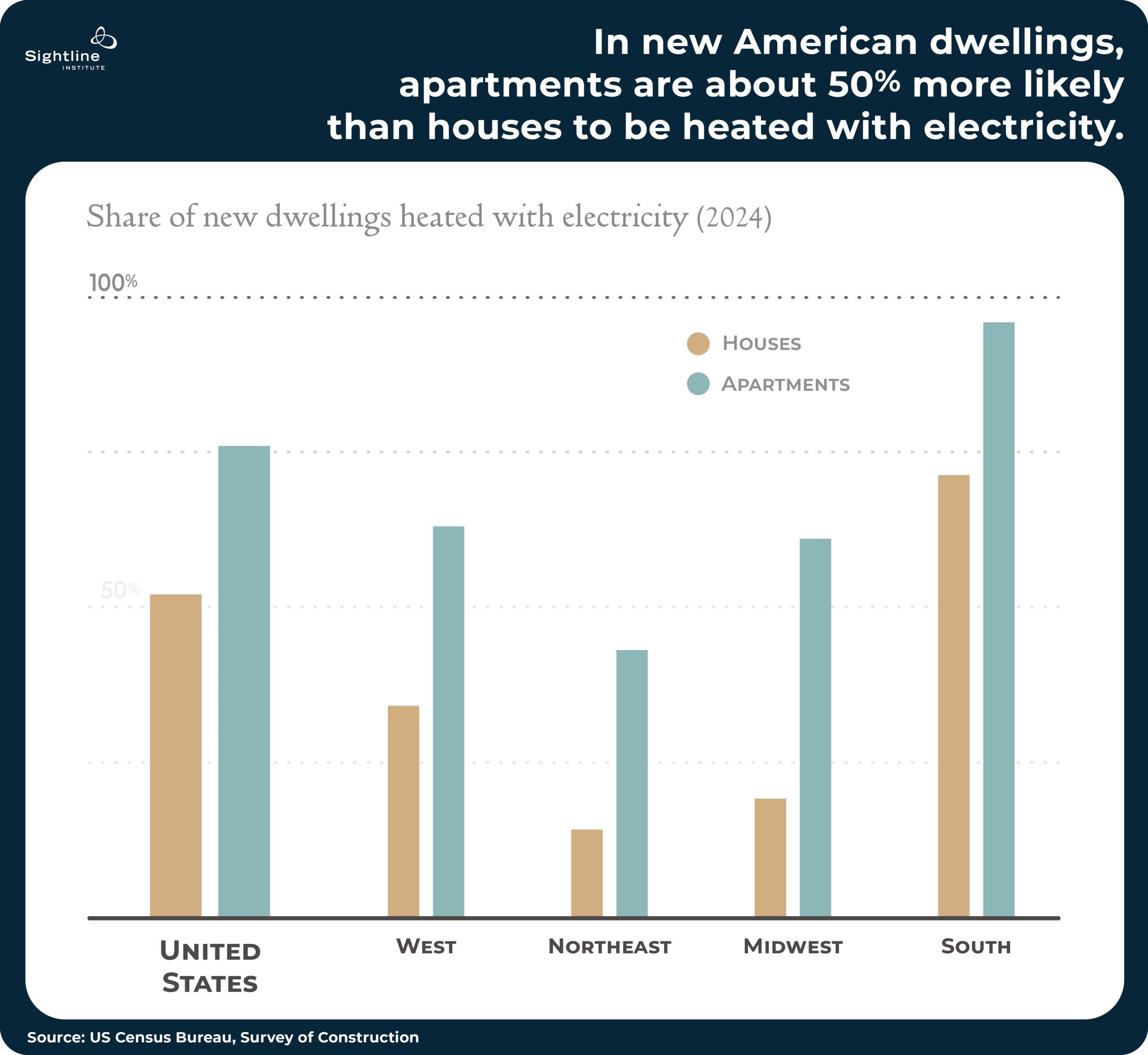
Apartments, concludes a new Sightline report, are unsung climate heroes. Compared with standalone houses, apartments cause dramatically less climate damage. They consume far less energy per resident; they are much more electrified; they require substantially fewer materials; they disrupt less carbon-holding land; and their residents drive less.
Thanks to these advantages, on average, people who live in urban high-rise apartments cause one-third as much climate pollution per person as do residents of suburban houses. Residents of low-rise apartments, meanwhile, cause half as much as do house dwellers. Climate-wise, apartments are to houses as EVs are to SUVs.
The climate virtues of apartments would be of merely academic interest if every would-be apartment dweller already inhabited one, but many more Americans would choose apartments were they more affordable. They would be more affordable were they more abundant. And they would be more abundant were they not banned on more than 95 percent of US residential land. Liberalizing zoning for apartments would speed the trend already underway away from houses and toward apartments. A larger share of people are living in apartments every year—the figure already exceeds a quarter of Americans.
Climate-wise, apartments are to houses as EVs are to SUVs.
Fortunately, a budding pro-homes or YIMBY movement (for Yes In My Back Yard) is racking up an impressive record of victories, including legalizing apartments in numerous American cities and states. Its wins are mounting in both blue and red places, thanks to the bipartisan nature of the cause: whether you are offended by government infringement on property rights (on the right), the shortage of homes (in the center), or by the legacy of redlining (on the left), legalizing apartments is a win.
The upshot? Climate leaders could keep megatons of carbon out of the atmosphere by joining this swelling, bipartisan pro-homes movement. Doing so would not even cost them much. The budget of the US climate movement, at $4 billion a year, is one hundred times larger than the $40 million pro-homes movement, according to new research in the report. So shifting just one percent of climate philanthropy to pro-homes initiatives would double the YIMBY movement’s budget. It might also, during the Trump years, trim more emissions than any other domestic climate initiative.
Almost no one thinks of apartments as climate solutions, but they are. And there could be lots more of them if they were legal again in more of the places Americans love to call home.
Related
- Articles:
- Five Reasons Four-Story Apartment Buildings Are Good | Especially in Oregon and the rest of the Pacific Northwest.
- New Oregon Rules Will Re-Legalize Neighborhood Apartments | Over time, the state zoning standards make space for tens of thousands more homes in Oregon cities.
- Podcast: Why climate funders don’t fund housing policy, and why they oughtta | Volts
- Social media: Posts on Bluesky, LinkedIn, Instagram, Facebook, X.
- Email newsletter: Personal introduction and context from report author Alan Durning. Subscribe to Sightline’s Climate and Housing newsletters here.
- Charts: Download all charts from the report, free to use and publish elsewhere with credit and link (e.g., “Courtesy of Sightline Institute”).