


Takeaways
- While ranked choice voting introduces new elements to campaigning, the day-to-day operations of running a campaign are not much different from a plurality-winner, aka “first past the post,” election.
- Candidates and campaigners may foster a more collaborative political environment and will likely help educate voters about the process.
Multnomah County, Oregon’s most populous county, is holding its first ranked choice election this year. Seattle, Cascadia’s largest city, will upgrade to ranked top-two primaries in 2027. As voters and candidates learn about the new rules, campaign staff and volunteers, acting as liaisons between the two groups, might wonder what the change from plurality-winner (aka “first past the post”) elections means for their day-to-day.
Sightline spoke with seven individuals—political consultants, campaign managers, issue and labor group leaders—in the campaign world in Alaska and Portland, Oregon, both of which switched to ranked choice voting in the last few years. Their take? While the new model required some adjustment, it also created new opportunities to engage with voters and allowed candidates flexibility to run on broadly popular issues. In both places, the core campaign strategy was, in the words of Talking Heads, “same as it ever was:” voter outreach, clear messages, and endorsements.
What makes ranked choice elections different from plurality-winner elections?
On a ranked ballot, voters may rank candidates from most to least favorite: 1, 2, 3, and so on. As the counting process plays out, officials eliminate candidates with the fewest first-place votes and transfer their share according to voters’ next-place preferences.
As such, candidates stand to benefit from earning a place anywhere on a voter’s ballot. Ranked choice voting largely eliminates the “spoiler” effect, as candidates with similar platforms no longer have to worry about splitting a base if voters engage with rankings.
Takeaway #1: With ranked choice voting, positivity pays off
Attitude adjustment may be the biggest change under ranked choice elections. Candidates have more to gain from boosting each other than tearing each other apart. Highlighting areas of common ground can endear candidates’ voter bases to one another, increasing the odds that voters will rank both on their ballots. Conversely, “going negative will drastically, negatively impact your campaign,” said Evelyn Kocher, who ran Portland City Councilor Angelita Morillo’s 2024 campaign.
Some campaigns have found success in cross-endorsing one another’s candidates. Kocher recalled her candidate Angelita Morillo’s partnership with fellow District 3 hopeful Tiffany Koyama Lane. The two had overlapping policy goals, voter bases, and sets of endorsements. “We could ask folks to just carry both candidates’ literature, and it worked great.”
Working directly with other campaigns seeking the same voter base requires a new degree of communication and coordination, like having two teams agree on shared flyers. Marchel Kaleikini, who knocked countless doors for Timur Ender’s 2024 Portland City Council campaign, recalled another early puzzle: producing meaningful data. The application they used to track voter outreach wasn’t set up to handle ranked choice voting. “We had to request specific questions like, ‘Do we have your commitment to rank Timur as your first choice? If not, do we have your commitment that you’ll rank him [in] your top three?’”
Ranked choice campaigning doesn’t mean exclusively buddying up with like-minded candidates, however. According to Joelle Hall, President of the Alaska AFL-CIO, the ranked model encourages campaigns to appeal beyond their bases. “You’ve got to figure out what you’re going to say to Republicans, Democrats, and independents, because they’re all going to be able to vote for you in either first or second place,” she said.

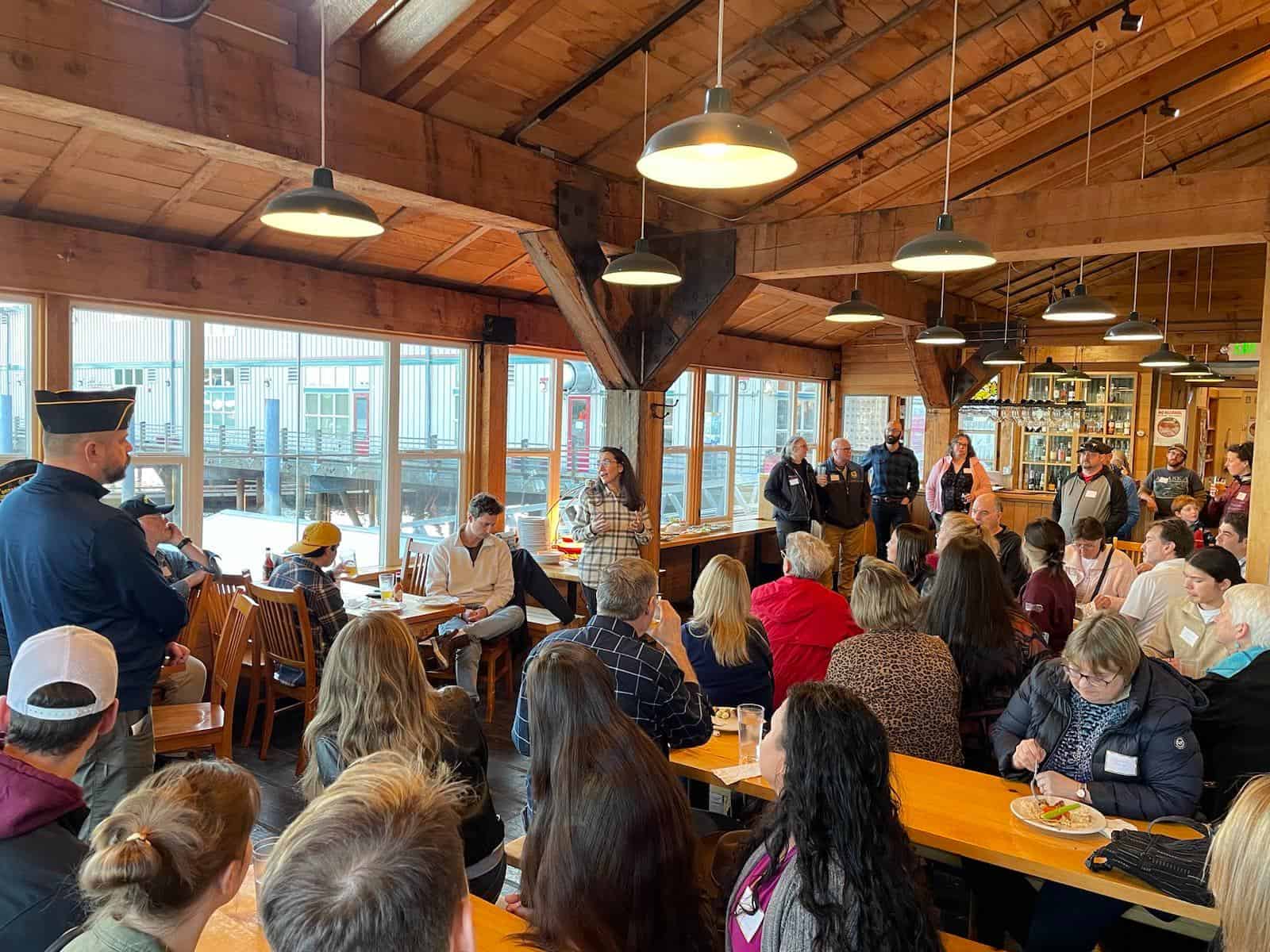
 Loren Holmes/Anchorage Daily News via ZUMA Press Wire.
Adapting to a more positive system also gives campaigners room to grow. “Trying new things can be a very fascinating and liberating experience,” said Burke Croft, Senior Data Director at the Alaska campaign consultancy Ship Creek Group. “If you don’t like politics as you see it today, this changes the incentives.”
Takeaway #2: Voter education becomes a new task—and opportunity—for campaigners
When secondary rankings can make or break candidates, helping voters understand and engage with ranked choice voting becomes a campaign to-do.
Election officials typically run education initiatives before implementing the reform, but they can’t reach every voter. In 2024, Campaign Manager Marchel Kaleikini found that many Portlanders had questions about the city’s new ballot format and why it mattered. The campaign, , she said, needed its volunteers to have concise answers to common questions.
Voter ed doesn’t have to begin or end with in-person conversations. Campaigns can roll education efforts into print and digital appeals to voters. Burke Croft told Sightline that some of Ship Creek Group’s clients included educational materials on campaign mailers. “Half a page or a full page was dedicated to ‘this is what your ballot’s going to look like in November,’” he recalled.
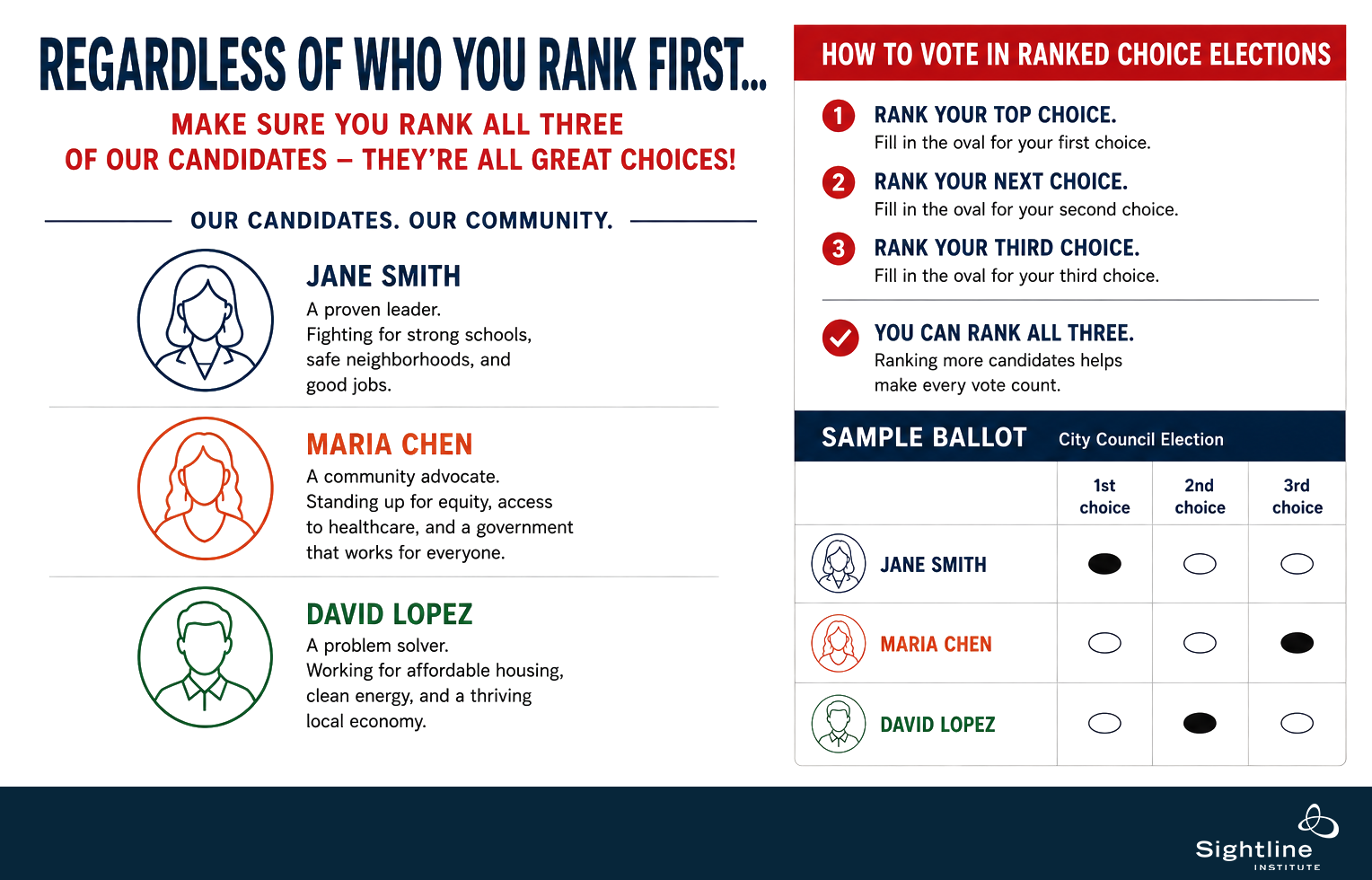
In Portland, Angelita Morillo used her sizable social media presence to spread the word. “Her voters were generally more educated about the ranked choice voting system than voters for other candidates,” said Evelyn Kocher, Morillo’s campaign manager. Morillo went on to win a City Council seat thanks to the thousands of voters who ranked her on their ballots, even if she was not their first choice.
Takeaway #3: Traditional campaigning carries over, with a particular emphasis on voter contact
A ranked choice election is still an election. A candidate’s name recognition, charisma, and track record draw voters in; advertising and outreach remain key to their success. “The campaign part of it doesn’t feel like it’s been that drastically different, honestly,” said Emily Fehrenbacher of The Mobilization Center in Anchorage, Alaska, which assists both state and local (non-ranked) campaigns.
Evelyn Kocher, the Portland-based campaign manager, cited tactics that likely sound familiar to anybody who’s participated in a first-past-the-post campaign. “We were trying to get out there and talk to folks as much as humanly possible. We had lots of events.” In Kocher’s assessment, a recognizable platform and clear communication count for a lot in a ranked choice campaign: “If you cannot sum up your campaign in your Instagram bio, then you’ll lose.”
Standing out from the crowd may be most important in a municipality or state’s first ranked choice election, which tends to attract a large candidate field.1 Campaigners should expect less crowded contests as time goes on; studies show that the flood of new candidates generally stems after the initial cycle. (There’s also a simple fix for persistently long ballots.)
Overall, the strategic shifts for hopeful teams and organizers are not astronomical. Campaigners’ core task, as always, is to convince voters that their candidate is competent for the job. Ranked choice voting simply shifts where campaigners focus their attention and the attitude with which they do it.
In Kocher’s words: “We’re not running against anybody, we’re running alongside people.”


