
Takeaways
- Mail-in voting, a big part of Cascadia’s democracy infrastructure, is facing challenges:
- The US Postal Service has consolidated processing centers, delaying postmarks and deliveries;
- A US Supreme Court case might require more stringent ballot deadlines; and
- Congress and President Trump are trying to impose additional barriers or even an outright ban.
- Four in five Cascadians rely on receiving their ballots by mail, including in rural and urban areas, so these pressures could have a widespread impact throughout the region.
- In the states that allow it, as many as one-fifth of mailed ballots arrive at elections offices after Election Day, leaving them at risk of invalidation in future elections.
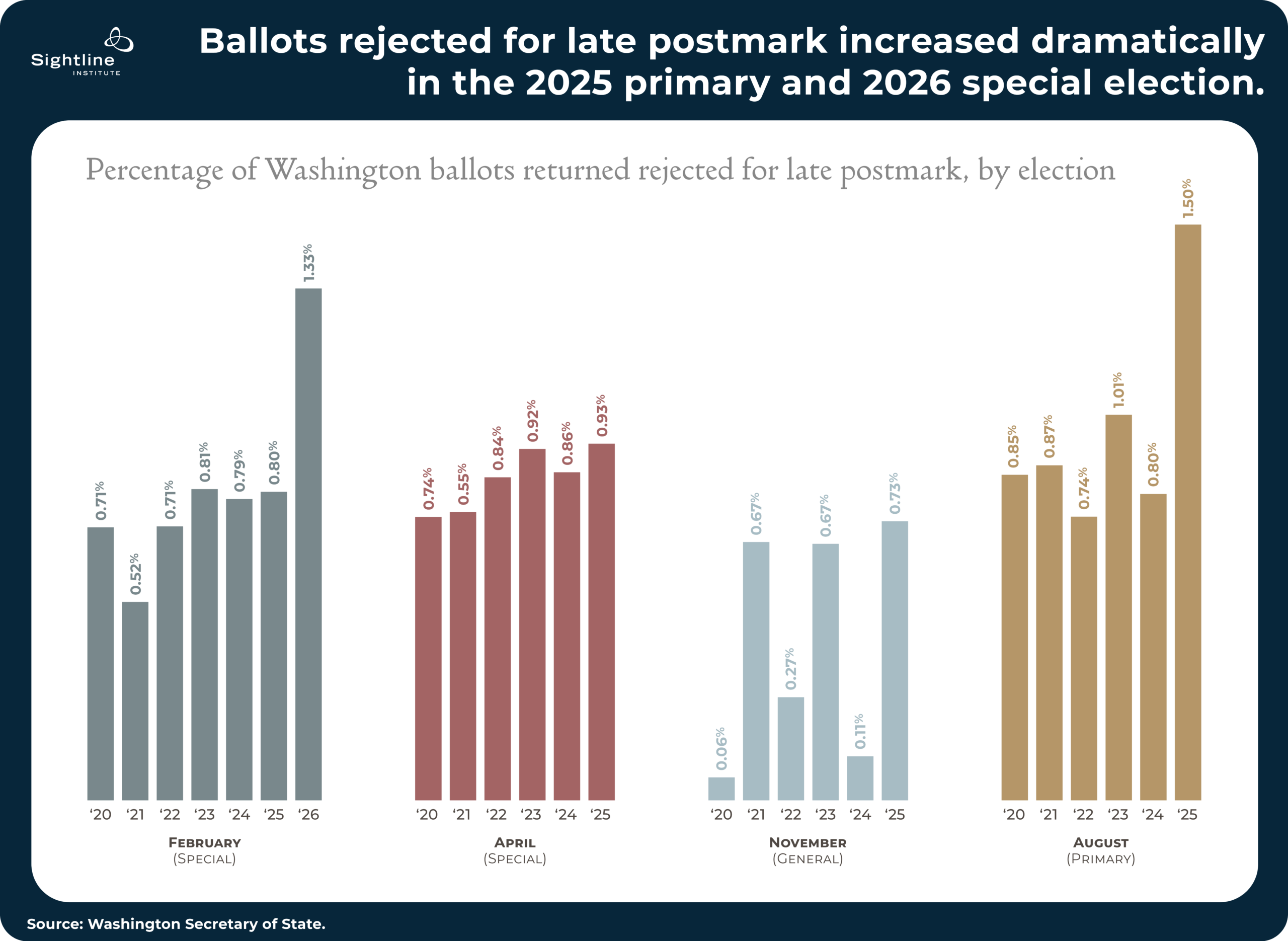
- Some changes have already impacted Cascadian voters. In Washington state, for example, officials have had to reject more ballots for tardiness recently than in the past.
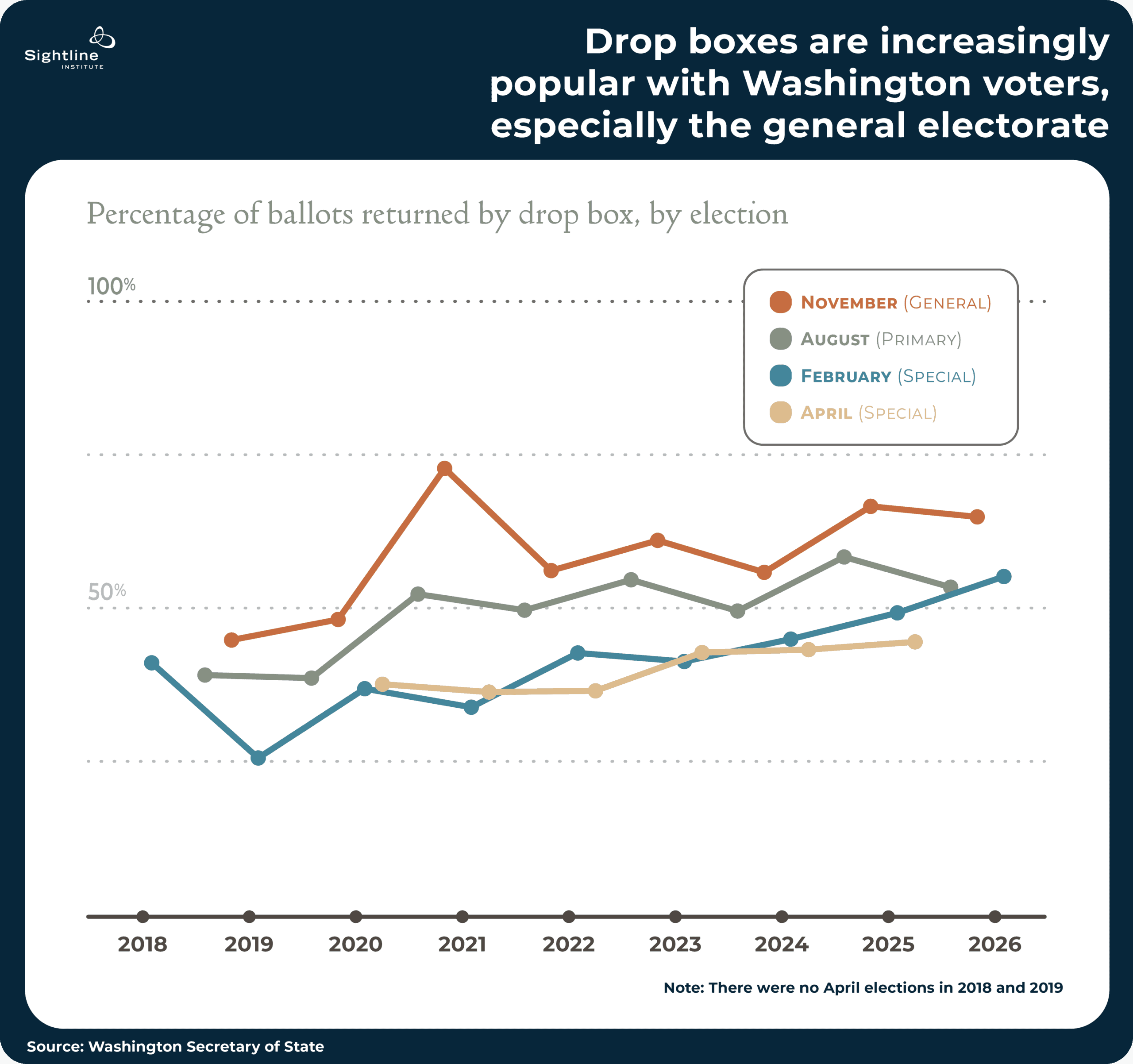
- To mitigate extant and potential changes, voters will need to vote earlier or use drop boxes where possible. Election administrators can help with clear instructions.
See Sightline’s fact sheets for Alaska, Idaho, Montana, Oregon, and Washington.
Author’s note, September 15, 2026: A swirl of litigation in late summer 2026 surrounding the United States Postal Service’s mail-in ballot rules ended (for now) with the US Supreme Court denying President Trump’s request for a stay on a lower court order. The ruling means that USPS’s new rules, dictated by President Trump’s Executive Order, will not go into effect for the 2026 midterms. Litigation continues on the question of whether the rules could apply to future elections (Sightline recommends following Election Law Blog for regular, detailed updates). Some ballots from the summer primaries are already getting tossed at higher levels than in previous elections due to USPS’s processing changes.
Voting by mail has a long and proven track record. It increases turnout, gives voters more time to consider issues and candidates, and saves election administrators money. It’s just as free from fraud as other methods of voting—which is to say, there’s virtually none. Neither Democrats nor Republicans get a particular boost from expanding access to mail ballots.
Unsurprisingly, it’s also popular. Across the five states that make up most of Cascadia (Alaska, Idaho, Montana, Oregon, and Washington), four in five voters receive their ballots in their mailboxes. Cascadia has always been a leader in this form of franchise: Oregon was the first state to hold an all-mail election in 1995 and made it permanent in 2000; Washington followed suit in 2011 after long offering an absentee option.1 Many states across the US expanded the option during the COVID-19 pandemic, and while some have reverted to offering it only to overseas and military voters, close to one-third of American voters still take advantage of the benefits of voting at home.
But this easy method of voting is now under threat. From postal service policy updates to a case before the US Supreme Court, voters long used to dropping their ballots in the mail may no longer have them counted in time. Fortunately, the biggest dangers, such as the US House’s proposed ban on mail-in ballots, don’t seem likely to go into effect any time soon.
In this article, I lay out the existing and potential federal threats to Cascadia’s favorite voting method. I then examine available data and policy on how they might affect our region’s elections.
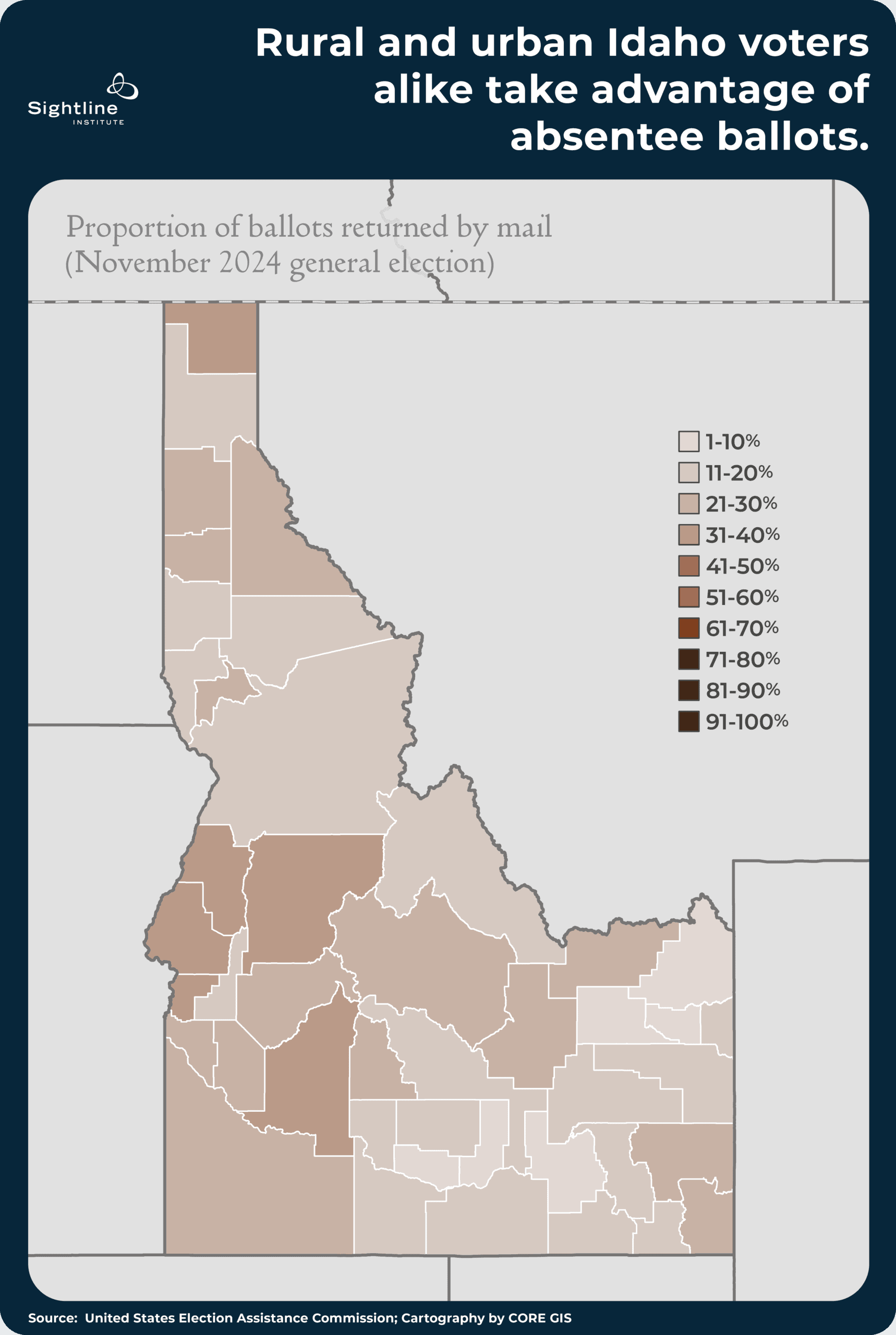
- Of the five main Cascadian states, Idaho, will have the fewest hurdles to overcome, as its laws already match some of the potential additional restrictions and fewer Idaho voters use the mail-in option. Yet plenty of Gem State voters—rural and urban—still benefit from access to absentee ballots.
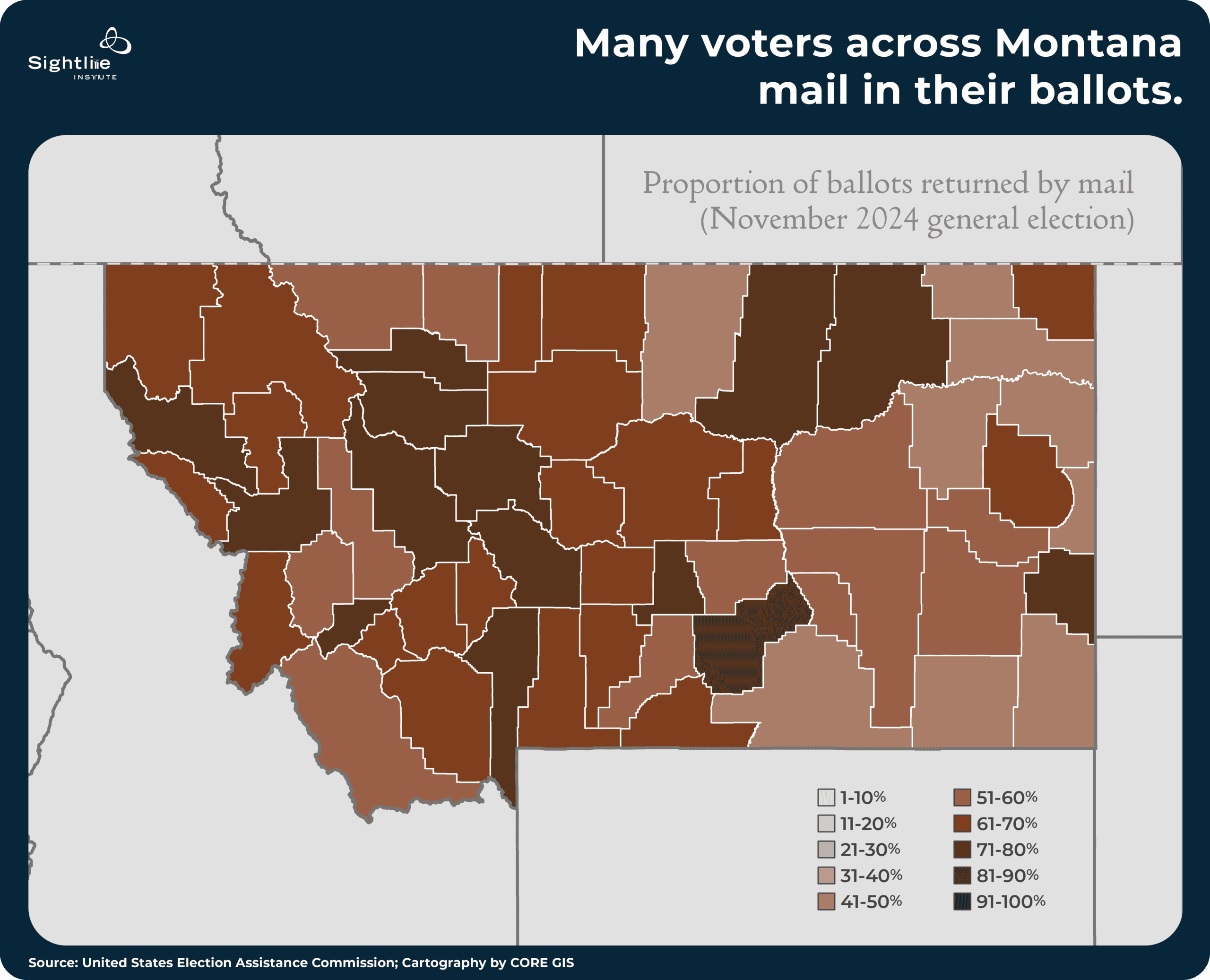
- Montana has similar laws to Idaho, but Montana voters return their ballots by mail at the highest rate of any state in the region (most Oregon and Washington voters return ballots through drop boxes), so USPS delays might affect more of them.
- Like voters across the region, Oregon voters would do well to get ballots in early or use the state’s many ballot drop boxes. Oregon’s May primary election was a good messaging test for election administrators and advocates.
- Voters in Washington, which currently allows ballots to arrive at elections offices later than any other state, might have to adjust their habits significantly, depending on the scope of the changes. And recent elections already show a larger proportion of ballots invalidated for tardiness compared with previous years.
- Any changes might have the most impact in Alaska, not for a large number of voters, but for those in remote areas with few fallback options.
Eroding easy voting: The major hurdles
The challenges that might affect mail-in ballots, described below from most to least likely, vary in the scale of their consequences. The most pervasive threat to mail voting isn’t an outright attack; it’s a secondary effect of USPS decisions that are already impacting voters. The US Supreme Court has not yet ruled in the relevant case, but its decision would affect as many as one in six voters in some states and is worth preparing for. More overtly anti-mail voting efforts in the form of congressional legislation and a presidential executive order have greater potential impact but murky prospects for success.
USPS processing and postmark delays
The United States Postal Service (USPS) both delivers unmarked ballots to voters’ homes and returns completed ballots from mailboxes to election centers.2 Its long-standing organizational challenges are already besetting voters.
Facing a financial crisis, USPS started consolidating mail processing centers more than two years ago and reducing delivery and pickup times in early 2025.3 Then in December 2025, USPS declared that postmarks show the date mail goes through an automated processing facility, not necessarily the date USPS receives the mail.4 Together, these shifts have two results: all mail returns are increasingly delayed, and mail might now be postmarked days after it first enters USPS custody. For voters, that might mean days after a voter has dutifully mailed their ballot.
Fourteen states, including Alaska, Oregon, and Washington, rely on the postmark to determine if ballots came in on time: they accept ballots postmarked by Election Day, even if the elections office receives the ballot a few days later.5 Delayed postmarks, therefore, might disqualify ballots, even those dropped in a mailbox before or on Election Day. And delayed mail deliveries will affect the timeliness of all ballots returned through USPS.
SCOTUS might shift ballot deadlines
The US Supreme Court is considering a case that could render postmarking moot. Watson v. RNC questions whether elections offices can accept ballots received after Election Day at all, even if postmarked earlier. The ruling, expected by late June, is likely to prohibit at least some post-Election-Day ballots, according to many court watchers.
If the high court rules that ballots must be received by an elections office by Election Day, the postmark on a ballot won’t matter. But USPS processing changes would still have an impact. In some areas, especially rural communities far from a mail processing facility, a ballot might leave a voter’s mailbox, take days to reach a processing facility, finally get processed, and then take days more to reach a local elections office for counting. By then, it could be too late.
So-far failed attempts: Executive orders, the SAVE Act, and the MEGA Act
Postal and deadline changes will only affect ballots arriving close to Election Day, but the federal government and especially the White House have targeted mail-in voting entirely—despite President Donald Trump’s own use of mail-in voting.6
President Trump issued an executive order at the end of March 2026 that instructs USPS not to deliver ballots to people unless they are on a federally provided voter list (which does not currently exist, since states manage elections).7 Lawyers declared the move patently unconstitutional, and more than 20 state governments immediately challenged the order, including Oregon and Washington, so it’s not likely to go into effect.8 The US Postmaster General, David Steiner, told the New York Times that the postal service would continue to send mail ballots, which it sees as following current law, until the courts say otherwise.9
In addition, Congress has been debating at least two different bills that would affect mail-in voting. The SAVE America Act (an update on an earlier “SAVE Act”), which passed the House in February 2026, would require proof of citizenship when voters register and a photo ID when voting. This policy would be a major change for voters used to registering and voting at home, not to mention the many voters who don’t have documentary proof of citizenship.
The MEGA Act includes similar ID restrictions and would also eliminate universal vote by mail, mandate that ballots are received by Election Day, and require voters to request a mailed ballot for every election.10 Both bills have additional provisions to federalize voter lists and increase penalties for election administrators, which would further strain already overburdened elections offices.
Fortunately, without changes to the Senate filibuster, none of this anti-voter legislation has a chance of passage, and the executive order will likely die in the courts. Still, the actions all add to the chaos and mistrust around elections, which can degrade voter confidence.
What these changes might mean for Cascadia
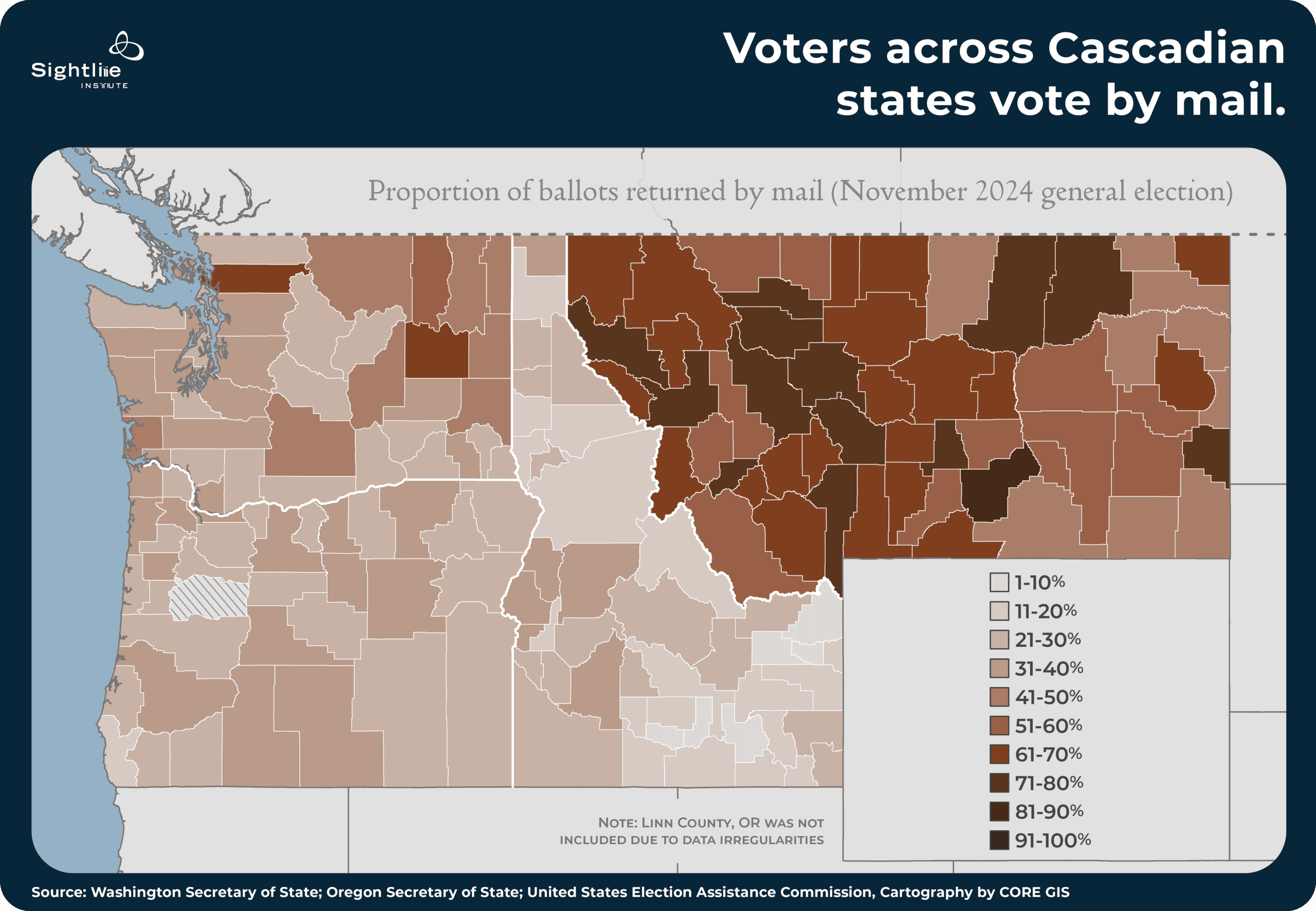
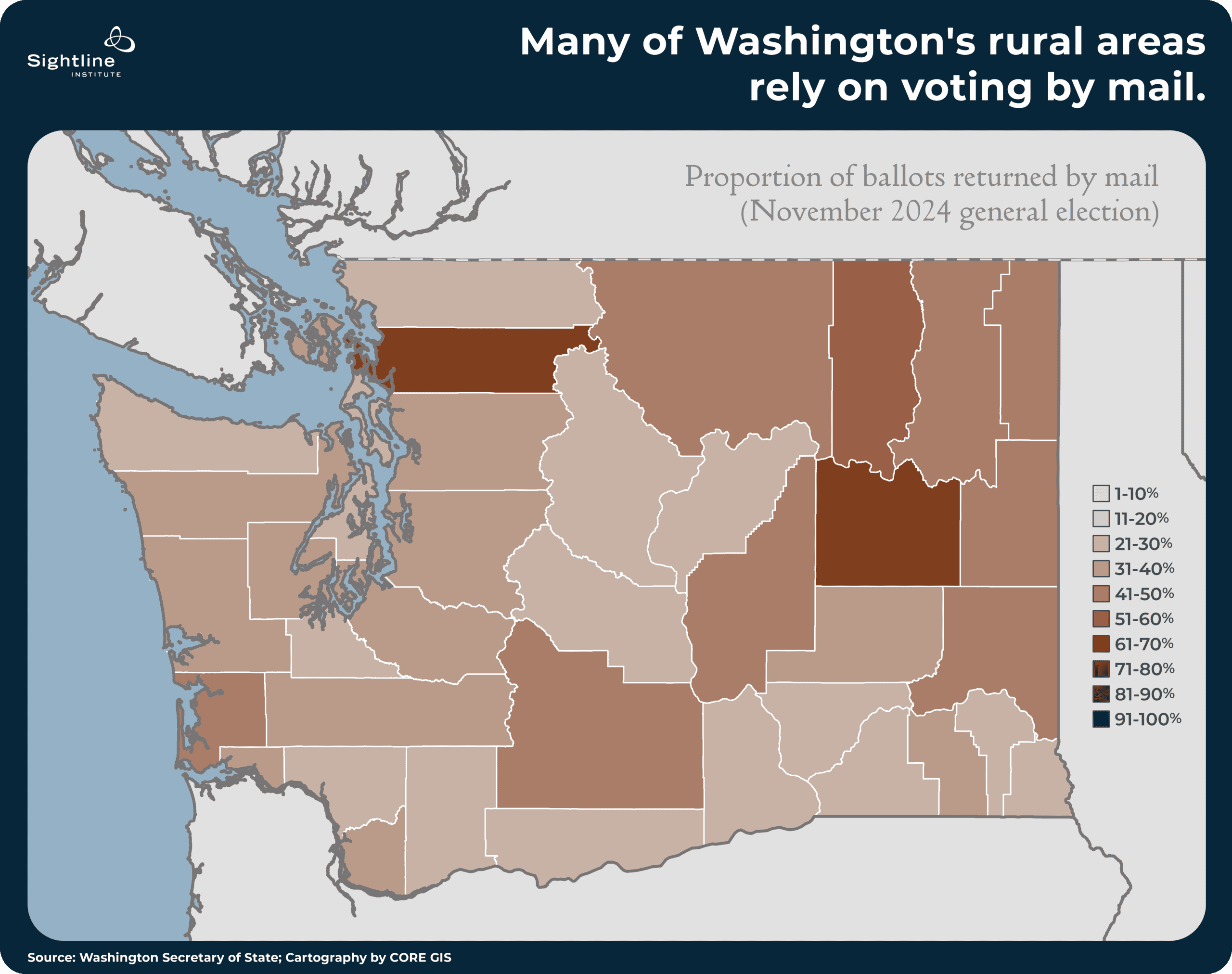
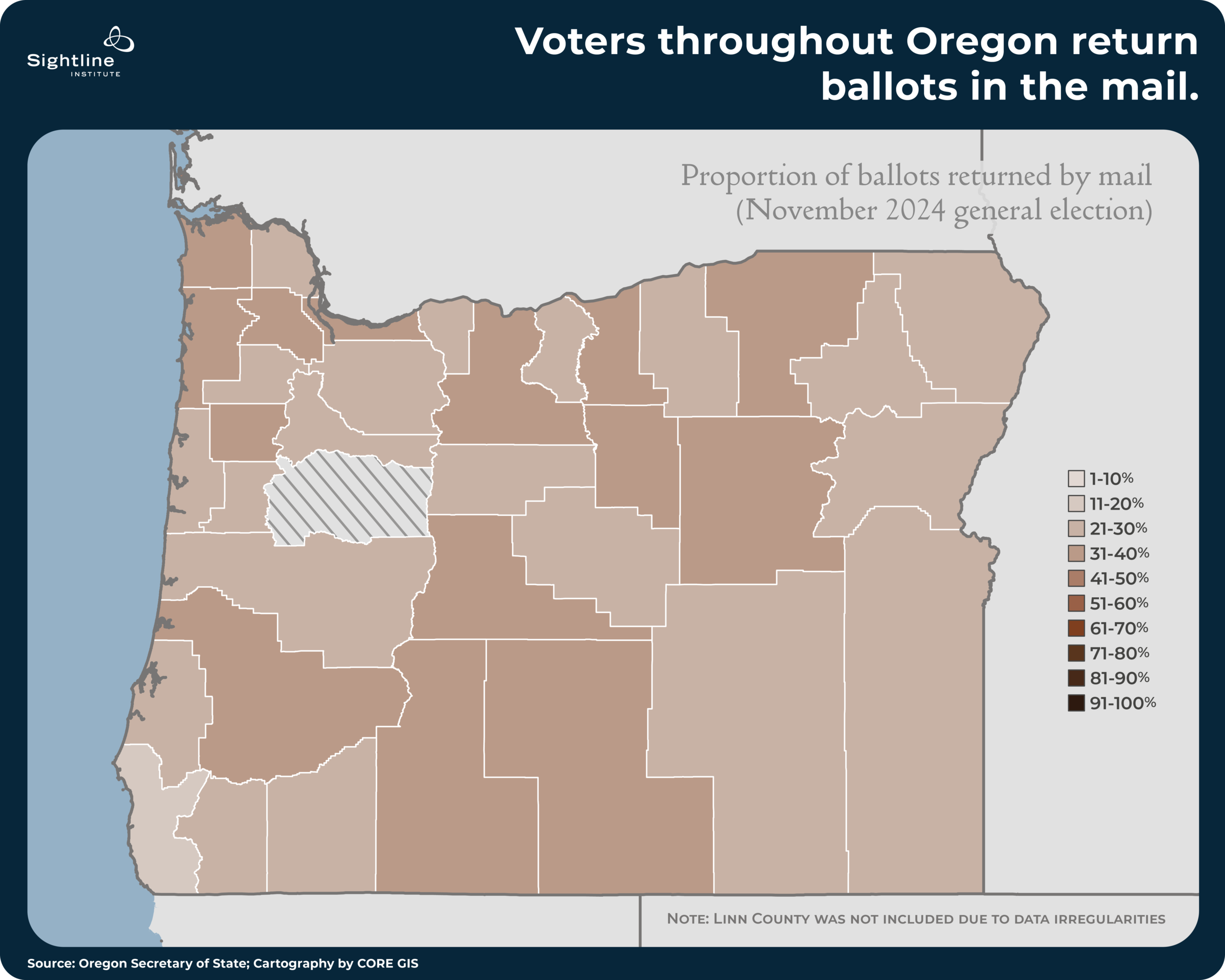
Data from Cascadian states help elucidate the scale of these real and proposed changes, focusing on those most likely to occur. Voters throughout the region mail in their ballots, including those in both urban and rural areas, so USPS delays will have a widespread impact (as would any federal mail voting ban, although those are unlikely to go into effect).
Washington returns show that the lags are indeed already affecting voters: officials have had to reject more ballots for late postmarks in recent elections than in the past. In addition, one-sixth of Washington ballots and many of Alaska’s absentee ballots currently arrive at elections offices after Election Day, suggesting the need for potentially dramatic shifts in voter habits depending on what happens in the Watson case. (See Sightline’s spreadsheets in the Appendix for full data.)
See Sightline’s fact sheets for Alaska, Idaho, Montana, Oregon, and Washington.
To respond, voters will need to mail their ballots earlier than in previous elections and use drop boxes or other voting return methods when possible. Fortunately, many election administrators in the region are already emphasizing these steps.
New rules could exclude thousands of voters throughout Cascadia who mail in their ballots
Returning ballots by mail (versus dropping them by an elections center or drop box) isn’t problematic per se—mail-in voting is still secure and, for many people, the most accessible form of voting. But places that depend heavily on mail voting might be more at risk for delayed returns and invalidated ballots.
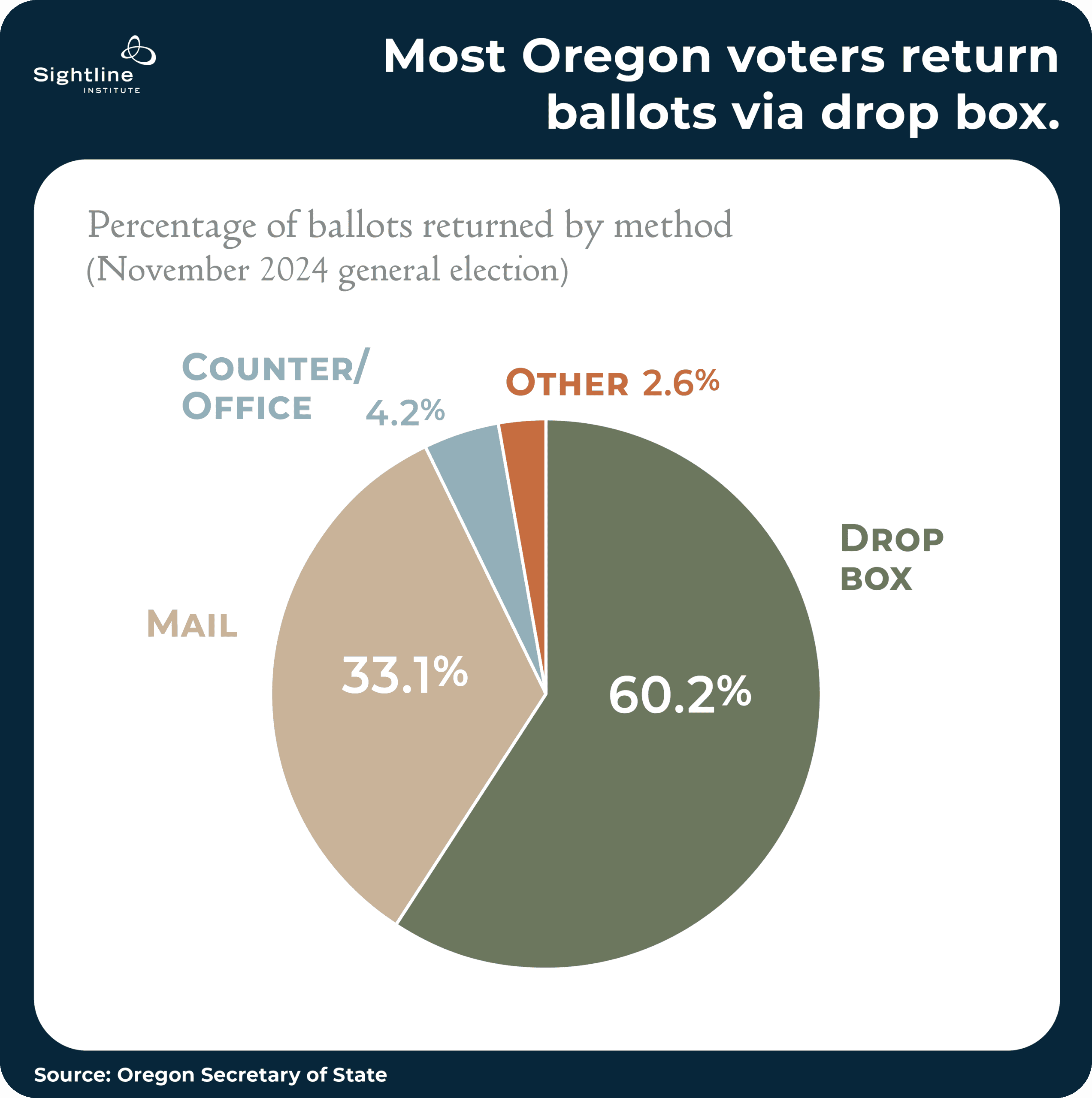
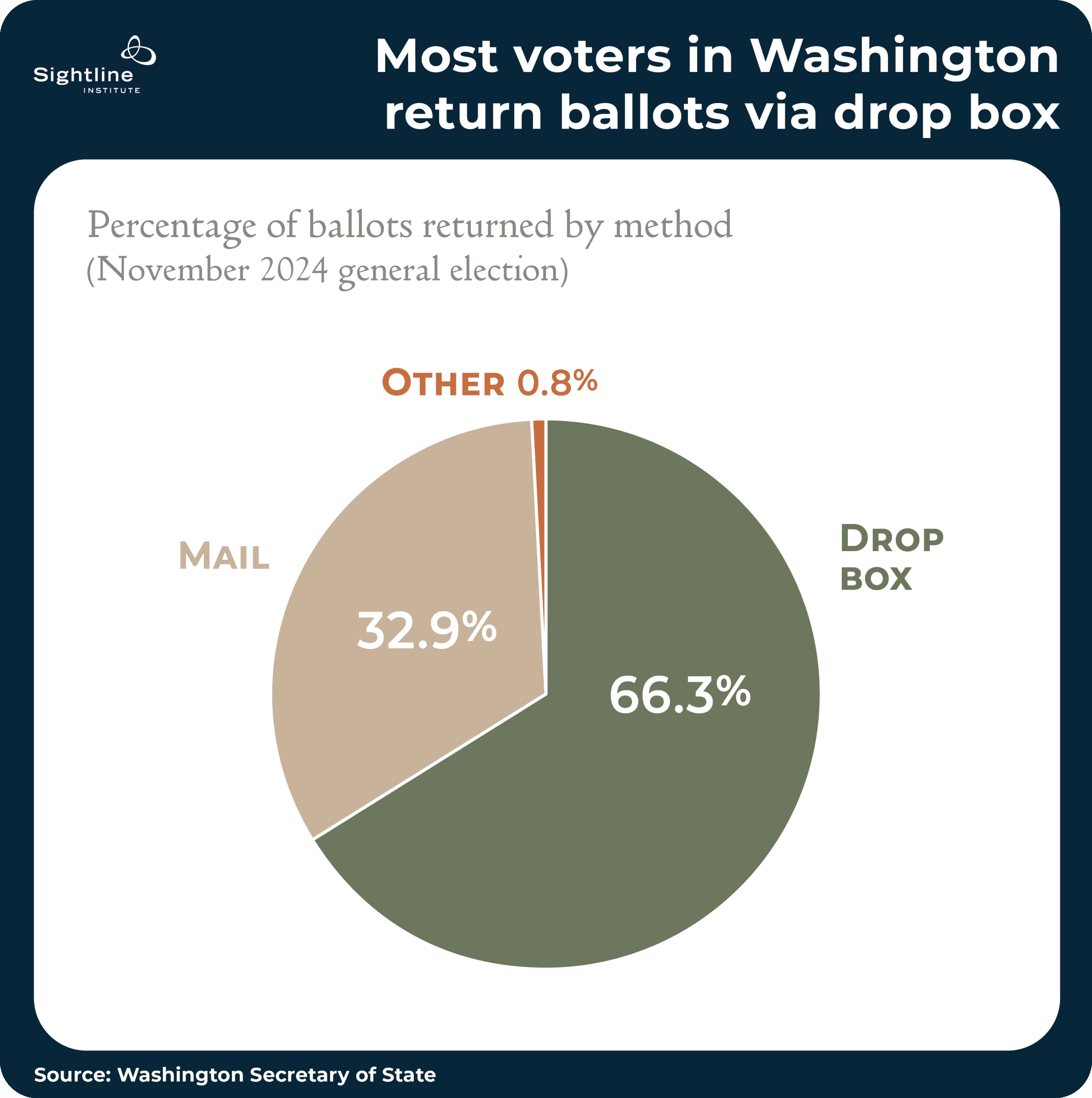
Oregon and Washington, like all universal vote-by-mail states, rely heavily on mail returns, although voters in those states also have the option of returning ballots via a drop box. In the November 2024 general election, 33 percent of Oregon voters returned their ballots by mail; another 60 percent returned them to a ballot drop box; 4 percent brought them to an office; and the remainder sent them via email or fax, or returned them to a different county. Washington saw similar numbers: 33 percent by mail, 67 percent by drop box, and a marginal number by email or fax.11
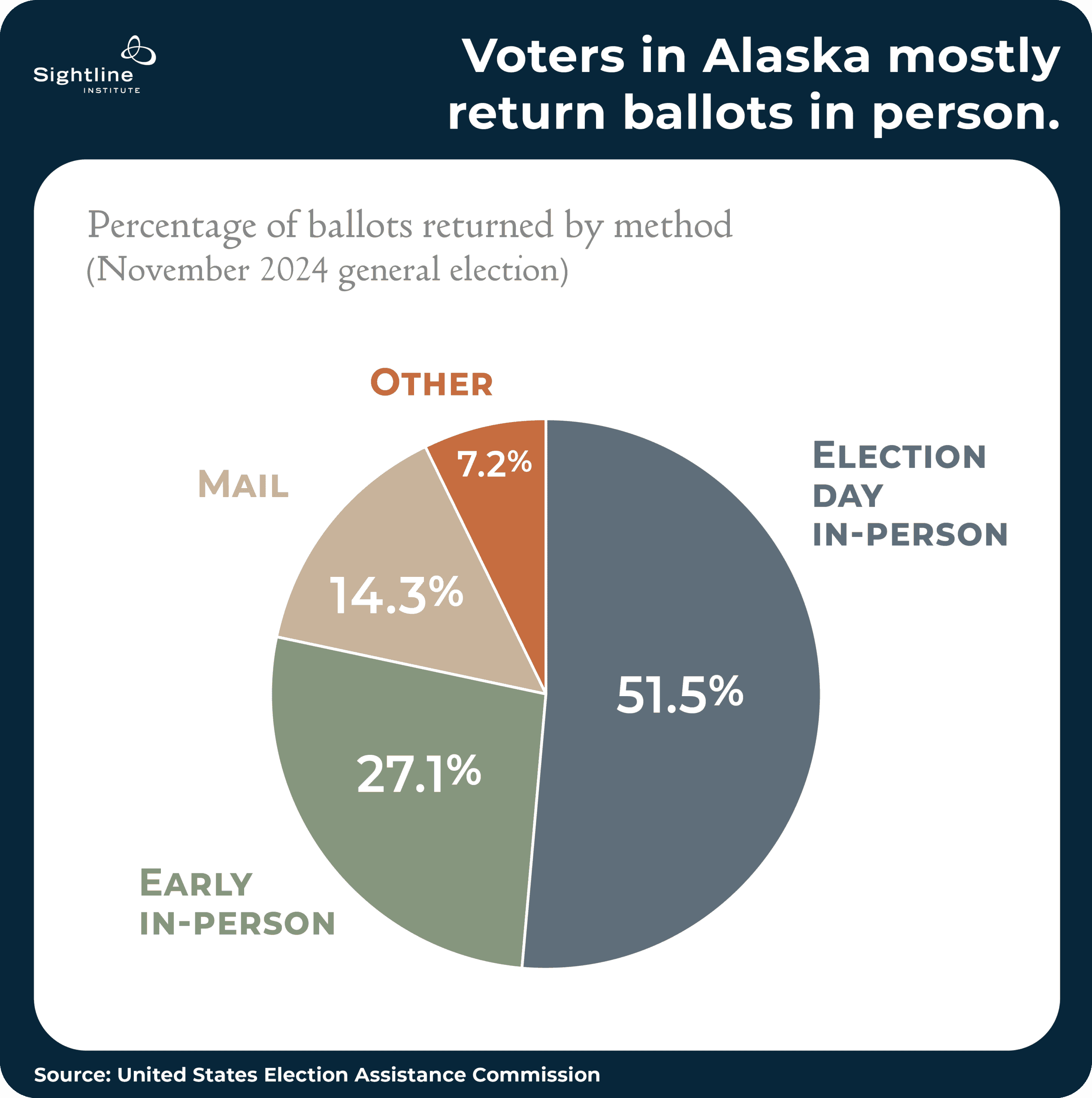
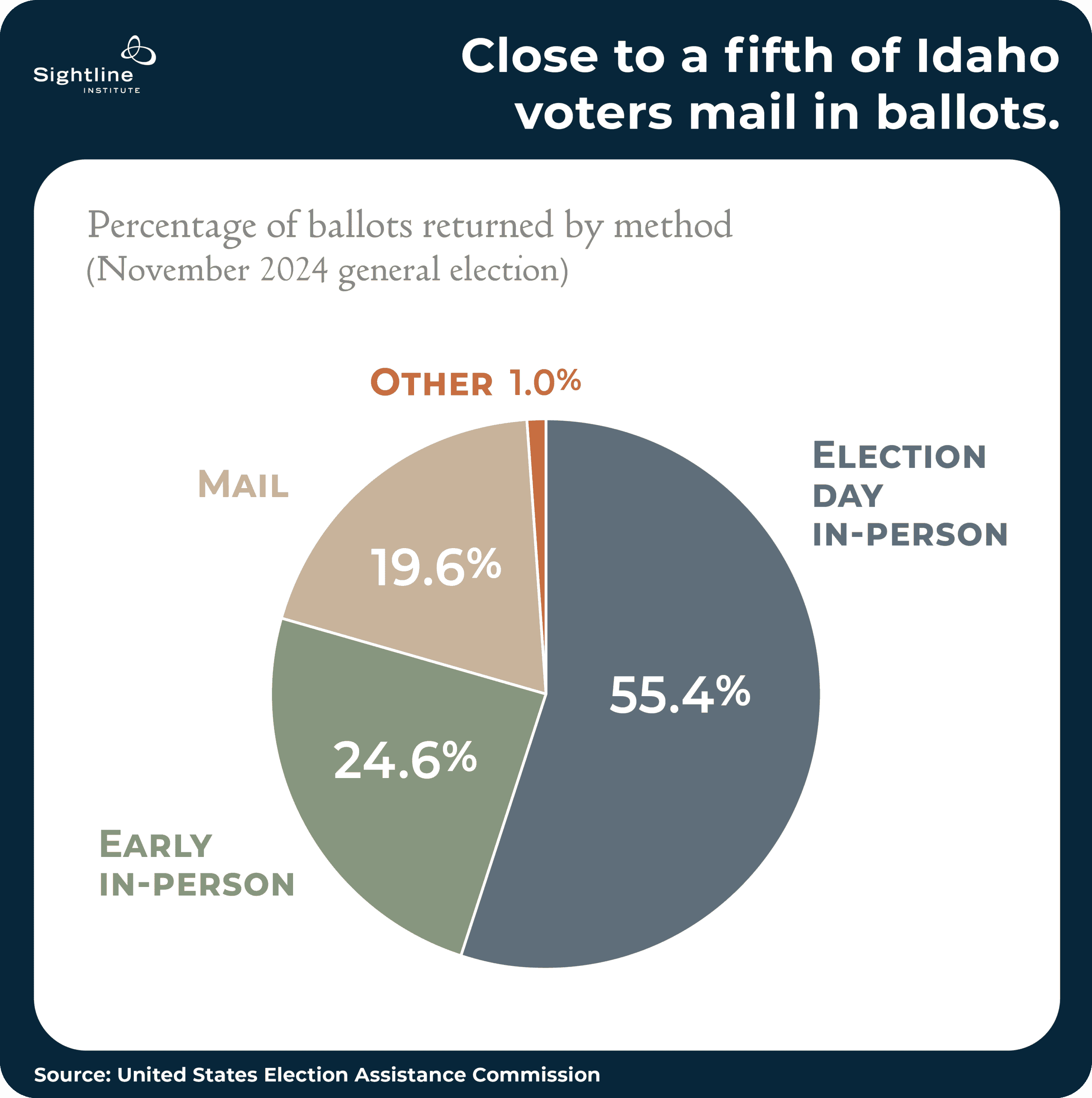
Plenty of voters in other Cascadian states also mail in their ballots: 14 percent in Alaska, 20 percent in Idaho, and 70 percent of voters in Montana sent their ballots in through the mail in November of 2024.12 Although Alaska has the lowest statewide rate of mail voting in the region, mail is a vital option for far-flung communities in a state where the nearest vote center can be a plane ride away. Plus, because officials tally votes at the state level (rather than locally), ballots sometimes have much farther to travel than in other states, putting Alaskan ballots at much higher risk of delays or missing receipt deadlines.