


Takeaways
- Studies continue to proliferate on the worrying health risks from gas stoves, especially for children and people with respiratory illnesses.
- Other gas appliances, including furnaces and water heaters, release their pollution outdoors, worsening ground-level ozone and fine-particle pollution, which again harm public health.
- Leaders can empower residents with accurate information about gas stoves when making decisions about their housing and appliances and make clean electric appliances the default choice for heating homes and water.
- In doing so, they can people’s health and reduce air pollution across the Northwest.
“Is this normal?” an Oregon resident asked in 2023, watching an infrared camera reveal otherwise invisible plumes drifting from their gas stove. They were one of 13 participants in Eugene and Springfield who volunteered to let researchers monitor their home’s air.
The answer? Yes, unfortunately. The plumes contained nitrogen dioxide, benzene, and a mix of other health-harming pollutants that gas stoves spew but induction alternatives do not. Gas furnaces and water heaters also degrade air quality, but outdoors, by venting pollutants and pumping carbon dioxide into the atmosphere, heating the planet.
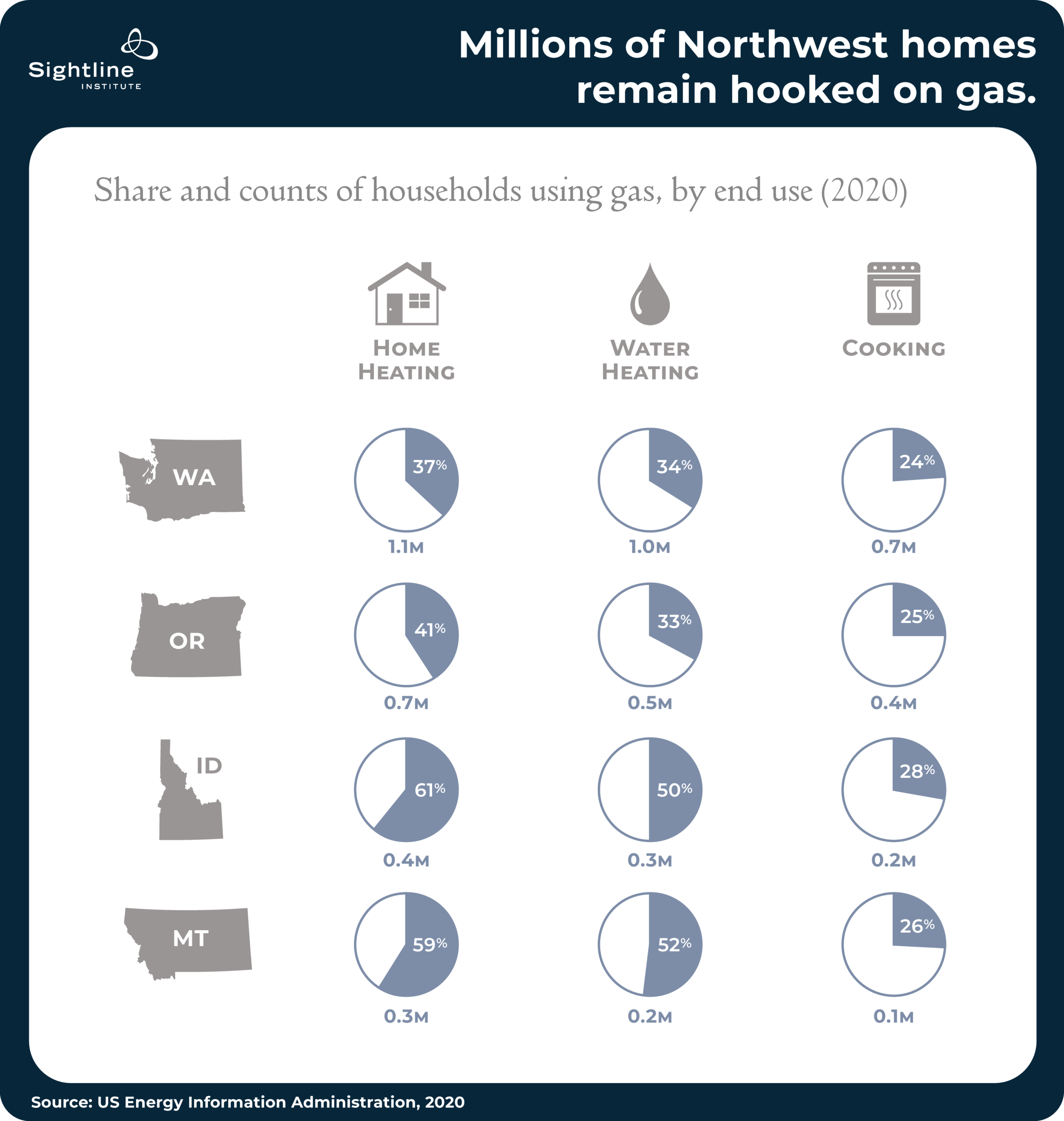
Despite mountains of evidence of these harms, gas appliances continue to pollute indoor and outdoor air across Northwest states. About 2.4 million households in the region (43 percent) burn gas to heat their homes, 2.1 million (37 percent) to warm their water, and 1.4 million (25 percent) to cook their food.
Northwest policymakers can do more to protect people from these known hazards. Through appliance warning labels, housing disclosures, public health guidance, appliance standards, and pollution fees for new buildings, leaders can make homes healthier and air more breathable—all while speeding the Northwest’s transition to a clean, affordable, electric future.
Numerous studies find gas stoves can worsen asthma and increase cancer risk
“Our improvement was about twice as much as you typically see with medical treatment of asthma,” lead researcher Ash Sehgal told Climate Colored Goggles, a climate and energy newsletter. He was referring to a 2026 Ohio study that found people with poorly controlled asthma saw their symptoms improve after they swapped gas stoves for electric induction. The study is part of a growing body of research examining what happens when people stop cooking with gas.
Paul Moore, a father of six with severe asthma who participated in the study, felt better within a week of replacing his stove. “A lot more people deserve to feel good when they cook or when they eat or when they are able to sit down with their families,” he told the Washington Post. (The authors called for a controlled trial to confirm the findings.)
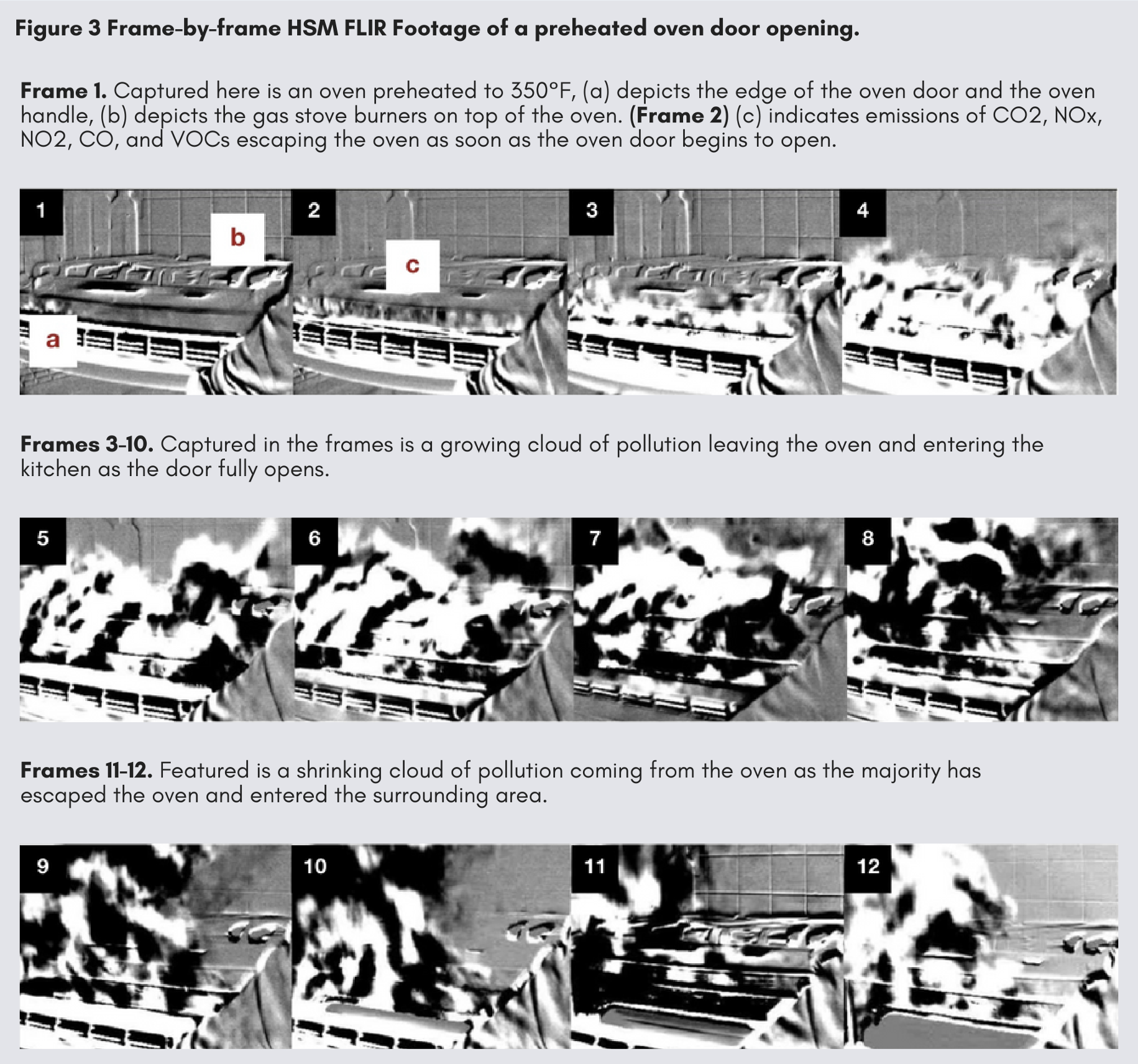
“It looked like my whole kitchen was on fire,” said one participant, on viewing the footage of her stove in a mini-documentary by Beyond Toxics.
Other research suggests that families in New York City apartments who swapped gas stoves for induction ones cut indoor nitrogen dioxide (NO₂) by more than half. “Every time I would turn it on, I would start coughing,” Maria Espada, a Bronx resident with asthma who participated in the New York study, told PBS NewsHour of her gas stove.
A national analysis of US households estimates that upgrading from a gas to an electric stove could cut total residential NO₂ exposure by about one-quarter for the average gas-stove household, and by more than half for households that cook heavily with gas.
Those findings build on decades of research into what gas stoves put into people’s homes. As early as the 1970s, scientists began to investigate the health hazards of gas stoves. In the 1980s, the US Consumer Product Safety Commission examined how indoor NO₂ from combustion appliances, including gas stoves, could degrade human health. Meanwhile, the gas industry worked hard to discredit this research, funding studies that found gas cooking to be safe and hiring the same public relations firm that helped tobacco companies burnish their public image, according to a 2023 investigation.
Today, health officials in Northwest states increasingly warn about the risks of cooking with gas. Washington’s health department, for example, warns that gas stoves “produce a harmful contaminant called nitrogen dioxide [NO2]” and that “indoor NO2 can make asthma and other breathing problems worse for children.”
NO₂ can inflame the lungs and airways, worsening asthma, triggering coughing, and generally making it harder to breathe. Car tailpipes and fossil-fuel power plants spew the same pollutant outdoors; indoors, gas stoves are a primary source. Long-term NO₂ exposure from cooking with gas can diminish lung function and worsen chronic respiratory disease. Pollution from gas stoves can especially harm children’s developing lungs and people with asthma and other respiratory conditions.
“It’s like having car exhaust in a home,” Brady Seals, a researcher who now directs Electrification for Health at Stanford’s Center for Human and Planetary Health, told the Washington Post.
Seals co-authored a widely cited 2022 analysis estimated that gas stove use could account for nearly 13 percent of childhood asthma in the United States.
Stanford researchers estimate that about 22 million Americans could bring their total NO2 exposure levels below the World Health Organization’s threshold—above which health risks rise—simply by switching from gas to electric stoves. That’s roughly one-sixth of the Americans who currently cook with gas.1
Gas stoves also emit benzene, a known carcinogen that can damage the body’s ability to make blood cells and increase the risk of leukemia. Just 45 minutes of gas or propane cooking drove kitchen benzene levels above those associated with secondhand tobacco smoke in nearly three out of ten tests, according to a 2023 study of homes in California and Colorado. The same study found that gas and propane burners and ovens released 10–25 times as much benzene as electric coil and radiant alternatives, while induction stoves registered none.
In 2025, researchers modeled, for the first time, how benzene from gas stoves could raise cancer risk in the United States. For children in unventilated apartments where families cook heavily with gas, the study found an added lifetime cancer risk of up to 16 times a common one-in-a-million benchmark. Under the same scenario, the model projected 29 additional leukemia cases per year among the 1.8 million children living with the most polluting gas stoves. (Researchers have yet to test these projections by tracking real people’s health over time.)
Making matters worse, both NO₂ and benzene can spread past the kitchen and linger in other rooms of a home long after someone turns off their burner, as shown in the above video.
Ventilation can lower but not eliminate exposure to these pollutants. Only switching to induction stoves, which do not release either NO₂ or benzene, can do that. (Electric coil and radiant models can still emit small amounts of benzene from their hot surfaces; heating food and oils on any stove can generate fine-particle pollution.)
Despite the ever-thicker stack of research showing the harm of gas stoves, Northwest states lack strong protections for air quality inside people’s homes. Clean air laws define air pollution as outdoor pollution, meaning indoor pollution falls largely outside environmental regulators’ purview. Health departments also generally lack the authority to regulate pollution inside private homes.
Indoor air “falls through the cracks,” Seals told Sightline.
Gas furnaces and water heaters pollute outdoor air and heat the planet
Gas furnaces and water heaters, meanwhile, primarily pollute outdoor air by venting their exhaust. Nitrogen oxides (NOx) from these appliances react with other pollutants and form ground-level ozone and fine-particle pollution, which can again inflame airways, worsen asthma, and harm lung and heart health.
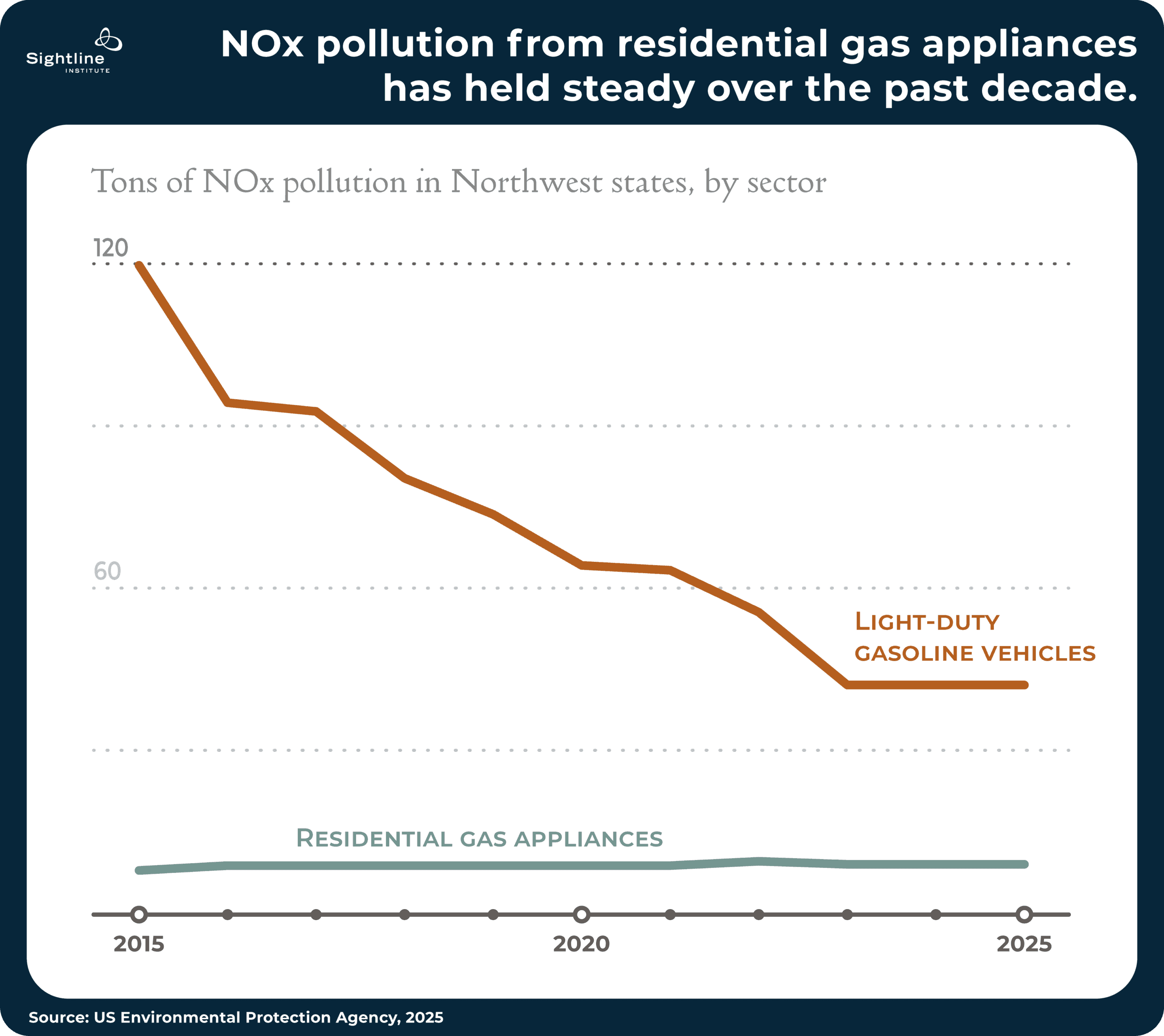
And unlike a major source of NOx pollution—gasoline-powered cars—pollution from residential gas appliances has barely budged in Northwest states over the past decade. (Federal tailpipe standards helped drive much of the decline in pollution from cars.)
Today Idaho, Montana, Oregon, and Washington meet US federal outdoor air quality standards for ozone and nitrogen dioxide (NO2, one type of NOx). But complying with those standards does not eliminate the pollutants’ health risks. The Washington Department of Ecology flags NOx pollution as a concern because it contributes to ozone, which the agency monitors closely in parts of the state with elevated levels. The Oregon Department of Environmental Quality has targeted the Portland Metro area for ozone-reduction efforts after some readings of the pollutant exceeded the federal standard in recent years.
The US Environmental Protection Agency (EPA), for its part, warns that “even relatively low levels of ozone can cause health effects,” including coughing, trouble breathing, and worsened asthma. In laboratory studies, 1 in 10 healthy adults who breathed ozone at 60 parts per billion for several hours—below the federal standard of 70 parts per billion—experienced at least a 10 percent drop in lung function.
Gas furnaces and water heaters also burn methane, the main component of gas, and vent carbon dioxide into the atmosphere, heating the planet. Across Northwest states, burning gas in homes emitted about 10.4 million metric tons of carbon dioxide in 2024, roughly what two million gasoline-powered cars spew in a year.2 Nationally, heating homes and water accounts for about 96 percent of residential gas emissions; cooking accounts for about 2 percent. (Climate pollution exacts its own toll on health through extreme heat, wildfire smoke, and other impacts.)
Five ways the Northwest can protect people’s health and the climate from gas appliance pollution
Oregon and Washington already use building codes to outfit new construction with cleaner equipment, including heat pumps. But lawmakers and regulators across the Northwest have largely left people in the dark about how to make healthy choices about the appliances in their homes, and they can do more to make cleaner appliances the default option.
Here’s how the region can step up—and in some cases catch up with other states and local governments leading the way:
1. Give shoppers the health facts when they buy a stove
Northwesterners buying a new stove can easily get information about the appliance’s features, price, and energy use, but receive no information at the store about the health risks of burning gas to cook.
In 2025, Colorado became the first state to mandate that new gas stoves display a yellow warning stating: “Understand the air quality implications of having an indoor gas stove.” The notice directs shoppers, by QR code or web link, to information from the Colorado Department of Public Health and Environment on pollutants that gas stoves release, their potential health effects, and ways to reduce exposure. (Appliance manufacturers and trade groups sued to block the law on First Amendment grounds; a federal judge temporarily blocked enforcement in December 2025 while the case proceeds.) New York lawmakers passed a similar bill in 2026, though as of October 2026, the governor had not yet signed it. Northwest states could pursue similar laws to improve consumer knowledge.
Meanwhile, health departments across the region could develop public information resources for retailers, nonprofits, utilities, and contractors to share with customers through appliance sales and rebate programs. In an analogous case, for example, US EPA’s former Burn Wise program worked with the hearth industry to create posters, brochures, and other materials that businesses and nonprofits could share with customers about wood stove pollution, health risks, and cleaner burning practices.
Health departments could also run and support broader public awareness campaigns through social media, paid advertising, and partnerships with trusted messengers such as chefs and health professionals. The American Lung Association’s Healthy and Efficient Homes campaign, for example, uses videos in multiple languages to educate families about the health risks of household appliances, while hundreds of thousands of people have watched cooking and science influencers discuss gas stove health risks.
2. Inform potential homebuyers and renters if a house has a gas stove
Stove labels would reach people buying a new stove, but not people who move into a home with a gas stove already installed. Disclosures to renters and homebuyers could change that.
Most Northwest states already require landlords and home sellers to provide renters and buyers with a range of health and safety information. Washington landlords, for instance, must give new tenants state-approved information about the health hazards of indoor mold and how to control it. For most homes built before 1978, federal law also requires landlords to disclose known lead-based paint hazards and provide information about lead’s health effects.
Washington’s home seller disclosure form asks sellers to report appliance defects and the presence of carbon monoxide alarms and wood-burning appliances. If a home has a wood stove or fireplace insert, the form asks whether it carries a clean-burning certification. Oregon’s seller disclosure form similarly asks whether a home has a wood stove and whether it carries a certification label.
Lawmakers in the Northwest could add questions to existing disclosure requirements, such as: Does the home have a gas cooking appliance? Does the kitchen exhaust fan vent outdoors? State health departments could pair the disclosure with a short fact sheet on indoor air risks and ways tenants and homeowners can reduce exposure to pollution.
Real estate brokers could also help inform homebuyers about the health effects of the appliances in the houses they are considering. They already guide buyers through disclosures and other paperwork covering everything from foundation cracks to electrical systems. And they must take continuing education courses to keep their licenses active. In Oregon, brokers can count courses on environmental protection toward those requirements. Real estate trade groups, in collaboration with state health departments, could add information about gas appliances to existing training, giving brokers material to better advise potential buyers.
Not only would disclosures and broker training give renters and buyers more information before they sign a lease or buy a home, but they also might encourage landlords and sellers to install healthier appliances before listing a property.
3. Help doctors and nurses educate patients about gas stoves
Montana, Oregon, and Washington already publish guidance to help families reduce their exposure to pollution from gas stoves. Montana’s health department, for example, advises people who cook with gas to ventilate, use their gas stove less, maintain a carbon monoxide detector, and consider “replacing gas appliances with electric or induction appliances.”
Health departments could help doctors and nurses share this information more widely.
“The provider should ask about what kind of stove [children] have at home,” said Dr. T. Stephen Jones, a former Centers for Disease Control and Prevention physician and epidemiologist, in a 2020 interview with Undark. Indeed, the American Academy of Pediatrics recommends that clinicians ask families of children with asthma about gas stoves and other gas appliances, alongside mold, smoking, and other potential triggers.
Yet training has not caught up with guidance. In 2025, the American Academy of Pediatrics said environmental health education—which includes the health effects of indoor air pollution—was “not yet comprehensive” and often left physicians underprepared to address patients’ concerns. A 2024 nationwide American Lung Association survey of healthcare professionals found that only one in four felt satisfied with their knowledge of indoor air pollution’s health effects, and only two in five felt well-prepared to discuss them with patients. Emissions from gas and propane appliances ranked among the indoor pollutants health professionals knew least about, with fewer than half reporting familiarity.
Washington Physicians for Social Responsibility, a health professional-led advocacy organization, told Sightline that pediatricians do not typically receive formal instruction on discussing indoor air quality with patients. Dr. Alee Perkins, a Washington-based pediatrician, echoed concerns about the lack of guidance for physicians on indoor air quality in an interview with Sightline. She said indoor air rarely comes up with her patients, in part because more urgent health concerns often take priority, she believes many patients may not be able to afford electric alternatives or decide the appliances that are in their rental homes. Single induction cooktops, widely available for less than $100, could offer one option—a cost likely still too high for some families, but a sliver of the price of induction ranges and an appliance that doesn’t require a landlord’s permission to use.
State health departments could partner with medical associations—including, for example, state chapters of the American Academy of Pediatrics, given children’s particular vulnerability to indoor air pollution—to turn existing indoor air guidance into screening questions, fact sheets, and other tools for doctors and nurses to use with their patients.
4. Limit outdoor pollution from gas furnaces and water heaters
States already protect outdoor air from some household appliances’ pollution. Oregon and Washington, for example, require new wood stoves to meet particulate-emissions standards before retailers can sell them. States could similarly require new furnaces and water heaters to meet certain air quality standards.
One approach would be to pursue zero-emission standards for new heating appliances, something that would help Oregon and Washington achieve their goal of heat pumps making up at least 90 percent of residential heating, cooling, and water heating equipment shipments by 2040.
California is already pursuing this type of policy. The California Air Resources Board, the state’s air quality and climate regulator, is developing Clean Space and Water Heater Standards. Under the regulator’s 2025 proposal, zero-emission equipment would account for at least 75 percent of space heater sales and 50 percent of water heater sales by 2040.
A second approach could protect the air from NOx pollution. Since Northwest states currently meet federal ozone and NO2 standards, this path may be more challenging but not impossible. In fact, since 2013, the Southwest Clean Air Agency has capped NOx from certain water heaters in five southwest Washington counties. Its rule still allows gas models whose pollution stays below the cap.
Several California air districts serving areas that do not meet federal ozone standards have capped NOx pollution from gas heating equipment. The Bay Area Air Quality Management District will require retailers and installers to sell and install only zero-NOx furnaces and water heaters, with the rules phasing in from 2027 to 2031.
Meanwhile, Maryland’s Department of the Environment is crafting a Zero-Emission Heating Equipment Standard that would eliminate both NOx and greenhouse gas pollution from new residential furnaces, boilers, and water heaters.
Lawmakers across the Northwest could clarify state regulators’ authority to enact these changes by explicitly authorizing appliance pollution standards. But even with that authority, states could run into federal limits on appliance regulations. Federal courts have disagreed about how far the federal Energy Policy and Conservation Act (EPCA), which sets national energy efficiency standards for certain appliances, preempts state appliance rules. In 2026, the Second Circuit upheld New York state’s restrictions on fossil-fuel appliances in new buildings, finding that EPCA does not apply to laws regulating building emissions.
5. Make clean appliances the cheapest choice for housing builders
In the parts of the Northwest where building codes still make it easy to install gas appliances in new homes, including Idaho, Montana, and to a lesser extent Oregon, state and local governments could establish pollution fees that encourage builders to install clean appliances.
A 2022 analysis of nine US cities, including Eugene and Seattle, found that all-electric new homes with induction stoves cost less to build than homes connected to gas and electricity, largely because builders avoided the cost of new gas infrastructure. But some prospective buyers prefer gas for cooking, so builders may still install gas equipment despite the added cost.
Ashland, Oregon, sought to encourage cleaner equipment in January 2026. Builders of new homes pay a fee for each fossil-fuel appliance they install—about $4,100 for a gas furnace and $1,300 for a gas water heater in 2026. Bend followed in June 2026, adopting a Climate Pollution Fee that will apply to gas appliances in new homes beginning in April 2027. Both cities pursued fees instead of revising local building codes because Oregon law makes it difficult for local governments to adopt stricter building standards than the state.
Both cities direct the revenue to help households install heat pumps, upgrade electrical panels, and switch to induction cooking.
Cleaner Northwest air starts with healthier homes
A shopper buys a stove, a family moves into a home, a patient visits a doctor, an old furnace wears out, a home builder chooses equipment—these are all opportunities for leaders to help Northwesterners protect their and their families’ health at home through better information and cleaner appliance choices. They can:
- Task retailers with giving shoppers the health facts about gas stoves,
- Make sure homebuyers and renters know about gas appliances in their new homes by updating disclosure requirements and improving training for real estate professionals,
- Ensure that families, especially those with children, get information from their doctors about how to protect their lungs by tasking health departments with developing materials for and with health professionals,
- Make heat pumps the default replacement choice for a broken furnace or water heater by requiring manufacturers and retailers to meet zero-emission standards, and
- Encourage developers to build all-electric by charging a fee to install polluting equipment—and use the proceeds to help even more Northwesterners upgrade to modern, healthy appliances.
The infrared camera in Oregon made invisible pollution inside the home visible. These policies would make that pollution harder to ignore, helping Northwesterners breathe easier.

