Donate Newsletters

Myths and Facts about Capping Climate Change Pollution

Author’s note: Some folks in the Oregon legislature have been fretting about falsehoods lately. I wrote this up to help inform a hearing on climate bills in Salem on April 14th.

Oregonians are already paying for climate change, through damaged shellfish, lost snowpack, and increased wildfires. Climate models predict that, without urgent action, the Oregon drought could morph into something like the California mega-drought. It’s time to act. Don’t let false rumors—often circulated by entrenched fossil fuel interests trying to protect their profits—trip Oregon up on the path to clean energy. Get the facts.

MYTH: “Making polluters pay will wreck the economy.”

FACT: Portland State University’s modeling shows that holding polluters accountable and reinvesting the money in schools and roads will grow jobs and wages, particularly in rural Oregon.

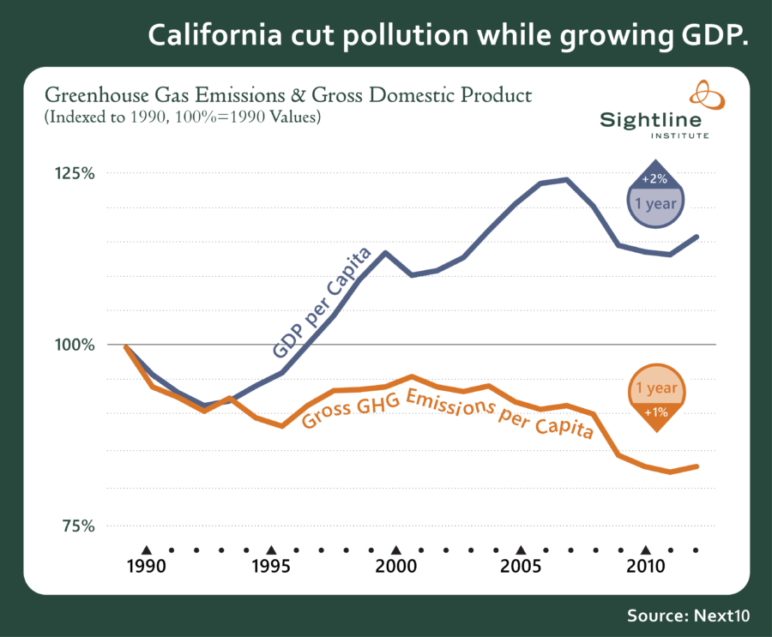
It isn’t just economic modeling; years of real real-world experience show that economies survive and thrive when polluters pay. Nine northeast states, British Columbia, California, and Quebec have all been making polluters pay for years, and their economies have kept pace with other parts of the United States and Canada where polluters still spew for free. California has been growing jobs faster than other states. Europe has cut pollution for ten years while growing GDP. Here’s the evidence:

Read more

Oregon has a climate law implementation question. HB 3470 has an answer.

Most parents are familiar with the slight panic of not knowing if you really have a way to enforce a rule you made for your kids. You’ve been clear that it is not OK to chew gum at the dinner table, but now what? Reach in his mouth and pull the gum out? Carry him to his room? Stop dinner until he complies?

Oregon is facing a similar dilemma: the Beaver state has had climate change pollution goals in law for eight years, but doesn’t have a mechanism to meet the legal pollution limits. Oregon House Bill 3470—the Climate Stability & Justice Act of 2015—would create the framework to fairly and cost-effectively phase out fossil fuels. Here’s why HB 3470 is the bill Oregon has been waiting for:

Read more

What If Polluters Paid and You Got the Money?

What if we could click our ruby slippers and transport ourselves to a magical place where polluters pay and we all get checks in the mail? The Oregon legislature is considering two bills that would take us there.

When designing a program to make climate polluters pay, one of the most important decisions is what to do with the money. Northeast states and California invest in energy efficiency and transportation. British Columbia gives tax cuts to people and businesses. Two Oregon bills contemplate mailing out dividend checks. If Oregon passed a polluters-pay-plus-dividend bill, the air would no longer be a free dumping ground for pollution, clean energy would be on an even playing field with fossil fuels, and each Oregonian would get a check for $500-$1,500 every year. Sound too good to be true? It’s not. Here are the details, Q & A style.

1. What are these Oregon dividend bills and what do they do?

HB 3176 would charge fossil fuel sellers a fee for each ton of pollution, starting at $30 per ton and increasing by inflation plus $10 per ton every year. All the money would go into a Trust Fund. Each September, the Department of Revenue would mail every Oregon taxpayer and taxpayer dependent a check for an equal share of the money.

HB 3250 would do roughly the same thing, but instead of creating a set fee schedule it would create a set number of pollution permits that fossil fuel sellers could buy in an auction. Each year, less pollution would be allowed and fewer permits would be available. By 2050, Oregon’s climate pollution would be 85 percent below 1990 levels. As permits become scarce, the price would go up.

2. Why are there two bills? Is one better than the other?

Both bills lead to the Emerald City, but they encounter different lions, tigers, and bears along the way.

Read more

Debating Coal and Oil Exports

If you haven’t yet gotten your fill of Sightline on Northwest coal and oil plans, then I have good news for you: I was featured recently on a UWTV program, Inside Outlook.

Host Gavin P. Sullivan moderated a discussion with me, Ross Macfarlane from Climate Solutions, and Frank Holmes from the Western States Petroleum Association. The program also includes some time with me—standing track-side in Seattle’s SoDo neighborhood—providing additional context and explanation.

Voter Suppression is Exorbitantly Expensive

There is a war going on, and Oregon is ground zero. Some states, mostly in the South and Midwest, are restricting voter rights through Voter ID laws and barriers to voter registration. But the Pacific Northwest is defending rights. In a democracy, honoring every citizen’s vote is the right thing to do. Oregon proves it is also the cost-conscious thing to do.

Oregon is a national leader in striking down the barriers to voting: the Beaver State enables citizens to register online, mails ballots to all registered voters, and now will digitally transfer eligible voters’ information from the Department of Motor Vehicles (DMV) to the voter rolls. But even in Oregon, every single Republican and one Democrat voted against the new motor voter law. House Republican Leader Carl Wilson of Grants Pass explained that the law would “cost a broke county $7,800 in the first year. That is money we don’t have.” Never mind that the cost of honoring Josephine County’s citizens’ right to vote adds an infinitesimal 0.009 percent to the county’s $84 million budget.

If this war were really about how much money states and counties spend on voting, voting rights would be winning across the country. For all its efforts to empower voters, Oregon gets a real bargain on elections. Other states could too.

Original Sightline Institute graphic, available under our free use policy.

Honoring citizens’ right to vote by running the state and county administrations that register voters; keeping the voter rolls updated and accurate; distributing, collecting, and tallying ballots—add up the costs of all those activities and divide by the number of registered voters in Oregon, and it comes to less than $2 per registered voter per election.

Other states average around $10 per registered voter per election.

By erecting or maintaining barriers to voting, other states pay five times as much as Oregon.

Why are Oregon’s costs so much lower than the national average?

Read more

Event: Curious About Carbon Pricing?

Do you wonder what carbon pricing means and what the differences are between fees, taxes, shifts, offsets, and caps? Next Thursday, join Sightline Institute’s senior researcher, Kristin Eberhard, along with Oregon Climate’s executive director, Camila Thorndike, to discuss what it would mean for Oregon to put a price on carbon. What: Curious About Carbon Pricing? Where: Friendly House, Portland, … Read more

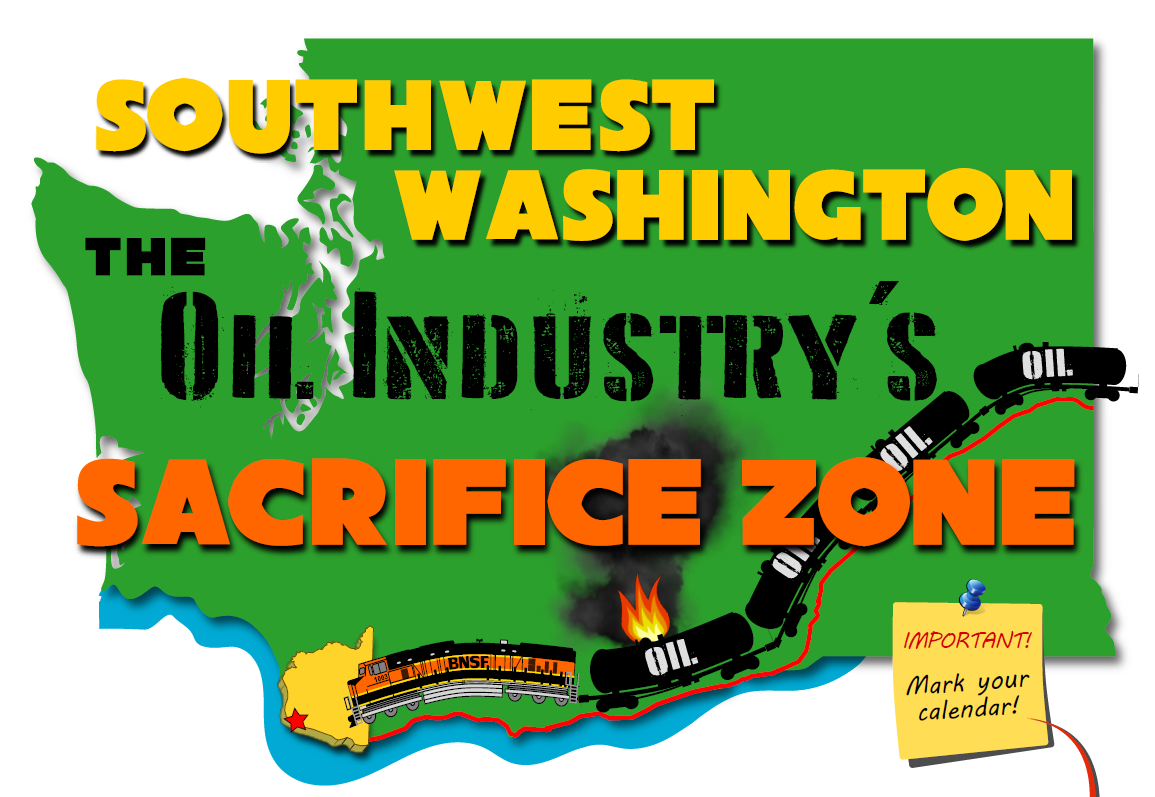
Event: Southwest Washington—the Oil Industry’s Sacrifice Zone?

This April 1st, Eric de Place will join Vancouver, Washington leaders for a forum discussion on the threat of oil trains to southwest Washington communities.

After an introduction by Vancouver City Councilor Bart Hansen, Eric will give an overview of the oil industry’s designs on the Vancouver area and then moderate a panel of local leaders, including Lauren Goldberg, attorney for Columbia Riverkeeper; Vancouver City Councilor Anne McEnerny-Ogle; Barry Cain of Gramor Development; Cager Clabaugh of ILWU 4; Eric LaBrant of Fruit Valley Neighborhood Association; and a representative from Oregon Physicians for Social Responsibility.

Oregon Legislature Passes New Motor Voter Law

Editor’s note October 2016: Did you know the Portland area has experienced a double-digit boom in the percentages of people registered to vote in the upcoming presidential election? This increase is thanks to the implementation of the Oregon Motor Voter Law, a program that automatically registers eligible voters. We’re bringing back this popular post to highlight how this … Read more

Wyoming Legislature Embraces Socialism for Coal

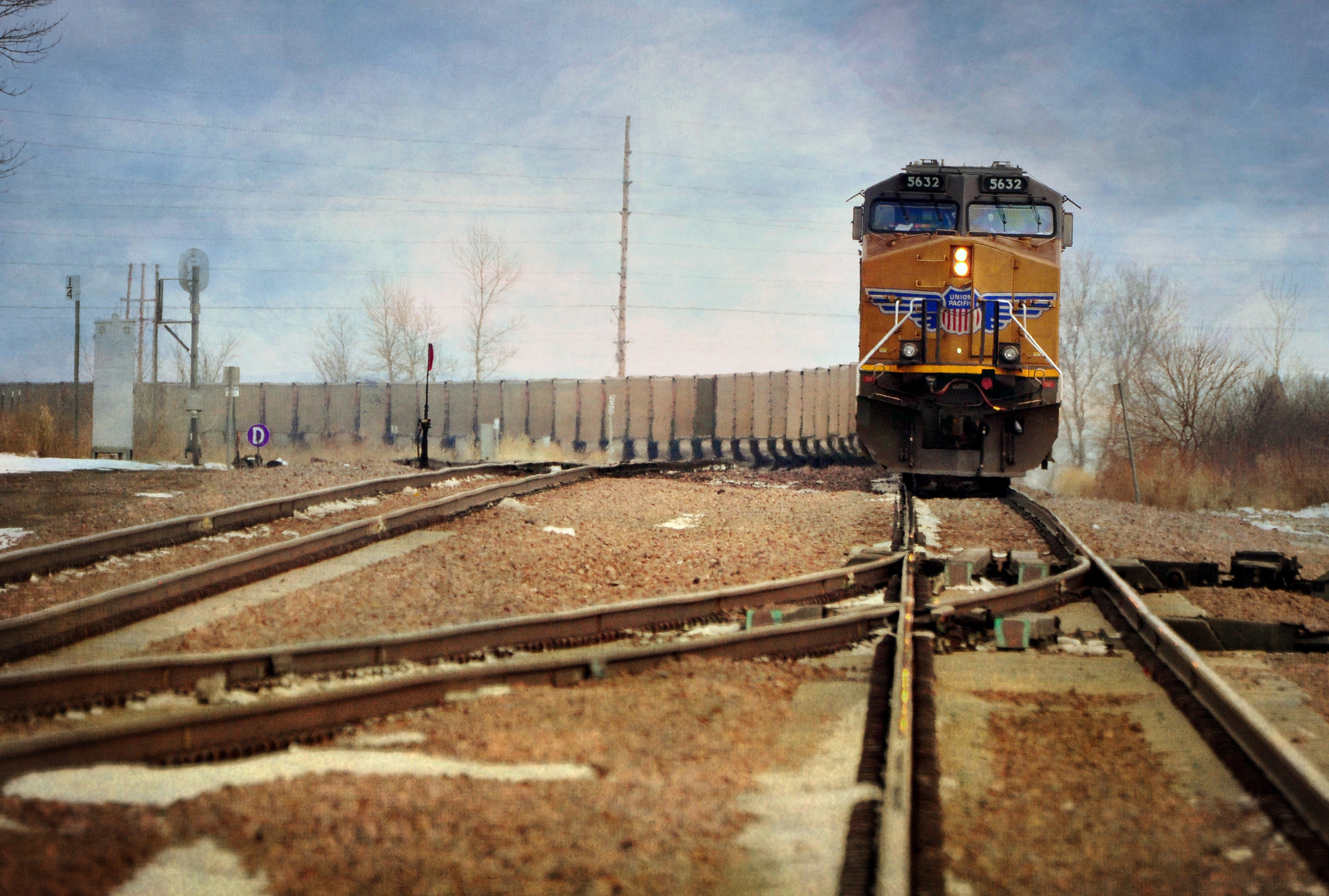
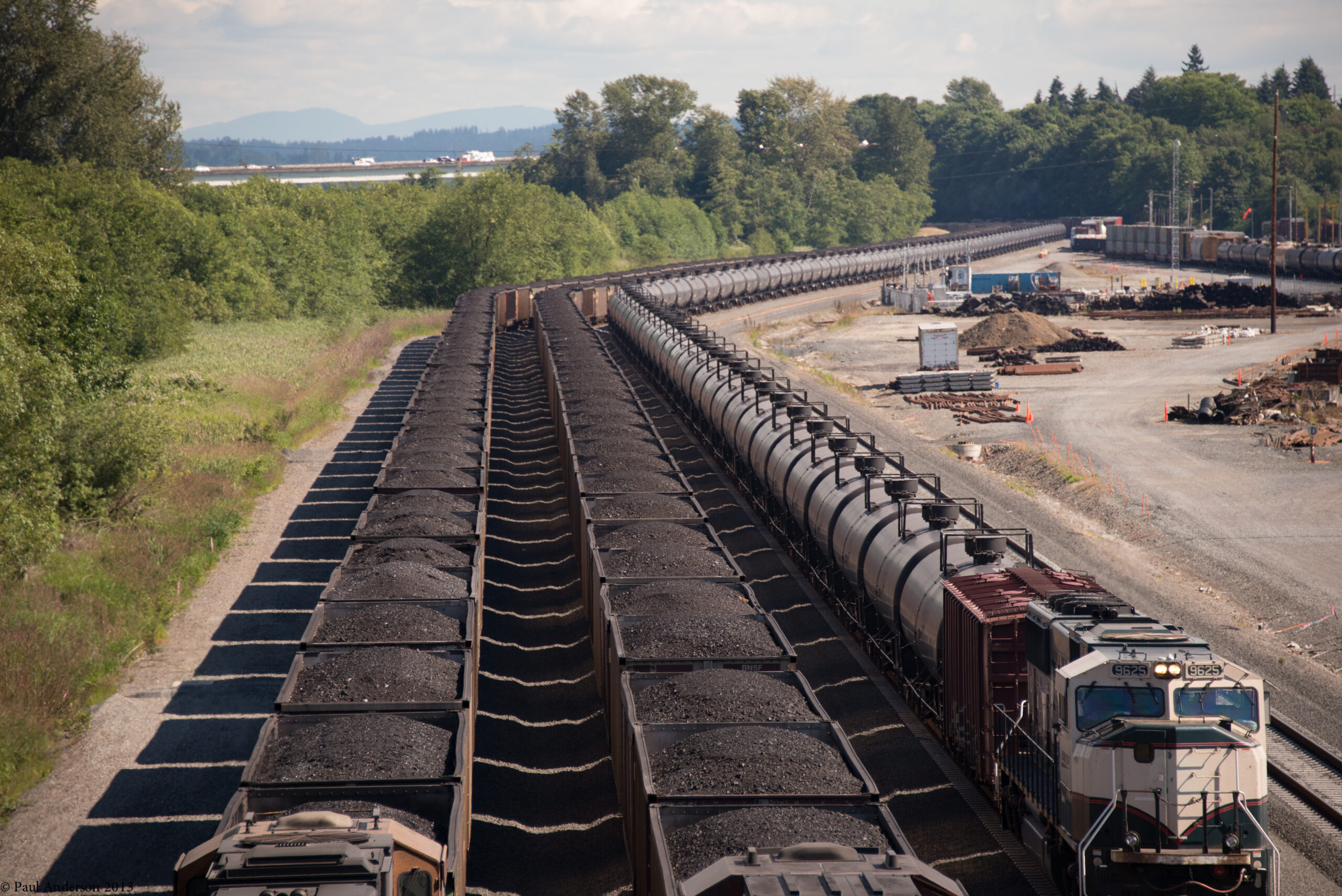
coal train in Wyoming

You can’t make this stuff up. The Wyoming state legislature—ostensibly one of the most conservative deliberative bodies in North America—has embraced full-on socialism for the coal industry. From The Branding Iron, the student paper at the University of Wyoming:

A budget amendment making its way through the Wyoming legislature could grant the Wyoming Infrastructure Authority (WIA) the power to pursue projects like coal ports in other states…The bill also provides $1 billion in bonds to the WIA for the express purpose of pursuing infrastructure projects, like coal ports.

So the allegedly die-hard conservatives in the Wyoming legislature want to commit a billion dollars in bonding authority, backed up by financial resources of the state government, specifically to build coal export facilities that the private sector itself won’t fund. And even though they residents of Wyoming would ultimately bear the risk from a failed infrastructure project, they even want to the bond money out of state, to build projects in Oregon or Washington.

If that isn’t a prime example of what conservatives profess to hate, I don’t know what is.

Read more

Cloud Peak Projects Major Coal Export Losses

Cloud Peak Energy—the third largest coal producer in the Powder River Basin, and one of the main proponents of coal export projects in Washington and Oregon—recently released its earnings statement for the fourth quarter of 2014. And as I read through the details of their earnings statement, I discovered that a prediction I made last fall was wrong.

I had anticipated that Cloud Peak would start reporting losses from its export division starting in 2015. But I was three months too late: Cloud Peak actually reported export losses in the fourth quarter of 2014.

But as bad as that revelation is for Cloud Peak’s export ambitions, the news gets much, much grimmer.

Read more

×