Donate Newsletters

Event: Will a Carbon Tax Fly in Oregon?

Next Thursday, join our senior researcher Kristin Eberhard to talk about carbon pricing possibilities for Oregon. The League of Women Voters of Corvallis is hosting a public forum with a great panel of speakers to lay out some smart climate policy for the Beaver State. Joining Kristin will be Jeff Renfro, senior economist at Portland State University’s Northwest Economic Research Center (NERC); … Read more

The Money Behind Northwest Coal Exports

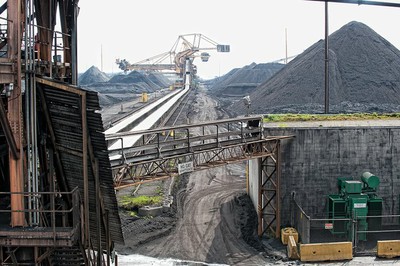
If you’ve been following the Northwest coal export debate, you’ve probably heard of Ambre Energy—the struggling Australian firm that’s behind two of the three remaining coal terminal proposals in Washington and Oregon. Ambre made headlines back in August, when the state of Oregon denied a key permit for the company’s proposed Morrow Pacific coal terminal project on the Columbia River.

But even if you’ve heard of Ambre, you may not have heard of the company’s main financial backer: a tight-lipped private equity firm called Resource Capital Funds (RCF). Focused on minerals investments, RCF has a truly global reach: it’s registered in the Cayman Islands; maintains offices in Denver, New York, Toronto, and Perth, Australia; and invests in mining and minerals projects all over the world. With more than $100 million at stake with its investment in Ambre, RCF has become the chief financial backer of Northwest coal exports.

And while you might think that having the backing of a global investment firm like RCF would be a sign that Ambre is a solid company with strong financial prospects, you’d actually be mistaken. A review of the firm’s past investments shows that RCF actively seeks out risky projects with a high potential for failure.

Read more

Indiana Jones and the Clean Power Rule

In Indiana Jones and the Last Crusade, Indie finds himself on a ledge before a chasm, with no obvious way across. Ignoring the evidence of his senses, he follows a clue he’s been given, takes a leap of faith and lands on an invisible plank. The proposed US Clean Power Rule puts Oregon and Washington, along with other Western states, on a ledge, too. Oregon and Washington are on a quest to meet their own self-imposed climate targets, but the federal rule seems to lead them astray, requiring different goals and tangential negotiations that will sap their energy and make it harder for them to reach their goal. What may not be apparent is that the rule also provides a plank: adopting a regional carbon price can substitute for complicated and ineffective power-rule compliance plans and let Oregon and Washington meet their own targets. It can also carry the West to a clean energy economy.

Backstory

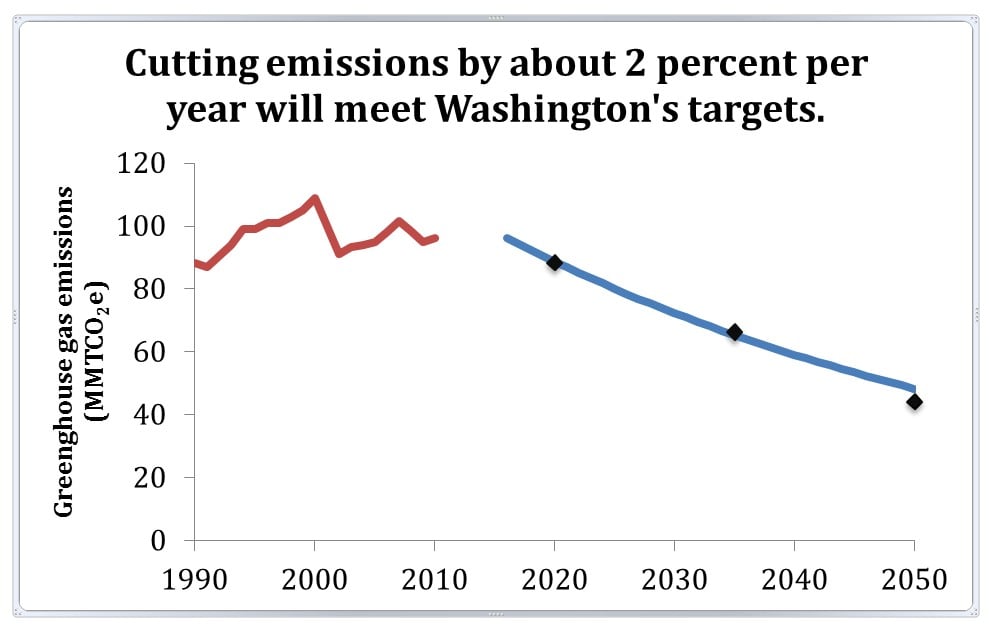
The US Environmental Protection Agency (EPA), fulfilling its duty under the federal Clean Air Act to regulate CO2 emissions, has issued a proposed Clean Power Rule that would reduce CO2 pollution from power plants nationwide 30 percent below 2005 levels by 2030. Although Republicans think even this relatively modest goal is too much, Oregon and Washington already have more ambitious climate laws on the books. If Oregon follows a smooth line to its goal to cut pollution 75 percent below 1990 levels by 2050, it will cut pollution approximately 50 percent below 2005 levels by 2030. A straight line to Washington’s goal to cut pollution 50 percent below 1990 by 2050 will cut approximately 22 percent below 2005 levels by 2030, but the electricity sector will likely make deeper cuts than the state average. Both states aim to squeeze out much more pollution by 2050.

Original Sightline Institute graphic, available under our Free Use Policy.

Read more

How Fossil Fuel Money Plays in Northwest Elections

Over the last few years, the Northwest has been embroiled in an increasingly heated debate over its participation in fossil fuel exports. Energy companies’ plans to build coal terminals, oil depots, and gas pipelines are drawing out protestors, grabbing headlines, and earning plenty of attention from elected officials.

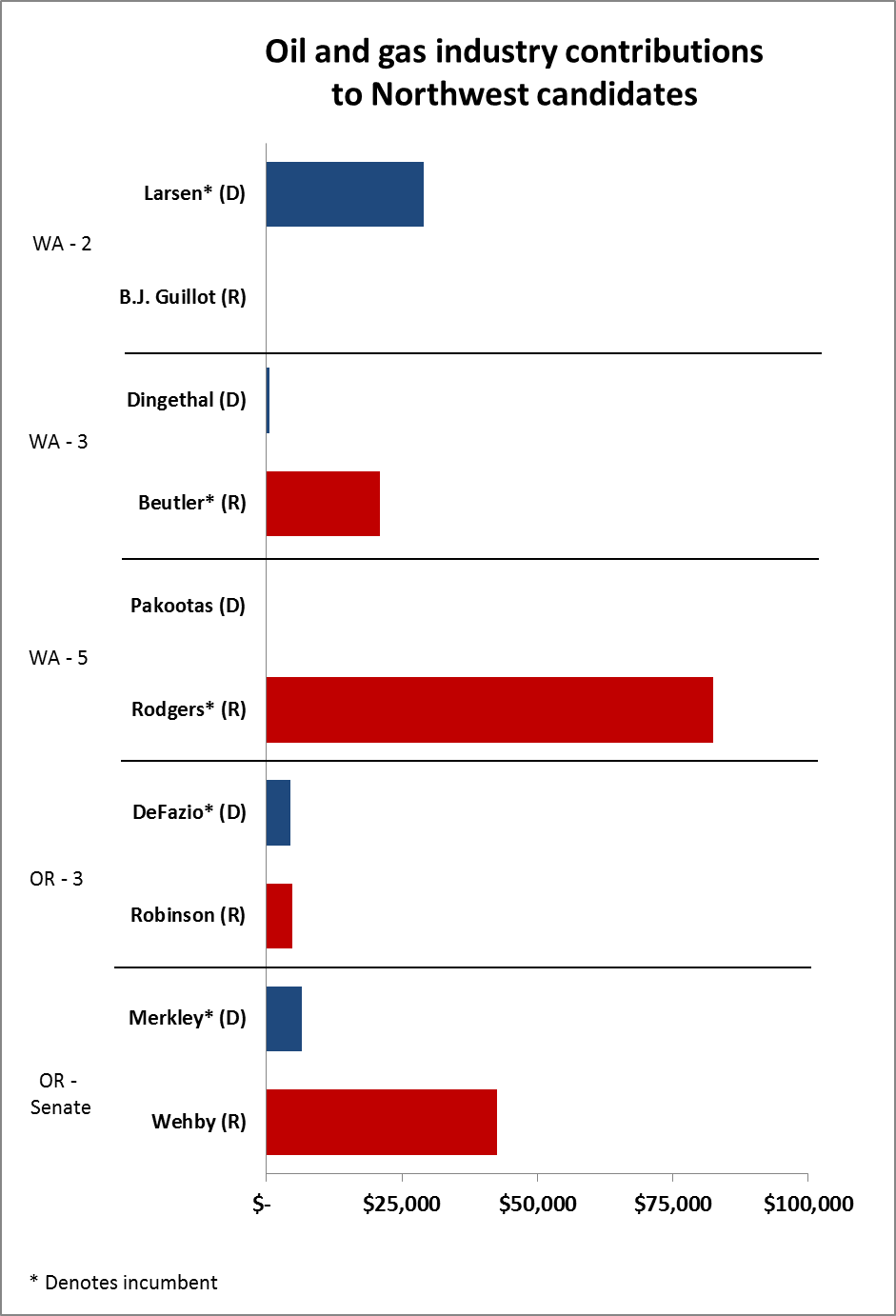
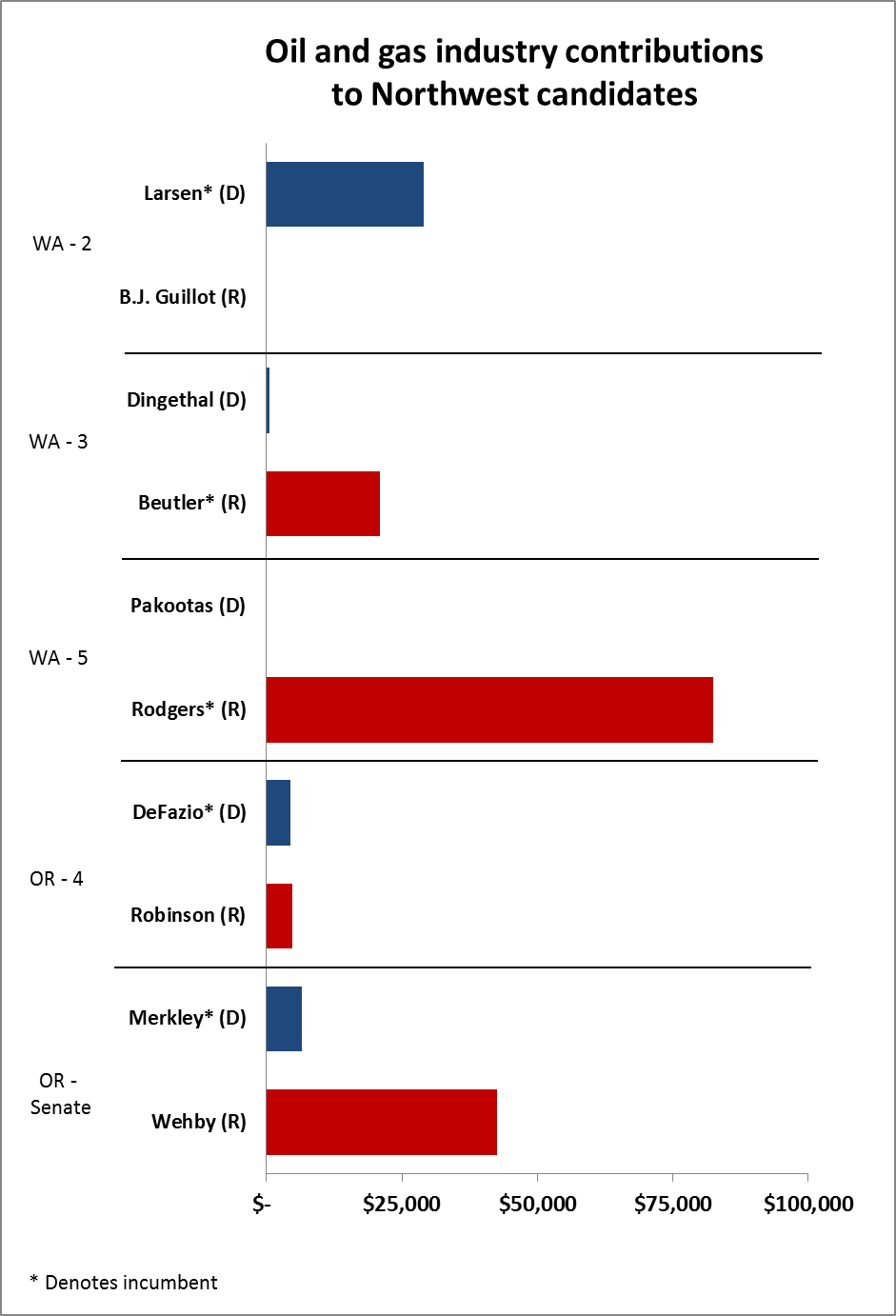
So to get a better sense for how these companies are playing the political game, we combed through campaign contribution data published by the Center for Responsive Politics in the OpenSecrets’ online database. To our surprise, we could identify very little money coming from the coal companies with a stake in Northwest export proposals. Yet we did find that the well-heeled oil and gas industry pumps plenty of money in the coffers of the region’s candidates for federal office.

We picked five electoral contests that we believe illustrate the breadth and depth of fossil fuel money in Northwest politics. Whether in highly contentious well-publicized races or predictable landslides, fossil fuel interests can be major players.

Original Sightline Institute graphic, available under our Free Use Policy.
Original Sightline Institute graphic, available under our Free Use Policy. fossil fuel money (Data from OpenSecrets.org.)

Here’s a closer look at how fossil fuel interests spent money on each of these races.

Read more

Toxic Lead’s Home Demolition Loophole

Residential construction is booming again in Seattle and other Northwest cities. To make way for the new, as well as needed increases in density, hundreds of older homes are being demolished every year. However, poor demolition practices—even by “green” builders—and lax regulation are creating an unnecessary hazard from lead-based paint.

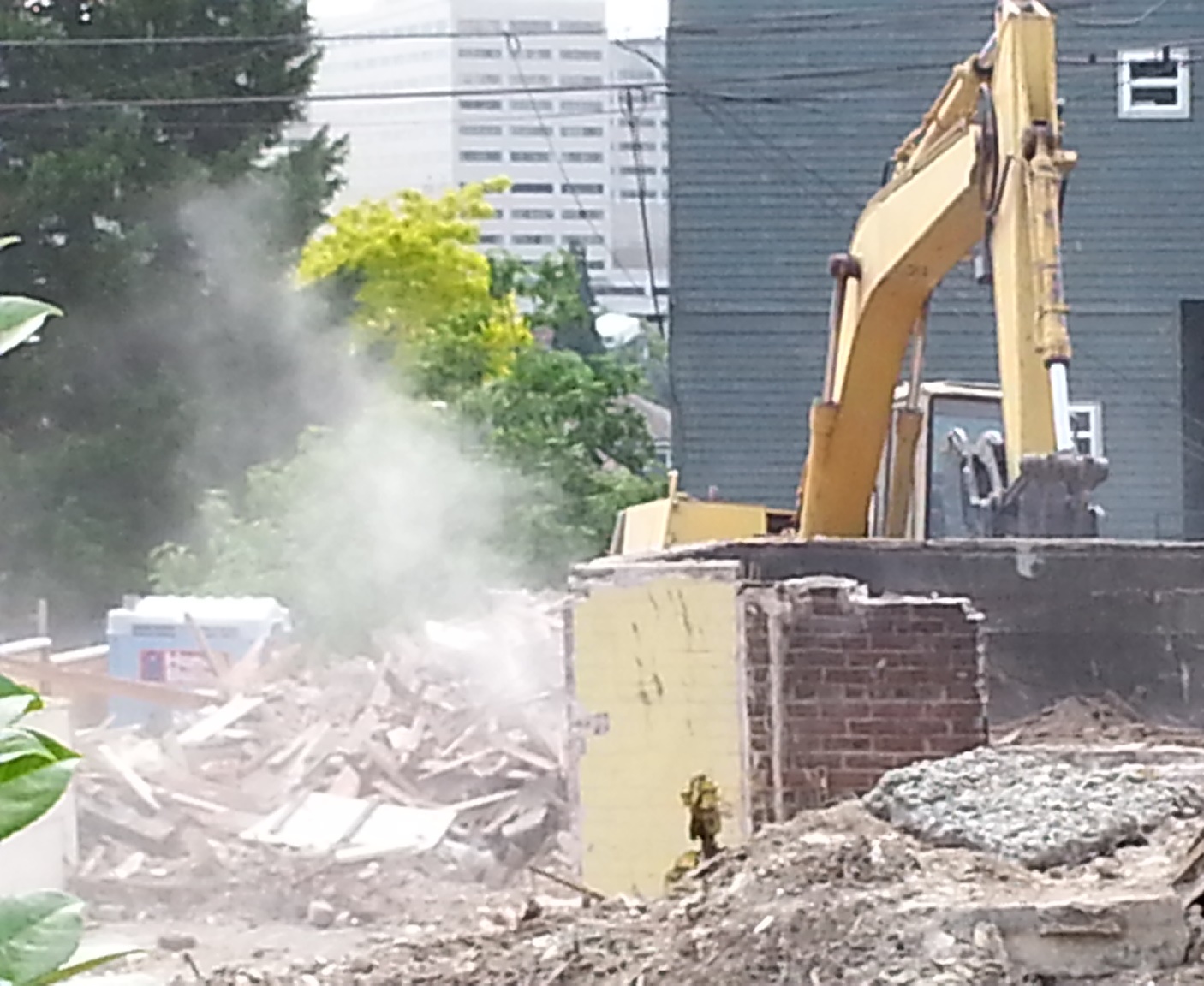
Removing older or poorly maintained homes from the housing stock can be a good thing, in the long run, to prevent childhood exposure to lead-based paint dust—a highly potent neurotoxin that study after study has shown can cause life-changing effects in children even when they’re exposed to very small amounts. But improperly handled demolitions can create shorter-term risks. If you see clouds of dust at a construction site where an older home is being torn down, you are likely seeing the spread of airborne lead dust.

[prettyquote align=”right”]No safe blood lead level in children has been identified. Even low levels of lead in blood have been shown to affect IQ, ability to pay attention, and academic achievement. And effects of lead exposure cannot be corrected.”—Centers for Disease Control, Healthy Homes and Lead Program, 2014. [/prettyquote]

A 2013 study of Chicago single-family home demolitions by David Jacobs, a leading expert on lead-based paint and housing, concludes that “large amounts of dust contaminated with lead and other heavy metals are generated from demolition of older housing.” When an excavator tears into an older home, lead that was once spread across walls, windowsills, and other surfaces in the form of paint gets pulverized into dust. And if relatively simple steps aren’t taken to control it, the contaminated dust can become airborne and settle on nearby yards, homes, sidewalks, and playgrounds.

Demolition lead dust that gets tracked into neighboring homes and finds its way into children’s bodies can increase children’s blood lead levels, especially in neighborhoods where multiple homes are being torn down. And toxic particles can travel far from demolition sites—up to 400 feet if conditions are right, according to Jacobs’ study.

Yet due to a loophole big enough to drive a backhoe through, knocking down an entire older home covered in lead-based paint in a single day doesn’t trigger any of the same health precautions as a construction crew would have to take if they remodeled the kitchen in that same house.

Read more

Recent Coal Export Trends: Q2 2014

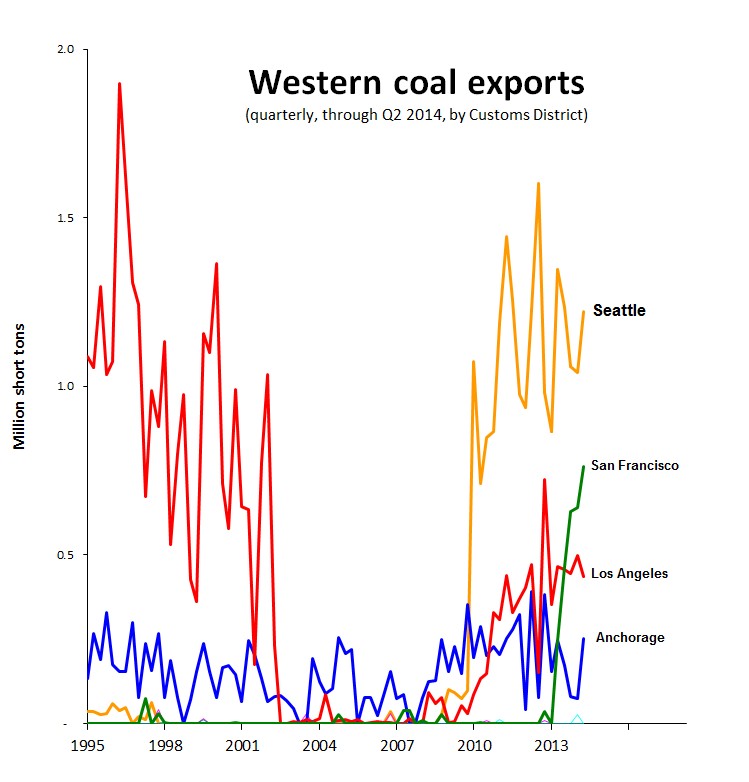
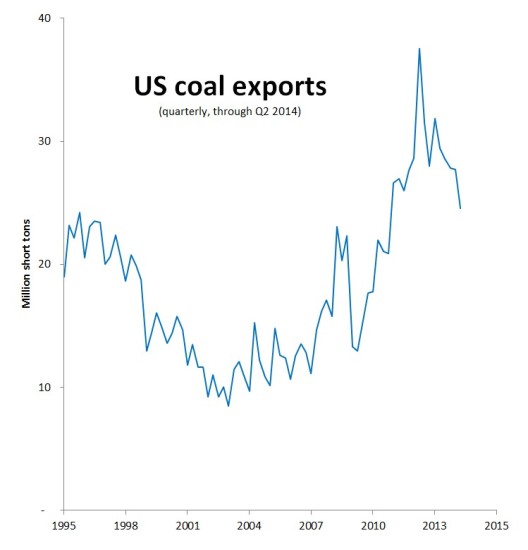
Here’s a look at the latest US Department of Energy figures in its quarterly coal export report, which take us up through the second quarter of 2014:

Original Sightline Institute graphic, available under our Free Use Policy.
Original Sightline Institute graphic, available under our Free Use Policy. US coal exports_Q2 2014 (Data from US Energy Information Administration’s Quarterly Coal Report.)

Nationally, coal exports fell again in the second quarter of 2014.

The US exported almost 24.6 million tons of coal in the second three months of the year. It was still a lot by historical standards, but it represented the fifth straight quarterly decline and a  reduction of 35 percent from the industry’s high water mark in the second quarter of 2012.

Read more

The #1 Question from Progressives about Revenue-Neutral Carbon Taxes

Last time, I shared the #1 question from conservatives about revenue-neutral carbon taxes like the Carbon Washington proposal to implement a BC-style carbon tax and use the revenue to cut sales taxes and business taxes:

How do you know it’s going to stay revenue-neutral?

This time I’d like to share with you the #1 question from progressives about revenue-neutral carbon taxes:

How do you know it’s going to stay revenue-neutral?

It’s the same question! The motivations for asking the question, of course, are different. Conservatives ask because they’re worried about government getting bigger, that is, when we compare revenues from the existing tax system X with revenues from a potential new tax system Y, they want to make sure that X ≥ Y. Progressives ask because they’re worried about government getting smaller, that is, they want to make sure that X ≤ Y.

Read more

The #1 Question from Conservatives about Revenue-Neutral Carbon Taxes

I give a lot of talks about revenue-neutral carbon taxes—especially the Carbon Washington proposal to implement a BC-style carbon tax and use the revenue to cut sales taxes and business taxes. The question that is far and away the #1 question asked by conservatives is:

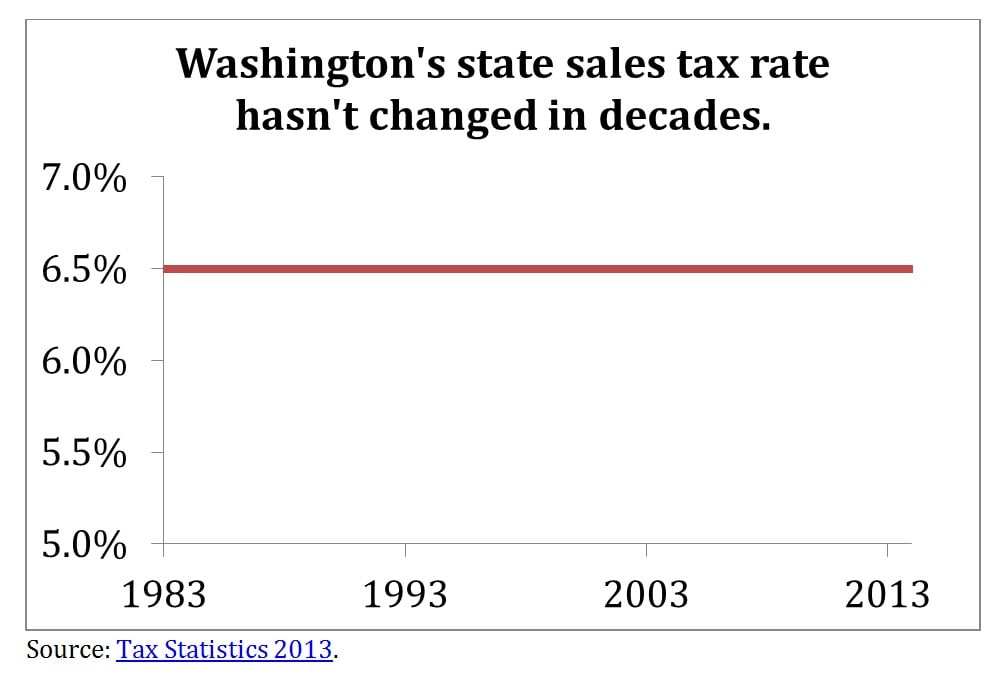
How do you know it’s going to stay revenue-neutral? It sounds all well and good to combine a carbon tax with dollar-for-dollar reductions in sales taxes and business taxes, but the legislature will just raise the sales tax back up, so pretty soon we’ll get stuck with both taxes.

I have two responses, one for realists and one for cynics.

Read more

We’re in this together: Sightline’s fall fund drive is on!

As a Sightline reader, you are well informed about the challenges that the Northwest faces in the journey toward health, safety, and sustained prosperity for all. Perhaps you’d like to make a difference, but are unsure about where to begin. At times, sustainability matters and policy choices can seem like colossal burdens in the journey to a happy, healthy planet. To begin can seem a tremendous act.

Luckily, we are in this together, and donating to Sightline is an easy way to help!

For the next two weeks we’re asking our friends, readers (that’s you), and subscribers to make a financial contribution in order to sustain our research, analysis, and news service.

Will you support Sightline’s quest for a sustainable future? Join us now and make a secure online gift in support of our fall fund drive.

Read more

Let’s Take the Education Debate Outdoors

The McCleary decision! High-stakes testing! Common Core!

In the Northwest’s raging and incessant debate about education funding, testing, and standards, the question of what gets taught is never far from center stage. A growing network of schools and reformers starts from the premise that 21st century challenges from economic globalization to climate change call less for content mastery than for a set of abilities that group loosely around “learning how to learn.”

The emerging field of “Deeper Learning” seeks to shift educators’ focus from “teaching to the test” to helping children learn to think, communicate, collaborate, and initiate. School districts across Cascadia and beyond face the challenge of how to retool classrooms and educators to impart these 21st century skills.

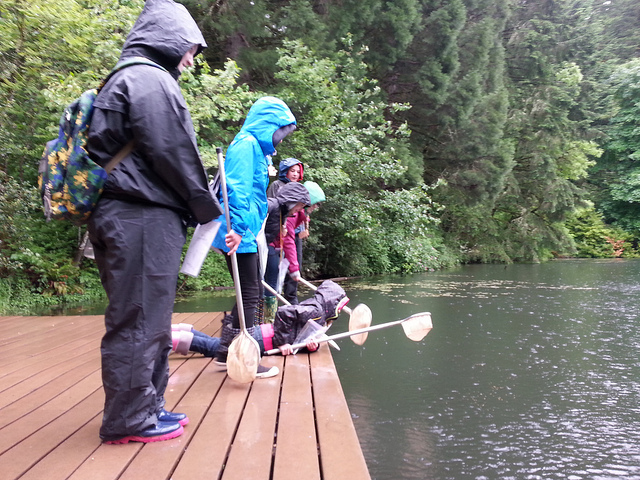
One of the best ways to deliver Deeper Learning, though, requires no classroom walls at all. Hands-on learning about nature, in nature, switches children into a discovery mode: the place where deeper learning happens.

Read more

×