Donate Newsletters

Four Carbon Cap-Tax Hybrids

Fits like a fleece vest.

A tax and a cap are just different vehicles for delivering the same thing: a carbon price that holds polluters responsible for their pollution, drives the transition to clean energy, andstaves off the worst risks of climate volatility. With a tax, you know the price in advance but not the quantity of carbon pollution per year; with a … Read more

Jury-Rigging Democracy

“The best argument against democracy,” Winston Churchill reportedly said, “is a five-minute conversation with the average voter.” Watching native-born Americans belly flop on a citizenship test suggests Churchill wasn’t far wrong.

But what about a week-long conversation? Worse? Actually, no.

An intriguing model of citizen participation in Oregon suggests that prolonged conversations with voters—or, conversations among voters—can dramatically improve democracy. The model is based on the jury: the panel of disinterested voters, operating under strict rules of procedure, presented with arguments and evidence, and left to apply their judgment to a case.

What an independent, nonpartisan Oregon group called Healthy Democracy has begun doing, with the sanction of state government, is to submit pending ballot measures to quasi-jury trials and then publish the results in the voters’ pamphlet. What’s so intriguing is that Oregon voters are starting to pay special heed to the one-page verdicts of these mock trials. In fact, before long, such juries could hold more sway than millions of dollars in campaign cash.

Oregon’s Citizens’ Initiative Reviews (CIRs) are perhaps the brightest light in the constellation of reforms to the initiative process that I’ve been mapping in this set of articles. And paradoxically, they do nothing to stem the tide of Big Money (after all, SCOTUS won’t let us). Instead, they just aim to make money matter less.

Read more

Cap and Trade—In 3 Pictures

We all rely on mental shortcuts to make sense of new information. Often, metaphor and analogy—or pictures—help us get a handle on abstract ideas.

Right now, far-reaching climate and energy policy is back in the news, this time at the state level on the west coast where California has an established cap and trade system, Oregon and Washington are thinking seriously about putting a limit on climate pollution, and British Columbia has a successful carbon tax shift in place.

The time is right to deploy the most compelling illustrations of how smart climate and energy policy works for people and our economy. Here are three mental shortcuts for talking about cap and trade:

Read more

A Fair Share of Streets (Part 2)

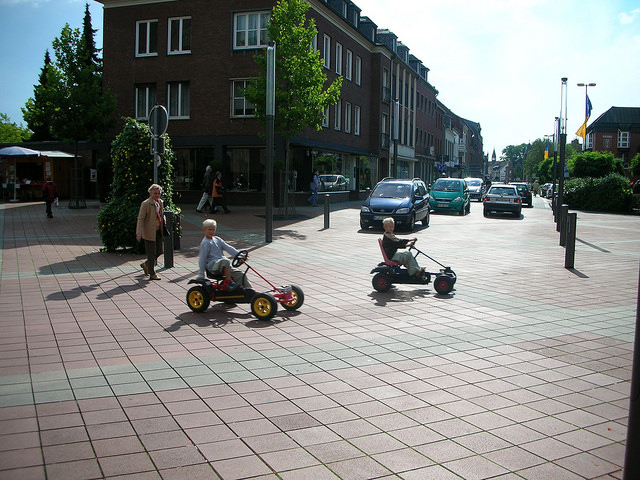
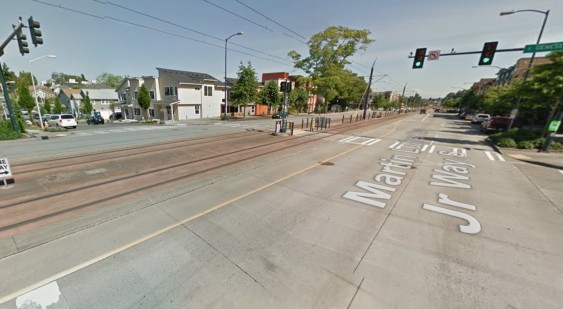
In my last post, I took a look at streets that have been designed specifically so kids and cars can safely share space. That’s most definitely not the case on streets like this one, where a seven-year-old Seattle girl last week was critically injured by a car that hit her in a crosswalk, never even braked, and left her lying in the street.

MLK Way S and Genesee, Seattle
MLK Way S and Genesee, Seattle by Map data 2014, Google

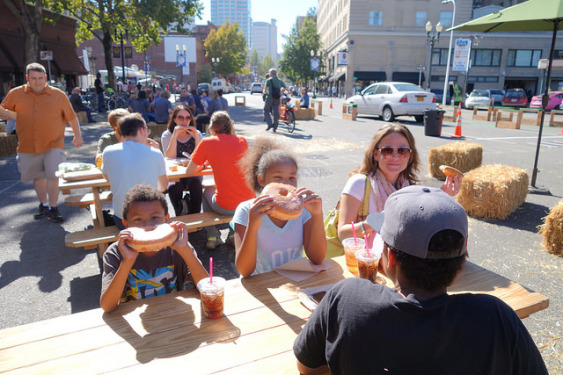
A bold experiment in Portland last week offered a glimpse of how different things could be. Using a DIY approach that would make a traffic engineer wince, Better Block PDX temporarily transformed several blocks of 3rd Avenue in Old Town/Chinatown from a street that primarily moves people in cars to one that serves all kinds of people.

3rd Avenue Better Block PDX 1, by Greg Raisman
3rd Avenue Better Block PDX by Greg Raisman used under CC BY-NC-SA 2.0

Read more

The Big Problem with Letting Small Railroads Haul Oil

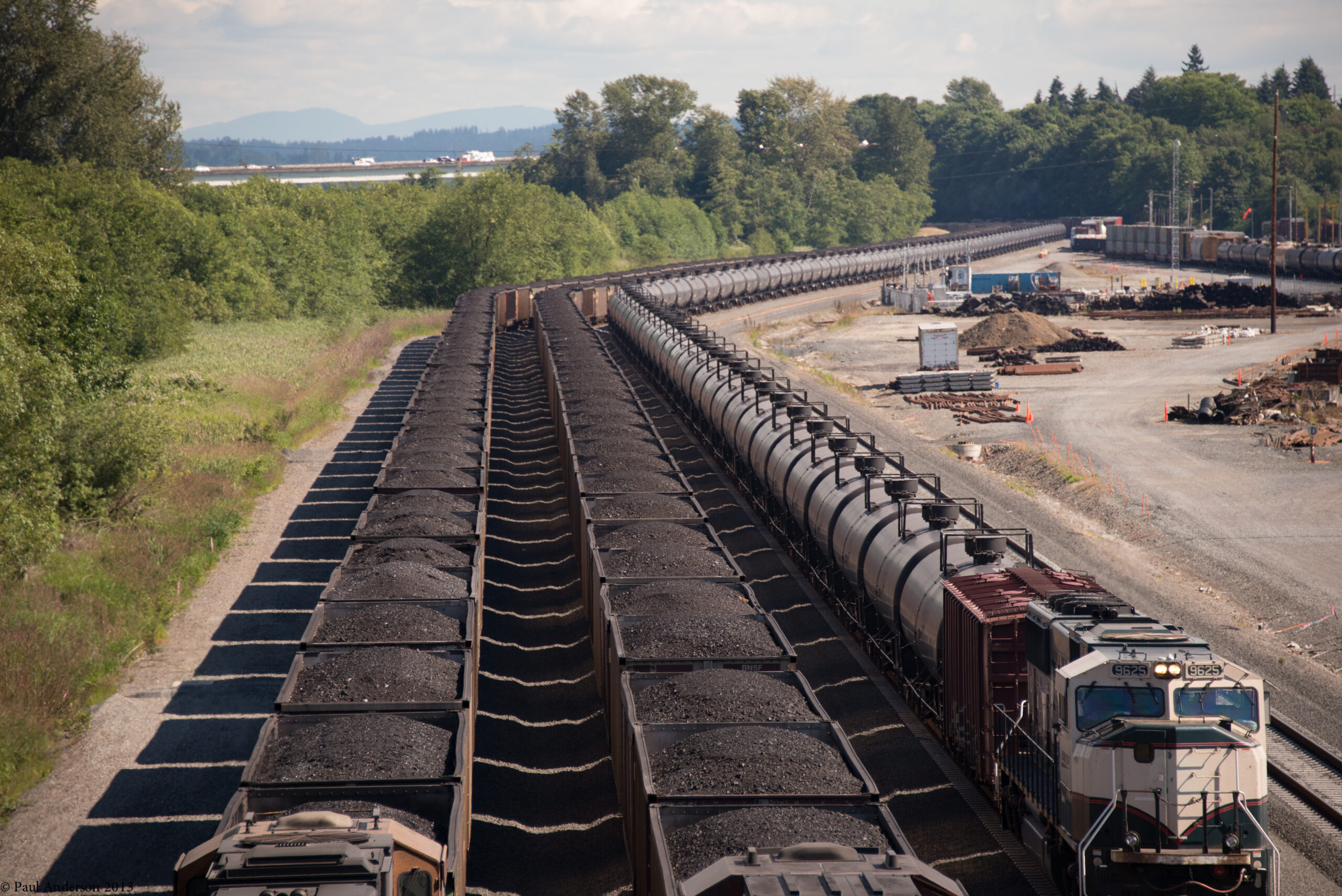
The disaster in Lac-Mégantic, Quebec—where 47 people were killed by a Bakken oil train derailment—is commonly understood to have resulted from a train slipping its brakes and then rolling downhill into town where it crashed disastrously. It was a tragedy, but it should not be considered just a mechanical accident.

In truth, it was a self-reinforcing chain of events and conditions caused by underinvestment, lack of maintenance, and staff cutbacks. And it’s a lesson the Northwest should heed because it illuminates the risks of allowing small regional and short line railroads to pick up unit trains of crude oil from bigger railroads like BNSF and transport them short distances to refineries and terminals. The Northwest is home to at least two small railroads with big oil-by-rail aspirations. One already hauls oil trains several times a week through Portland and small towns in northwest Oregon while the other, plagued by a string of recent derailments, aims to service no fewer than three terminals at the Port of Grays Harbor.

The story from Quebec—of what happened to the Montreal, Maine & Atlantic (MMA) railroad—is the story of a disaster waiting to happen. MMA was a regional railroad assembled in 2002 by a holding company from the assets of bankrupt Iron Road Railways, which owned four small railroads operating in Maine, Vermont, and Quebec. MMA had struggled financially from the start just as its major customers in the forestry industry also struggled. It went through a series of cutbacks to staff and maintenance.

Read more

Lecture: The Thin Green Line

Last week I gave a talk at Western Washington University about the massive coal, oil, and gas export projects slated for sites throughout the Pacific Northwest. Over the course of about 45 minutes I explored the changes confronting this region, as well as some of the opportunities we have to act as a sort of … Read more

A Fair Share of Streets (Part 1)

One takeaway from my last post on Portland’s courtyard housing competition was that it makes little sense to squander large chunks of scarce urban land by designing them exclusively for cars. Parking spaces, driveways, and even low-volume residential streets that sit empty most of the day are simply a waste of valuable real estate in growing cities.

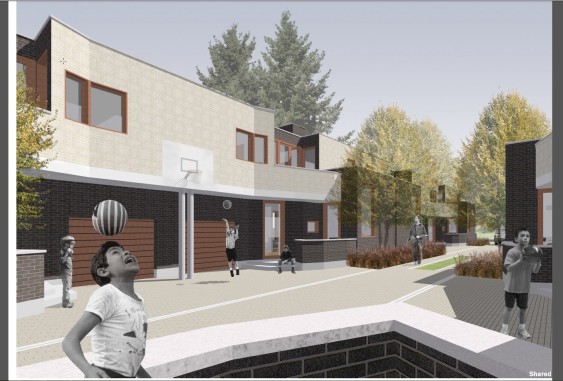
So Portland legalized the shared court—a common area in a residential development where cars can drive through (slowly) to park, but that primarily serves as a place for kids to play, neighbors to eat and socialize, or someone to build a sailboat. The landscaping, unconventional paving materials, and narrow or semi-obstructed pathways clearly say to drivers: “This space is going to have people wandering through it, and it’s your responsibility to drive at a safe speed and not mow them down.”

City of Portland Courtyard Housing Competition, by Steven Dangermond and Christopher Keane
Image by City of Portland Courtyard Housing Competition, by Steven Dangermond and Christopher Keane

Yet the idea of encouraging toddlers to ride tricycles or nine-year-olds to play kickball in the same spaces with moving cars can seem, well, wrong. After decades of conditioning children to stay out of the street, always look both ways, never assume that cars will stop, any parent has to wonder how safe that can be. But, in a sense, that just illustrates how skewed Americans’ thinking about streets has become.

Read more

Zoning: Inclusionary v. Exclusionary

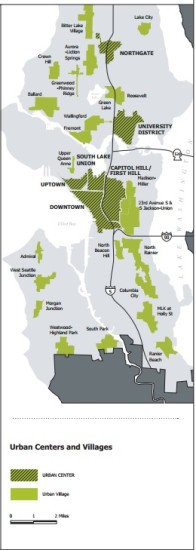
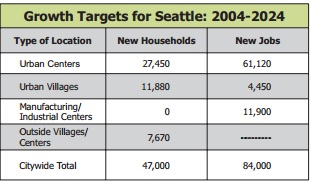
At last count, Seattle ranked as the fastest growing major city in America. The city’s growth has easily outpaced the projections of its decade-old Comprehensive Plan, which foresaw 47,000 new households (as well as 84,000 new jobs) between 2004 and 2024. Between 2005 and 2012 the city added 29,330 net new housing units—roughly 62 percent of its 2024 target in just 7 years.

Growth Targets for Seattle, 2004-2024, Map
Seattle Comprehensive Plan by Seattle Department of Planning & Development

Growth Targets for Seattle, 2004-2024
Seattle Comprehensive Plan by Seattle Department of Planning & Development

This rapid growth has stemmed in large part from the city’s relatively robust economy. From March 2013 through March 2014, for example, King County (which includes Seattle) ranked fifth among all US counties in net job growth, trailing only the likes of Los Angeles County and Manhattan.

But the population boom has sent housing prices and rents trending upwards—creating real anxiety among many renters, and fears that Seattle’s housing market will price out residents that once could afford to live in the city.

One city councilmember has described today’s housing market as being in “crisis,” and the mayor has launched a housing affordability advisory committee aiming to make affordability recommendations by next March. (Full disclosure: Sightline Executive Director Alan Durning will serve on it.)

Read more

Courting Families in Portland

When we moved into our house 10 years ago, no one on our street had kids. Now, there are eight on our side alone.

My daughter lurks at the bottom of our neighbors’ front stairs, hoping she can round up a gaggle of kids. But figuring out where they can physically play outside can be awkward. Some of us have small decks and front yards, but they’re high off the sidewalk and not quite childproof for younger siblings. Our narrow street gets a lot of cut-through traffic. And our back yard was laid out by someone who clearly had more interest in pruning than kids.

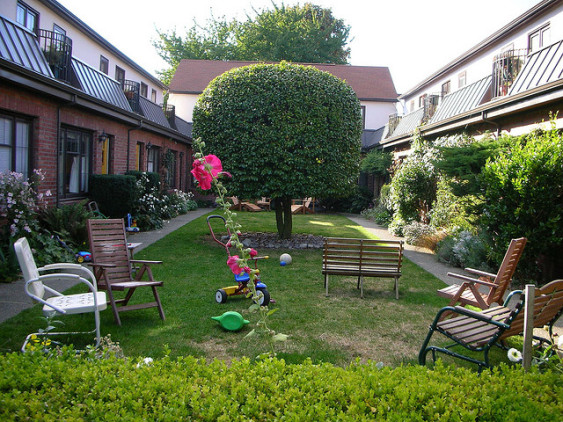
As I’ve said before, my holy parenting grail is finding places where your child can play happily and safely while you can keep a half eye on them AND get something social or useful done. In the earlier part of the 20th century, we used to build housing that facilitated this. It’s courtyard housing, with densely clustered homes or apartments built around common open spaces.

Main Courtyard 2, by John Herschell
Main Courtyard 2 by John Herschell used under CC BY-SA 2.0

Read more

How State Public Money Pays for Coal Exports and Oil Trains

Communities across Oregon and Washington are growing increasingly agitated about the risks of fossil fuel export. Proposed coal terminals generated unprecedented opposition from local residents and, more recently, dramatic increases in oil train traffic have many questioning the grave safety risks associated with a cargo so prone to explode. Yet at the very same time, … Read more

×