Donate Newsletters

What 8 Million Tons of Coal Looks Like

Eight million metric tons. That’s how much coal the so-called Morrow Pacific coal export project proposes to move through two port terminals along the Columbia River each year. That’s more than 4,500 pounds per Oregon resident, every year, year after year after year.

Numbers of such staggering proportions can be hard to visualize. That’s where handy graphics like the following can help:

Ticket to Ride (The Bus for a Long Time)

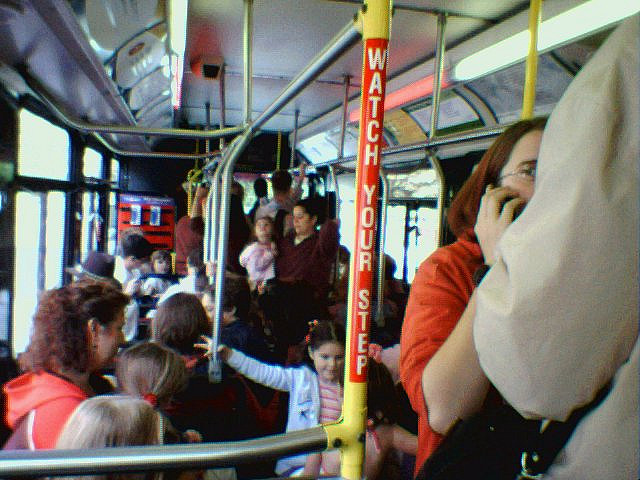
Crowded Portland Bus

Portland’s transit agency is considering giving riders a perk that nearly no other in the country offers: the ability to board a bus or train and ride anywhere in the system for three hours before having to pay another fare. It’s also analyzing whether it could afford to allow riders to take unlimited trips on a single ticket after 7 p.m.

This generous transfer policy would benefit low-income and cash-paying riders, such as a transit-dependent mom who runs errands and “chains” trips together on the bus or a hotel night shift worker who could commute more economically.

On the other hand, it would also benefit wealthy and occasional riders who hop on the MAX to a Trailblazers game, who are financially more than able to buy a $5 day pass but would be able to complete their round trip for just $2.50. (For more background, read our earlier post.)

A long string of service cuts and fare increases have led Portland-area riders, particularly those who live in lower-income neighborhoods and communities of color, to agitate for a 3-hour transfer window and unlimited night service. TriMet has listened and is currently analyzing how much the transfer changes would cost.

Read more

The Northwest’s Pipeline on Rails

Sightline is releasing a new report: The Northwest’s Pipeline on Rails. It’s the first comprehensive look at the nearly one dozen plans that have emerged since 2012 to ship crude oil by train to Northwest refineries and port terminals.

Moving large quantities of oil by rail would be a major change for the Northwest’s energy economy, but so far the proposals have largely escaped notice.

Why does it matter? Because:

  • In Oregon and Washington, 11 refineries and port terminals are planning, building, or already operating oil-by-rail shipments.
  • If all of the projects were built and operated at full capacity, they would put an estimated 20 mile-long trains per day on the Northwest’s railway system. Many worry about the risk of oil spills from thousands of loaded oil trains that may soon traverse the region each year.

It’s the Soil, Stupid

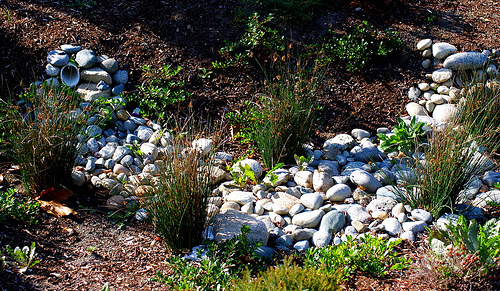
Rain garden
rain garden
Seattle rain garden, Lisa Stiffler.

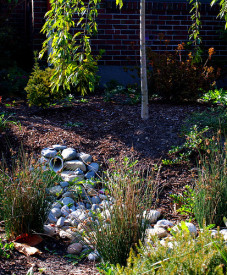
The recent dust up over troublesome amounts of pollutants leaching out of a Redmond rain garden got me thinking about soil. That’s because the soil in a rain garden has to meet a lot of needs, some of which are in conflict with each other. It needs to soak up potentially large volumes of stormwater quickly, filter and capture pollutants, keep plants alive through sodden winters as well as summer droughts, and avoid leaching nutrients. Plus, the ingredients for the soil need to be locally, readily, and affordably available.

We’re asking a lot of this dirt.

In Washington, the state’s official rain garden guide and its “2012 LID Technical Guidance Manual for Puget Sound” include specific recommendations for the “bioretention soil mix”—that’s the layer of soil that lines the rain garden. Washington calls for a mix that is 60 to 65 percent sand or soil excavated from the site, and 35 to 40 percent compost. The sand component helps with the drainage and filtering, while the compost provides nutrients needed by plants and trees and can help capture pollutants.

But the nutrients in the compost don’t always stay put, as Redmond and others have demonstrated. When these nutrients pollute rivers and lakes they stoke blooms of nasty algae that muck up the water, then die and suck oxygen out of the waterbodies as the tiny plants rot. If too much nitrate leaks from rain gardens into drinking water, the tainted water can cause “blue baby syndrome” in which infants are deprived of oxygen, turning their lips blue.

So I put the question: “Why so much compost in bioretention soil mixes?” to green stormwater engineers that included Curtis Hinman, the guy in charge of Washington State University’s Puyallup Green Stormwater Infrastructure Program.

Read more

Rogue Wheat in Oregon

Earlier this month the discovery of genetically modified (GM) wheat that was not supposed to be in an Oregon wheat grower’s field ignited an international uproar that threatens US wheat exports to other nations. The Oregonian provided especially good coverage, even including other examples in Oregon where GM crops were found outside the areas where they were expected, at potential or real economic detriment to other growers or organic growers of the same crops. Then, Grist reported that although Monsanto had discontinued field trials of GM wheat in Oregon in 2005, the company was still testing GM wheat in Hawaii and North Dakota.

US wheat growers worry that Japan and other countries, including those in the European Union, where GM foods are poorly received, will halt US exports, at least until further field testing resolves the purity of US wheat. The uproar also gives US growers an economic incentive to support GM food labeling, which could allow US crops easier access to international markets.

Read more

A Mom’s Long Bus Ride

Bus wait

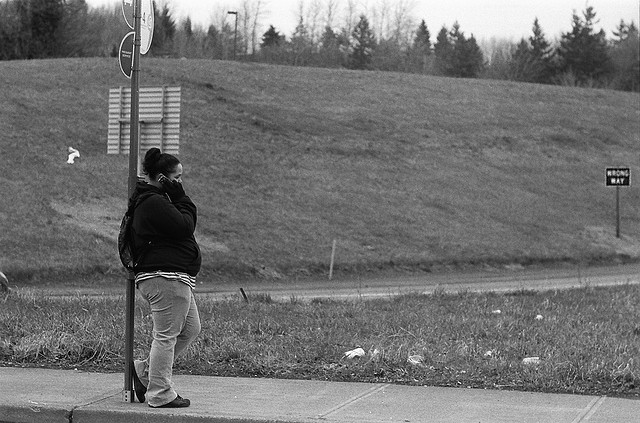
On one of her marathon bus commutes, DiJonnette Montgomery-Thompson watched a mother with three small children in tow get kicked off a bus and left on the side of the road because their transfers expired before they reached their destination. They had no more money to pay another fare.

It’s a problem that Montgomery-Thompson, a 39-year-old student getting a degree in social work, can run into when she and her daughter string together errands on the bus to buy school shoes, fill a prescription, or hit the library.

The two-hour window they’re now allowed to transfer to other buses or rail lines after paying their collective $4.15 fare seems like it should be long enough to get a lot done. But because her main bus line in suburban Beaverton, Oregon, only runs once an hour on weekends, a one-way trip to the grocery store and one other stop can easily eat up that time. If that transfer window runs out, she ends up paying again to finish her errands and get home.

Read more

Morrow Pacific: The Economics Just Don’t Work

Report-thumbA few months ago we reported on the shaky finances of Ambre Energy, Ltd, the Australian firm that’s at the center of two of the three remaining coal export terminal proposals in Washington and Oregon. Ambre’s finances paint the picture of a struggling, high-risk start-up: by the end of 2012 the company had burned through well over a hundred million dollars of its investors’ money, accumulating massive debts and obligations in the process, yet still hadn’t cobbled together even a hint of a profitable business.

But if the company’s recent financial disclosures are accurate, our earlier report just scratched at the surface of Ambre’s financial woes. Our brand-new look at the finances of Ambre’s Morrow Pacific coal export project suggests that one of the company’s export proposals is in deep financial trouble, because it faces:

  • Higher transportation costs than any nearby competitor;
  • Higher handling costs than existing coal terminal projects in the region; and
  • Greater capital costs than comparable export terminal projects.

For more details, read on…

Read more

Oregon: Driving Downhill

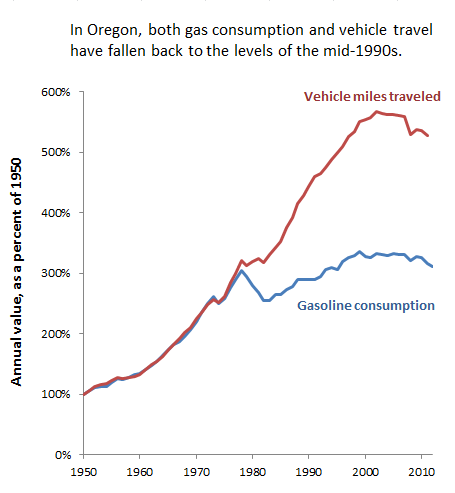
There’s a lot of history packed into this chart on Oregon’s vehicle trends: the seemingly relentless driving boom of the 1950s through 1990s; the decoupling of gasoline consumption from vehicle travel after the OPEC crisis and the economic downturn in the late 1970s; and, most recently, the peaking of both gasoline consumption and vehicle travel in the late 1990s and early 2000s, respectively.

Oregon vmt and gas2

But perhaps even more telling is the following chart, showing the same trends adjusted for population growth:

Read more

What’s in Your Garage?

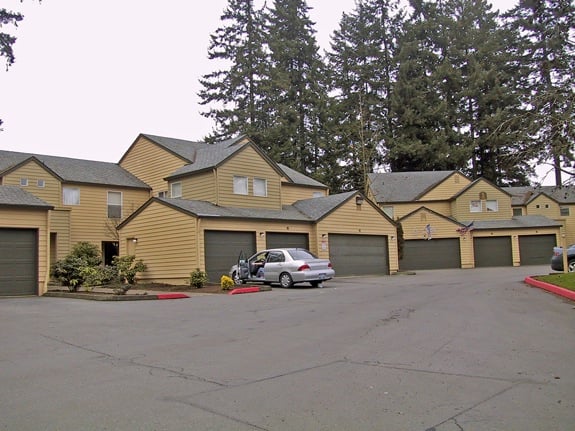
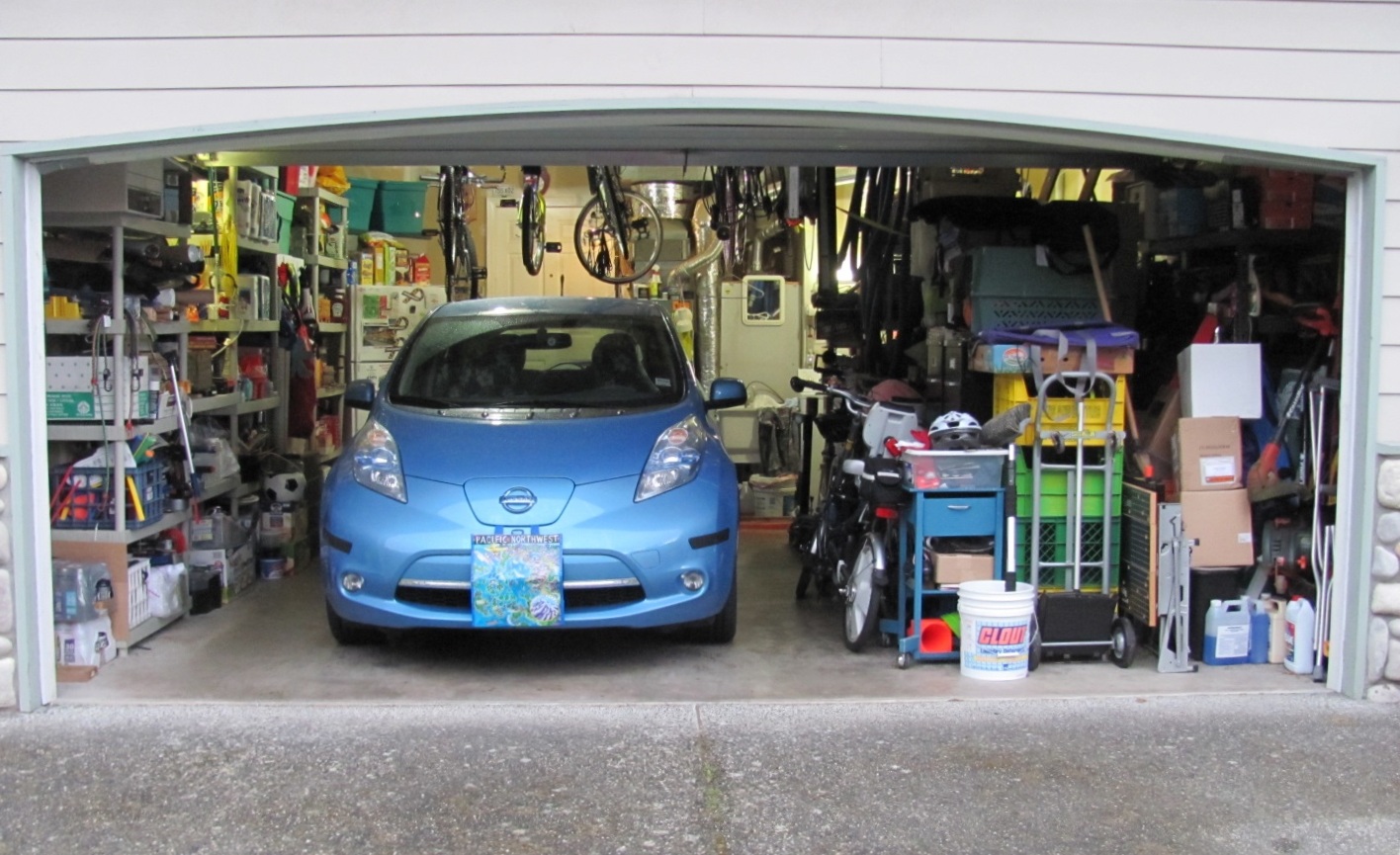
One car and lots of stuff in a two-car garage.
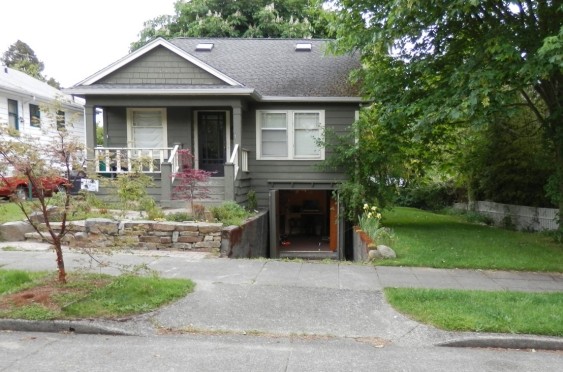
Alan's single-family home with single-car garage.
Photo by Alan Durning.

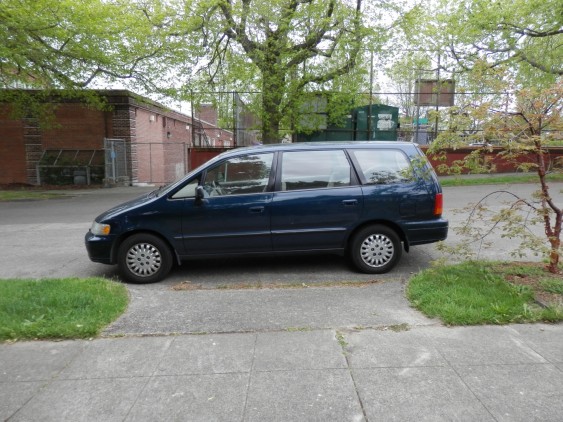
I have not owned a car in seven years, but I do own a garage. It’s pictured above. In fact, I am legally required to own an off-street parking space; that’s written in the land-use code for my city, Seattle, as for virtually every city. The driveway that leads to my garage, meanwhile, eliminates almost exactly one parking space from my street. Parking in front of a driveway is illegal, and a regular curb cut is almost exactly the size of a parking space, as illustrated below.

Driveway curb cut blocking street parking space.
Photo by Alan Durning.

The net effect—one mandatory off-street parking space plus one car-less household—is a one-space reduction of parking supply on my block. Repeat: my obligatory driveway and garage deprive the universe of one on-street slot. This is ironic, but it’s only the tip of the irony iceberg where car-storage is concerned.

Read more

×