Donate Newsletters

The Roommate Gap: Your City’s Occupancy Limit

Portland, OR Skyline at Night, Photo Credit Pirtz

When The Real World filmed its 2013 season near downtown Portland recently, it did so in apparent violation of city law, which forbids more than six unrelated people from sharing a dwelling. The Real World puts seven young adults with outsized personalities together in a house and films the resulting train wrecks for television. It’s not just Portland. In fact, Seattle and Spokane are the only big Cascadian cities where TRW could have filmed without breaking local laws on roommates. TRW did film its 1998 season in Seattle. Everywhere else, The Real World would break the law, as it did when it filmed in New York (occupancy limit for unrelated roommates: three).

Top Ten (Sightline) Hits of 2012

Photo: Blue Bike against Tree in Portland, Credit Kaptain Amerika
Photo credit Kaptain Amerika

Okay, we knew lots of you were into bikes, and it shows. But, more generally, it looks like Sightline readers simply favor posts about getting around. As we close out 2012, we’re taking a look back at the most popular Sightline articles of the year. The upshot: bikes reign, but you’re also reading plenty about public transit, traffic trends, mobile food vendors, and even road porosity. The outliers? Clotheslines and coal exports. Here’s the roundup:

10. How Not to Forecast Traffic: How One Washington State Transportation Council Misuses Statistics (April 9). Clark Williams-Derry breaks down the erroneous traffic projection practices of the Southwest Washington Regional Transportation Council for the route between Portland, OR and Vancouver, WA.

9. Look Who’s Taking Coal Money: The Face of the Coal Industry in the Northwest (December 13). Our readers aren’t so excited about “getting around” when it comes to transporting coal through our communities and exporting it through local ports. This exposé by Eric de Place drove exceptional site traffic on the day of its publication and sparked a region-wide conversation about the public relations firms working for the coal industry in our neck of the woods.

Read more

Cargo bikes

Mom's city bike taxi. Photo courtesy: Patrick Barber.

Editor’s Note 5/19/16: In celebration of National Bike Month in the United States, Sightline is bringing back this cargo-bike classic. Since this article was published in 2012, cargo bikes have gained popularity and are seen all over Cascadia and beyond. Do you own a cargo bike? We want to know what you tow! Email us a … Read more

Unlocking Spare Bedrooms: Occupancy Limits

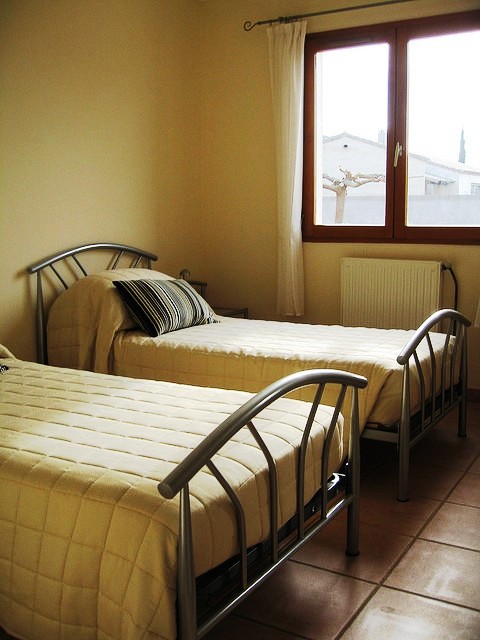
A pair of twin beds in an unoccupied room.

Most northwesterners are well provided with housing. In fact, northwesterners near or above the median income are among the best-housed people of all time: we have a lot of private indoor space.

Consider bedrooms, for example. Through most of history, most people shared bedrooms. Many even shared beds. I’m not just talking about couples. When Abraham Lincoln was a lawyer riding the circuit in Illinois, he routinely shared a bed with others in his business. The future president of the United States did not think twice about crawling into bed at the end of the day with a fellow attorney. That’s how people lived.

Read more

Look Who’s Taking Coal Money

This is great: the redoubtable Joel Connelly, over at the Seattle P-I, is on the case. Take a look at his story: Seattle PR firms are doing “coal’s dirty work.”

If ever an industry needed good PR, it’s coal.

The industry can’t hope to promote its own coal export schemes in the Northwest so instead it buys support from local consulting and PR firms willing to do coal’s dirty work. By taking money from Big Coal, these firms—many of which have carefully groomed reputations for sustainability and public-interest work—have themselves become a part of the coal industry.

Most of these firms might rather not have the public know about the work they do, with the blinds pulled down, on behalf of out-of-state coal giants. After all, their livelihoods depend on appealing to green-minded governments, nonprofits, and businesses in the Northwest. So as an exercise in letting in the sunlight—and as a sort of caveat emptor for clients—here is a look at the Northwest’s homegrown coal industry.

Edelman

The world’s largest independent PR firm, Edelman operates with a dizzying hypocrisy that is on bold display in its Seattle office. Although CEO Richard Edelman says publicly: “I do not subscribe to the use of front groups to cover up the true intent of a client,” the firm is in fact the shadowy force behind the newly constituted front group Alliance for Northwest Jobs & Exports (ANJE). The Seattlepi.com calls ANJE an “astroturf” group for its work supporting the proposal to ship 48 million tons of coal each year from Cherry Point.

Read more

Yet Another Crummy Traffic Forecast

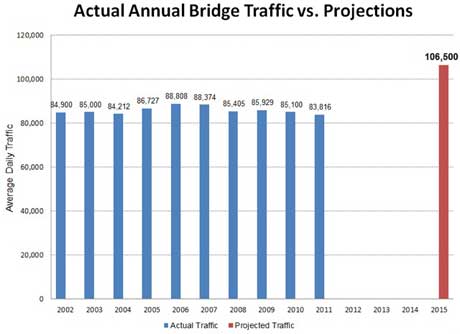
From a Willamette Live article, this chart virtually speaks for itself:

According to the article, the blue bars represent the combined traffic on two different bridges crossing the Willamette River in Salem, OR. The data show that traffic across the river has essentially flatlined for the last decade; there’s simply no evidence of growth. If anything, the numbers show a very slight decline, given that traffic reached a ten-year low in 2011.

Yet as recently as 2006, the state projected that traffic volumes would grow by 20 percent by 2015—as represented by the red line.

Read more

Decriminalizing Roommates: Occupancy Limits

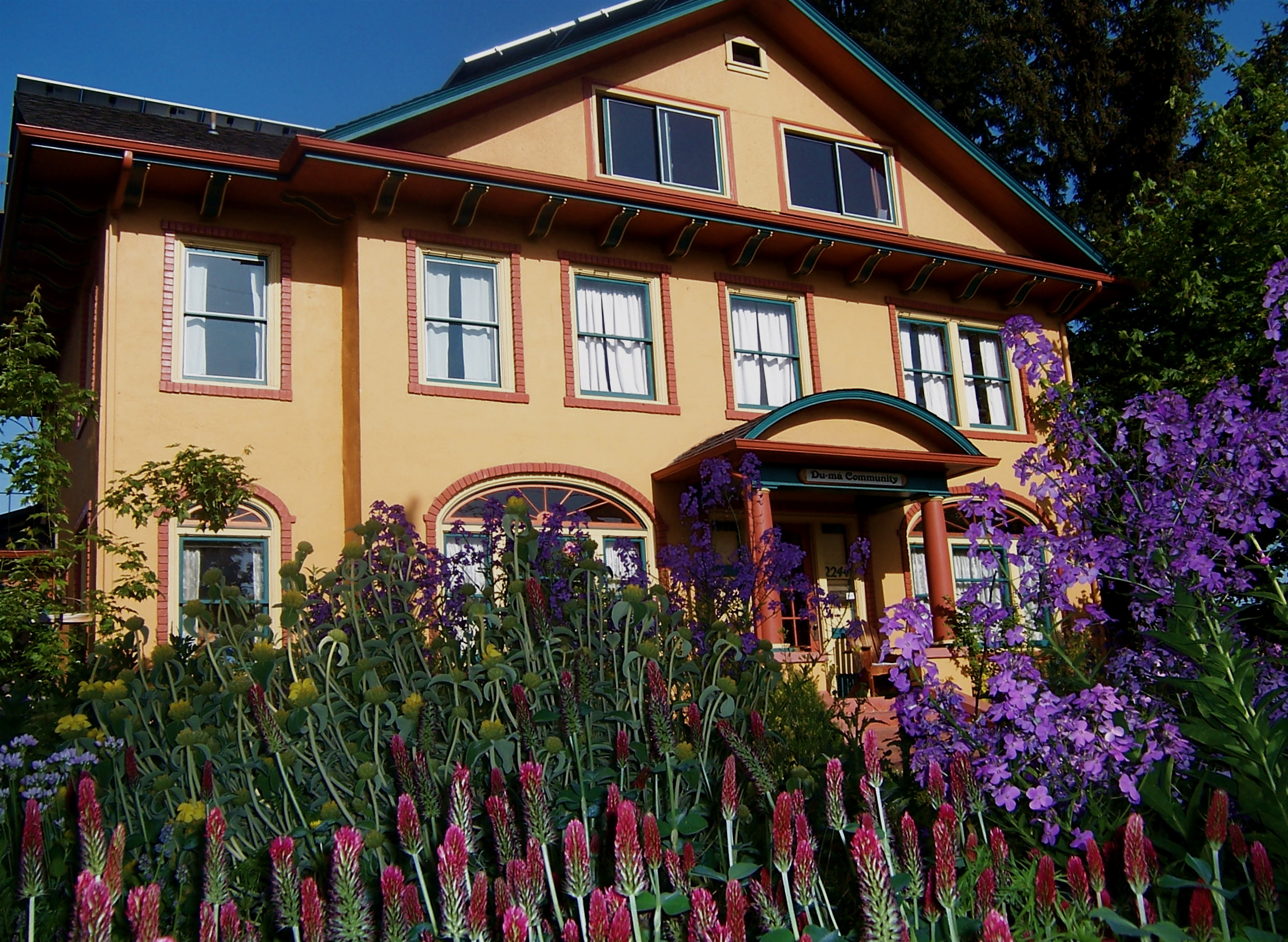
Duma - the 10-bedroom home of Allen Hancock and his 8 roomates in Eugene OR.

A friend of mine lives in a nine-bedroom, century-old house tucked among the wooden mansions of Seattle’s north Capitol Hill neighborhood. In some ways, it’s the quintessential home of the fortunate and green-minded in the urban Northwest: it has a hybrid car, an electric car, and bicycles in the drive and chickens in the yard. In another way, it’s unusual. The dwelling’s 5,000 square feet of indoor space are home to nine people: my friend and her husband, their two daughters, and five housemates. This living arrangement is in flagrant violation of city code.

Under Seattle law, as in almost every city in Cascadia and beyond, the number of people who may share a house or apartment is strictly limited, regardless of the dwelling’s size, unless all occupants are members of the same family. In Seattle, the limit is eight people (see Seattle Municipal Code 23.84A.016 “household” definition). With nine (and in the past up to eleven people) occupying her house, my friend is a law breaker. A city housing inspector could fine her and kick someone out.

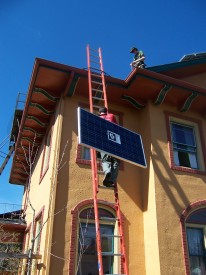
Photovoltaic panel installation at the Duma Community, Eugene OR.
Photovoltaic panel installation at the Duma Community, Eugene OR. Photo courtesy of Allen Hancock.

Another friend of mine, Allen Hancock, owns a similarly spacious house near the University of Oregon in Eugene. A Christian college built the house in 1926 as a home for a dozen or more “wayward girls.” By the time Allen moved in, in 1990, someone had divided the 4,400-square-foot structure into six apartments and let it run down. He restored, remodeled and retrofitted the house. Today, it has 10 bedrooms plus a guest room and, usually, nine residents. Allen has personally devoted two decades of labor to turning Duma, as he calls the house, into a model of green living, with reused building materials throughout, extreme insulation and energy efficiency upgrades, photovoltaics on the roof, edible landscaping, and a rainwater catchment system, all located on one of Eugene’s main bicycle routes.

Read more

Emancipating the Rooming House

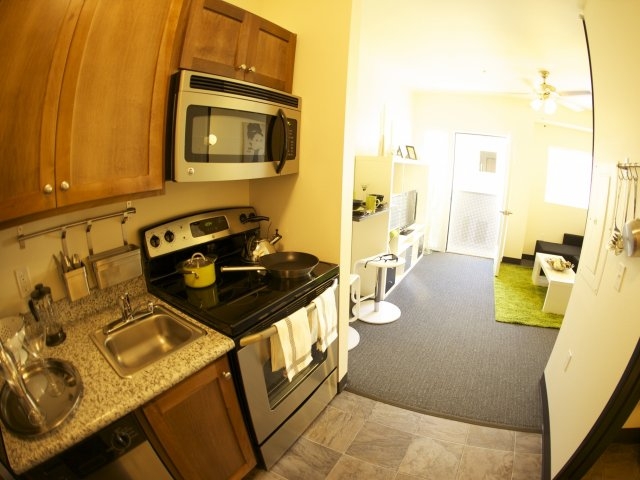
Kitchen and living space in small studio apartment at Freedom Center, Portland.

They may not be for you, but rooming houses and other small, basic dwellings should not be against the law. Some people want them — need them, in fact — and they provide housing affordably, with a tiny ecological footprint, and in walkable neighborhoods. Yet across most of the metropolitan Northwest, these basic homes are currently forbidden or rendered unprofitable by local codes.

My last article recounted how we arrived at this confounding pass, where the law has vacated the lower rungs of the historic housing ladder. This article describes nascent efforts to repopulate those rungs, by building neo-rooming houses and micro-apartments…

Comedy (and Carbon Taxes) in Portland: December 5

Sightline Fellow Yoram Bauman—the inimitable standup economist—will be at Lewis & Clark College on Wednesday, December 5. The show starts at 7 pm in the Council Chambers (building 36 on this PDF). It’s free and open to the public. Yoram includes a short bit on carbon taxes in his routine. He’ll also be part of … Read more

×