Donate Newsletters

Northwest Utility Rejects Kinder Morgan’s Coal Pollution

Huge news yesterday: Portland General Electric slammed the door on Kinder Morgan’s scheme to build a giant coal export facility on the Columbia River.

The reason? Because PGE agrees with what Sightline has been arguing: coal terminals mean coal dust pollution. And coal dust pollution, Sightline has shown, jeopardizes local health, environment, and economies.

Kinder Morgan, in particular, should not be trusted with coal-handling. The company’s track record is one of pollution, law-breaking, and cover-ups.

So PGE deserves a standing ovation for thwarting Kinder Morgan’s plans to build a coal terminal on port land for which PGE holds a long-term lease. But PGE’s decision is probably less about environmental responsibility than about plain business sense. The utility operates a natural gas plant near the proposed coal site and company officials worry that coal dust would foul the generating equipment. And PGE is right to worry: as Sightline has documented extensively, Kinder Morgan’s coal operations are plagued by escaping coal dust.

If PGE is right that coal dust is too risky for power plants, what might it mean for our lungs? Or for Columbia River fish?

Remember, PGE knows coal. They’ve been handling and burning it for decades at the Boardman Coal Plant in eastern Oregon. They know first-hand how dirty and dangerous it is. Presumably, they know too that coal terminals make terrible neighbors.

Today, we can watch Kinder Morgan’s PR flaks scramble to spin the story, like so:

“The PGE leasehold is only one of those sites. … Nothing has changed. We don’t have a site identified, and we have not put forth a proposal,” Fore said.

Really, Kinder Morgan?

Then why do Kinder Morgan’s own publicity materials identify a specific site? And why do they include a photograph of it labeled “proposed terminal development”?
Read more

Why We Fall in Love with Cycling

Editor’s note August 2016: Need some cycling inspiration this sunny Northwest weekend? We have just the thing—this favorite from a few summers back should have you happily wheeling about town in no time…. Traveling the world’s great bicycle cities, I fell in love with cycling. The ease, safety, convenience… (dreamy sigh). But as my six-month … Read more

Saving Cash with Green Stormwater Solutions

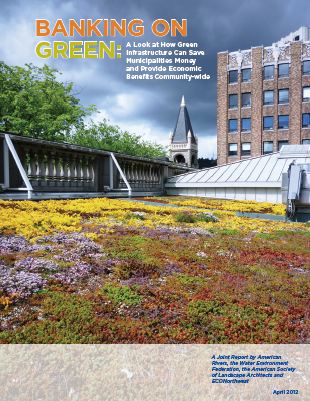
Here’s a good reason to build rain gardens and green roofs, and to plant and protect trees: It’ll save you money. That’s the conclusion of a new report from the American Association of Landscape Architects called “Banking on Green.”

The study surveyed green stormwater projects from across the US, plus a handful from Canada, and determined that in 41 percent of the cases, the environmentally friendly approach was cheaper than if a conventional solution for runoff was used.

The work builds on previous research by the US Environmental Protection Agency, ECONorthwest, the University of New Hampshire, Seattle Public Utilities, and others who have come to similar conclusions about cost savings.

The “Banking on Green” report also provides a list of 479 green infrastructure case studies organized by state. It does a nice job compiling current research that explains and quantifies the many problems caused by polluted runoff, and it offers the most effective solutions for addressing these problems. But it’s not everything I could hope for.

Read more

What's Your Transit Score?

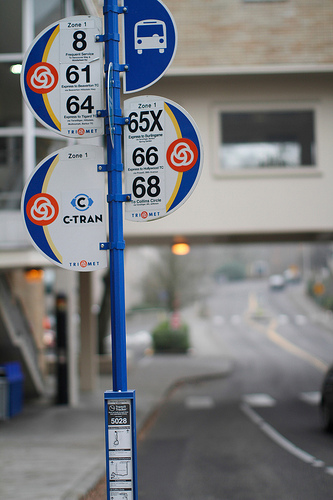
The hotshot team over at Walk Score is at it again. This time, they’ve ranked 25 major US cities based on transit. No surprise, New York City takes the cake, pulling off an impressive 81. San Francisco, Boston, DC, and Philadelphia round out the top 5. The Northwest fares decently with Seattle coming in a #7 … Read more

Toxic Couches: The Infographic

How dangerous can 12 seconds be? In the case of California’s 12-second rule, it can be pretty toxic. California requires that furniture be able to withstand a candle flame for 12 seconds without igniting. Because California’s market is so big, most manufacturers build furniture to pass the 12-second rule. No study has ever proven the … Read more

The Rain-barrel Connection

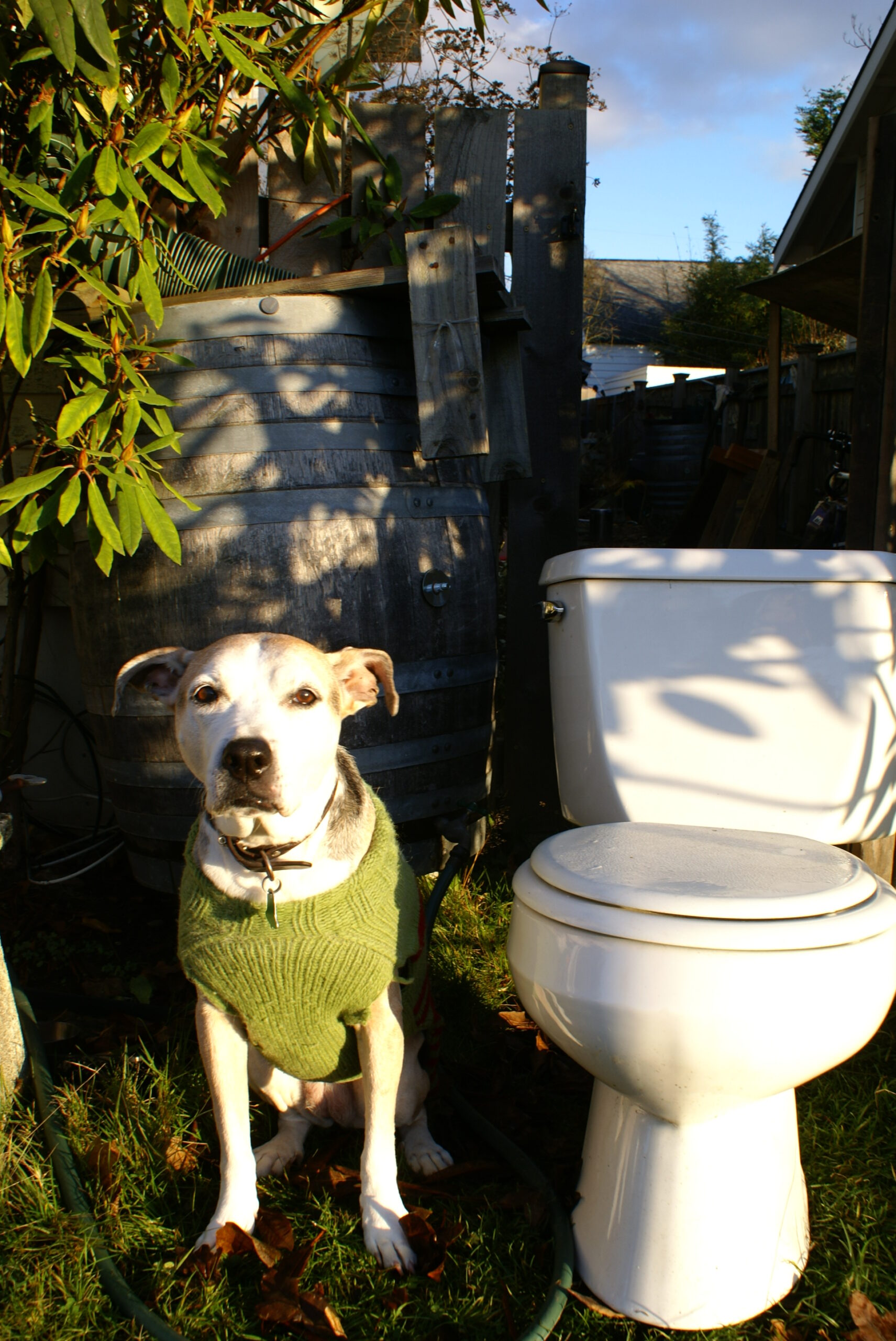
Call me a dreamer. I want to flush with rainwater. Rain barrels already anchor my downspouts. I want to hitch them to my toilet tank. It would save me money and leave the city’s drinking water for better uses.

Yet so far local plumbing rules aren’t helping me, or thousands of others in the Pacific “Northwet,” make the rain-barrel connection. It’s not so much that rules prohibit it but that even local authorities do not really understand what the rules mean. A little clarification—and publicity—would go a long way.

Already, outside my house in Seattle’s Ballard neighborhood, I’ve managed to irrigate my Victory Garden all summer from nothing but the 500 gallons of rain I collect in ten barrels. During the other three seasons, though, the garden doesn’t need extra moisture, so my barrels sit unused and, often, full to the brim.

Read more

Coal’s Spontaneous Combustion Problem

Those who are evaluating export proposals might do well to examine one little-talked-about peculiarity of Powder River Basin (PRB) coal: it has an unfortunate tendency to spontaneously combust, even in rail cars and stockpiles.

To be clear, it’s not as if coal trains will be delivering blazing cargoes. The threat is likely to be more insidious—slowly smoldering coal that is perhaps emitting noxious gases into neighboring communities. Yet the severity and toxicity of these gases are largely unkown.

Does self-ignited coal pose a genuine pubic health risk or is it little more than a handling annoyance for coal shippers? We don’t know. But we do know that even the coal industry says self-ignition is a problem:

Operators familiar with the unique requirements of burning PRB coal will tell you that it’s not a case of “if” you will have a PRB coal fire, it’s “when.”

In fact, one technical analysis—demonstrating that “PRB represents the extremes of handling problems”—found that:

Spontaneous combustion of coal is a well-known phenomenon, especially with PRB coal. This high-moisture, highly volatile sub-bituminous coal will not only smolder and catch fire while in storage piles at power plants and coal terminals, but has been known to be delivered to a power plant with the rail car or barge partially on fire…

Needless to say, even low intensity fires are potentially troublesome for communities near stockpiles or along rail corridors. Yet it’s hard to evaluate the magnitude of the problem.

Read more

In Southern Oregon, Measure 37 Stirs in its Grave

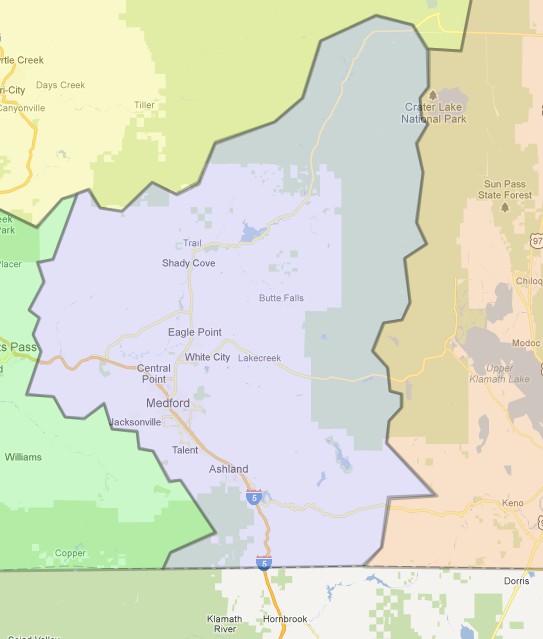
If you want proof of the staying power of a genuinely bad idea, look no further than the primary ballot in Jackson County, Oregon. Voters there will decide on two county charter amendments. One is bizarre, one is both bizarre and pernicious, and both are backed by a Tea Party organization with national reach.

The amendments are an attempt to reanimate the corpse of Measure 37, an ill-conceived ballot initiative that would have yielded a truckload of unintended consequences had Oregon voters not quickly repealed it. But I’m getting ahead of myself.

Here’s the backstory. In 2004, Oregon passed Measure 37, under which any landowner who felt that a regulation reduced the “value” of his or her property would be eligible for a cash payment from the government or a waiver from the regulation. (Sometimes called “pay-or-waive” laws, these kinds of laws amount to drastic expansions of the legal meaning of a “regulatory taking“.)

Can’t build a subdivision on your farmland? The government would have to pay you or waive the law. There were logging companies that wanted to clearcut their forests unless they were paid not to, while other forest landowners threatened to build housing developments in working forests. One fellow claimed the government needed to pay him to prevent him from mining inside a national monument.

Read more

How Not To Forecast Traffic

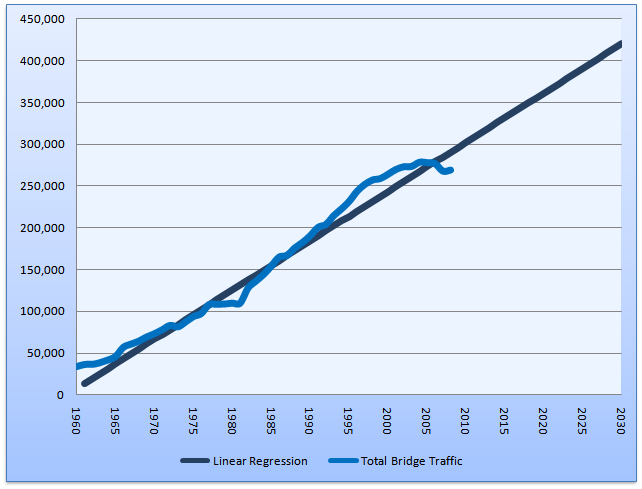
Oh, jeez, this is like shooting fish in a barrel: a picture-perfect demonstration of how not to estimate future traffic volumes.

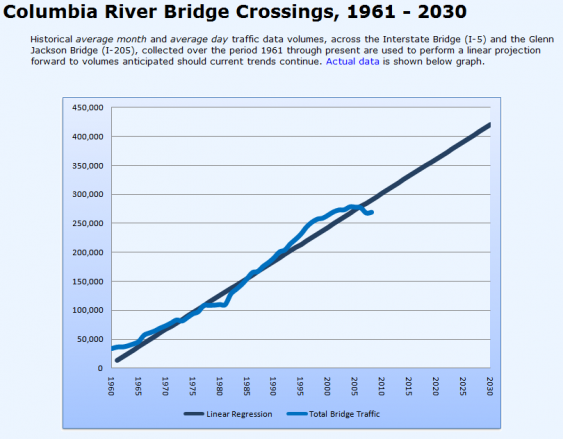
On the website of the Southwest Washington Regional Transportation Council, I ran across this doozy of a chart, showing projections for future traffic across the Columbia River between Portland, OR, and Vancouver, WA.


It seems that the chartmaker used a linear regression (which comes standard on most spreadsheet programs) to draw a straight line through traffic data from the early 1960s through 2010, and continue that line through 2030. Then—apparently with a straight face—the Transportation Council presents this line as a “projection” for future traffic volumes, “should current trends continue.”

Read more

×