Donate Newsletters

Getting Out of Work’s Way

Alan Durning: Food Handler

This post is an excerpt from Sightline’s recent report, Making Sustainability Legal: Outdated Rules that Stop Affordable, Green Solutions.  It is an update of our October 2011 post on work licensing rules in the Pacific Northwest.

Alan Durning: Food Handler
Photo courtesy Cynthia Savers

I got my Oregon Food Handler’s Badge. It took 52 minutes online and cost $10. Now I can work legally in Oregon restaurants!

If, however, I wanted to work braiding hair African-style in Oregon, or kickboxing for prize money in Washington, or selling timeshares in Montana, or promoting concerts in Alaska, or as an athletic trainer in Idaho or as scores of other things across the Northwest, I’d have to endure a more onerous licensing process.

Much more onerous.

Consider African-style hair braiding. As an article in yesterday’s edition of The New York Times points out, licensing rules in many states place tremendous and unnecessary burdens on would-be hair braiders. Oregon is one of those states. To braid hair for money in Oregon legally, I would need (in addition to actual braiding skills—no small thing), a hairstylist or barber license. Earning a cosmetology badge requires 1,700 hours of training and classes. That’s often two years of coursework, and it costs thousands of dollars. But this schooling is largely irrelevant to African-style hair braiding.

Read more

Crime in Cascadia

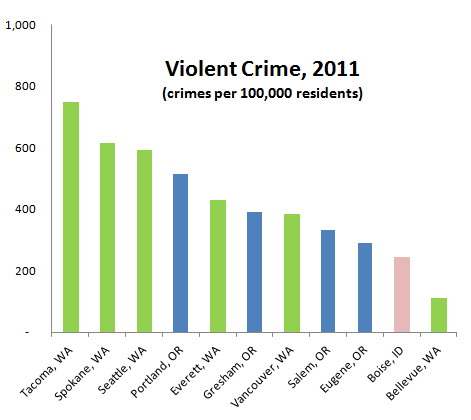
I was mucking around this morning with the FBI’s new crime statistics, which reports the prevalence of major categories of crimes for every US city with at least 100,000 people. I learned a few things about the Northwest.

For one thing, Washington’s cities clearly lead the region in violent crime:

The “violent crime” category is comprised of murder, forcible rape, robbery, and aggravated assault.

In 2011, Seattle and Portland each had 20 murders, far more than any other city in Cascadia. Although the two cities have very similar numbers of residents, Seattle had 15 percent more aggravated assaults and 54 percent more robberies. Portland, however, had more than 2.5 times as many forcible rapes as Seattle.

Here’s a look at more of the numbers.

Read more

Hawaiians and Pacific Islanders in the Northwest

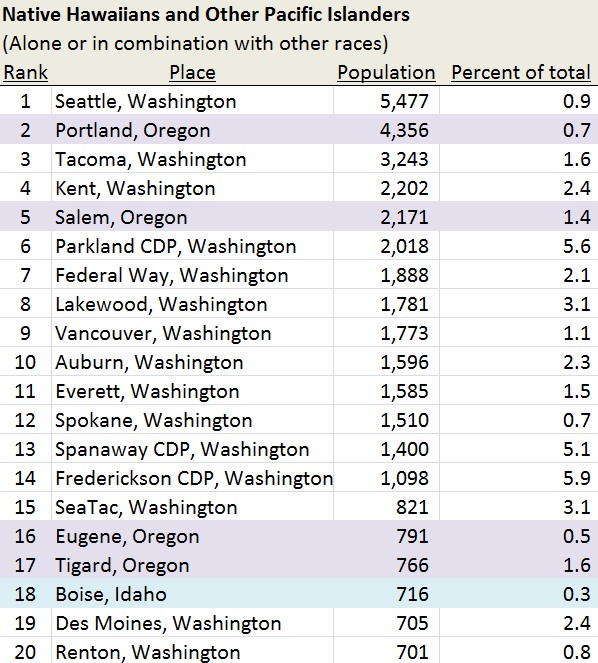
The Northwest has a surprisingly strong historical connection to Hawaii, which I’ll explore a bit next week. That connection is still reflected to a degree in the region’s demographics. Continuing my series on the evolving racial demographics in the Northwest, let’s take a look at Pacific Islanders who reside in Cascadia.

Washington is home to more people who self-identify as Native Hawaiian or Pacific Islander than any other state apart from Hawaii and California.

Not surprisingly then, the largest populations of Hawaiians and Pacific Islanders in the Northwest can be found in the central Puget Sound region. The cities that populate the stretch of territory from Everett through south Tacoma account for 13 of the top 20 spots in the region.

In Oregon, the big Willamette Valley cities of Portland, Salem, and Eugene boast the most Pacific Islanders with the Portland-area suburb of Tigard making a surprise appearance.

Read more

Electric Cars: A Shopper’s Cheat Sheet

I’ve been thinking about upgrading to an electric car for a while now. And in today’s market, there are plenty of models to choose from.

But having a lot of options makes for a complicated decision! Each model of electric car has its own unique mix of efficiency, charging time, and driving range—and since buying a car is a big decision, I want to find the model that makes the most sense for my family. To add to the confusion, there doesn’t seem to be any single, unified source of information on the many electric car options out there.

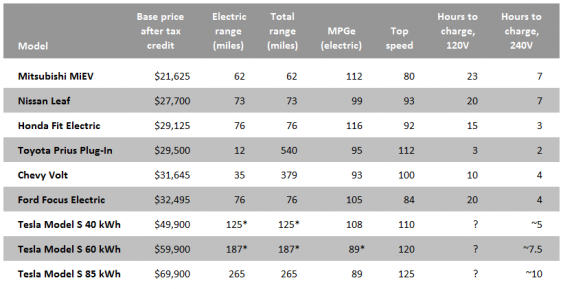
So, for my own convenience—and hopefully yours—I pulled together a table with basic stats on the major electric and plug-in hybrid cars…

(Click the table to see a larger version.)

What I took away from this research is that there’s no “perfect” choice among the EVs on the market. They’re all far more efficient in electric mode than gas-only models. That means less money spent on fueling your car, and lower levels of greenhouse gas emissions for each mile driven. But whether you’re willing to pay a premium for a longer range, a faster charge, or a higher top speed seems like a personal choice that I can’t help you out with.

But at least you now have the numbers. Happy comparing!

And now for the notes and caveats:

Read more

Ocean Acidification: The Local Story

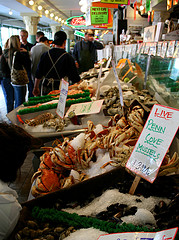
Mussels at Pike Place Market

When people learn that carbon dioxide pollution is turning our oceans more corrosive, it’s tempting to decide that the problem is too big for any person or local government to tackle.  But as our knowledge of ocean acidification continues to evolve, it turns out that in hotspots like Washington State, local factors—from nutrient pollution to seasonal currents and maybe emissions from ships or our own traffic—are playing a role too.

As Betsy Peabody, executive director of Puget Sound Restoration Fund, put it at this week’s meeting of the state’s Ocean Acidification Blue Ribbon Panel:

This is not just the carbon story that we’ve been hearing about happening somewhere out there. It’s different. It’s here.

The bad news? These local drivers are combining with rising global carbon dioxide emissions to make local waters increasingly acidic and put the Northwest on the leading edge of destructive changes in ocean chemistry.  For example, seawater in the depths of Hood Canal is already among the most corrosive found anywhere on earth. As that trend accelerates, it could profoundly change our marine systems, what appears on our dinner plates and whether shellfish farmers and, potentially, commercial fishermen will be able to stay in business.

The good news? While Washington State can’t do much about global carbon emissions, it does have some control over the local impacts that are contributing to the problem. Figuring out what those contributors are, and where the opportunities are to better control them, is one of the tasks of the blue ribbon panel that Gov. Christine Gregoire convened to look at the problem of ocean acidification. Washington State is the first to tackle the issue, and other states whose economies depend on a healthy seafood industry (such as Maine) are looking to us for solutions.

The basic problem is that excess carbon dioxide causes seawater to become more acidic (although it still remains above neutral on the pH scale). These chemical changes also bind up carbonate ions, which thousands of species of marine creatures need to build shells and skeletons. As those ions become scarce, those creatures have a hard time building and maintaining those protective structures. Although responses to acidifying seas vary widely among different species, mollusks such as oysters and clams and tiny creatures at the bottom of the food chain appear particularly vulnerable so far.

Since the ocean absorbs roughly a third of the carbon dioxide emissions we release into the atmosphere, rising climate pollution is making the oceans more acidic worldwide. This long-term trend is what scientists refer to as “ocean acidification.” But there are other sources of carbon dioxide in our local waters, which are contributing factors to the problems that have already begun to affect the state’s $270 million shellfish industry.

Here are some of the local influences that the panel is investigating:

Read more

Coal Exports and Carbon Consequences II

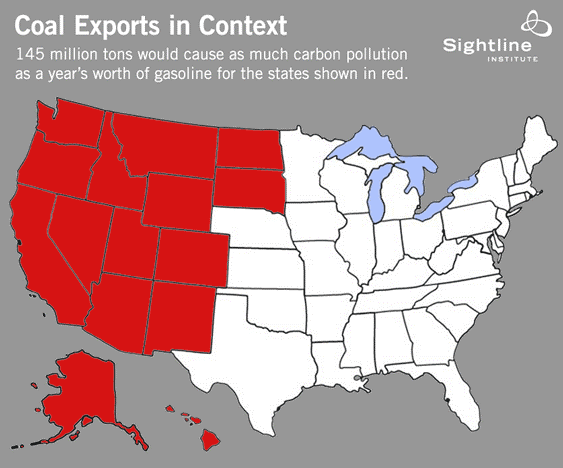
There are at present six proposals to export coal from Northwest ports. If all of these proposals are built, and if all of them operate at full capacity, the Northwest would be shipping 145 million tons of coal per year.

When burned, that coal will produce roughly 262 million tons of carbon dioxide per year. It’s such a staggering figure, that it’s a little hard to grasp. So here’s some context:

US map with states highlighted


Read more

Making Sustainability Savory

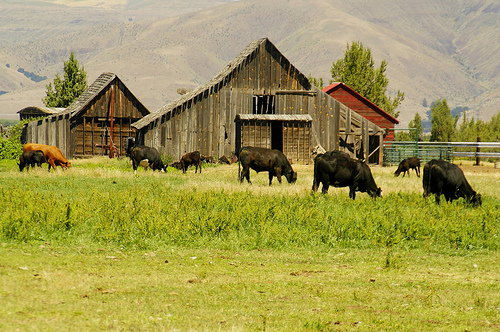
Is meat sustainable?” It’s a question too big to tackle in a single blog post, but the fact is that billions of people worldwide eat meat, in one form or another, and in the Northwest, farm sales of livestock represent nearly $3 billion in sales annually. It’s useful, therefore, to consider whether some forms of meat production are better for natural systems than others.

One promising technique attempts to use livestock grazing to reverse desertification, restore grassland habitats, and even reduce global warming. It may hold promise for the Northwest’s dry interior regions.

There’s a fascinating back story to the so-called “brown revolution” for arid lands that starts with Allan Savory, who founded the Savory Institute based on the principles he discovered while ranching in Africa. One good account comes from Spencer Beebe, who profiled the work on Ecotrust’s blog.

The guiding belief behind Savory’s work is that while overgrazing can cause desertification, there’s something to be learned from the fact that humans, grazing animals, and their habitats evolved together. For example, in arid environments today, sudden dry periods can halt the natural decay of plant material. But in prehistoric times, huge herds of grazing animals, such as buffalo or elephants, moved frequently across the landscape, in the process trampling organic material into the soil and breaking dry ground to allow water to seep in. The grazing herds also effectively “recycled” grassland forage by eating it, then returning it in the form of dung and urine. Herds moved on before they ran out of forage, which allowed the grazed area to “rest,” recover, and re-grow, thanks to water infiltration and the chewed and trampled biological material, before grazers returned to repeat the process.

Read more

Where Are the Women Bike Commuters?

Why don’t women bike to work more often? You hear many theories: we’re less willing to ride in traffic, we can’t arrive at a showerless office all sweaty, we never bothered to learn how to fix a flat, our schedules are over-extended, we work longer hours to make the same money as men, those of us with kids spend twice as much time on average caring for them, and many of us squeeze in shopping and errands on the way to and from work.

There’s no single satisfying answer, although convenience is a recurring theme. Sometimes,though, the reason can be as stupid as a garage door. When I evaluated all the things in my life that keep me from hopping on my bike more often, that’s what it boiled down to. I used to keep my bike in the back yard, but after I bought a trailer to haul around our 3-year-old, it was too cumbersome to hoist all of that up the steep stairs to our house and then squeeze through bushes and trees to get to our covered back deck. The other option was our garage, which has an old wooden door that’s falling apart. After some reflection, I realized that I hate to open it because every time I do I’m afraid that I’m going to do irreparable damage and then I’ll have to pay a lot of money to replace it. So there my bike sits, held hostage by a lack of handiness and disposable income.

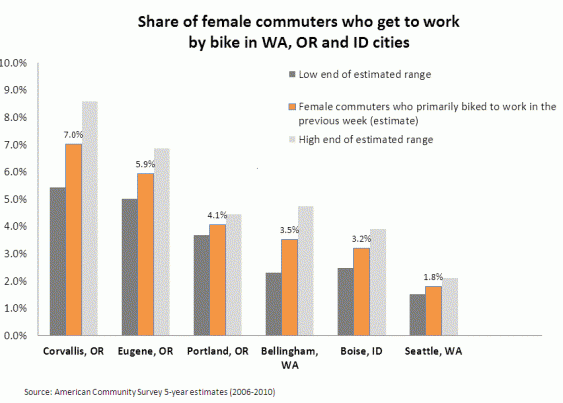
According to new 5-year estimates from the commute section of the American Community Survey (2006-2010), I’m not alone. Even among Northwest cities with significant numbers of female bike commuters, the percentage of women who primarily biked to work in the week before they were surveyed ranged from a low estimate of 1.8 percent for Seattle to 7 percent in Corvallis, Oregon.

Women bike commuters chart in NW

For a larger version of this chart, click here.

Read more

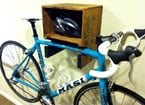
26 Ways to Store Your Bike

Back in February, Treehugger posted a visually tantalizing slideshow of bike storage options. We featured it in Sightline Daily’s news digest, but something about it ate at us: many of the solutions were utterly impractical.

As even an occasional Northwest bike-rider knows, our bikes get wet. Sometimes, really wet—not to mention muddy, gritty, grimy, etc. Certainly past the point of wanting to hang them over an expensive couch.

Still, the article piqued our curiosity. How do real people park their bikes? We put a call out to readers to submit their bike storage photos. Here’s what we got.

Have your own bike storage solution? Email us at editor@sightline.org, and we’ll add your submission to our Pinterest board.

Read more

Lane County’s Latino Residents

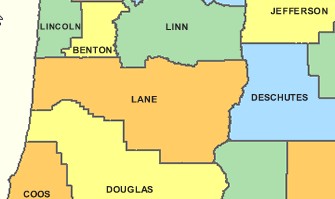
Sightline is working with University of Oregon Planning Professor Gerardo Sandoval to develop indicators of equity and sustainability for the Eugene-Springfield metro area, with special attention to the Latino community.

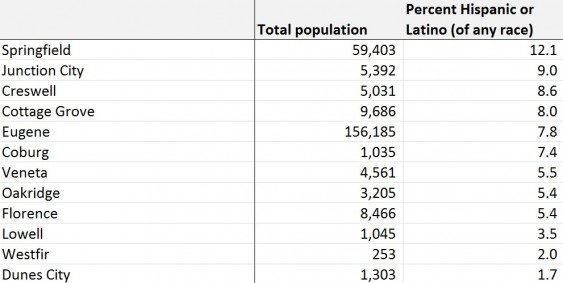
So, as part of our ongoing work on Cascadian demographics, I thought it worthwhile to see what recent Census numbers say about the distribution of Lane County’s Latino residents. (Last month, we conducted a state-by-state analysis of Latino residents in the Northwest.)

Here’s a rank-ordered view of the Lane County’s cities:

Read more

×