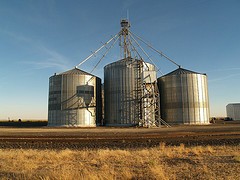
 Grant County, Washington has no shortage of food. There’s plenty of land devoted to growing wheat, potatoes, apples, mint, grapes, and peas in a county that ranked second in the state for agricultural sales in 2007.
But, according to the new USDA Food Desert Locator database and mapping program, nearly one in four county residents lives in a food desert with limited access to affordable and nutritious food. Roughly half of those people are low income.
When it comes to addressing obesity and hunger, food deserts are only one part of a much more complicated picture. They may be a problem for a relatively small percentage of households, and it’s easy to overstate their importance. But for someone living in one and having trouble meeting such a basic need as eating, it’s probably a big deal. At least in the US Northwest, new maps show a significant number of people who may lack easy access to affordable and healthy food live in rural areas, including places that grow huge quantities of food.
The new federal Food Desert Locator identifies census tracts that the USDA considers food deserts, which means the population has lower than average income and a significant number of residents (either 20 percent or 500 total) have low access to a large grocery store or supermarket. In urban areas, that means living more than a mile away from the grocery. In rural areas, the threshold is 10 miles.
In each food desert, you can zoom in on street boundaries and see how many low-income residents, kids, households without cars, and seniors live in that particular neighborhood.
You can certainly argue about whether the USDA food desert definition has any real meaning, and I get into the considerable limitations of the data below. But I was still a little curious about what the maps showed. So here are some charts ranking which counties in Northwest states (Washington, Oregon, Montana and Idaho) have the highest percentage of residents living in the USDA’s definition of a food desert:
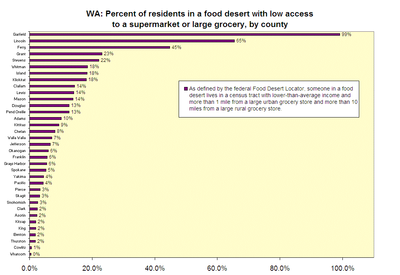
Click here for larger version of Washington chart.
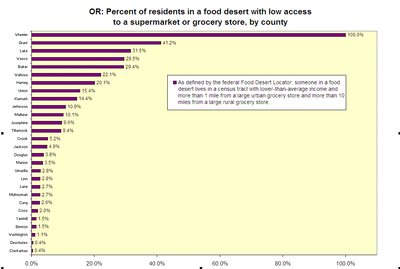
Click here for larger version of Oregon chart.
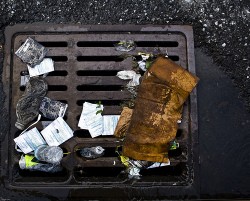 New rules approved by Washington’s lawmakers will cut the amount of salmon-harming copper, toxic coal pollutants, and algae-stoking fertilizers that foul local waterways. Oregon legislators are halfway to approving a ban on copper brake pads—a ban that Washington approved last year.
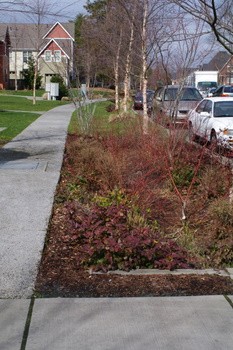 Researchers have pointed the finger at stormwater runoff as the top source of pollution that’s getting into Puget Sound and other Northwest waterways. And because runoff comes from just about everywhere—roofs, roadways, parking lots, farms, and lawns—the solution has to be just as widespread.
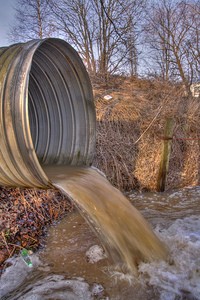 The culprit in each of these stories is the most mundane of villains: the rain. As rainwater streams off roofs and over roadways and landscaped yards, it mixes a massive toxic cocktail. It scoops up oil, grease, antifreeze, and heavy metals from cars; pesticides that poison aquatic insects and fish; fertilizers that stoke algal blooms; and bacteria from pet and farm-animal waste. A heavy rainfall delivers this potent shot of pollutants straight into streams, lakes, and bays—threatening everything from tiny herring to the region’s beloved orcas to our families’ health.
 The Census Bureau makes it official: center cities are hip. According to a new