Donate Newsletters

The Man Behind the Exploding Trains

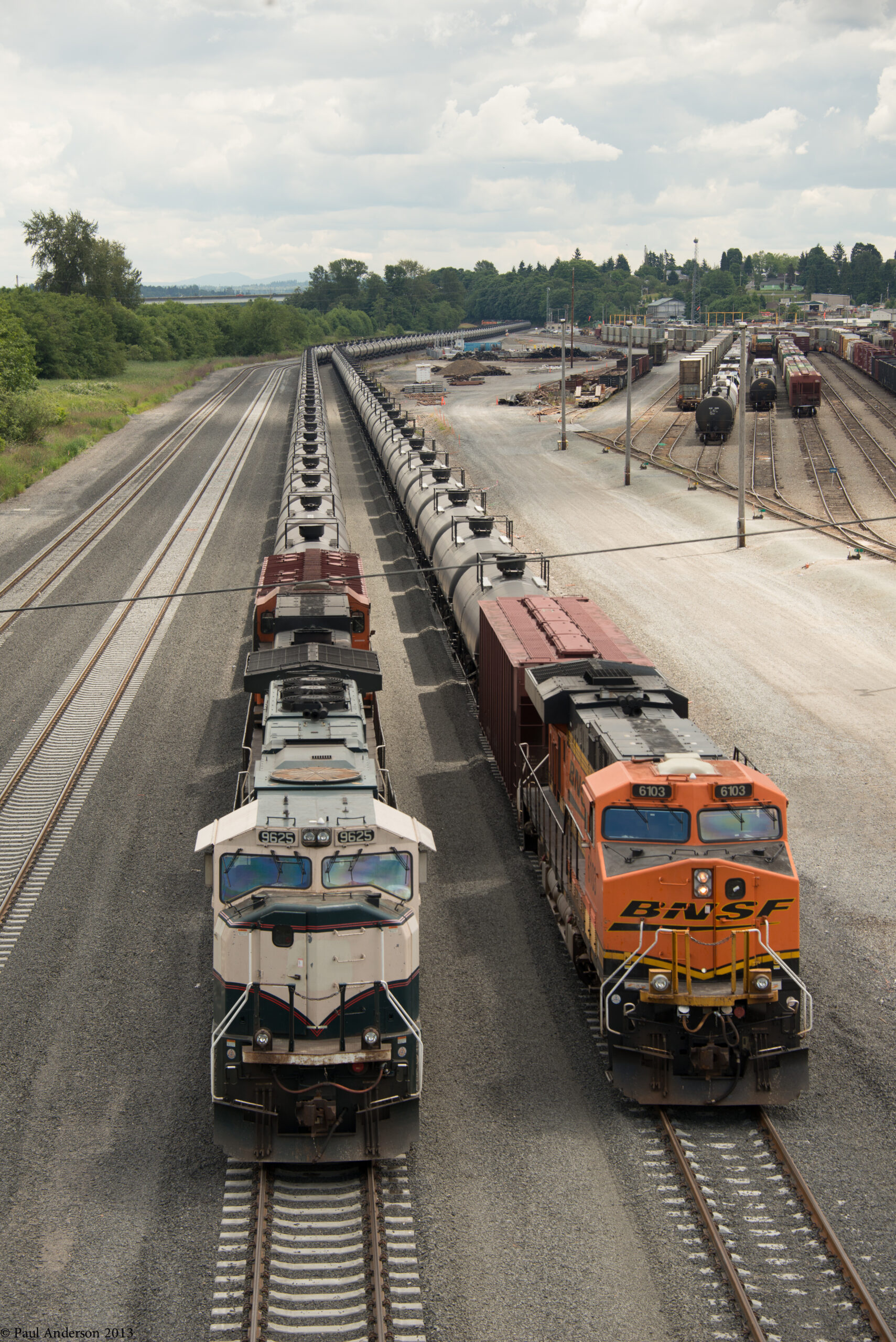
[prettyquote]“Look for the UTLX logo on tank cars when you watch trains roll by. As a Berkshire shareholder, you own the cars with that insignia. When you spot a UTLX car, puff out your chest a bit…” – Berkshire Hathaway’s 2012 Annual Report[/prettyquote]

In our previous installment, we explored how unsafe DOT-111s, the Ford Pinto of rail cars, make up the vast majority of oil-filled tank cars now riding the rails in North America. With DOT-111s, there is no margin for error. A serious derailment will almost always lead to oil spills or explosions. But if they are so clearly dangerous, why are these tank cars still on the rails?

The reason, in short, is because the railroad and rail car industries have opposed new safety regulations. (The oil and ethanol industries have abetted their cause.) Citing supposedly onerous costs for retrofitting unsafe tank cars, as well as the related infrastructure to load and unload the products they carry, these companies have successfully argued against rules that would require them to make the upgrades that could prevent the explosions.

Behind many of the industry groups opposing hauling Bakken crude in only safe tank cars is a single figure: Warren Buffett.

Read more

The Growth in Oil-By-Rail in One Picture

Everyone’s talking about how fast crude oil-by-rail shipments have increased, but what does that really mean? The increase has been staggering: In 2013, US railroads moved 11 times more crude oil than all the oil moved by train from 2005 to 2009, the five-year period before oil train shipments began to increase from historical levels. … Read more

Updated Oil-by-Rail Analysis

Editor’s note: The report referenced below is a living document, and Sightline researchers update it regularly to reflect new developments. For the most recent facts and figures, please see the report, The Northwest’s Pipeline on Rails.

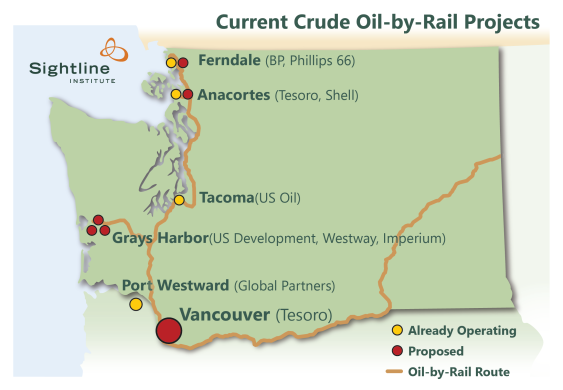
Sightline is re-releasing a popular report: The Northwest’s Pipeline on Rails. It’s the most comprehensive regional analysis of plans to ship crude oil by train. oil_rail_map_021814--150ppiMoving large quantities of oil by rail would represent a major change for the Northwest’s energy economy, and the plans now in development puts the region’s communities at risk.

Why does it matter?

  • In Oregon and Washington, 10 refineries and port terminals are planning, building, or already operating oil-by-rail shipments.
  • If all of the projects were built and operated at full capacity, they would put an estimated 11 loaded mile-long trains per day on the Northwest’s railway system. Many worry about the risk of oil spills from thousands of loaded oil trains that may soon traverse the region each year.

    Read more

Dust Up

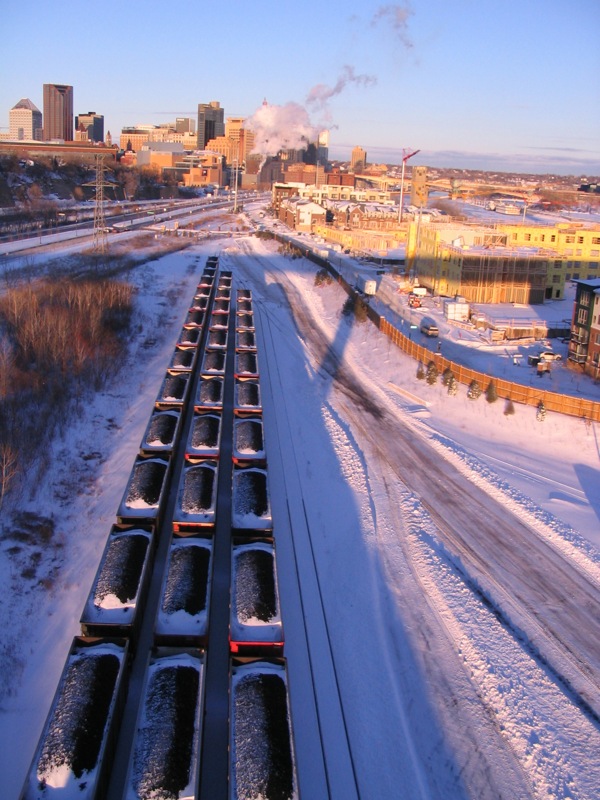
Amid all the debate about the risk of coal trains spreading coal dust into areas near the railroad tracks, it’s often forgotten that the subject is controversial even within the industry. How to control coal dust—or whether it can be done at all to a meaningful degree—has been the subject of a long-running dispute between those who ship the coal and those who carry it. The coal companies or utilities that ship the coal are on one side and the railroads that carry it are on the other.

The controversy developed originally not because either side was concerned about the spread of coal dust into neighboring communities or rivers, but because coal dust accumulation had become so severe in places that it actually destabilized tracks, resulting in derailments or trackside fires. In response, the railways began levying fees on the coal shippers to cover the costs of treating the coal with a chemical spray designed to reduce dust emissions. The coal shippers objected, arguing that the fee was unfair and that the coal dust control techniques are ineffective.

The result was a years-long battle before a federal regulatory agency, the US Surface Transportation Board (STB). It was finally resolved in December 2013 when the STB ruled mostly in favor of the railways—the government denied the fee, but instead allowed the railways to require coal shippers to undertake the dust-reduction techniques the railways wanted. (The ruling is here.) The legal arcana may be of little interest outside law firms, but the research results that supported the decision are relevant to everyone with a stake in the coal exports debate.

The STB relied on the findings of a seven-month experiment called the Super Trial designed to answer some of the persistent questions about how effective coal dust suppression techniques really are. Although the government concluded that it is possible for shippers to substantially reduce coal dust, the research findings also leave open several major worries, among them:

  • Coal dust from empty railcars, which may emit as much dust as loaded cars and which are never treated to reduce dust.
  • Coal dust reduction techniques may not be effective at high speeds or over long distances.
  • The studies tell us little about the extent of very small particle emissions, which may be the most risky to human health.
  • Much of the methodology and results are proprietary, making them hard to evaluate.

It’s worth taking a closer look at the STB case because the answers can help us glean important information about what large-scale rail shipping would mean for coal dust in the Pacific Northwest.

Read more

No Margin for Error

[prettyquote]“Clearly, the heads and shells of DOT-111 tank cars…can almost always be expected to breach in derailments that involve pileups or multiple car-to-car impacts.” — National Transportation Safety Board, June 19, 2009.[/prettyquote]

Much of the oil traveling by train to the profusion of new oil-by-rail terminals is shipped in what one Chicago-area leader called the “Ford Pinto of railroad cars.” These are the soda-can shaped tank cars, DOT-111s, built to standards in effect as recently as 2011 that have a “high incidence of failure during accidents.” If used to ship crude oil, their design flaws pretty much guarantee that a serious train derailment will lead to oil spills or massive explosions.

One summer night in 2013, a rail accident involving DOT-111s resulted in a catastrophic explosion that killed 47 people in a small town in Quebec. In the months that followed, DOT-111s carrying oil unleashed towering explosions in Alabama, North Dakota, and New Brunswick.

These mishaps were not accidents, so much as they were the logical consequence of a sea change in the way that we transport crude oil. A few years ago, a sudden oil boom from shale geologies, such as the Bakken formation of western North Dakota, caught almost everyone by surprise. With few good options for moving the abundant new found oil to market, companies turned to railroads in a big way: shipments of crude oil by rail spiked, and then spiked again.

Yet shippers are moving oil largely in the old DOT-111 tank cars that for more than 20 years we’ve known are unsafe. In fact, since 1991, the National Transportation Safety Board (NTSB) has issued several crash investigation and safety recommendation reports involving tank cars documenting the inadequacies of the DOT-111 standard.

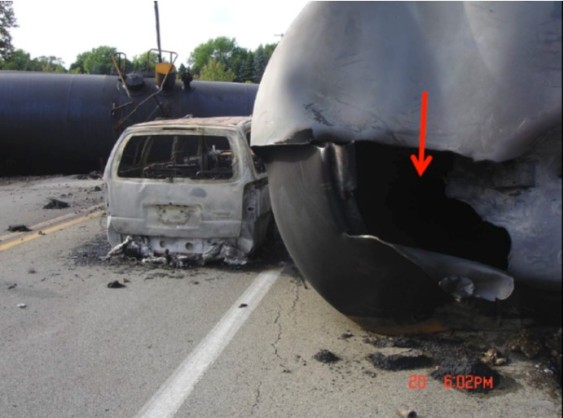
Things came to a head after a high profile collision in 2009 when a slow moving train composed of DOT-111 cars hauling ethanol derailed at a road-crossing in Cherry Valley, Illinois. The resulting fireball fatally burned a passenger and seriously injured three others in vehicles waiting at the crossing. Local officials had to evacuate residents within a half-mile of the incident.

A tank car carrying ethanol involved in the Cherry Valley derailment showing head (tank car end ) failure lying next to burned automobile. Arrow points to head failure. (Credit: NTSB)

Read more

Video: How Oil Trains Put the Northwest At Risk

Why should the Northwest worry about the oil-by-rail projects that are cropping up around the Northwest? In three-and-a-half minutes, here’s your answer: This is a beautiful piece of work (and I’m not just saying that because I’m featured in it). Big thanks to Portland-based filmmaker Trip Jennings who produced the video, as well as to … Read more

Event: Sightline in Vancouver, WA, on Fossil Fuel Exports

Coal train in White Rock, BC, Canada. Credit AaverageJoe.

We don’t get down south as often as we’d like, but next Thursday, February 6, I’ll be on WSU Vancouver’s campus, joining the Center for Social & Environmental Justice as one of two speakers on fossil fuel exports out of the US Northwest and Canada.

I’ll talk from 12-1:15 p.m. on the climate impacts of Northwest fossil fuel exports, as well as the threats that shipping them poses to our communities. Then, stick around, because from 1:25-2:40, University of Alberta political science associate professor Dr. Ian Urquhart will go in-depth on the fate of Canada’s tar sands.

Have a friend who’s never heard of the coal and oil exports issues? Want some takeaway facts and stats to share in your community? Just want to see me in person? (Unlikely, I know.) Then this is the perfect lunchtime event for you.

Read more

CARTOON: How Communities See Oil Trains

Cartoonist Marty G. Two Bulls Sr. nails it with his depiction of the oil-by-rail schemes popping up around the country. Enough said. Two Bulls is an Oglala-Lakota from the Pine Ridge Indian Reservation in South Dakota. You can find his graphic and editorial cartoon work on his website and read about him in this profile. … Read more

South Korea to Tax Coal

China gets most of the attention in the Pacific Rim coal export debate, and for good reason. They’re the 800-pound gorilla, consuming more coal than any other nation on earth. Even though the Chinese import only a tiny share of their total consumption, that small share qualifies them as the top coal importer in the Pacific Rim.

Still, China isn’t the only important player in the Asian coal market. In fact, it’s likely that US coal won’t even go to China. Instead, they’ll go to south Korea.

Why Bakken Oil Explodes

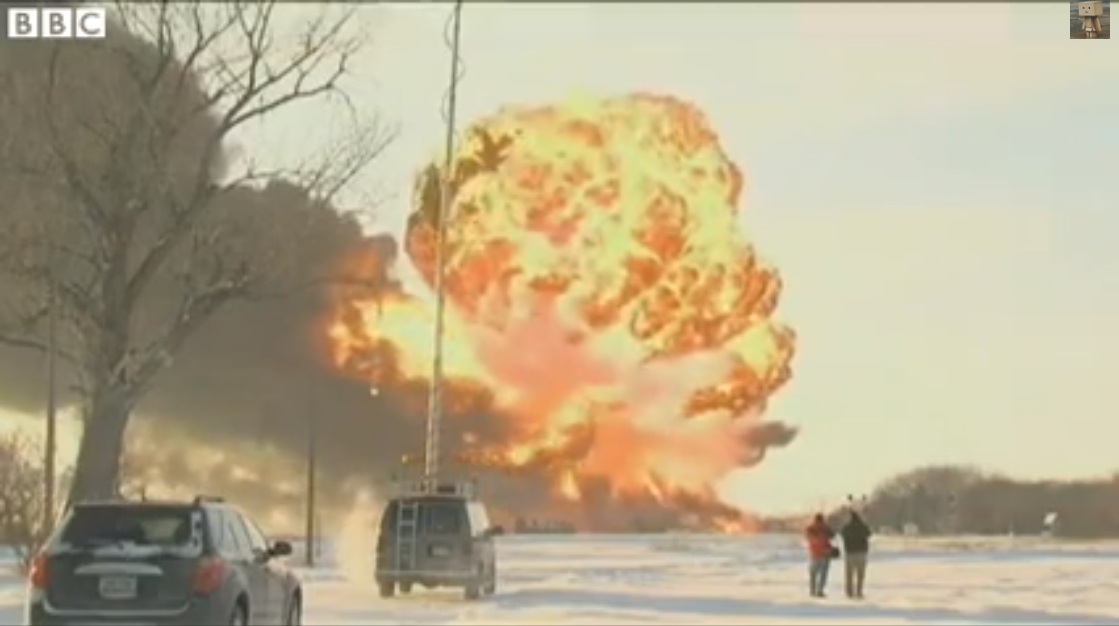
Screen shot of BBC footage of ND oil train explosion.

In early January, a federal agency alert made clear what many already knew: that crude oil from the Bakken formation is more prone to explosion than other types of crude oil. The warning came after tank cars carrying Bakken oil exploded in three separate railroad accidents in Alabama, North Dakota, and Quebec. It’s a worrisome finding for the hundreds of communities that host loaded oil trains every week.

Let’s take a closer look at some particular issues with Bakken oil.

What’s different about Bakken oil?

Bakken oil is a type of “light sweet crude,” a relatively high quality oil that is easier to refine into commercial products, but also easier to ignite. A few decades ago, light-sweet crude was the dominant oil type in the US. Light oil is by no means new to the industry, but the recent boom in oil extraction in the Bakken and similar deposits elsewhere does represent a new and unexpected development for the industry.

Read more

×