Donate Newsletters

Industry to Feds: “We Will Not Remove Any Unsafe Oil Rail Cars from Service”

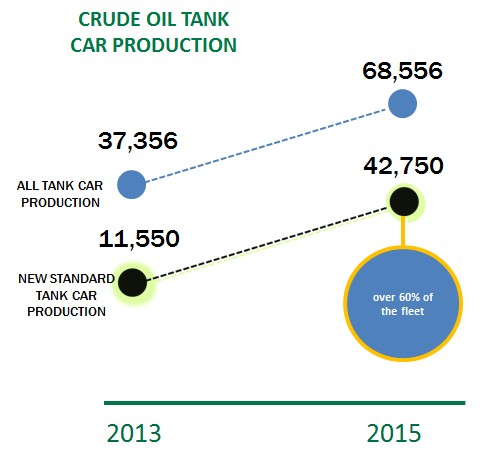
“We will not remove any unsafe oil rail cars from service.” That was the upshot of oil industry testimony at a recent rail safety hearing before the US Senate. To be fair, that isn’t a direct quote. But it is a direct consequence of the math. Under questioning from Senators about the wisdom of continuing … Read more

New Video: The Pacific Rim Coal Bubble

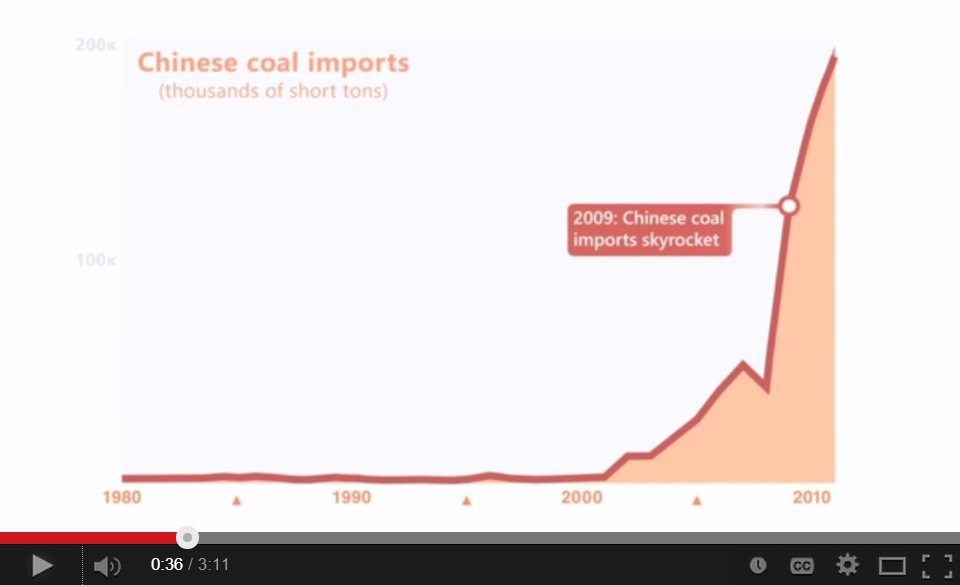
Hey, kids!  Check out our new video explaining why coal exports in the Pacific Northwest have become such a huge financial risk—with many blue-chip investors abandoning the space, leaving the field to risk-hungry, high-flying international speculators.

For those of you who don’t have the patience for a 3 minute video, here’s the short version:

Read more

Oil Trainspotting, Part 2

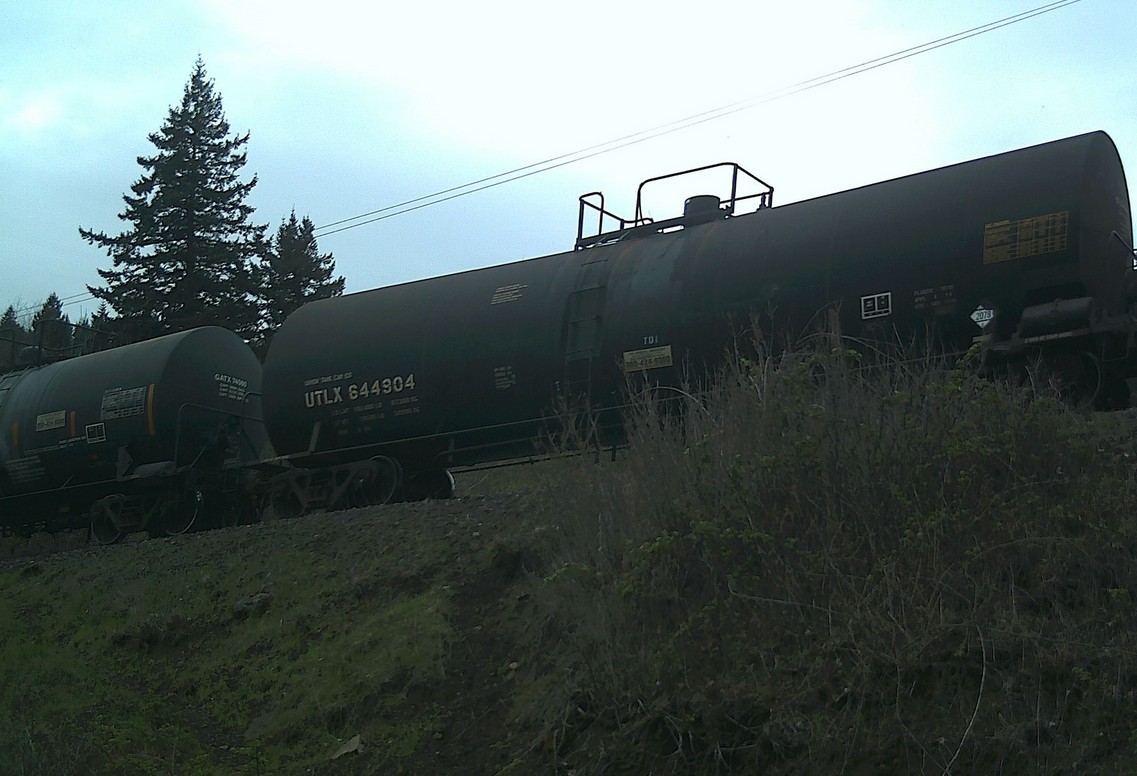
Two weeks ago, we called on northwesterners to start tracking oil train movements as they pass through local communities. It looks like people are responding to the call: our first oil trainspotting video comes from Everett, and it’s up on Facebook. It shows an empty oil train heading south and then east toward Stevens Pass, … Read more

Events: Sightline on Fossil Fuel Exports: Bainbridge Island and Vancouver, WA

Next week, I’ll be doing two public speaking engagements on The Thin Green Line—the notion that the Northwest is uniquely positioned to thwart large-scale fossil fuel exports. Bainbridge Island When: Tuesday, April 8, at 7 pm Where: Eagle Harbor Congregational Church, 105 Winslow Way West, Bainbridge Island. Map. Details: I’ll be focusing on new developments … Read more

What the Northwest Can Learn from Louisiana

I returned from a recent visit to the southern tip of Louisiana with a newfound appreciation for how important it is to prevent coal exports in the Northwest. The two Mississippi River coal facilities there—United Bulk Terminals and Kinder Morgan—are filthy, and plainly degrading nearby communities. Worse yet, another coal terminal, called RAM, is seeking permission to develop along the same stretch of the river.

Now comes news from the New Orleans Times-Picayune that local environmental groups are bringing a lawsuit against United Bulk on the grounds that it has repeatedly violated the US Clean Water Act. Click on that link and you’ll find glaring photographic evidence of coal and coal dust spilling into the Mississippi from the coal-loading equipment.

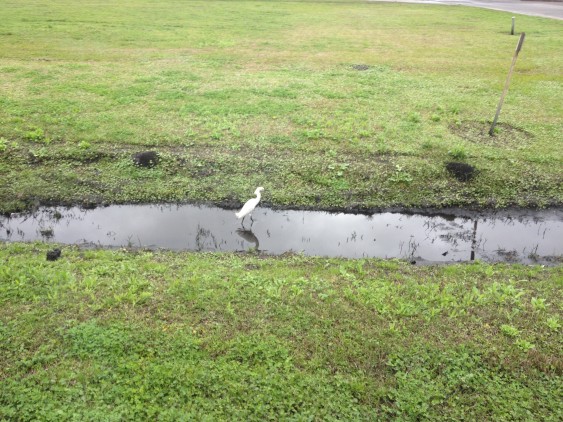
Here’s a photo I took of a snowy egret in a ditch near the United Bulk Terminals site. The water it’s standing in is literally black with coal contamination.

Egret in coal polluted ditch by Eric de Place

Predictably, the coal terminal operators complain that they’re somehow being treated unfairly. They claim to have spent tens of millions of dollars on modernizing the facility. But in some ways, their protestations are all the more damning because they demonstrate simply that coal terminals are almost always nasty and polluting neighbors.

It’s exactly what Sightline has found when examining coal dust complaints at terminals in Alaska, northern British Columbia, southern BC, Louisiana, South Carolina, Virginia, Australia, India, and South Africa. It’s the same story everywhere.

Read more

Recent Coal Export Trends: Q4 2013

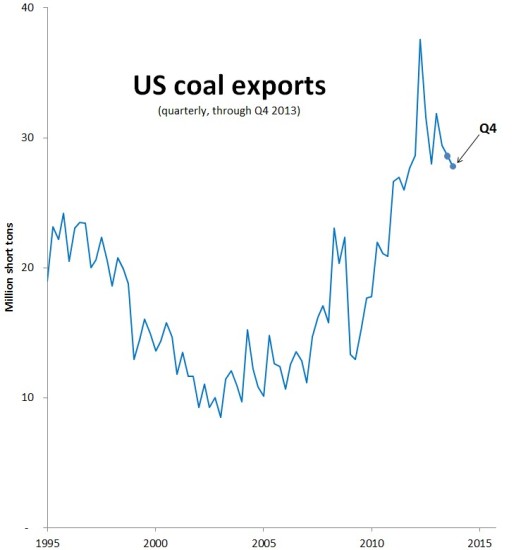
Late last week, the US Department of Energy released new figures in its quarterly coal export report. Here’s what happened up through the end of the year, 2013:

Original Sightline Institute graphic, available under our Free Use Policy

Nationally, coal exports were down nearly 3 percent in the final quarter of 2013.

Overall in 2013, the US exported almost 118 million tons of coal. It was unquestionably a lot by historical standards, but even so it represented a 7 percent decline from the record export levels of 2012.

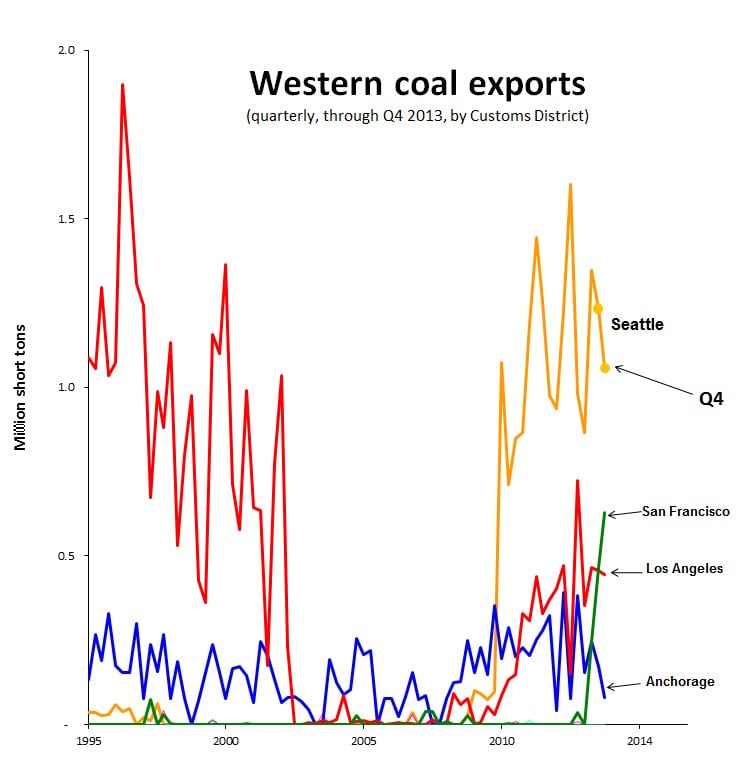
The Western Customs Region, center stage in the ferocious debate over expansion capacity, is currently only a minor player in the national coal exports scene. The West Coast exported roughly 2.2 million tons in the fourth quarter of 2013, about 5 percent less than the previous quarter. Just so, total export figures for 2013 also registered about 5 percent lower than they did in 2012.

Read more

Tesoro: A Track Record of Pollution, Hostility to Workers, and Meddling in Politics

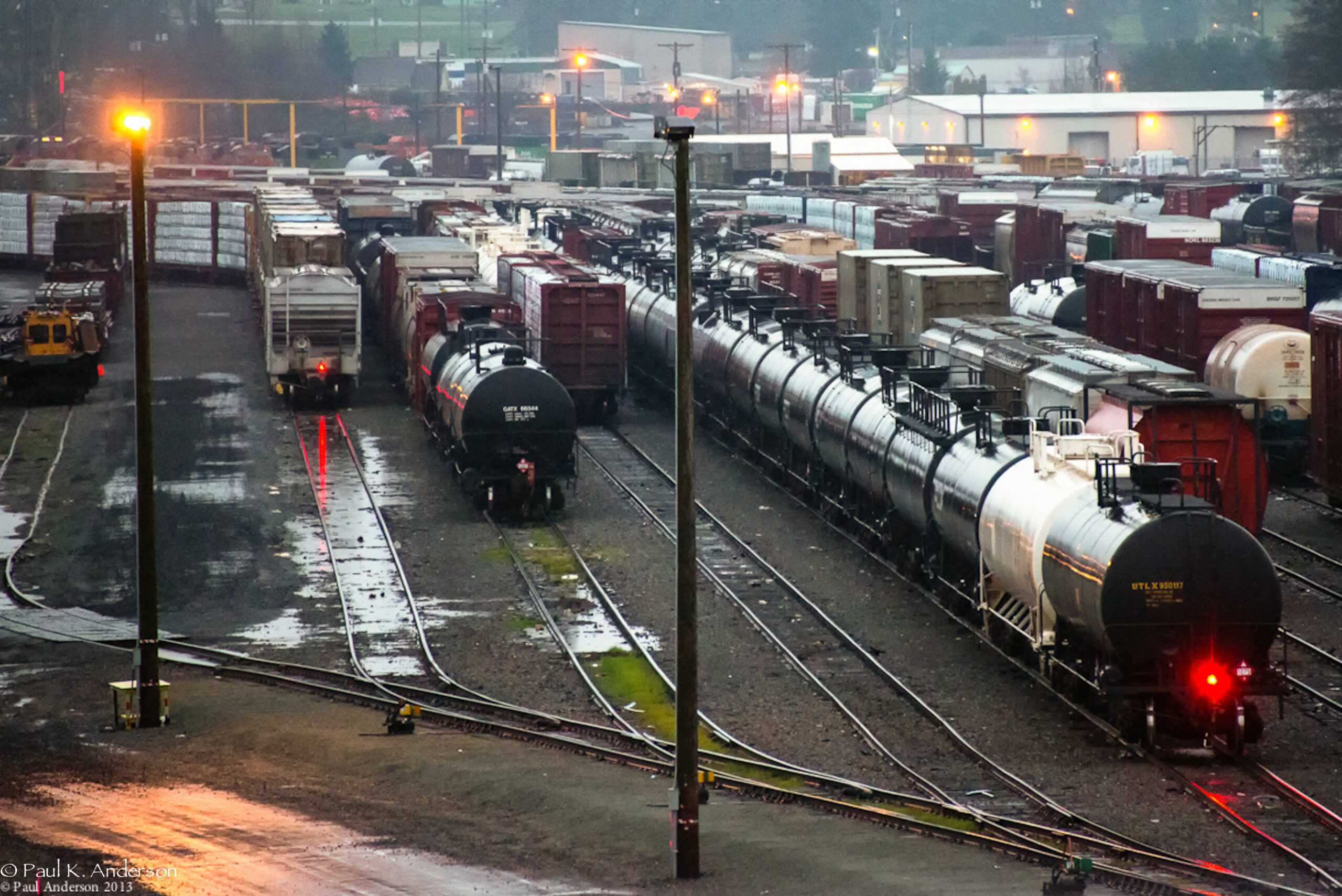
Right about now, oil executives in Texas are boarding a plane bound for the Northwest. Their goal? To steam roll opposition to the monster oil train terminal that Tesoro wants to construct on the downtown waterfront of Vancouver, Washington.

Hot on the heels of learning that the local city council is narrowly opposed to the project, the oil refining giant is going on a full court press lobbying mission in Vancouver, Washington. The company’s leadership, including senior VPs and CEO Greg Goff, will be meeting behind closed doors with members of the city council and the Port of Vancouver. Then on Tuesday, March 25 from 1:00 to 2:00, they are holding a private meeting with 40 business leaders at the Heathman Lodge.

As a public service to the community of Vancouver, it’s worth explaining what Tesoro is—and why their oil train terminal has no place on the Columbia River.

Tesoro’s plan for Vancouver, Washington

Tesoro’s deadly Anacortes fire

The Thin Green Line

The Pacific Northwest stands squarely between the most voracious energy markets in the world and huge fossil fuel deposits in the interior of North America—Powder River Basin coal, Bakken shale oil, Alberta tar sands, and remote natural gas fields. Big energy companies plan to unearth these vast reserves of carbon-intense fuels and put them up for sale in Asia.

If they are successful, these energy firms will unleash the carbon equivalent of roughly five Keystone XL Pipelines. But to get their products to market, energy companies first have to build new terminals and pipelines to move all that fuel. They need destinations for the scores of oil and coal trains that they plan to run across the Northwest, and they need right-of-ways to lay new pipelines.

In short, they need our permission.

So it is by geographic accident that the Northwest, perhaps the greenest corner of North America, will play an outsize role in determining the planet’s climate future. Will we double-down on coal and oil use, thereby jeopardizing our chance at a stable climate? Or will we act as a thin green line, insisting that we must do better—that our economy and our children demand a cleaner future?

To illustrate the threat—and the enormous opportunity—Sightline is proud to release a new video animation by Don Baker.

Read more

Oil Trainspotting in the Northwest

Last week, the Washington legislature adjourned having failed to require even basic disclosure about the movements of hazardous oil-bearing trains. The measure, which included a a “Right-to-Know” provision to help communities know more about the oil moving through, passed the House, but oil company opposition stopped the bill cold in the Senate.

Oil companies and railroads don’t want us to know what they’re up to, but we may be able to find out anyway. Citizens can use their own video camera equipped smart phones to start tracking oil trains. Think of it as crowdsourcing our Right to Know about oil trains.

There’s nothing nefarious about this. In fact, it already happens every day.

“Railfanning,” as it’s called by enthusiasts, is the hobby of watching and filming trains. You can find numerous videos online posted by dedicated railfans, including some of oil trains in the Northwest. Here’s one of oil tank cars rolling through Burlington, Washington. And another of a BNSF oil train in Vancouver, WA. Here’s one rolling through Mukilteo.

As US Senator Cantwell pointed out in a recent congressional hearing on rail safety, oil trains are traveling through every major population area in Washington (three of which are bigger than the entire state of North Dakota where they originate) as they move “from Spokane down to Pasco through the Columbia Gorge then through Vancouver, then up to Tacoma, and perhaps on through Seattle, through Everett, up to Skagit Country for processing.”

Read more

Keystone XL vs. Coal Exports

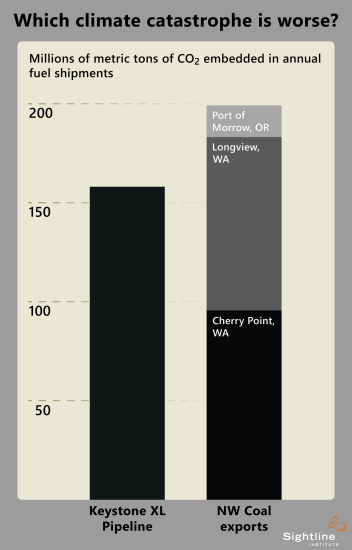
Back by popular demand, here’s a look at the carbon dimensions of two climate change horror shows in the making: the Keystone XL Pipeline and new coal export terminals in the Northwest. From the “King Kong versus Godzilla” files, here’s my analysis of their carbon impacts.

Original Sightline Institute graphic, available under our Free Use Policy.

The result surprised me: coal exports look to be an even bigger climate disaster than the pipeline. We can ill afford either one of these projects, but until we have a clear energy policy that respects climate science we’ll be wrestling with these kind of deadly proposals one at a time.

Now, for geeks out there, here’s the methodology I used to generate these numbers.

Read more

×